
A basketball finger guard may look simple, but different designs vary significantly in coverage, flexibility, support, thickness, fastening, comfort, movement, and fit. The wrong choice can either provide too little protection or interfere with normal ball handling. This guide helps you choose the right guard for your finger, your activity, and your game. For a broader view of the FingerTipSplint range, start with the FingerTipSplint homepage.
Table of Contents
- Why Basketball Players Use Finger Guards
- What Makes a Basketball Guard Different?
- 7 Important Features
- How to Choose the Right Size
- Interactive Fit Test
- Protection vs Mobility
- Coverage: What Part of the Finger?
- Materials: What to Consider
- Guard vs Sleeve vs Splint vs Tape
- Which Players May Want a Guard?
- Guard for Different Basketball Activities
- 3D Finger Guard Infographic
- Step-by-Step Buying Process
- 10 Common Buying Mistakes
- 5-Minute Pre-Game Test
- When a Guard Isn’t the Right Solution
- Product Guide
- Buyer Scorecard
- Care and Maintenance
- Doctor Advice
- Quick Checklist
- FAQ
A good basketball finger guard should balance secure fit, appropriate protection, comfortable support, and enough mobility for the player’s intended activity. Instead of choosing the thickest or most rigid option, compare the guard’s coverage, material, fastening, size, movement, and intended use.
Why Basketball Players Use Finger Guards
Protecting a Vulnerable Finger
A player may want additional protection during activity, especially if a finger has been previously injured or is prone to impact. A guard provides a layer between the finger and the ball or other contact.
Reducing Contact and Impact Exposure
A guard can reduce direct exposure of the finger to impact. It does not guarantee injury prevention, but it may reduce the force of direct contact in certain situations.
Supporting a Finger During Activity
A guard can provide general support during basketball movements. The level of support depends on the guard’s design and the player’s needs.
Confidence During Practice or Play
Knowing that the finger has some protection can help a player approach activity with more confidence. This is a practical benefit, not a medical claim.
What Makes a Basketball Finger Guard Different?
Basketball requires frequent dribbling, catching, passing, shooting, rebounding, and hand contact. A guard should be assessed not only for protection but also for how it behaves during hand movement and ball contact.
Dribbling
Fingertip and finger pad contact with the ball. A bulky guard may alter the feel of the ball.
Catching
Impact and grip during reception. A guard should stay secure during impact.
Passing
Finger positioning and release. A guard should not interfere with hand movement.
Shooting
Finger placement and release point. A low-profile guard preserves more natural movement.
Rebounding
Hand contact and reach. A guard should not restrict necessary movement.
Defense
Quick hand positioning. A guard should remain secure during rapid movement.
The 7 Most Important Basketball Finger Guard Features
1. Fit
The guard should stay in position without excessive pressure. A guard that slides or creates pressure points will not be worn consistently.
2. Protection
Look at which part of the finger the product actually covers. Coverage should match the area that experiences impact.
3. Support
Determine whether the design provides light support or more substantial stabilization. Match the support level to your needs.
4. Mobility
Can you comfortably perform normal basketball hand movements? A guard that restricts necessary movement interferes with performance.
5. Material
Flexibility
How much the material bends with the finger.
Durability
How well the material holds up to repeated use.
Skin contact
How comfortable the material feels against the skin.
Moisture
How the material handles sweat during play.
6. Fastening
Consider straps, wraps, adjustable closures, and elastic construction. The fastening determines how securely the guard stays in position.
7. Profile and Thickness
A bulky guard may interfere with ball handling. A lower-profile guard preserves more natural movement.
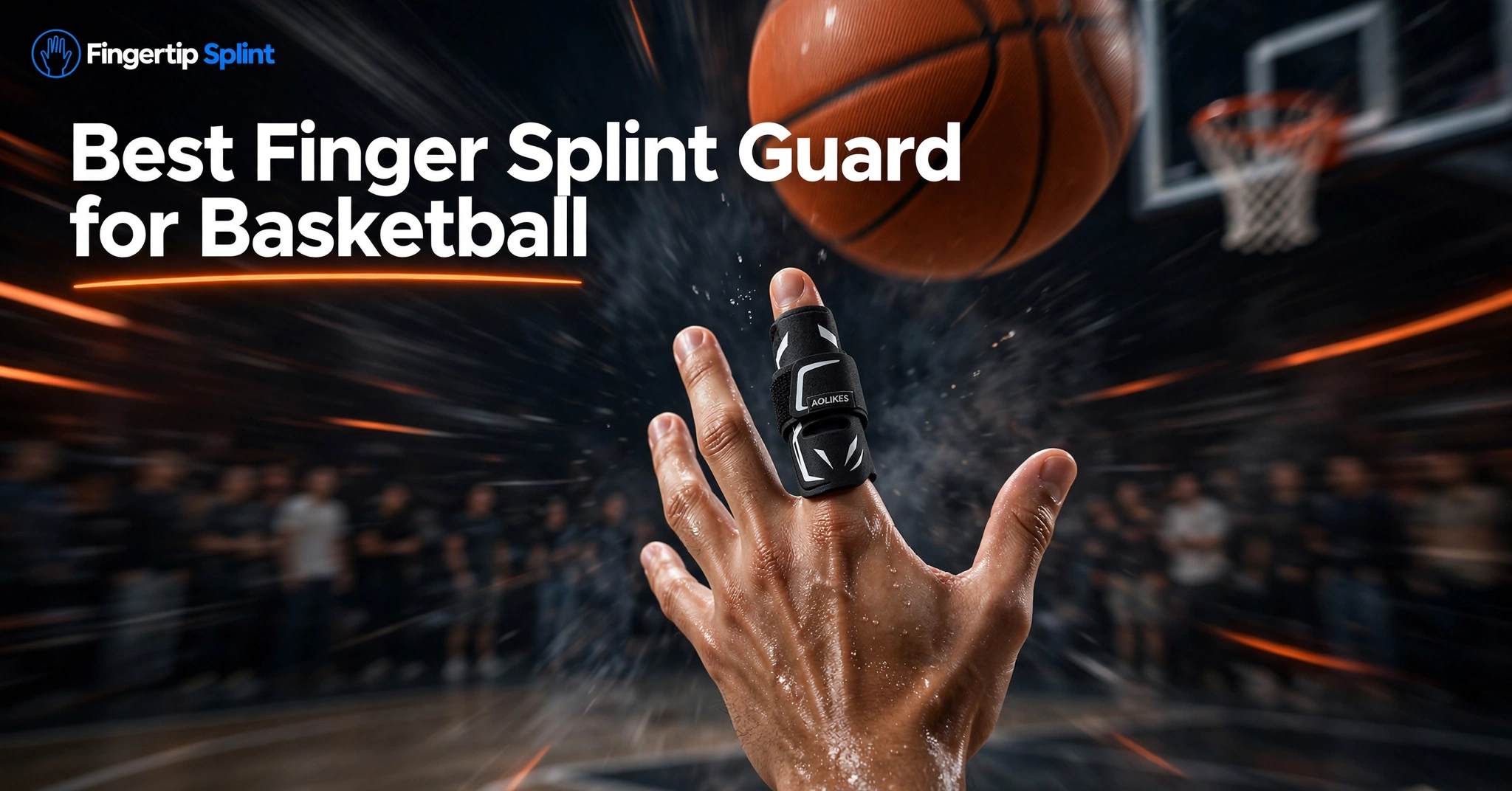
How to Choose the Right Finger Guard Size
Measure Before Buying
Follow the specific manufacturer’s sizing instructions. Do not guess based on appearance.
Do Not Guess Based on Glove Size
Finger dimensions can differ even when overall hand size is similar. Measure the specific finger you need to protect.
Account for Comfort
A secure fit should not become painful compression. Look for a balance between stability and comfort.
Check Movement After Fitting
The guard should remain secure during normal movement. Bend, straighten, and grip to check the fit.
Finger Guard Fit Test for Basketball
Answer five questions to check whether the guard is appropriate for basketball. This is a practical fit test, not a medical assessment.
Answer all five tests to see whether the guard is appropriate for basketball.
Protection vs Mobility — Finding the Right Balance
This is a central concept in choosing a basketball finger guard. Greater coverage can provide more protection, but greater rigidity can limit movement. Lightweight designs may preserve more mobility but provide less structure.
Finger Guard Coverage — What Part of the Finger Needs Protection?
Fingertip Coverage
Useful when fingertip exposure is the main concern. Covers the very tip of the finger, which is often the first area of contact during dribbling and shooting.
Middle Finger Coverage
Covers the middle section of the finger, including the shaft and possibly the PIP joint. Useful for impact or pressure along the length of the finger.
Joint Coverage
Joint-specific designs differ from simple sleeves because they are structured to support or stabilize a specific joint. This matters when the injury or vulnerability is at a specific joint.
Full-Finger Coverage
Covers the entire finger. Provides more protection but may reduce mobility. The trade-off depends on the player’s activity and needs.
Finger Guard Materials — What Should Basketball Players Consider?
| Material/Construction | Potential Advantage | Possible Tradeoff |
|---|---|---|
| Flexible fabric | Mobility | Less structure |
| Silicone | Cushioning and comfortable contact | May provide limited stabilization |
| Foam padding | Impact cushioning | Can add bulk |
| Rigid material | Greater structure | Less flexibility |
| Elastic material | Flexible fit | May provide less rigid support |
No material is universally best. The right choice depends on what you need from the guard and how you play.
Finger Guard vs Finger Sleeve vs Finger Splint vs Tape
| Product | Primary Purpose | Mobility | Support |
|---|---|---|---|
| Finger guard | Protection | Usually moderate to high | Varies |
| Finger sleeve | Coverage and cushioning | High | Low |
| Finger splint | Stabilization | Lower | Higher, varies |
| Finger tape | Securing and support | Varies | Varies |
| Buddy tape | Finger-to-finger support | Reduced | Moderate |
Choose the product category based on the actual need. For injury-specific guidance, see our article on finger splints for sprains and dislocations.
Which Basketball Players May Want a Finger Guard?
Guards
Ball handling and passing considerations. A low-profile guard preserves fingertip control.
Forwards
Rebounding and contact considerations. A guard with more coverage may be appropriate.
Centers
Contact and catching considerations. A durable guard that stays secure during contact.
Recreational players
Comfort and general protection. A balance of support and comfort.
Practice players
Repeated activity and durability. A guard that holds up during extended use.
Players returning from injury
Those cleared to return and needing protection during activity.
Finger Guard for Different Basketball Activities
Dribbling
Does it affect fingertip or ball contact? A bulky guard may alter the feel of the ball and affect control.
Shooting
Does it interfere with hand positioning? A guard that restricts finger movement can affect the shot.
Passing
Does it remain secure? A guard that shifts during passing can affect control and accuracy.
Catching
Does the guard stay in place when receiving the ball? Impact stress during catching can shift a poorly fitted guard.
Rebounding
Can the hand move naturally? Rebounding involves reaching and hand contact.
3D Interactive Basketball Finger Guard Infographic
The interactive 3D component explorer below shows how a basketball finger guard interacts with the hand. Click each component to see what it does and why it matters.
Basketball Finger Guard Explorer
Click a component to learn what it does and why it matters during basketball.
Step-by-Step Basketball Finger Guard Buying Process
10 Basketball Finger Guard Buying Mistakes
A guard can look protective without matching the finger or activity.
What to do instead: check fit, coverage, and activity compatibility.
A guard that is too loose or too tight will not provide consistent protection.
What to do instead: measure and compare with the product’s chart.
Excessive pressure can cause numbness, tingling, or discoloration.
What to do instead: secure and comfortable, not tight.
More protection is not always better if it restricts necessary movement.
What to do instead: balance protection with mobility.
A guard that interferes with ball handling will not be worn consistently.
What to do instead: test with a ball before relying on it.
Thicker material may add bulk and reduce flexibility.
What to do instead: match thickness to your activity.
The fastening determines how securely the guard stays in position.
What to do instead: confirm the fastening holds during movement.
A guard that feels fine at home may not perform during competitive play.
What to do instead: test during practice first.
These are warning signs that the guard may not be appropriate.
What to do instead: remove the guard and reassess the fit.
A general guard is not a substitute for injury-specific support.
What to do instead: seek professional assessment for significant injuries.
How to Test a Finger Guard Before Playing
Use this five-minute pre-game test to check whether the guard is appropriate for basketball.
Test 1
Open and close the hand. Check that the guard stays in place.
Test 2
Dribble slowly. Check that the guard does not interfere with ball contact.
Test 3
Catch a basketball. Check that the guard stays secure during impact.
Test 4
Pass normally. Check that the guard does not affect control or release.
Test 5
Take several practice shots. Check hand positioning and release.
Test 6
Check the guard afterward. Look for slipping, rubbing, pressure, or skin irritation.
When a Basketball Finger Guard Isn’t the Right Solution
- Visible deformity
- Severe pain
- Major swelling
- Suspected dislocation
- Suspected fracture
- Significant movement loss
- Numbness or altered sensation
- Worsening symptoms
A general basketball guard may not be appropriate for every injury. For injury-specific guidance, see our article on finger splints for sprains and dislocations. For a basketball-specific protection guide, see our article on the best finger splint guard for basketball.
Product Guide — AOLIKES Sport Finger Splint Guard
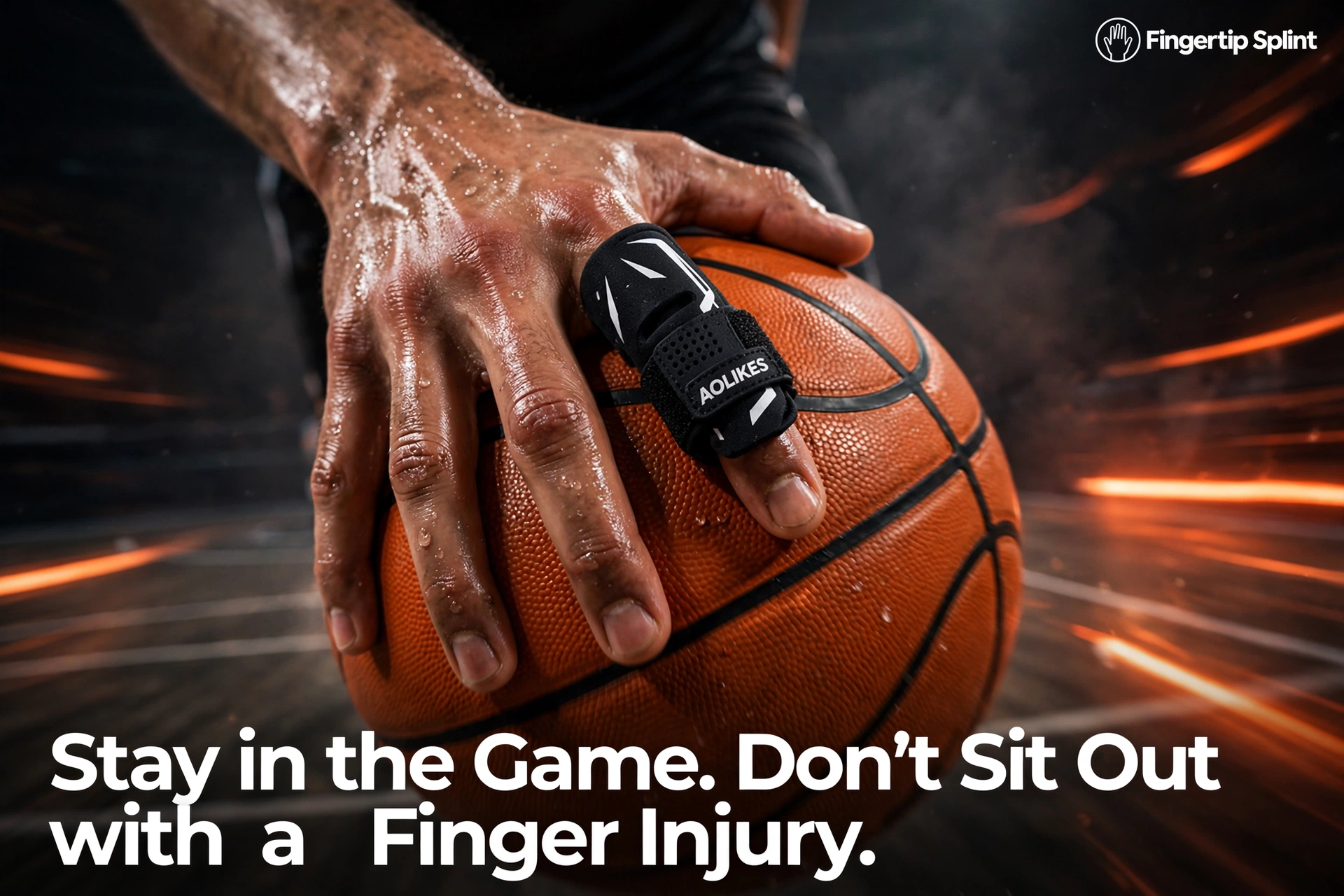
Use this section as a worked example of how to evaluate a basketball finger guard against the criteria in this guide. The product being evaluated is the AOLIKES Sport Finger Splint Guard from FingerTipSplint.
AOLIKES Sport Finger Splint Guard
- Design overview: Sport finger guard for protection and support
- Fit considerations: Check the product page for sizing and application guidance
- Protection characteristics: Guard structure intended to reduce impact on the finger
- Support characteristics: Check the product page for support level details
- Basketball compatibility: Low-profile construction intended to minimize interference with movement
- Intended use: Basketball and other sports activities
Design Overview
The AOLIKES Sport Finger Splint Guard is designed for sport finger protection and support. It is a protective guard, not a diagnostic device or a treatment for injury.
Fit Considerations
Check the product page for sizing and application guidance. Confirm that the guard fits the intended finger without excessive pressure.
Protection Characteristics
The guard structure is intended to reduce impact on the finger. Protection characteristics depend on coverage area and material.
Support Characteristics
The support level depends on the guard’s design. Match the support to your specific needs.
Basketball Activity Compatibility
Confirm that the guard stays secure during dribbling, passing, shooting, and catching. Verify that it does not interfere with ball handling or grip. For buyers comparing different finger protection options, explore the FingerTipSplint shop.
What Buyers Should Check Before Ordering
Check the product dimensions, materials, intended use, and instructions. For a broader buying guide on basketball-specific protection, see our article on the basketball finger guard buying guide for fit, protection, and support.
Basketball Finger Guard Buyer Scorecard
Select a feature to see what to evaluate. This is an educational comparison tool, not a medical recommendation.
- Correct size for the intended finger
- Secure positioning that does not slide
- Comfortable contact without pressure points
- Manufacturer sizing guidance followed exactly
- No numbness, tingling, or discoloration during wear
Basketball Finger Guard Care & Maintenance
Cleaning
Follow the manufacturer’s cleaning instructions. In general, silicone can be washed with mild soap and warm water. Rinse thoroughly.
Drying
Ensure the guard is completely dry before reapplying to prevent moisture buildup against the skin.
Inspecting Straps
Check the straps and fastening system for wear, stretching, or damage. A worn strap may not hold the guard securely.
Checking Material Damage
Look for tears, thinning, or other signs of wear. A damaged guard may not provide the same protection.
Replacing Worn Equipment
Replace the guard if it becomes torn, stretched, discolored, or loses its shape.
Following Manufacturer Instructions
Follow the manufacturer’s guidance for cleaning, storage, and replacement.
Doctor/Healthcare Advice — What Should Matter Most?
This section is written in the tone of a practical professional checklist. It is not a diagnosis and does not replace an in-person assessment.
Fit
The guard must fit the finger correctly to provide consistent support and protection.
Purpose
The guard should match the intended use, whether protection, support, or both.
Appropriate support
Support should match the situation, not be maximum by default.
Comfort
The guard should not cause irritation or pressure points during use.
Injury severity
Significant injuries require professional assessment, not just a guard.
Reassessment
Symptoms that persist or worsen deserve professional evaluation.
Additional trusted resources include the Mayo Clinic finger injury overview, the Cleveland Clinic finger splint resource, the AAOS hand and finger fracture resource, the MedlinePlus finger injuries page, the NHS finger injuries guidance, the WebMD finger injuries overview, and the Healthline finger injury resource.
Quick Basketball Finger Guard Checklist
Click each item to confirm. Aim to check all 11 before buying.
Frequently Asked Questions
Look for secure fit, appropriate protection, comfortable support, and enough mobility for your activity. Compare coverage, material, fastening, and size. Test the guard during practice before relying on it during a game.
For a broader buying guide, see our article on the basketball finger guard buying guide for fit, protection, and support.
It should be secure and comfortable, not excessively tight. You should be able to wear it without numbness, tingling, significant discoloration, or increasing pain. Excessive tightness does not improve protection and can create new problems.
If concerning symptoms occur, remove the guard and reassess the fit.
It can, depending on the guard’s design and fit. A bulky guard may alter the feel of the ball and affect hand positioning. A low-profile guard designed for basketball use preserves more natural movement.
Test the guard during practice to confirm it does not interfere with dribbling, passing, or shooting.
No. A finger sleeve typically provides coverage and cushioning with limited support. A finger guard usually provides more structured protection. The right choice depends on your specific need.
For a comparison of product categories, see the guard vs sleeve vs splint vs tape table in this guide.
It depends on your needs. A flexible guard preserves more mobility and is usually more practical for basketball. A more rigid guard provides more support but may restrict movement. The right choice depends on your specific situation.
Match the support level to your activity and needs rather than assuming more rigidity is always better.
Suitability depends on the guard design and applicable league or facility rules. Some guards are designed for sports use and preserve finger movement. Always check applicable rules concerning braces, taping, or protective equipment.
Follow professional advice on return to play after any significant injury.
A general basketball guard is designed for protection, not injury-specific support. If you have a specific injury, the appropriate support depends on the injury and professional guidance.
For injury-specific guidance, see our article on finger splints for sprains and dislocations.
Choose the Right Guard, Not Just Any Guard
A basketball finger guard should balance fit, protection, support, mobility, comfort, and basketball compatibility. Do not choose a guard simply because it looks protective. Evaluate the AOLIKES Sport Finger Splint Guard against the criteria in this guide before deciding.
Explore the FingerTipSplint shop for other support options, check the FingerTipSplint FAQ, or use the request-a-quote page for bulk or business purchasing. For medical finger splint supply, see the medical finger splint supplier page.
View the Product Explore Finger ProtectionFinal Takeaway: Match the Guard to the Game
The best basketball finger guard is the one that fits your finger, provides appropriate protection, stays secure during play, preserves the movement you need, and does not interfere with ball handling. Before you buy, check the coverage area, support level, materials, fastening method, and activity compatibility. Test the guard during practice before relying on it in a game.
If symptoms persist, worsen, or involve visible deformity, severe pain, major swelling, numbness, or significant loss of movement, do not simply cover the area and continue playing. Seek appropriate medical evaluation. For medical finger splint supply and distribution, see the medical finger splint supplier page and the finger splint distributor page. For the full FingerTipSplint range, visit the FingerTipSplint homepage.