
Your finger bends awkwardly during basketball. It gets caught while playing volleyball. Or it becomes sore after training. You are worried about missing practice. You are unsure whether a splint is the right choice. A 3-piece adjustable finger splint set may be worth evaluating when its design matches the support you need. But significant injuries should be assessed before choosing a brace. Start by exploring our finger-support solutions to see the full range.
Table of Contents
- Quick Answer
- Why Finger Injuries Happen During Sports
- What Is a 3-Piece Set?
- What to Look For
- Splint vs Buddy Taping vs Finger Guard
- Featured Product
- How to Check Fit and Fastening
- Recovery: Why There Is No Universal Timeline
- Common Mistakes Athletes Should Avoid
- When to Seek Medical Advice
- Interactive Buyer Guide
- 3D Infographic
- FAQ
- CTA
What Is a 3-Piece Adjustable Finger Splint Set Used For?
A 3-piece adjustable finger splint set may be useful when its design, sizing, and support level match the user’s needs. For sports-related finger injuries, choose a splint based on the affected area and recommended treatment. Seek medical assessment for severe pain, deformity, significant swelling, or difficulty moving the finger.
Why Finger Injuries Happen During Sports
Finger injuries are common in sports that involve catching, gripping, or contact. Understanding how they happen helps you recognize when a minor problem is actually something more serious.
Common Mechanisms of Injury
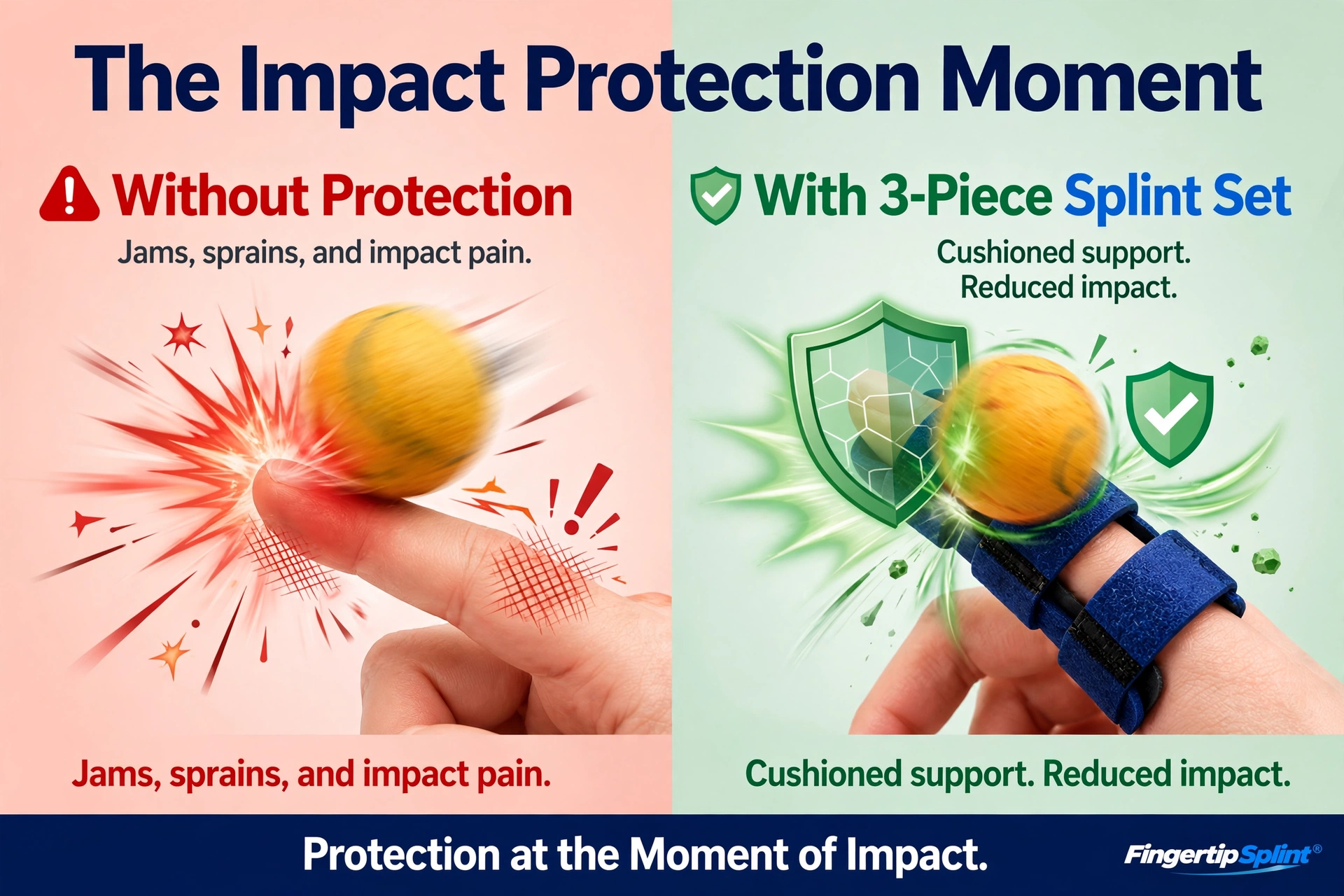
- Direct impact from a ball or another player
- Forced bending when catching or blocking
- Twisting during a fall
- Repetitive gripping during training
Types of Finger Injuries
Finger injuries range from bruises and sprains to dislocations, fractures, and tendon injuries. The same visible symptom can have different causes. For example, swelling after a ball strikes a fingertip may indicate a relatively minor injury, but it can also accompany a fracture or tendon damage.
- Persistent pain
- Deformity
- Inability to bend or straighten a finger
- Significant swelling
- Numbness or color changes
Do not assume that a splint alone treats every sports injury. For authoritative background on sprains and initial care, see the NHS sprains and strains guidance and the AAOS OrthoInfo.
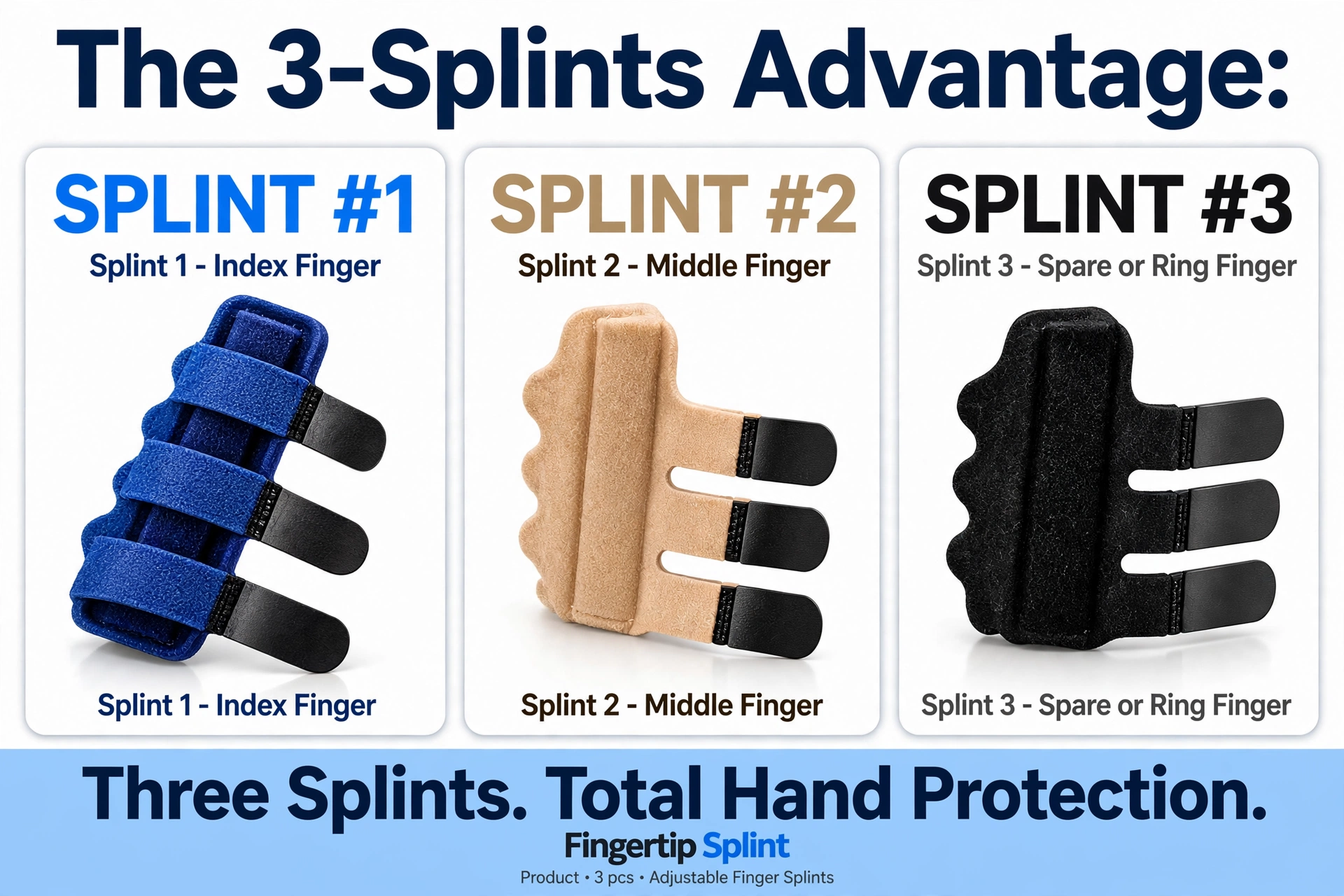
What Is a 3-Piece Adjustable Finger Splint Set?
A 3-piece adjustable finger splint set contains multiple splints that may be used for different fingers or support needs. The number of pieces supplied does not indicate how much stabilization each splint provides.
Number of Pieces vs Level of Stabilization
Having three pieces gives you options. It does not mean each splint provides strong immobilization. The level of support depends on the design and construction of each splint.
Adjustable Fastening and Structural Support
Adjustable fastening allows you to customize the fit. Structural support refers to how much the splint restricts movement. Both features depend on the product’s design and intended use.
What Buyers Should Verify
- Package contents
- Sizing and compatible fingers
- Fastening method
- Care instructions
- Intended use
What to Look For When Choosing a Finger Splint for Sports
Choosing the right splint requires understanding your specific situation. Consider these criteria.
Appropriate Support
Does the design suit the affected finger and the joint requiring support?
Correct Sizing
Does the product accommodate your finger dimensions according to its sizing guide?
Secure Fastening
Can the splint stay in the intended position without excessive tightness?
Comfort and Skin Contact
Are there potential pressure points or areas of rubbing?
Movement Restriction
Does the device provide the degree of immobilization recommended for the injury?
Care and Durability
Are cleaning instructions and material information provided?
For more detailed fit and protection guidance, see our 3PCS finger support braces: adjustable fit and protection article.
Finger Splint vs Buddy Taping vs Sports Finger Guard
Different approaches serve different purposes. Compare them by their intended role and limitations.
| Approach | Purpose | Adjustability | Limitations |
|---|---|---|---|
| Finger splint | Stabilizes a joint or finger | Varies by design | Incorrect use may cause harm |
| Buddy taping | Uses an adjacent finger for support | Limited | May be inappropriate for certain injuries |
| Sports finger guard | Provides impact protection | Varies | Not the same as therapeutic immobilization |
Buddy taping may be suitable for certain injuries when recommended by a clinician. A structured splint may be required for other injuries. A sports finger guard should not be assumed to provide therapeutic immobilization. For a broader overview, see our 3-piece adjustable finger splint set for sports support article.
Featured Product: 3PCS Adjustable Finger Splint Set
3PCS Adjustable Finger Splint Set
This set contains three adjustable splints. It is an option to evaluate based on your specific support needs.
- Three adjustable splints in one set
- Adjustable design for a custom fit
- Designed for finger support
- Suitable for daily wear with proper care
- Reusable with proper care
Who May Want to Consider This Set
Readers looking for multiple adjustable finger splints may find this set useful. It may be appropriate for people who want options for different fingers or who need a backup splint.
What to Verify Before Ordering
- Number of splints and included components
- Available sizes or adjustment range
- Which fingers and joints the design can support
- Materials and fastening method
- Manufacturer’s intended use and care instructions
What It Should Not Be Expected to Do
This product is not designed to diagnose a condition, treat every finger injury, or replace medical assessment. If you have a significant injury, seek professional advice.
How to Check Fit and Fastening Safely
Proper fit and fastening are essential for comfort and safety. Follow the product instructions and any clinician-provided positioning requirements.
Follow Product Instructions
Read the manufacturer’s sizing and fitting instructions. Position the splint as directed.
Do Not Improvise
The splint should not be improvised into a position that forces a painful or visibly deformed finger straight.
Warning Signs That Require Review
- New numbness or tingling
- Worsening pain
- Increased swelling
- Skin damage
- Finger becoming unusually pale, blue, or cold
Do not simply tighten straps to prevent slipping. A prescribed splint’s position and wear schedule should not be changed independently.
Sports Injury Recovery: Why There Is No Universal Timeline
Readers often want to know when they can return to practice. Recovery depends on the injury, the affected joint or tendon, treatment, and individual progress.
Clinical Milestones
- Assessment
- Protection or immobilization when indicated
- Follow-up
- Prescribed movement or rehabilitation
- Clearance for sport
Pain Reduction Alone Does Not Prove Healing
Pain reduction alone does not prove an injury is healed. Returning too early can aggravate some injuries or delay recovery. Follow your clinician’s guidance on return to activity.
Common Finger Splint Mistakes Athletes Should Avoid
Avoid these common errors to protect your finger and avoid setbacks.
1. Continuing to Play Because a Splint Is in Place
A splint does not make an injured finger safe for continued play. Seek medical clearance before returning to sport.
2. Assuming Every Painful Finger Injury Is a Sprain
Different injuries can produce similar symptoms. A fracture, dislocation, or tendon injury may require different treatment.
3. Choosing a Splint Based Only on Appearance or Price
Evaluate the actual design, sizing, and support level. Match the product to your specific needs.
4. Tightening Straps Until They Cause Pressure or Tingling
Over-tightening can cause numbness, tingling, and skin damage. Follow the fitting instructions.
5. Changing a Prescribed Immobilization Position
Do not independently change a prescribed position. Contact your clinician if the splint is causing problems.
6. Ignoring Symptoms That Persist or Worsen
If symptoms persist or worsen, seek professional advice.
7. Returning to Gripping, Lifting, or Ball Sports Without Guidance
Return to activity should be guided by a clinician. Do not rush back to sport.
When to Seek Medical Advice Before Using a Splint
Some situations require professional assessment before choosing or using a splint.
- Visible deformity
- Open wounds
- Suspected dislocation or fracture
- Inability to move the finger normally
- Severe pain
- Altered sensation or circulation
Some tendon injuries require timely evaluation even when the injury initially looks small. Readers with diabetes, reduced sensation, or circulation problems should obtain individualized advice about device use and skin checks.
For authoritative background on finger injuries, see the AAOS OrthoInfo and the ASSH HandCare resources. For general symptom evaluation and treatment, see the Mayo Clinic and Cleveland Clinic health library. The NHS sprains and strains guidance provides initial care information. For patient-friendly information on fractures, joint injuries, and care, see MedlinePlus. Johns Hopkins Medicine health library and Healthdirect Australia provide additional patient education. WebMD and Healthline provide supplementary consumer education. The American Academy of Family Physicians provides clinical patient education resources.
Which Finger Support Should You Consider?
Interactive Buyer Guide
This guide helps you organize your next step. It does not diagnose an injury.
Has the finger injury been assessed?
Which activity is relevant?
Are there serious warning signs?
Select your answers above to see guidance.
Explore Finger Splint Support: Joints, Fit and Sports Safety
Interactive 3D Hand and Finger View
Click each part to learn about joints, support, fit, and safety.
Illustration for understanding finger support options. Actual fit and coverage vary by product.
Frequently Asked Questions
A 3-piece set contains multiple splints that may be used for different fingers or support needs. The intended use depends on the product’s design and specifications. Review the product details before ordering.
It depends on the injury and your clinician’s guidance. A splint does not make an injured finger safe for continued play. Seek medical clearance before returning to sport.
A suspected fracture requires prompt medical assessment. Do not rely on a splint alone. A clinician can determine the appropriate treatment.
Follow the manufacturer’s sizing instructions and measure as directed. Do not guess based on appearance. If you are between sizes, consider the product’s adjustability.
Buddy taping uses an adjacent finger for support. A splint provides independent support. Buddy taping may be appropriate for certain injuries when recommended by a clinician; a splint may be required for others.
It should be secure without causing numbness, tingling, or color changes. Follow the fitting instructions. Do not tighten straps to prevent slipping.
Pain reduction alone does not prove an injury is healed. Do not return to training without medical clearance. Follow your clinician’s guidance on return to sport.
Wear duration depends on the injury and treatment plan. Follow your clinician’s guidance. Do not remove the splint or resume activity based solely on elapsed time.
Remove the splint and seek medical advice immediately. Numbness, color changes, or a cold finger may indicate a problem requiring prompt attention.
A set may provide options for different fingers or support needs. Check the product’s sizing and compatible fingers before ordering.
Seek medical attention for visible deformity, open wounds, suspected dislocation or fracture, inability to move the finger normally, severe pain, or altered sensation or circulation.
Review Your Options and Choose With Confidence
Compare Support Options Before You Buy
Compare the splint’s coverage, sizing, and support structure with your clinician’s instructions. The 3PCS Adjustable Finger Splint Set is an option to evaluate. Explore the 3-piece adjustable finger splint set and review its fit and support details before choosing your finger support.
Explore the full browse finger splints and hand-support products collection to compare options, read our best 3-piece finger splint set for daily hand support article for broader guidance, or request a product quote for business or wholesale inquiries. For answers to common questions, visit the FingertipsSplint FAQ page.
Explore the 3-Piece Finger Splint Set Read More Finger-Support GuidanceMake an Informed Decision About Finger Support
The right finger splint for sports support depends on the affected finger, the joint requiring support, the level of immobilization needed, and the treating clinician’s recommendations. A splint can provide support while it is worn, but it cannot replace medical assessment or prescribed treatment.
If you have a suspected fracture, dislocation, or significant injury, seek professional assessment before choosing a splint. Do not assume that wearing a splint makes an injured finger safe for continued play. For mild discomfort or a previously assessed issue, a properly fitted splint may be part of your support routine.
For more detailed guidance, see our 3PCS finger support braces: adjustable fit and protection and our best 3-piece finger splint set for daily hand support articles. For general information, visit FingertipsSplint’s finger-support solutions.