
Finger discomfort makes ordinary tasks difficult. Typing, dressing, cooking, or holding a cup can become frustrating. You want practical support for everyday routines. But you are confused by the different types of braces and splints available online. You are worried about choosing the wrong product. This guide helps you compare a 3-piece finger splint set according to support requirements, fit, intended use, and product instructions. Start with our finger-support solutions to explore the full range.
Table of Contents
- Quick Answer
- What Is a 3-Piece Finger Splint Set?
- What Does Daily Hand Support Mean?
- How to Choose the Best Set
- Comfort, Fit and Everyday Wear
- Splint vs Brace vs Sleeve vs Buddy Taping
- Featured Product
- Step-by-Step Evaluation Guide
- Common Mistakes
- When Daily Support Is Not Enough
- Interactive Buyer Guide
- 3D Infographic
- FAQ
- CTA
What Is the Best 3-Piece Finger Splint Set for Daily Hand Support?
The best 3-piece finger splint set for daily hand support is one that matches the affected finger, intended use, fit requirements, and recommended level of movement restriction. Compare the set’s sizing, support design, fastening, and care instructions. Seek medical assessment for a suspected fracture, dislocation, severe pain, deformity, or significant swelling.
What Is a 3-Piece Finger Splint Set?
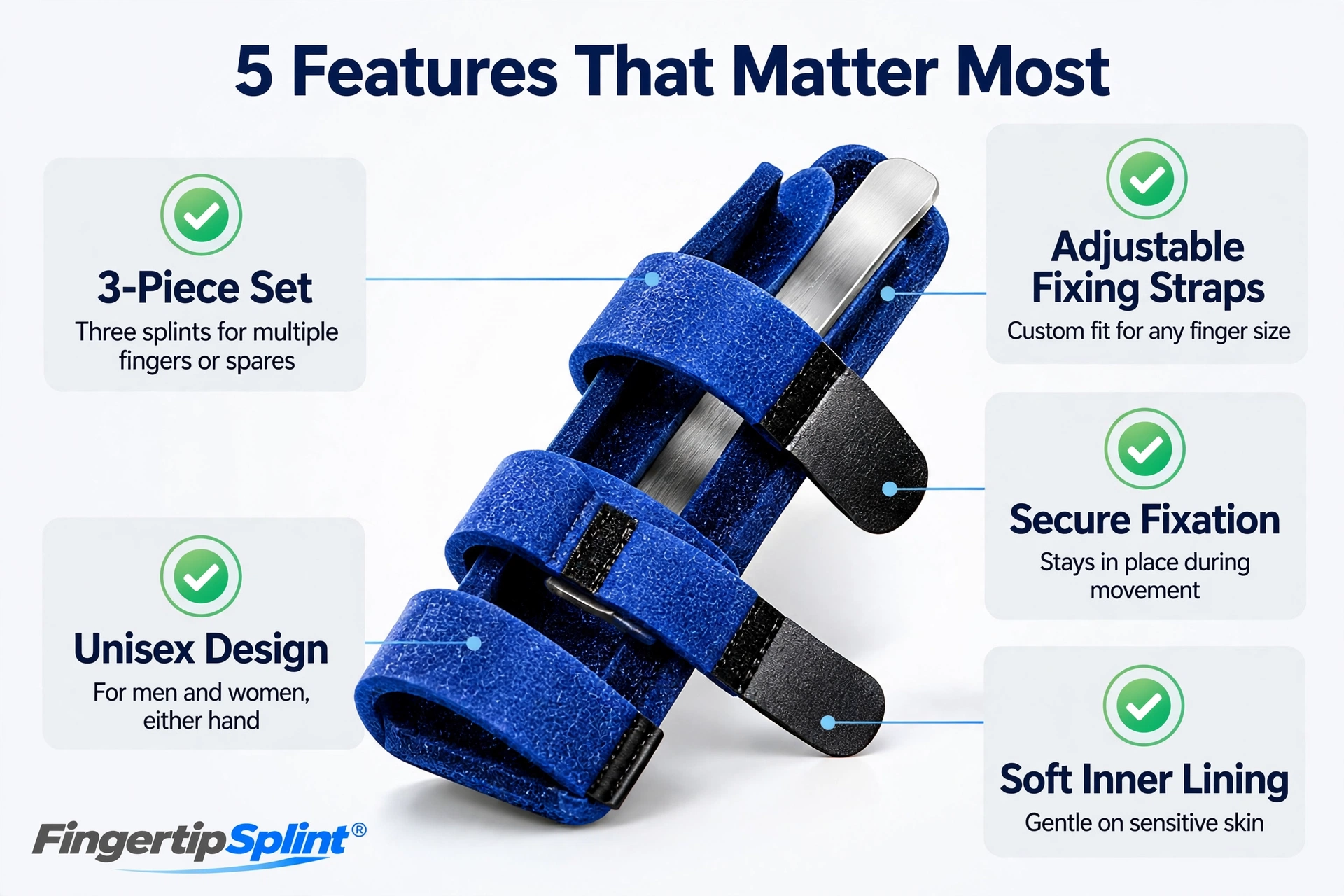
A 3-piece finger splint set contains three splints. The piece count alone does not establish its suitability. What matters is the design, intended finger coverage, adjustment features, and how well the set matches your needs.
Contents and Design
Check the product listing for specific details about the contents, design, and intended use. Do not assume that all three pieces are the same or that they fit every finger.
How Finger Splints Differ
Finger splints differ in their construction and the movement they restrict. Some are intended to support a particular joint. Others have a different purpose. The appropriate design depends on the affected area and the reason for using it.
What Does Daily Hand Support Really Mean?
Daily hand support is not the same as unrestricted hand use. A splint may limit movement, protect a specific area, or help maintain a prescribed position, depending on its design.
Practical Situations
Typing, dressing, holding light objects, and completing household tasks may be affected by a splint. Some activities may need to be modified while a finger is injured or immobilized.
An Everyday Example
A person may find that a splint fits comfortably while resting but makes gripping an object awkward. The correct response is to check the device instructions and activity restrictions, not to force the hand through discomfort.
How to Choose the Best 3-Piece Finger Splint Set for Daily Hand Support
This is a major decision-making section. Compare these criteria before choosing a set.
Intended Use and Support Area
Does the design suit the affected finger and the joint requiring support? A set that contains several supports is not automatically the best choice if the design does not match the injured joint or required movement restriction.
Size and Manufacturer Sizing Guidance
Follow the manufacturer’s sizing instructions. A splint that is too tight can cause skin irritation; one that is too loose may not provide adequate support.
Number and Type of Pieces Included
Check how many pieces are included and what they are. A set may provide options for different fingers or support needs.
Fastening and Adjustment Method
Check how the splint is secured and whether the adjustment system suits your needs.
Material and Skin-Contact Comfort
Consider the material’s feel, flexibility, and breathability. Check the product description for specific details.
Cleaning and Maintenance Instructions
Follow the manufacturer’s care instructions. Regular cleaning helps maintain the product and protect your skin.
Compatibility with Clinician Recommendations
If you have a diagnosed condition, follow your clinician’s guidance on the type of support that is appropriate.
For more detailed fit and protection guidance, see our 3PCS finger support braces buying guide.
Comfort, Fit and Everyday Wear
Fit affects comfort and practical use. A loose support may shift, while excessive pressure may cause discomfort or affect circulation.
Correct Sizing and Positioning
Follow the manufacturer’s sizing and positioning instructions. The splint should cover the intended area.
Fastening
The splint should be secure without excessive pressure. A secure fit is not the same as a tight fit.
Skin Checks and Monitoring
Check the skin for redness, irritation, or pressure marks. A brace should not cause new numbness, tingling, worsening pain, or a change in finger color or temperature.
Swelling, Skin Sensitivity, and Reduced Sensation
Swelling, skin sensitivity, or reduced sensation can make fit monitoring especially important. Check the fit periodically and adjust as needed.
- New numbness or tingling
- Worsening pain
- Increasing swelling
- Skin damage
- Finger becoming pale, blue, or cold
Do not attempt to solve poor fit by simply tightening the straps. Prescribed splints may have specific positioning and wear requirements.
Finger Splint vs Finger Brace: Which Is More Suitable for Daily Use?
Different product categories are not interchangeable. Compare them by their intended role and limitations.
| Option | What to Consider |
|---|---|
| Structured finger splint | Intended joint coverage and movement restriction |
| Adjustable finger brace | Fit, fastening, and its intended support function |
| Finger sleeve | Coverage and the level of support offered by its design |
| Buddy taping | Whether it is appropriate for the particular injury and has been applied correctly |
The most restrictive option is not automatically the best. The correct choice depends on the injury, the required position, and medical advice where indicated. For sports-use context, see our 3-piece adjustable finger splint set for sports support article.
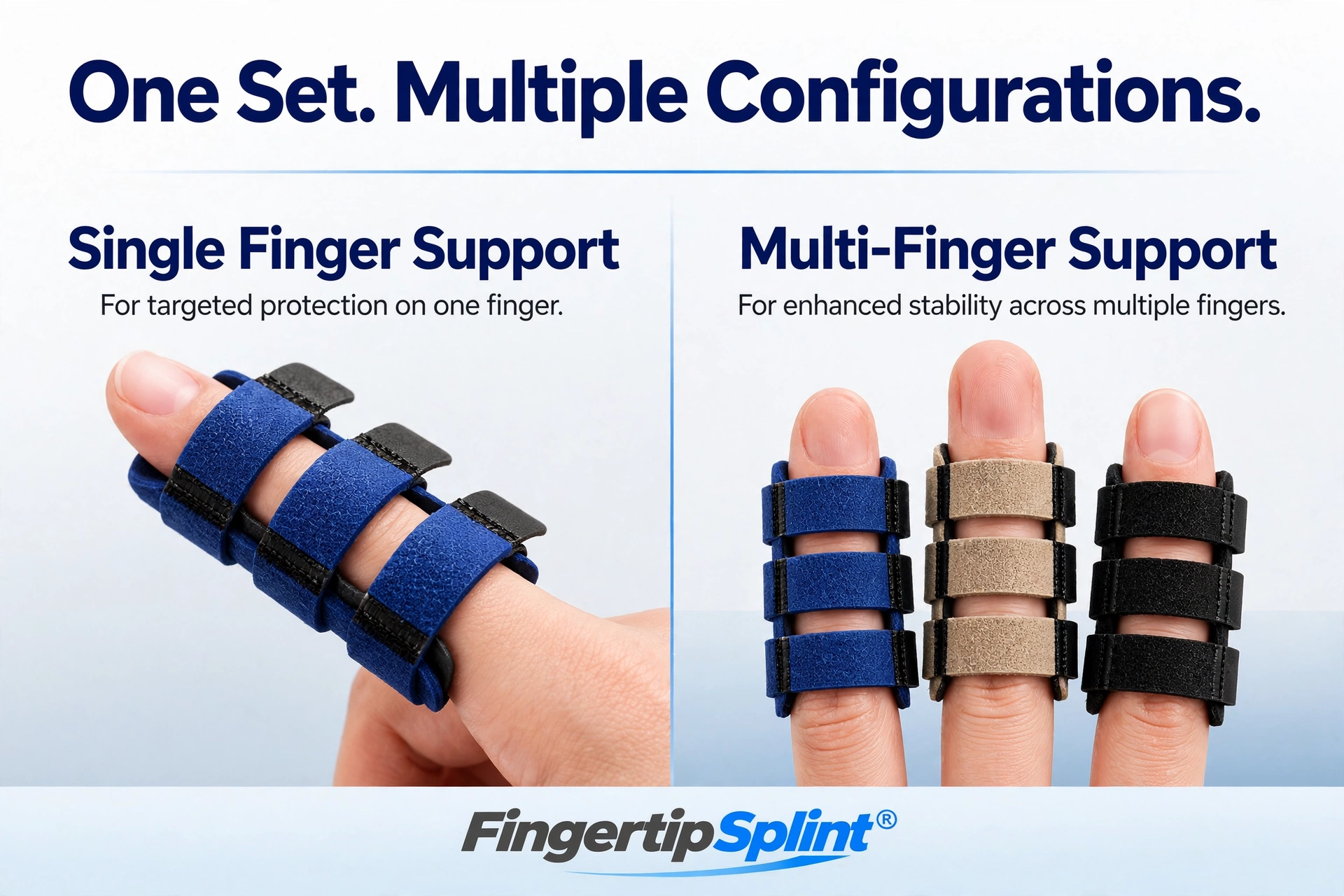
Featured Product: 3PCS Adjustable Finger Splint Set
3PCS Adjustable Finger Splint Set
This set contains three adjustable splints. It is an option to evaluate based on your specific support needs.
- Three adjustable splints in one set
- Adjustable design for a custom fit
- Designed for finger support
- Suitable for daily wear with proper care
- Reusable with proper care
Who May Want to Consider This Set
Readers looking for multiple adjustable finger splints for everyday support may find this set useful. It may be appropriate for people who want options for different fingers or who need a backup splint.
What to Verify Before Ordering
Buyer Checklist
Step-by-Step Guide to Evaluating a Finger Splint
Use this pre-use checklist to evaluate a finger splint before relying on it.
Step 1 — Confirm the Product Is Suitable
Confirm that the product is suitable for the intended purpose.
Step 2 — Read the Instructions
Read the sizing and positioning instructions. Position the splint as directed.
Step 3 — Check Support Coverage
Check that the support covers the intended area.
Step 4 — Fasten Securely
Fasten it securely without excessive pressure. A secure fit is not the same as a tight fit.
Step 5 — Check Skin Comfort and Sensation
Check skin comfort, sensation, swelling, and finger color. Remove the splint if you notice problems.
Step 6 — Follow the Wear Schedule and Care Instructions
Follow the specified wear schedule and care instructions.
Step 7 — Stop and Seek Advice if Concerning Symptoms Develop
Stop and seek advice if concerning symptoms develop. Do not manipulate a visibly deformed or potentially fractured finger to test the fit.
Common Mistakes When Using Finger Splints for Daily Support
Avoid these common errors to protect your finger and support your daily activities.
1. Choosing a Product by Appearance Alone
A splint that looks supportive may not provide the support you need. Evaluate the actual design and intended use.
2. Assuming Every Piece in a Set Fits Every Finger
Check the sizing and compatible fingers before ordering.
3. Ignoring Sizing and Intended-Use Instructions
Size affects fit and comfort. Check the sizing guide and intended use before ordering.
4. Tightening a Brace to Compensate for Poor Fit
Tightening a poorly fitting brace can cause numbness, tingling, and skin damage. Reassess the size and positioning instead.
5. Continuing Activities That Worsen Symptoms
If an activity worsens your symptoms, stop and reassess. Follow your clinician’s guidance on activity restrictions.
6. Wearing a Splint Despite Numbness or Skin Changes
If you notice numbness, tingling, or skin changes, remove the splint and seek advice.
7. Replacing a Prescribed Splint Without Professional Advice
Do not independently change a prescribed splint. Contact your clinician if the splint is causing problems.
8. Delaying Assessment of a Significant Injury
A suspected fracture, dislocation, or significant injury requires prompt medical assessment.
When Daily Finger Support Is Not Enough
Some situations require professional assessment rather than self-selected support.
- Suspected fracture or dislocation
- Visible deformity
- Severe or increasing pain
- Major swelling
- An open wound
- Inability to move the finger normally
- Altered sensation and circulation
Readers with diabetes, reduced sensation, circulation problems, or vulnerable skin should seek individualized guidance before using a splint that may create pressure. A supportive feeling does not prove that the injury is minor or that the product is treating it correctly.
For authoritative background on sprains and initial care, see the NHS sprains and strains guidance. For information on finger injuries and orthopedic treatment considerations, see the AAOS OrthoInfo and the ASSH HandCare resources. For condition-specific guidance on symptoms and evaluation, see the Mayo Clinic and Cleveland Clinic health library. For patient-friendly information on fractures, joint injuries, and care, see MedlinePlus. Johns Hopkins Medicine health library and Healthdirect Australia provide additional patient education. WebMD and Healthline provide supplementary consumer education. The American Academy of Family Physicians provides clinical patient education resources.
What Should You Check Before Choosing a Finger Splint Set?
Interactive Buyer Guide
This guide helps you identify what to evaluate before choosing a set. It does not diagnose a condition.
What is your main reason for looking at a finger splint?
Which feature matters most to you?
Do you have any warning signs?
Select your answers above to see guidance.
Explore Daily Finger Support: Joint Coverage, Fit and Function
Interactive 3D Hand and Finger View
Click each part to learn about joints, support, fit, and safety.
Illustration for understanding finger support options. Actual fit and coverage vary by product.
Frequently Asked Questions
The best set is one that matches the affected finger, intended use, fit requirements, and recommended level of movement restriction. Compare sizing, support design, fastening, and care instructions before choosing.
Check the package contents, sizing, intended support area, fastening method, care instructions, and whether the design matches your needs. Do not assume every piece fits every finger.
It depends on the design and your condition. Some tasks may be affected by the splint. Follow your clinician’s guidance on activity restrictions.
Follow the manufacturer’s sizing and positioning instructions. The splint should cover the intended area and be secure without causing numbness, tingling, or color changes.
A finger splint may provide more structured support and restrict movement. A finger brace may provide lighter support or protection. The right choice depends on your specific needs.
A suspected fracture requires prompt medical assessment. Do not rely on a splint alone. A clinician can determine the appropriate treatment.
Wear duration depends on the condition, product instructions, and clinician guidance. Follow professional advice on how long to wear the splint.
Remove the splint and seek medical advice immediately. Numbness, color changes, or a cold finger may indicate a problem requiring prompt attention.
It depends on the injury and your clinician’s guidance. A splint does not make an injured finger safe for continued play. Seek medical clearance before returning to sport.
Seek professional advice for persistent or worsening pain, reduced function, significant swelling, deformity, an open injury, or symptoms following an injury. People with reduced sensation or circulation problems should also seek individualized advice.
Review Your Options and Choose With Confidence
Compare Support Options Before You Buy
Looking for practical finger support for everyday needs? Explore the 3PCS Adjustable Finger Splint Set and review its design, sizing, and intended use before choosing. The right support is the one that matches your needs and provides an appropriate fit — not simply the one with the most pieces.
Explore the full browse finger splints and support products collection to compare options, read our 3PCS finger support braces: adjustable fit and protection article for broader guidance, or request a product quote for business or wholesale inquiries. For answers to common questions, visit the FAQ page.
Review the Product Details Read More Finger-Support GuidesMake an Informed Decision About Daily Finger Support
The right 3-piece finger splint set for daily hand support depends on the affected finger, the joint requiring support, the level of support needed, and the treating clinician’s recommendations. A splint can provide support while it is worn, but it cannot replace medical assessment or prescribed treatment.
If you have a suspected fracture, dislocation, or significant injury, seek professional assessment before choosing a splint. Do not assume that wearing a splint makes an injured finger safe for continued activity. For mild discomfort or a previously assessed issue, a properly fitted splint may be part of your daily support routine.
For more detailed guidance, see our 3PCS finger support braces: adjustable fit and protection and our 3-piece adjustable finger splint set for sports support articles. For general information, visit FingertipsSplint’s finger-support solutions.