
If you love golf, gym training, racket sports, or any activity that asks a lot of your hands, wrist and thumb discomfort can quickly get in the way. The right wrist and thumb support strap may help you stay active — but only if it fits properly, suits your activity, and does not interfere with safe movement. This guide explains how to choose a wrist and thumb support strap for golf and active use, what it actually does, and when to seek medical advice. For a broader view of hand and wrist support options, explore the available support range from FingerTipSplint.
Table of Contents
- Why Golfers and Active People Consider Support
- How Golf Places Demands on the Wrist and Thumb
- What a Wrist and Thumb Support Strap Actually Does
- Can You Wear a Strap While Playing Golf?
- Other Activities Where Support May Be Considered
- How to Choose a Strap for Golf and Active Use
- Signs You Should Reconsider Your Activity First
- Wrist & Thumb Strap vs. Other Support Options
- How to Wear a Wrist and Thumb Support Strap Correctly
- Common Mistakes Golfers and Active Users Should Avoid
- When to Seek Professional Advice
- Is a Compression Wrist and Thumb Support Brace Right for You?
- Frequently Asked Questions
A wrist and thumb support strap may provide adjustable compression and support during selected activities involving gripping and hand movement. For golf and other sports, choose a design that fits securely without restricting circulation or interfering with technique. The right option depends on your symptoms, activity, and the level of support you need.
Why Golfers and Active People Consider Wrist and Thumb Support
Golf, gym training, racket sports, gardening, and many other activities ask the same structures to work hard, over and over. Every swing, lift, or grip applies force through the wrist and thumb. When those structures are already sensitive or fatigued, the repetitive demand can turn a favourite activity into a painful one.
According to NHS guidance on wrist pain, wrist and thumb discomfort is one of the most common reasons adults seek help. The causes range from tendon irritation and joint conditions to sprains and overuse. Because symptoms can overlap, self-diagnosis is risky. A brace that helps one condition may not help another.
This is why it is important to think of wrist and thumb support as one part of a broader decision. Golfers, gym-goers, and active people often reach for a support strap because it feels like a quick solution. Sometimes it is helpful. Sometimes the wiser choice is to reassess the activity itself, adjust technique, or seek medical advice before continuing.
If you are exploring options for both active and everyday use, it helps to understand how different supports compare. The daily support wrist and thumb brace guide covers the everyday-use side in detail.
How Golf Places Demands on the Wrist and Thumb
Golf looks gentle. It is not. A full swing involves a coordinated sequence of grip pressure, wrist positioning, and rotational force through the hands and forearms. At impact, the club transmits a sharp load through the lead wrist and thumb. On a long practice session, that sequence repeats dozens or hundreds of times.
Three factors affect how much demand the wrist and thumb experience during golf:
- Grip pressure: Holding the club too tightly increases strain on the thumb and wrist tendons.
- Wrist positioning: Excessive cupping or bowing during the swing can stress the wrist joint and thumb base.
- Workload: Long practice sessions, poor lie conditions, and hard range mats all increase cumulative load.
Technique, equipment, and existing conditions all play a role. A player who notices discomfort during repeated practice swings should reassess the activity and symptoms rather than simply tightening a brace and continuing. This is where many active people get stuck: the brace provides short-term relief, so they keep swinging, and the underlying problem quietly worsens.
According to Mayo Clinic’s information on De Quervain tenosynovitis, thumb-side wrist pain is often associated with repetitive gripping and twisting — exactly the type of load golf and racket sports involve. Recognising the pattern early is more useful than playing through it.
For readers who want to understand how the wrist and thumb support together during activity, the article on understanding thumb spica brace designs provides useful background on how different designs distribute support.
What a Wrist and Thumb Support Strap Actually Does
A wrist and thumb support strap is a device that wraps around the wrist and thumb area, providing adjustable compression and, in some designs, limited movement support. It is not the same as a rigid thumb-spica brace or a medically prescribed splint. Understanding the difference matters before you buy.
Adjustable Compression
Compression supports the soft tissues around the wrist and thumb and may improve awareness of joint position during movement. Straps allow you to adjust the level of compression for comfort and activity.
Contact Around the Wrist and Thumb
The strap’s coverage determines which structures it supports. A wrist-only brace supports the wrist but provides minimal thumb support. A combined wrist and thumb strap supports both areas but may feel bulkier.
Movement Restrictions
Some straps allow near-full movement. Others limit specific motions, such as thumb extension or wrist deviation. A compression strap is not automatically equivalent to a rigid splint. If you need significant movement restriction for a diagnosed injury, a strap is usually not the right choice.
If you are also dealing with finger or hand pain alongside wrist and thumb discomfort, exploring the full range of wrist and thumb support options can help you understand how different designs address different problems.
Can You Wear a Wrist and Thumb Strap While Playing Golf?
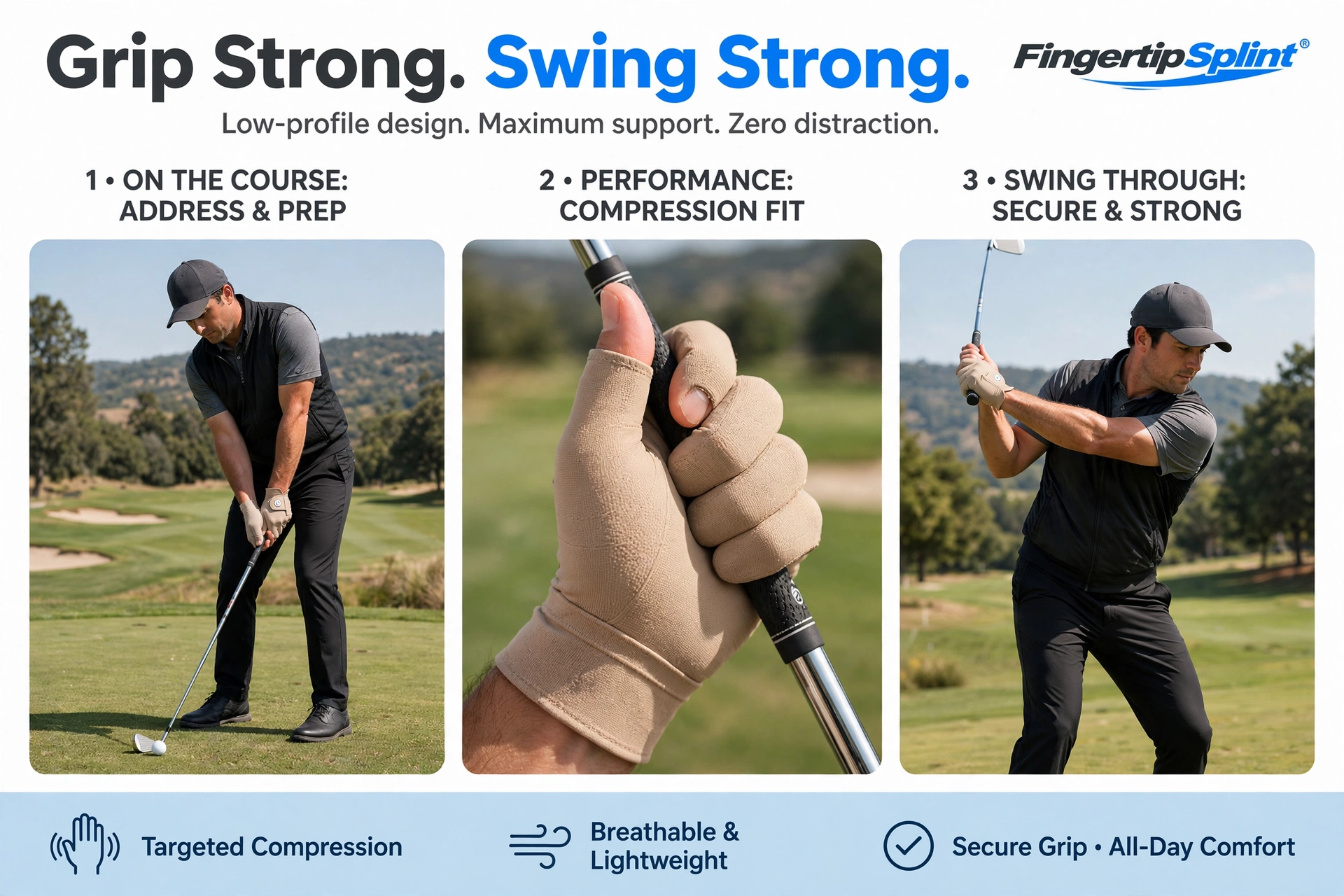
For many golfers, the answer is yes — with conditions. The strap must not compromise a safe, controlled grip, restrict the wrist movement required for the swing, or interfere with club control. Before wearing any support during play, consider:
- Grip security: Can you maintain a firm but relaxed grip without the strap slipping or bunching?
- Wrist movement: Does the strap allow the wrist rotation and flexion you need for your swing?
- Comfort: Can you wear the strap for the duration of a round without irritation?
- Fit: Does the strap stay in place through repeated swings?
- Control: Do you feel the club is under control throughout the swing?
If a strap feels like it is restricting the swing or interfering with your ability to control the club safely, remove it. A support that compromises technique is not helping you play better — it is increasing risk.
Other Activities Where Wrist and Thumb Support May Be Considered
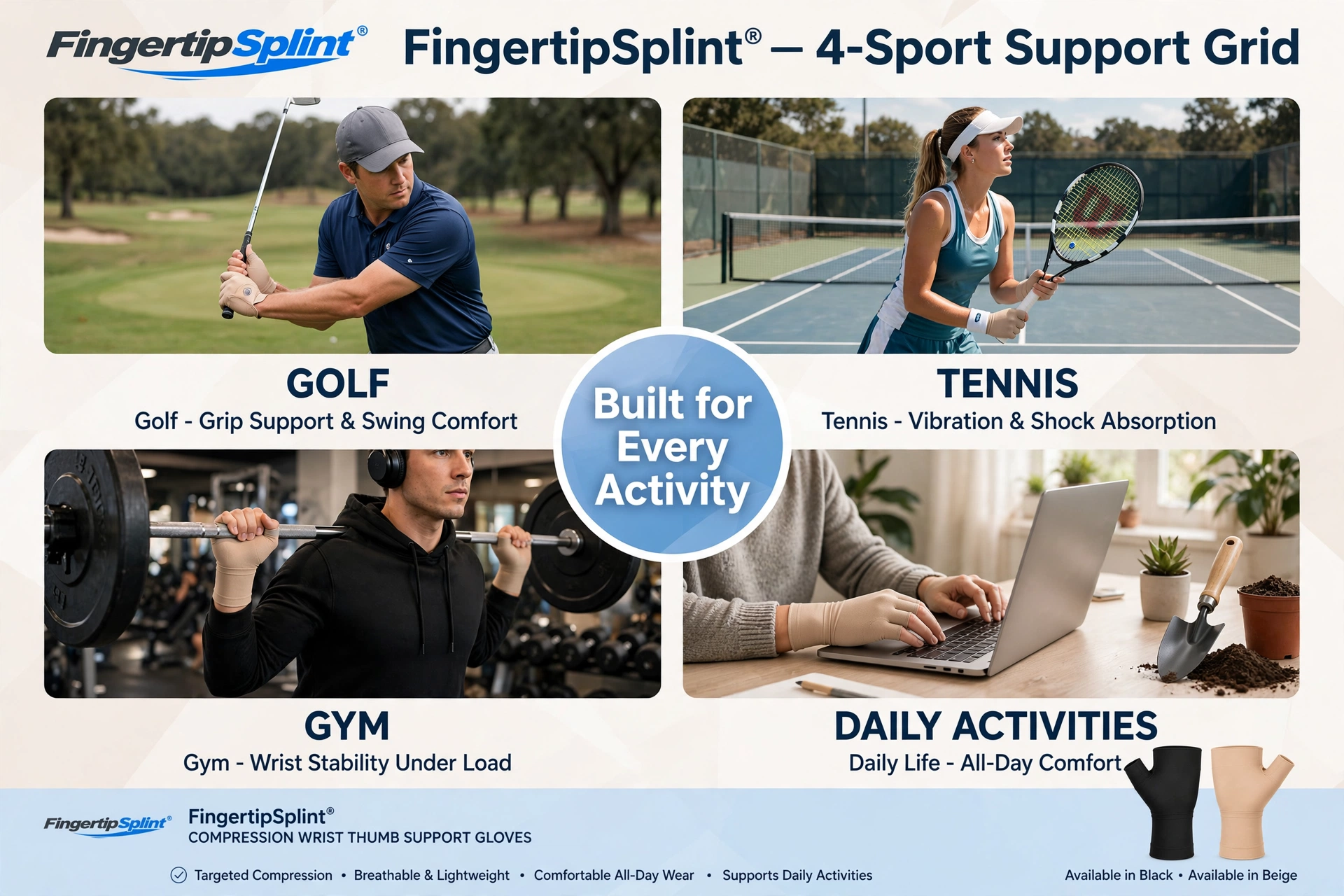
Golf is not the only activity where wrist and thumb support may be considered. Gym training, racket sports, recreational cycling, gardening, and repeated manual tasks all place demand on the same structures. But support needs differ by activity.
- Gym training: Exercises that load the wrist (pressing, gripping, or supporting weight) may benefit from compression support. Exercises requiring full wrist mobility may be better without a strap.
- Racket sports: Tennis, badminton, and squash involve repetitive wrist and thumb movements. A strap may help, but grip and stroke mechanics matter more than the brace itself.
- Cycling: Long rides can compress the wrist against the handlebars. A strap may reduce discomfort, but padding and bike fit usually matter more.
- Gardening and manual tasks: Repeated gripping, pruning, or lifting may benefit from support, especially during long sessions.
According to NHS guidance on tendonitis, activity modification is often more effective than continuing to load a painful area with a brace as the only protection. The combination of activity change and appropriate support usually works better than either alone.
How to Choose a Strap for Golf and Active Use
Choosing the right strap for active use comes down to matching the design to your activity and symptoms. Here are the factors that matter most:
Adjustability
Look for adjustable straps that let you customise the fit. A strap that is difficult to adjust will not stay comfortable during a full round of golf or a training session.
Thumb Coverage
Does the strap support the thumb at the base, along the side, or not at all? If your thumb is the source of discomfort, coverage matters more than overall compression.
Wrist Coverage
Some straps cover the wrist lightly. Others wrap more extensively. Choose based on where your discomfort is and how much support you need.
Material and Bulk
Breathable, low-bulk materials are generally more comfortable for active use. Bulky straps can interfere with grip and technique.
Fastening
Velcro, hook-and-loop, or elastic closures all work. The key is that the strap stays securely in place during repeated motion.
Skin Comfort
Check the material for skin compatibility. Rough seams, hard edges, or moisture-trapping materials can cause irritation during extended wear.
For readers who want a more detailed look at fit and comfort during compression, the compression wrist brace buying guide covers sizing and comfort in detail.
Signs You Should Reconsider Your Activity Before Using a Strap
A brace is not permission to play through worsening pain. Before reaching for a strap, consider whether your symptoms are telling you to modify or pause the activity.
Reconsider your activity if you notice:
- Discomfort that increases with repeated swings or gripping
- Swelling, reduced range of motion, or weaker grip
- Pain following a fall, sudden twist, or direct injury
- Tingling, numbness, or changes in hand colour or temperature
According to Cleveland Clinic’s guidance on when to seek help, persistent or worsening hand, wrist, or elbow pain should be assessed by a healthcare professional rather than managed with a brace alone.
Wrist & Thumb Strap vs. Other Support Options
Understanding how a compression strap compares to other options helps you decide whether it is the right choice for your activity.
| Support Option | What It Provides | Key Consideration |
|---|---|---|
| Flexible wrist and thumb strap | Adjustable compression and coverage | May offer limited movement restriction |
| Wrist-only brace | Primarily supports the wrist area | May not provide meaningful thumb support |
| Thumb-spica brace | Supports the thumb and may restrict movement | Can be bulkier and affect grip |
| Rigid or prescribed splint | More targeted movement restriction | Should be selected for the relevant injury or condition |
| No brace, with activity modification | Reduces or changes the provoking activity | May be appropriate for some mild issues; depends on the cause |
No single option is universally best. A compression strap may suit a golfer with mild discomfort who wants light support during play. A thumb-spica brace may be more appropriate for someone with a diagnosed tendon condition requiring more restriction. Activity modification may be the best first step for someone whose symptoms are just beginning.
Understanding Wrist and Thumb Support During Active Use
Select a component below to see what to consider for each.
How to Wear a Wrist and Thumb Support Strap Correctly
Proper wear is essential for comfort and safety. Follow this process based on the product’s design and the manufacturer’s instructions.
Step 1: Read the product instructions. Understand how the strap is designed to be positioned. Different designs cover different parts of the wrist and thumb.
Step 2: Position the strap as directed. Do not twist the wrist unnaturally to apply the strap. Follow the manufacturer’s diagram or instructions.
Step 3: Fasten snugly, not tightly. The strap should feel secure but not cause pressure. If you feel numbness, tingling, or throbbing, loosen it.
Step 4: Check comfort and circulation. Move your thumb and fingers gently. If colour, temperature, or sensation changes, remove the strap.
Step 5: Test ordinary movement. Move your hand through its normal range before attempting sport-specific movements like a golf swing or gym lift.
If the strap was prescribed for an injury or diagnosed condition, follow clinician instructions rather than relying only on the product’s general guidance.
Common Mistakes Golfers and Active Users Should Avoid
Many active people make the same mistakes when choosing or using wrist and thumb support. Avoiding these can save you weeks of frustration.
Believing that tighter is better can cause nerve compression and skin irritation.
Solution: Aim for snug, secure compression only.
A strap that looks good in photos may not fit your wrist or thumb properly.
Solution: Check sizing, coverage, and specifications first.
Compression does not prevent injury. It supports the area but does not replace technique, warm-up, or appropriate workload.
Solution: Use the strap as one part of a broader approach.
A strap is not permission to play through worsening pain. Doing so can delay healing and worsen the underlying problem.
Solution: Modify or pause the activity and seek assessment.
Bulky braces may interfere with grip, club control, or exercise form.
Solution: Match the strap to the movement your sport requires.
Wet or worn straps can cause irritation and lose their supportive properties.
Solution: Follow care instructions and replace worn straps.
Persistent or worsening symptoms usually need professional assessment, not more support.
Solution: Seek medical advice if pain does not improve.
In organised golf, equipment use is governed by the rules. Assuming a strap is always permitted can cost you a penalty.
Solution: Check the rules before playing in a competition.
When to Seek Professional Advice
Wrist and thumb discomfort can arise from different causes, including tendon irritation, joint conditions, sprains, and other injuries. The correct support depends on the diagnosis and the movements that need to be protected.
Seek professional advice if you have:
- Ongoing symptoms that do not improve with rest and support
- Recent injury with pain, swelling, or weakness
- Significant swelling or reduced range of motion
- Weakness in grip or thumb function
- Sensory changes such as numbness or tingling
According to MedlinePlus information on wrist pain, proper evaluation can help identify the underlying cause and guide appropriate treatment. Wrist and hand symptoms frequently overlap between conditions, so a professional assessment is often the fastest way to the right answer.
For general injury-care guidance, MedlinePlus’s information on wrist sprain aftercare is a useful reference for recovery-related decisions. And for thumb arthritis and related conditions, Mayo Clinic’s overview of thumb arthritis treatment covers how splinting fits into broader management.
Is a Compression Wrist and Thumb Support Brace Right for Your Active Routine?
If you are considering a compression support for golf or active use, the Compression Wrist & Thumb Support Brace from FingerTipSplint is one option to evaluate. This guide does not claim that it improves golf performance, prevents injury, or guarantees pain relief. What it offers is a compression design intended to support the wrist and thumb during daily and active use.
Evaluate it against your activity with these questions:
- For golfers: Will the design fit securely without compromising a safe, controlled grip?
- For gym users: Does it allow the wrist movement required for your intended exercise?
- For everyday active tasks: Is the material comfortable enough for the planned duration of use?
- For people with existing wrist or thumb problems: Is flexible support appropriate for your particular condition, or do you need a more restrictive design?
Before purchasing, review the product listing for material, sizing, coverage, fastening mechanism, and care instructions. Only rely on features that the manufacturer has explicitly confirmed. For personalised guidance, you can request a quote or review the frequently asked questions.
If you are also comparing support options for everyday comfort, the daily support wrist thumb brace guide provides a natural comparison point.
Explore the Compression Wrist & Thumb Support Brace
Review the FingerTipSplint Compression Wrist & Thumb Support Brace, check its design, fit, and intended use, and decide whether it suits your activity and support needs.
View the Product Browse All ProductsFrequently Asked Questions
Many golfers can wear a wrist and thumb support strap during play, but it depends on comfort, safe grip, movement, symptom severity, and competition rules. The strap should not compromise club control or restrict the swing in a way that increases risk. If you play in organised competitions, check the relevant rules before wearing a support device.
No. A wrist and thumb brace is a support device, not a strength-enhancing tool. It may provide compression and limited movement support, but it does not increase grip strength. Depending on its design and fit, it may even change how your grip feels, which is why testing it before play matters.
Suitability depends on the exercise, required movement, symptoms, and product instructions. Exercises that load the wrist and require moderate stability may suit a compression strap. Exercises that require full wrist mobility may not. Always test the strap during a light version of the exercise first, and remove it if it interferes with safe movement.
It should fit securely without causing numbness, tingling, increased pain, or changes in hand colour or temperature. If any of these warning signs occur, loosen or remove the strap and seek advice if symptoms persist. Snug compression is not the same as tight compression.
There is no universal duration. Follow the product or clinician instructions and reassess comfort and symptoms throughout the round. If the strap begins to cause irritation or discomfort, remove it. If your symptoms worsen during the round, stop and seek medical advice rather than continuing.
A compression strap provides flexible support with adjustable pressure around the wrist and thumb. A thumb-spica brace is typically more structured and is designed to restrict thumb movement more substantially. The right choice depends on your diagnosis and the level of support you need.
Stop or modify any activity that worsens your symptoms. If the pain is persistent, severe, or concerning, seek medical assessment rather than relying on a brace to keep playing. Playing through worsening pain can delay recovery and worsen the underlying problem.
Conclusion: Support That Fits Your Activity
The right wrist and thumb support strap depends on your activity, fit, and the reason for your discomfort. A compression strap may be one option for selected active routines, but it should not replace medical evaluation or be used to push through worsening pain.
If you are considering support for golf or other active use, weigh these factors carefully: how the strap fits, whether it allows the movement your sport requires, whether it stays secure during play, and whether your symptoms suggest the activity needs modification rather than more support.
For readers who want to explore support options, the FingerTipSplint shop offers a range of products. For healthcare providers and distributors, the medical finger splint supplier page provides additional information. And for personalised assistance, you can request a quote.
Staying active matters. Choosing the right support — or knowing when to pause — is part of staying active for the long term.