
If you are dealing with thumb-base pain, you have probably wondered whether a brace will actually help — or whether it will just make every task harder. Opening jars, holding a phone, writing, typing, cooking, or gripping a mug already hurt. Adding a stiff, uncomfortable brace on top of that feels like the last thing you need. The good news is that a well-designed CMC thumb brace is intended to support the joint without taking away the hand function you rely on every day. This guide explains how that balance works, what to look for, and how to choose a brace that actually fits your life. For a broader range of hand and thumb support products, explore the full FingerTipSplint range.
Table of Contents
- Understanding the CMC Joint and Why Thumb Movement Matters
- How a CMC Thumb Brace Provides Targeted Support
- How a Brace May Preserve Useful Hand Function
- CMC Brace vs. Full Thumb Spica
- Choosing a CMC Thumb Brace for Everyday Use
- How to Fit and Test a Brace Without Compromising Comfort
- Common Mistakes That Make a Thumb Brace Feel Restrictive
- When to Seek Advice From a Doctor or Hand Therapist
- Frequently Asked Questions
A CMC thumb brace supports the carpometacarpal joint at the base of the thumb and may limit movements that aggravate discomfort. A suitable design can leave the fingers free for many everyday tasks, but the amount of movement depends on the brace’s structure, fit, and the person’s condition. No brace guarantees completely unrestricted hand function.
Understanding the CMC Joint and Why Thumb Movement Matters
The carpometacarpal (CMC) joint sits at the base of the thumb, where the thumb’s metacarpal bone meets a small wrist bone called the trapezium. This joint is responsible for the wide range of motion that allows your thumb to pinch, grip, rotate, and oppose the other fingers.
According to the American Academy of Orthopaedic Surgeons, arthritis of the thumb most commonly affects the CMC joint. The cartilage that cushions the joint gradually wears down, leading to pain, stiffness, and reduced grip strength.
Why the CMC Joint Is So Important
The CMC joint is central to almost every hand task that involves gripping or pinching. Without a functioning CMC joint, activities like holding a pen, turning a key, or opening a jar become difficult or painful.
Why Preserving Movement Matters
Immobilizing the whole thumb or hand might reduce pain in the short term, but it can also make daily tasks harder and lead to stiffness over time. The goal of a CMC brace is to support the joint while keeping as much useful movement as possible.
For a broader look at CMC thumb brace uses and benefits, the article on CMC thumb brace uses and benefits covers the topic in greater detail.

How a CMC Thumb Brace Provides Targeted Support
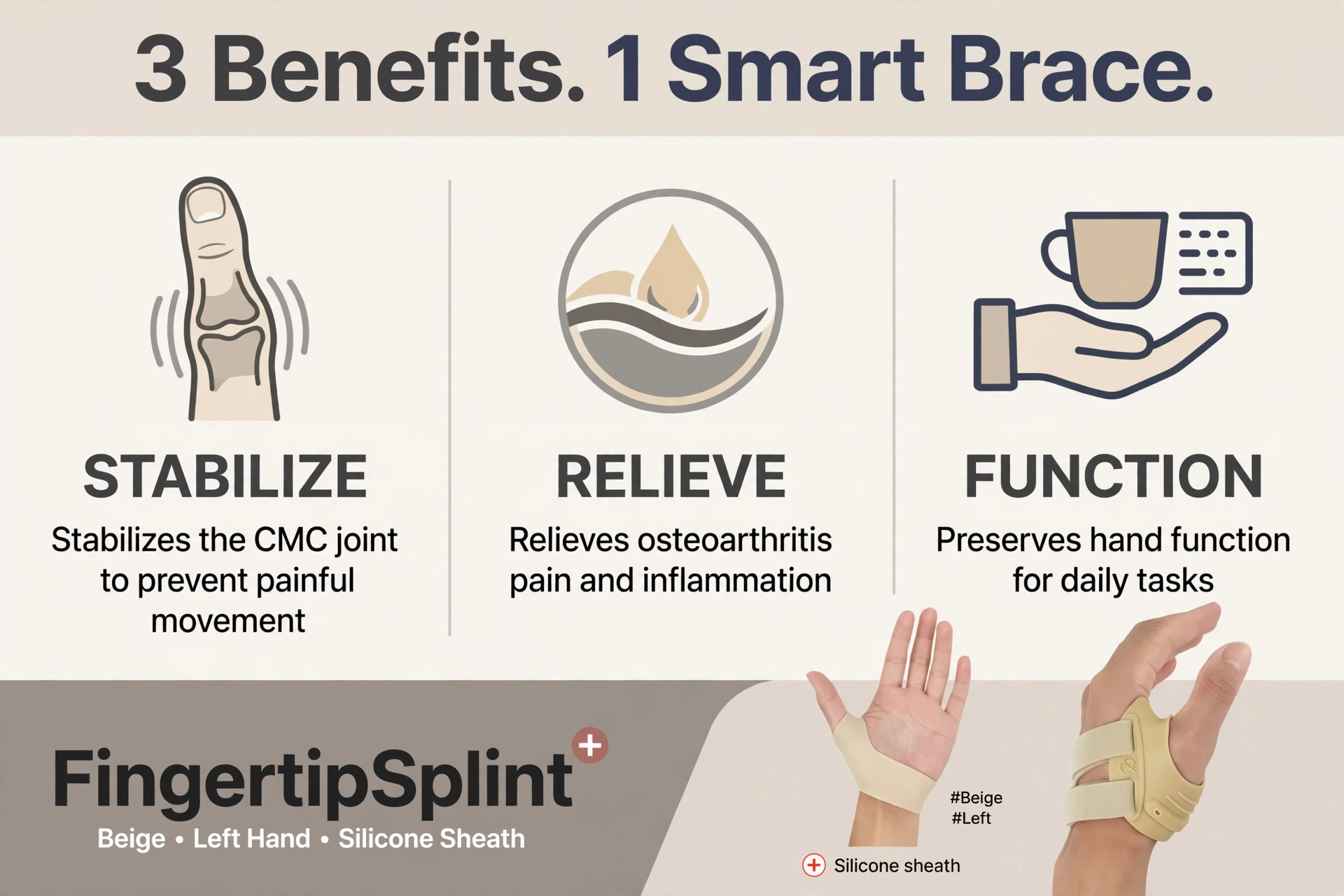
A CMC thumb brace wraps around the base of the thumb and applies gentle compression and support. Unlike a full thumb spica that may extend to the wrist and restrict more movement, a CMC-focused brace targets the specific joint that needs support.
Stabilizing the Joint
The brace’s shape and contact around the thumb base help stabilize the CMC joint during movement. This can reduce the load on the joint and limit certain aggravating motions.
Limiting Selected Movements
Depending on the design, the brace may limit movements that provoke pain — such as certain pinching or gripping motions. The amount of restriction depends on the brace’s construction and fit.
Supporting the Joint, Not the Whole Thumb
A CMC-focused brace supports the joint at the base of the thumb but leaves the rest of the thumb and fingers free to move. This distinction matters for readers who worry that support will mean loss of function.
According to the American College of Rheumatology / Arthritis Foundation guideline, hand orthoses are one option in the management of first CMC osteoarthritis. The appropriate design and wearing schedule depend on individual needs and professional guidance.
How a Brace May Preserve Useful Hand Function
A well-fitted CMC brace is designed to support the joint without taking away the hand function you need. Here is how that works in everyday activities.
Writing and Typing
Because the fingers remain free, some people can continue writing and typing while wearing a CMC brace. However, the brace may feel bulky or awkward at first. Testing comfort and dexterity is important before relying on it for these tasks.
Cooking and Meal Preparation
Holding utensils, stirring, or lifting light objects may be possible with a CMC brace. Heavier tasks — such as lifting a full pan — may still be uncomfortable or require modification.
Phone Use
Holding a phone with a CMC brace may be possible, but the brace’s bulk may make it less comfortable. Some people prefer to switch hands or use a phone stand.
Buttoning and Dressing
Fine motor tasks like buttoning clothing can be challenging with a brace. The fingers remain free, but the thumb’s movement may be limited. Testing these activities before relying on the brace is recommended.
For a closer look at how a CMC brace supports daily activities, the article on CMC thumb brace for osteoarthritis and daily activities covers practical use in more detail.
Explore Support and Movement
Select an area below to learn about its role and support considerations.
CMC Brace vs. Full Thumb Spica: Which Preserves More Movement?
Not all thumb braces are the same. Here is how a CMC-focused brace compares to other common options.
| Support Type | Movement Allowed | Consider It When |
|---|---|---|
| CMC-focused brace | Fingers and wrist mostly free | Mild to moderate CMC joint pain; functional movement is important |
| Full thumb spica | Thumb and sometimes wrist restricted | More severe symptoms or post-injury recovery |
| Rigid splint | Significant restriction | Acute injury or conditions requiring immobilization |
| Activity modification | No device; changes how tasks are performed | Mild symptoms or as a complement to bracing |
No single brace design is universally superior. The right choice depends on the condition, symptoms, and the activities you need to perform. According to a systematic review of thumb osteoarthritis orthoses, different brace designs can have different effects, and the choice should be guided by individual needs.
Choosing a CMC Thumb Brace for Everyday Use
Choosing the right brace requires matching the design to your symptoms and the activities you need to perform.
Joint Coverage
Does the brace cover the CMC joint at the base of the thumb? Check the product description and images to confirm coverage.
Sizing and Hand Orientation
Choose a size that matches your hand measurements. Confirm whether the brace is designed for the left hand, right hand, or both.
Material and Closure
Check the material for comfort and skin compatibility. Look for an adjustable closure that allows you to customize the fit.
Finger Mobility
Does the brace leave the fingers free? For readers who want to retain hand function, this is an important feature.
Ease of Adjustment
Can you adjust the brace throughout the day? A brace that is difficult to adjust may end up too tight or too loose.
The 1PCS CMC Thumb Brace for Osteoarthritis is one option to evaluate. Check its coverage, sizing, and adjustability against your needs.
How to Fit and Test a Brace Without Compromising Comfort
Proper fitting and testing are essential. Follow this step-by-step process based on the product’s design and the manufacturer’s instructions.
Step 1: Confirm the correct hand and size. Verify that the brace is designed for your hand and that the size matches your measurements.
Step 2: Position the brace. Follow the manufacturer’s placement instructions. The brace should sit over the CMC joint at the base of the thumb.
Step 3: Fasten securely. The brace should feel secure but not tight. You should be able to move your fingers freely.
Step 4: Check for warning signs. Look for numbness, tingling, redness, or changes in finger colour or temperature. If any of these occur, loosen or remove the brace.
Step 5: Test a simple task. Try holding a light object or typing a short message. If the brace causes discomfort or makes the task harder, adjust the fit or reassess the brace’s suitability.
Common Mistakes That Make a Thumb Brace Feel Restrictive
Some mistakes can turn a helpful brace into a frustrating one. Here are the most common ones.
A brace that is too small or too large will not fit correctly and may restrict movement unnecessarily.
Solution: Measure according to the manufacturer’s size guide.
A brace that is too tight can compress nerves and blood vessels, causing numbness or tingling.
Solution: Adjust the fit so it feels secure but not tight.
If the brace does not sit over the CMC joint, it may not provide effective support and may restrict movement elsewhere.
Solution: Follow the manufacturer’s placement instructions.
A more rigid brace may be appropriate for some conditions but can be overly restrictive for others.
Solution: Match the brace’s design to your symptoms and activities.
Using the brace differently than intended can reduce its effectiveness and increase discomfort.
Solution: Follow the product’s instructions for use and care.
A brace is not permission to push through pain. Doing so may worsen symptoms.
Solution: Modify or pause activities that cause pain and seek advice if symptoms persist.
If symptoms persist or worsen, professional assessment is the right next step. According to NHS guidance on arthritis, persistent joint symptoms should be evaluated by a healthcare professional.
When to Seek Advice From a Doctor or Hand Therapist
A CMC thumb brace is a support tool, not a treatment. There are situations where professional advice is essential.
Seek medical advice if you experience:
- Persistent or worsening pain
- Recent injury
- Significant swelling or deformity
- Reduced hand function
- Uncertainty about the cause of your symptoms
- Numbness, tingling, or changes in hand colour or temperature
For more information on arthritis and joint care, MedlinePlus provides reliable patient education resources. A hand therapist can also help fit a brace and recommend the right design for your needs.
Explore the 1PCS CMC Thumb Brace for Osteoarthritis
If thumb-base pain is making daily tasks harder, review the 1PCS CMC Thumb Brace, check its coverage and fit details, and decide whether its design matches your support and movement needs. For more options, browse our full hand and thumb support range.
View the Product Browse All ProductsFrequently Asked Questions
Some CMC brace designs leave the fingers free, allowing you to use them for many everyday tasks. However, comfort and function vary by fit, design, and individual needs. Check the product description and test the brace during low-risk activities before relying on it for all tasks.
Yes, to some degree. The brace may restrict selected movements to support the joint, but the amount varies by construction. A more rigid brace restricts more movement, while a flexible brace allows more. The right balance depends on your symptoms and needs.
Some people can perform these tasks while wearing a brace, but they should test comfort and dexterity without forcing painful movements. If the brace makes typing or phone use more difficult, consider removing it for those tasks or adjusting the fit.
Hand orthoses are one option in the management of first CMC osteoarthritis, but results are not guaranteed and a brace does not cure arthritis. A brace may help support the joint and reduce discomfort, but it is typically used as part of a broader management plan.
It should feel secure but not painful. You should be able to move your fingers freely, and you should not experience tingling, numbness, or changes in finger colour or temperature. If any of these occur, adjust the fit or remove the brace.
Wear schedules depend on the product instructions, your symptoms, and professional recommendations. Some people wear a brace during activities that provoke symptoms, while others wear it more continuously. Follow your clinician’s guidance rather than assuming all-day wear is appropriate.
Check the fit and positioning first. If the brace is too tight or not positioned correctly, adjust it. If the brace continues to feel stiff or uncomfortable, or if symptoms worsen, seek advice from a healthcare professional or hand therapist.
Conclusion: Support and Function Can Work Together
A CMC thumb brace is designed to support the joint at the base of the thumb without taking away the hand function you rely on every day. A well-fitted brace may reduce discomfort during gripping and pinching while keeping the fingers and wrist free for many tasks.
Use this guide as a framework: understand the joint, identify your symptoms, review the product’s actual specifications, choose a brace that fits your hand and your needs, and test it carefully during low-risk activities. Stop using the brace if it causes pain or irritation, and seek professional advice if symptoms persist.
For readers who want to explore support products, the FingerTipSplint shop offers a selection. For more hand-care education, visit the FingerTipSplint blog. For personalized assistance, you can request a quote or review the frequently asked questions.
Your hands carry you through everything. Choosing the right support — and knowing when to seek professional advice — is part of caring for them well.