
When a finger will not straighten comfortably, everyday tasks can become unexpectedly difficult. Typing, dressing, gripping, and holding small objects all require the fingers to move through their normal range. If a finger remains bent, feels stiff, or struggles to straighten, you may be wondering whether a finger straightener orthosis could help. The answer depends on why the finger is bending and what type of positioning it needs. This guide explains what a finger straightener orthosis is, the features that matter, how to use one safely, and when professional guidance is essential. For a broader view of finger support options, explore the full FingerTipSplint range.
Table of Contents
- When Might You Need a Finger Straightener Orthosis?
- What Is a Finger Straightener Orthosis?
- Key Features of a Finger Straightener Orthosis
- How Does a Finger Straightener Orthosis Work?
- Using a Finger Straightener Orthosis in Daily Life
- Who May Benefit From Finger Straightening Support?
- How to Choose the Right Size and Fit
- How to Wear and Care for a Finger Straightener Orthosis
- Common Mistakes When Using a Finger Straightener
- Finger Straightener Orthosis vs. Other Devices
- What to Check Before Buying
- Frequently Asked Questions
A finger straightener orthosis is a device designed to support a finger in a straighter or prescribed position. Its purpose depends on the design and the condition being treated. Some orthoses limit movement to protect an injury, while others help maintain positioning. Correct fit, appropriate wear instructions, and professional guidance are important for safe use.
When Might You Need a Finger Straightener Orthosis?
A finger straightener orthosis may be considered when a finger struggles to maintain a straighter position or when positioning support is needed for a specific condition. But a bent finger does not always have the same cause.
Common Situations
- Difficulty maintaining a finger in a straighter position — the finger may droop or curl, affecting daily tasks.
- Stiffness following an injury or reduced movement — prolonged immobilization can lead to stiffness.
- Conditions affecting tendons, joints, or finger alignment — such as mallet finger or trigger finger.
- Interference with typing, dressing, gripping, or other routine activities — the bent finger may make these tasks harder.
Why the Cause Matters
A finger that suddenly becomes bent or cannot straighten needs assessment rather than an immediate online purchase. Mallet finger affects the fingertip joint and may require a specific splinting protocol. Trigger finger may cause catching or locking during movement. Their management differs. For more information, see the NHS guide on mallet finger and the NHS guide on trigger finger.
What Is a Finger Straightener Orthosis?
An orthosis is an external device used to support, position, or control movement in a body part. A finger straightener orthosis is designed to help hold or guide a finger toward a specified position, depending on the device.
Three Broad Designs
- Static orthosis: Maintains a selected position and may restrict movement.
- Dynamic extension orthosis: Uses a mechanism such as a spring to assist a prescribed direction of movement.
- Adjustable positioning orthosis: Allows some adjustment to fit or positioning, depending on its construction.
Not Every Straightener Is the Same
Not every product advertised as a finger straightener is appropriate for every condition. The correct design depends on which joint is affected, the diagnosis, and whether the goal is protection, positioning, or assisted movement. According to the Cleveland Clinic guide to finger splints, different splint designs serve different purposes.
Key Features of a Finger Straightener Orthosis
The features of a finger straightener orthosis affect comfort, fit, and daily usability. Here is what to look for.
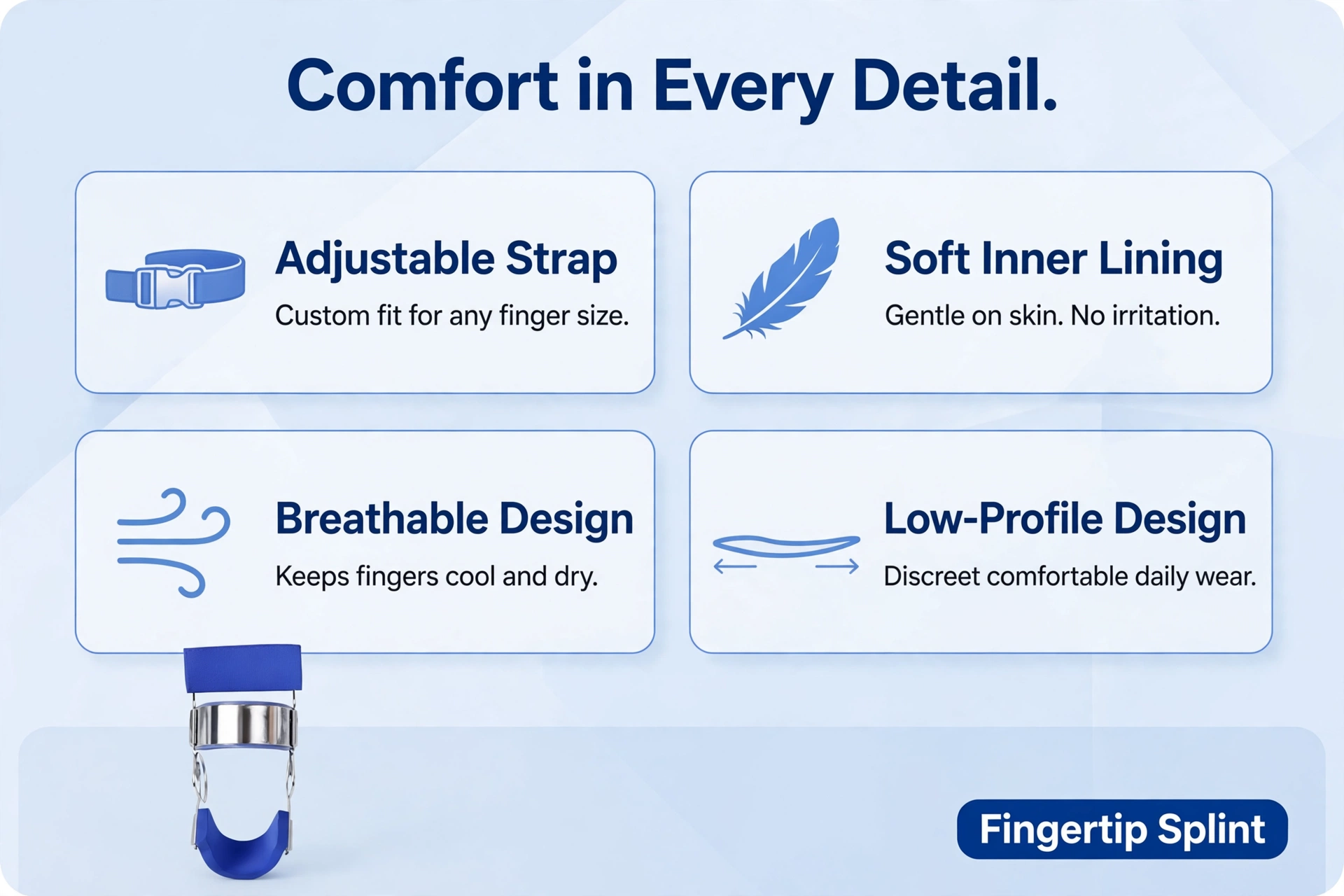
Adjustable Fit
Adjustability may help accommodate differences in finger size and positioning. Adjustment should not create excessive pressure or force a finger into an unsuitable position.
Comfort and Skin Contact
Check padding, edges, straps, and pressure points, especially when a device is worn for extended periods as prescribed. Rough edges or tight straps can cause irritation.
Support and Positioning Design
The support structure should match the intended joint and positioning goal. More rigid support is not automatically better — the design should match the specific need.
Everyday Practicality
Consider ease of putting on and removing the device when permitted, compatibility with approved activities, and whether the design interferes with necessary hand tasks.
Other Features to Assess
- Cleaning instructions
- Durability
- Fastening security
- Sizing information
- Clear product instructions
Explore the Finger Straightener Orthosis
Select an area below to learn about its role and safety considerations.
How Does a Finger Straightener Orthosis Work?
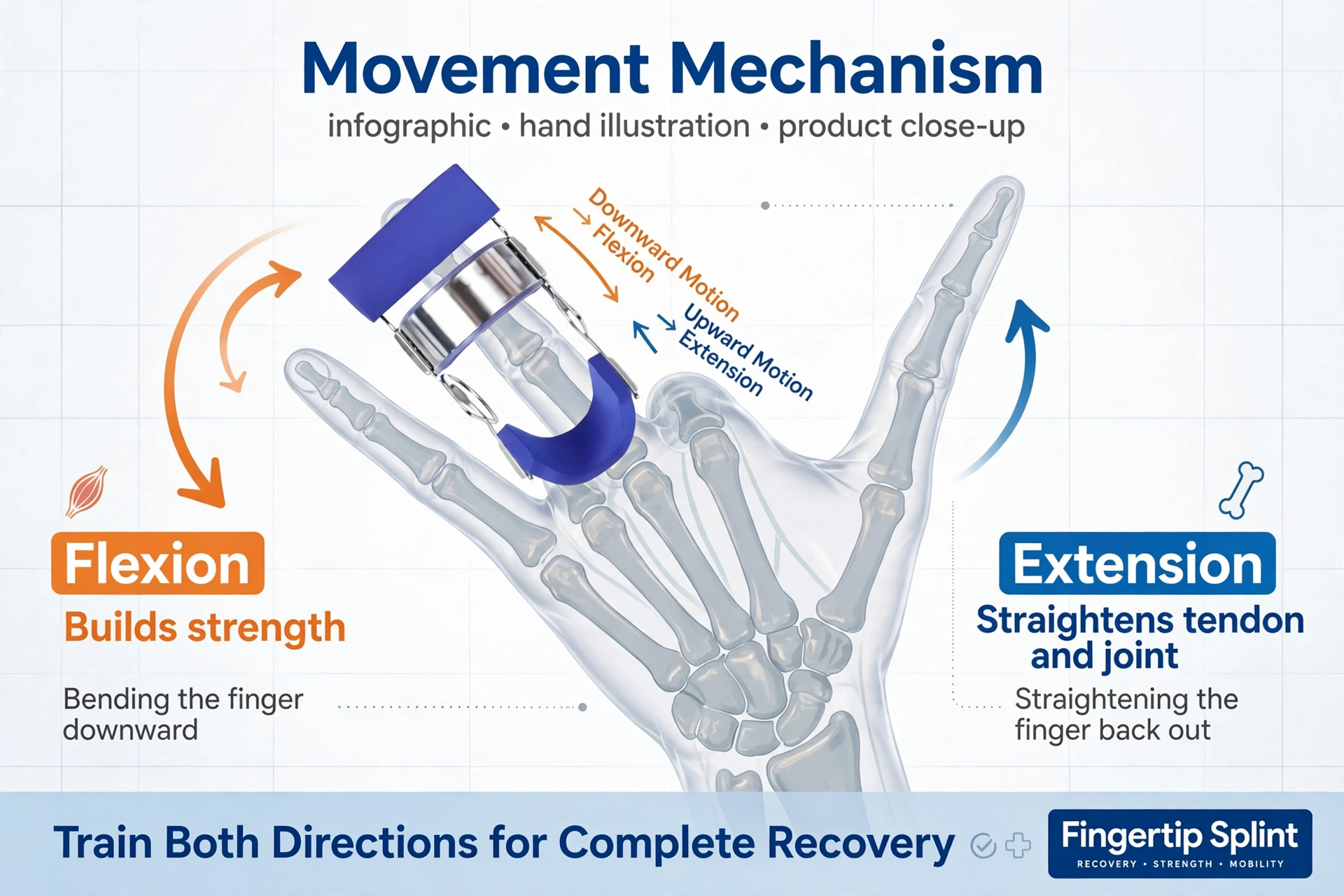
The mechanism of a finger straightener orthosis is straightforward: the device contacts selected parts of the finger to help maintain or guide a chosen position.
Extension vs. Flexion
Extension refers to straightening a joint. Flexion refers to bending it. A finger straightener orthosis is designed to support extension or positioning — it does not necessarily correct deformity permanently.
Static vs. Dynamic Designs
- Static: Holds a joint still when protection or positioning is needed.
- Dynamic: Provides gentle assistance toward a prescribed movement.
Matching the Joint and Goal
An orthosis must be selected for the joint and treatment goal, not simply because the finger looks bent. The knuckle, middle joint, and fingertip joint are different and require different support.
Using a Finger Straightener Orthosis in Daily Life
Daily use depends on the reason for wearing the orthosis. Some injury-specific splints must remain in place as directed; others may be removed for certain activities. Here is how different activities may be affected.
Typing and Phone Use
The orthosis may limit movement or make contact with devices. Check whether the design interferes with these tasks.
Dressing and Personal Care
Fastening clothes and handling small objects may be more challenging. Plan around these tasks as needed.
Light Household Tasks
Consider grip, friction, and whether the activity is permitted. Avoid tasks that could dislodge or damage the device.
Work and Study
Check whether the device interferes with writing, keyboard use, or tools.
Sleep and Rest
Wear overnight only if the device’s instructions or clinician’s advice specify it. Do not improvise a wear schedule.
Who May Benefit From Finger Straightening Support?
Not every person with a bent finger should buy a straightener. The suitability of a straightener depends on the cause of the finger’s position.
| Concern | What Readers Should Understand |
|---|---|
| Fingertip drooping after injury | Mallet finger may need a specific treatment plan and strict positioning instructions. |
| Finger stiffness | The appropriate balance of positioning and movement depends on the cause. |
| Difficulty straightening a joint | A clinician may need to assess the joint, tendon function, and possible contracture. |
| Triggering or locking | A straightener is not automatically the right treatment; trigger finger has different management options. |
| Arthritis-related changes | Support may help with a selected functional goal, but it does not reverse arthritis. |
How to Choose the Right Size and Fit
A properly sized and fitted orthosis is essential for comfort and effectiveness. Follow this checklist before purchasing.
- Identify which finger and joint need support.
- Read the manufacturer’s sizing and measurement instructions.
- Confirm whether the device is designed for the right or left hand, if relevant.
- Check how the orthosis fastens and whether it can be secured without excessive pressure.
- Confirm that the design matches the intended purpose and the clinician’s recommendations.
- Review cleaning instructions, return conditions, and the seller’s product specifications.
How to Wear and Care for a Finger Straightener Orthosis
Safe use and proper care are essential. Follow this step-by-step sequence, adapting it to the specific device instructions.
Step 1: Read the device-specific instructions before fitting.
Step 2: Position the orthosis as directed; do not force the finger into a straighter position.
Step 3: Fasten it securely without overtightening.
Step 4: Check the skin, comfort, sensation, and finger colour.
Step 5: Follow the prescribed wear schedule and restrictions on movement.
Step 6: Clean and dry the device according to its material and manufacturer guidance. Reassess fit if swelling changes or the device starts rubbing or slipping.
Common Mistakes When Using a Finger Straightener
Some mistakes can harm comfort or delay appropriate care. Here are the most common ones.
A device designed for one condition may not be appropriate for another.
Solution: Understand why the finger is bending before selecting a straightener.
Static, dynamic, and protective splints serve different purposes.
Solution: Match the device to the intended purpose and joint.
Excessive pressure can cause numbness, tingling, or circulation problems.
Solution: Fasten the device securely but not tight.
Forcing movement can cause pain and injury.
Solution: Follow the prescribed position and seek advice if the finger cannot be comfortably positioned.
Some injuries require strict immobilization and specific positioning.
Solution: Follow clinical instructions rather than improvising.
Worsening pain, numbness, or skin irritation require reassessment.
Solution: Stop and seek medical advice.
For certain injuries, the exact position and continuity of splint wear are important, so generic online advice should not replace clinical instructions.
Finger Straightener Orthosis vs. Other Finger Support Devices
Devices are often described using similar terms. Compare by function, not by marketing name.
| Device Type | Typical Purpose | What to Check |
|---|---|---|
| Finger straightener orthosis | Supports a prescribed straighter or selected position | Which joint it supports and whether movement is restricted |
| Protective finger splint | Protects or immobilizes a particular area | Injury-specific instructions and fit |
| Dynamic extension orthosis | Assists a selected movement | Appropriate fitting and prescribed movement range |
| Finger training brace | May guide, assist, or support movement depending on design | Intended movement and joint coverage |
A product described as a “straightener” may not be suitable for every type of finger deformity, and a device that supports movement may not protect a fresh injury. For more context on finger exerciser splint benefits, the article on finger exerciser splint uses and benefits provides additional information.
What to Check Before Buying a Finger Straightener Orthosis
If you are considering a finger straightener orthosis, the 1PCS Finger Exerciser Splint from FingerTipSplint is one product to investigate. This guide does not claim that it treats every finger condition or guarantees straightening. What it offers is a design intended to support finger positioning or movement.
Before purchasing, review the following:
- Current product photos: Do they show the actual design clearly?
- Sizing information: Does the product provide sizing guidance?
- Fastening design: How does the orthosis stay in place?
- Intended use: What is the device designed to do?
- Instructions: Does the product explain fitting, wear, and care?
For additional options, browse the FingerTipSplint shop or review the frequently asked questions.
Explore the Finger Exerciser Splint
Review the 1PCS Finger Exerciser Splint, check its design and intended use, and decide whether it matches your finger support needs.
View the Product Browse All ProductsFinger Straightener Orthosis FAQs
A finger straightener orthosis is used to support a finger in a straighter or prescribed position. Its purpose depends on the design and the condition being treated. Some orthoses limit movement to protect an injury, while others help maintain positioning.
Not exactly. An orthosis is a broader term for a device that supports, positions, or controls movement. A finger splint is a type of orthosis. Some splints are designed to straighten a finger, while others protect an injury or restrict movement.
It may help maintain or guide a straighter position, but the cause of the bending and the required correction matter. A brace does not guarantee permanent straightening. Some conditions require specific treatment, so professional assessment is recommended.
This depends on the device and your treatment plan. Some orthoses may interfere with typing or work tasks. Check whether the design allows the activities you need to perform. If the device interferes or causes discomfort, adjust the fit or consult your clinician.
This depends on the device and your condition. Some orthoses are designed for nighttime use, while others are intended for specific activities. Follow the manufacturer’s instructions and your clinician’s guidance rather than assuming overnight wear is appropriate.
A properly fitted orthosis should feel secure without causing numbness, tingling, or skin irritation. Check the skin, sensation, and finger colour after fitting. If the device slips, rubs, or causes discomfort, adjust the fit or seek advice.
Seek medical advice for persistent or worsening stiffness, a finger that suddenly cannot straighten after injury, deformity, severe pain, or loss of sensation. These symptoms require professional assessment to identify the cause and appropriate treatment.
Choose Finger Support for Your Specific Needs
The design of a finger orthosis determines what it can support. Fit, comfort, and correct use are important for daily practicality. The reason a finger will not straighten should be understood before selecting a device.
Use this guide as a framework: understand why your finger is bending, review the product’s actual specifications, choose a device that matches your needs, and follow professional guidance for use. Stop using the orthosis if it causes pain or irritation, and seek professional advice if symptoms persist.
For readers who want to explore support products, the FingerTipSplint shop offers a selection. For more hand-care education, visit the FingerTipSplint blog. For personalized assistance, you can request a quote or review the frequently asked questions.
Your hands carry you through everything. Choosing the right support — and knowing when to seek professional advice — is part of caring for them well.