
Description
Finger Exerciser Splint – 1PCS Spring-Loaded Finger Joint Training and Exercise Support Brace
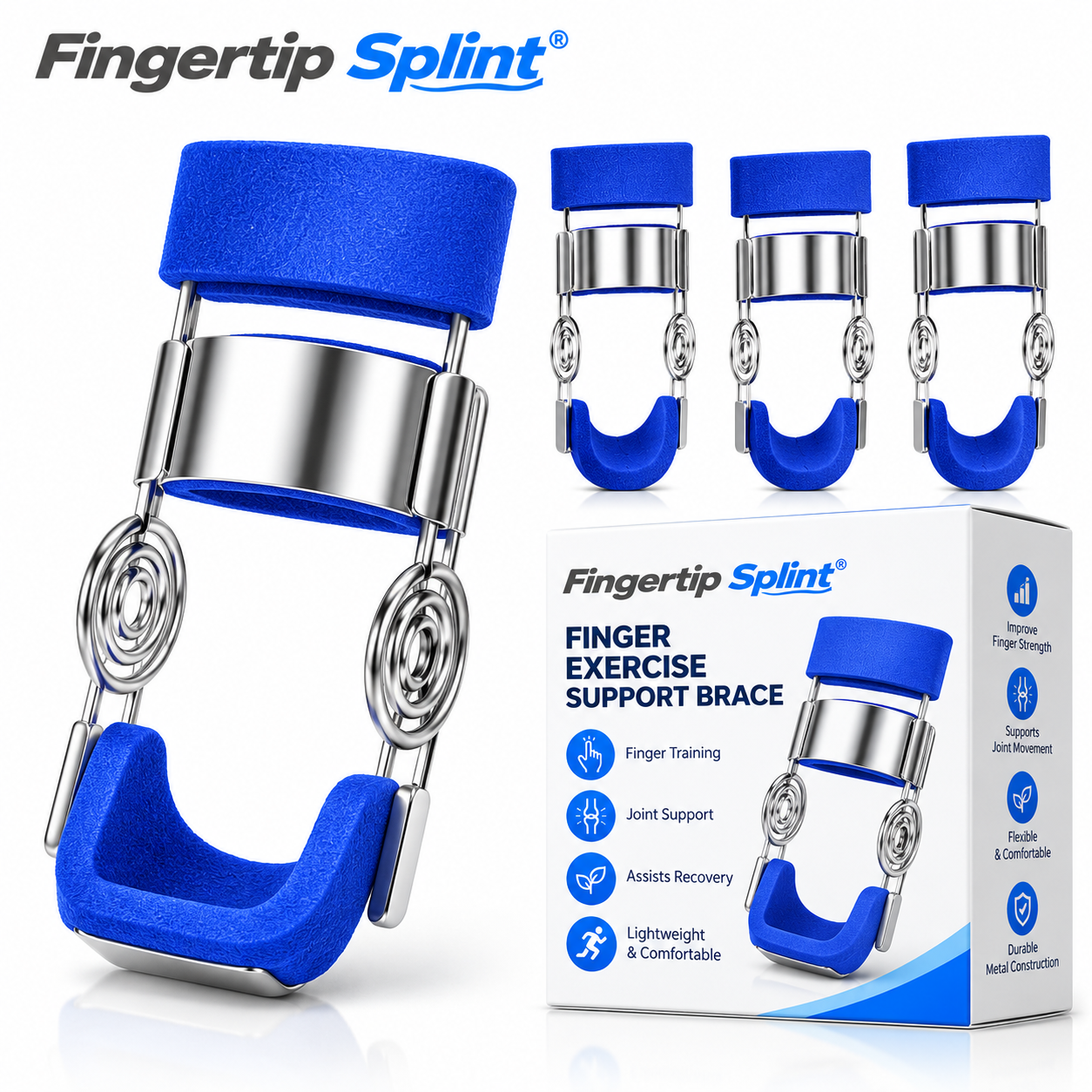
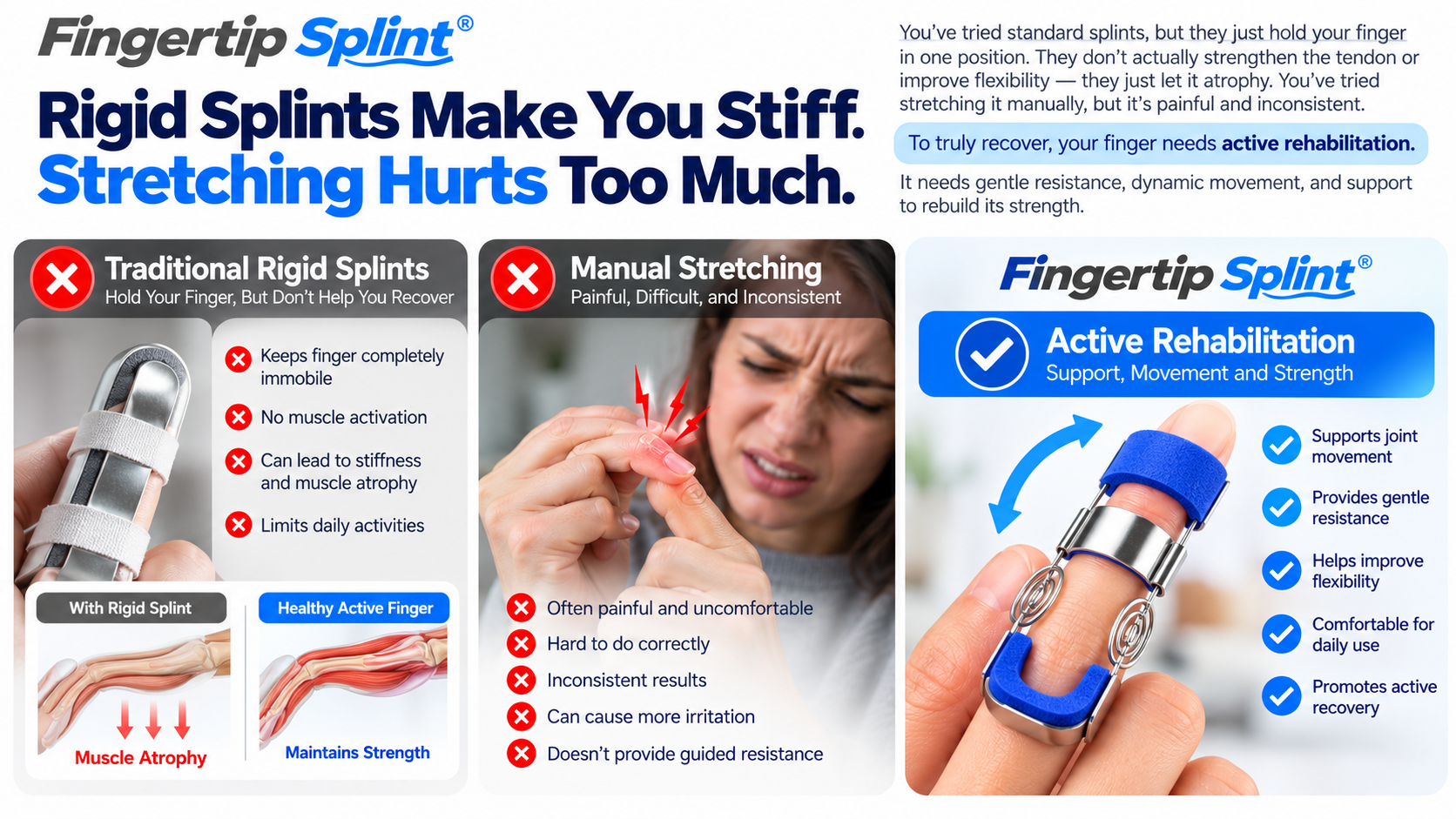
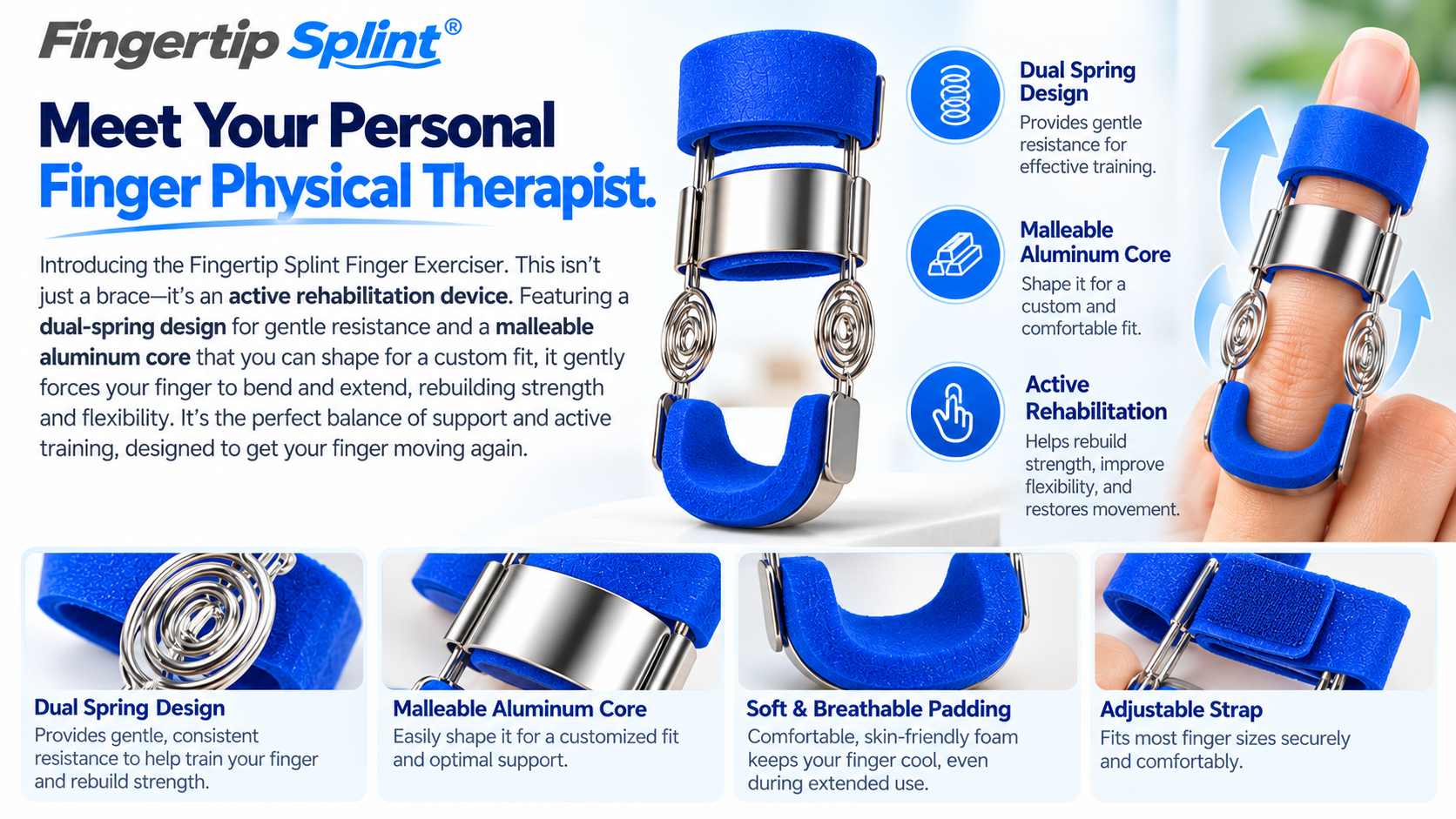
Discover the Fingertip Splint Finger Exerciser Splint, a compact, spring-loaded finger orthosis featuring a structured metal frame, dual coil springs and blue cushioned finger contact points. Designed for controlled finger positioning and movement exercises, this single-finger support accessory offers a different approach from conventional static finger splints.
The finger exerciser may be considered for professionally guided finger movement training where the device’s spring action, fitting dimensions and direction of assistance or resistance are appropriate. Unlike a basic rigid splint that maintains a fixed position, this design incorporates a spring mechanism that can apply force during finger movement.
Finger conditions vary considerably. The appropriate orthosis for stiffness, tendon injury, trigger finger or post-surgical care depends on the diagnosis and treatment plan. This product should not be used as a universal treatment or rehabilitation device without confirming its suitability.
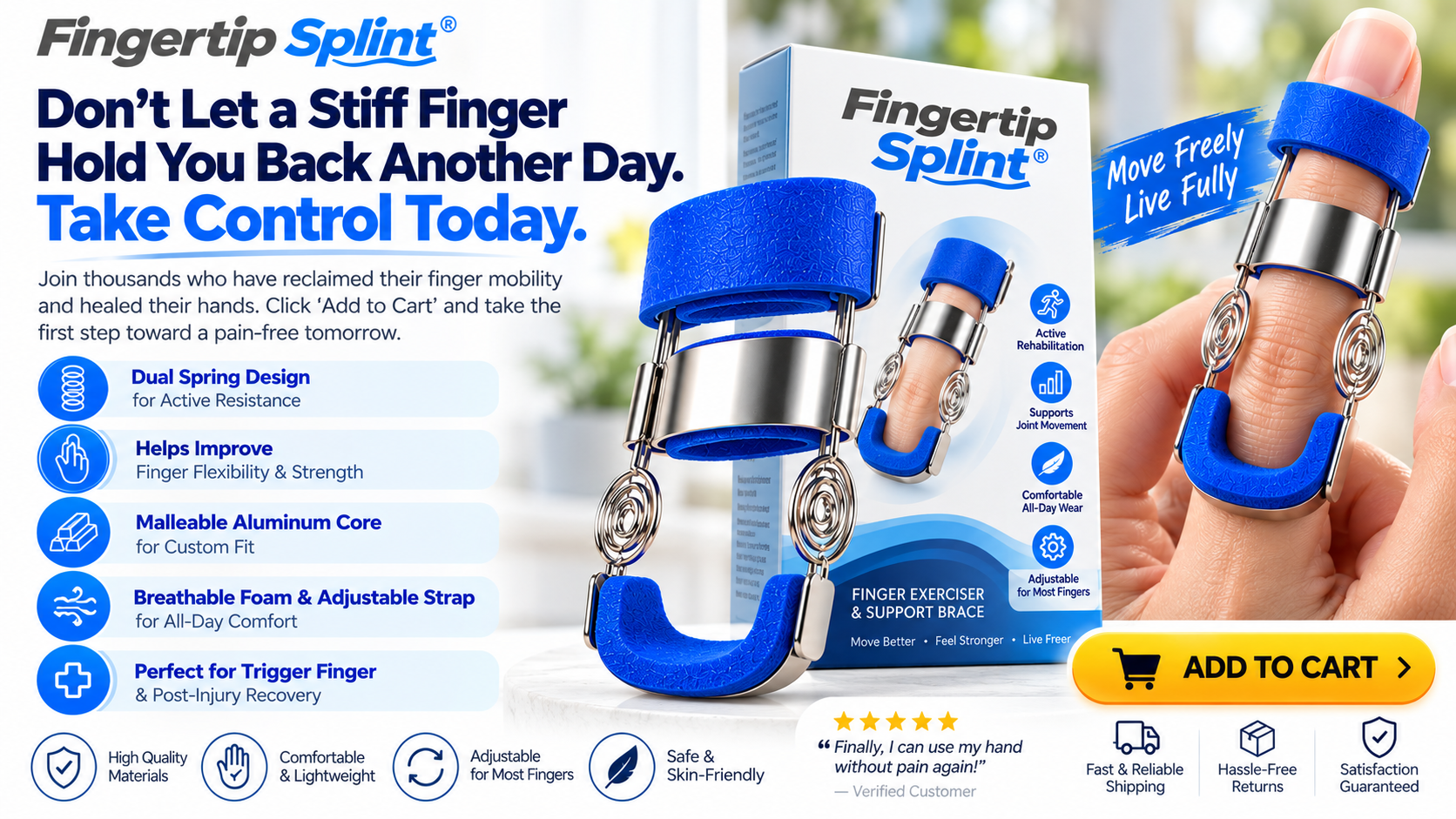
Finger Exerciser Splint Comparison: Fingertip Splint vs. Other Finger Support Devices
Finger splints and exercise devices are designed for different purposes. A dynamic spring-loaded orthosis is not necessarily a replacement for a rigid immobilization splint, an elastic finger sleeve or a handheld grip trainer.
The following comparison uses general product categories rather than unsupported claims about a particular competitor.
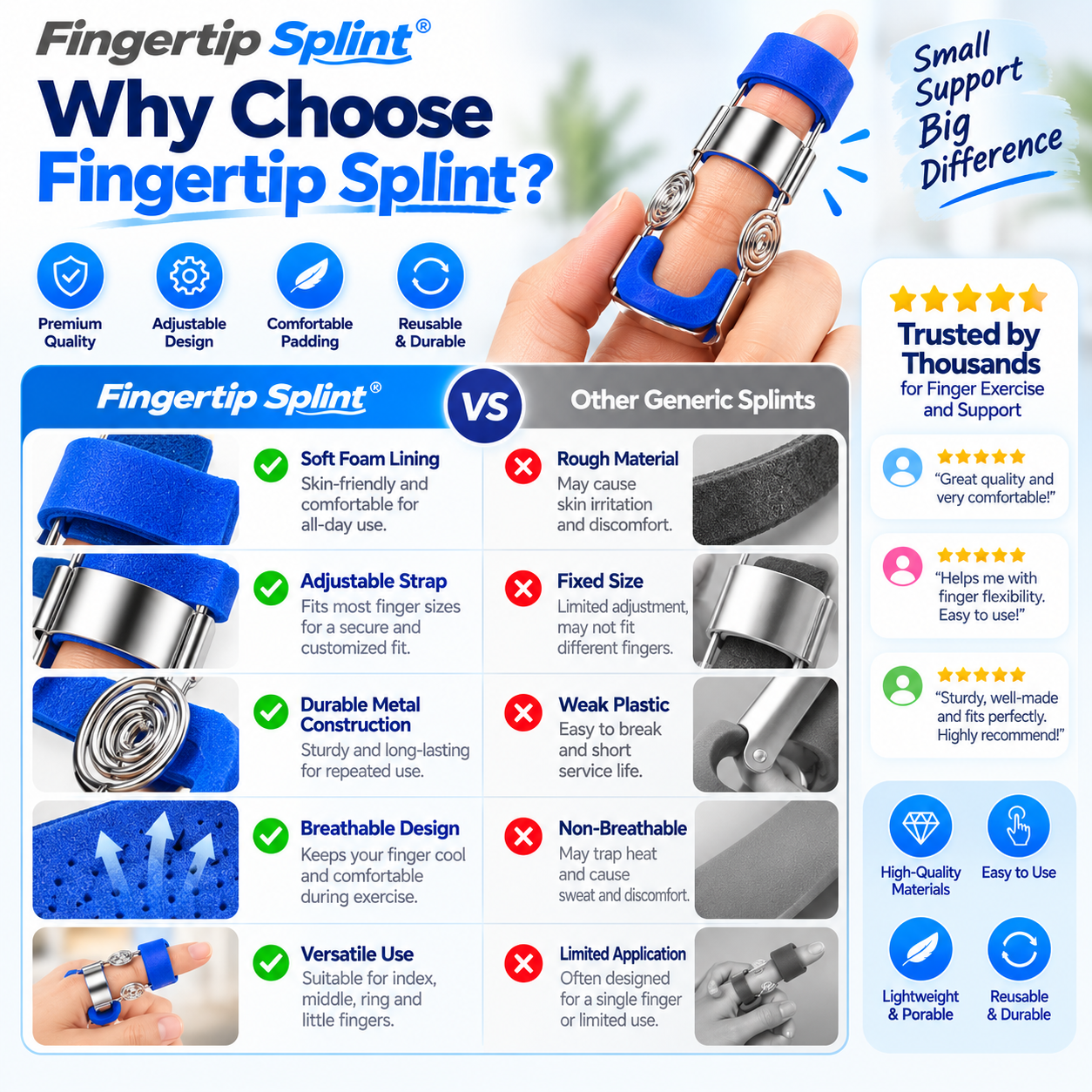
| Feature | Fingertip Splint Finger Exerciser | Generic Static Finger Splint | Elastic Finger Sleeve | Hand Grip Trainer |
|---|---|---|---|---|
| Main Design | Spring-loaded finger orthosis | Fixed-position support | Flexible compression sleeve | Hand exercise accessory |
| Primary Area | Selected finger | Selected finger or joint | Covered finger area | Hand and multiple fingers |
| Spring Mechanism | Two visible coil springs | Usually absent | Absent | Varies by trainer |
| Finger Positioning | Structured contact supports | Fixed or restricted position | Minimal structural positioning | Generally not an orthosis |
| Movement During Use | Movement depends on spring action and correct fitting | Often restricted | Usually permitted | Active hand movement |
| Cushioned Contact Points | Blue padded supports | Varies by model | Fabric contact | Varies by model |
| Best Selection Criterion | Correct spring force, fit and movement direction | Correct immobilization position | Appropriate compression and fit | Suitable exercise resistance |
| Important Limitation | Not suitable for every injury or exercise program | Does not provide dynamic movement | Limited structural support | Does not position a specific finger joint |
Comparison note: The correct orthosis depends on the condition and treatment goal. Static immobilization is medically necessary in some circumstances, while controlled movement is appropriate in others.
Finger Exerciser Splint Product Specifications
| Specification | Product Details |
|---|---|
| Brand | Fingertip Splint |
| Product Name | 1PCS Finger Exerciser Splint |
| Product Type | Spring-loaded finger exercise support orthosis |
| Spring Construction | Dual visible metal coil springs |
| Frame | Structured metal components |
| Contact Supports | Blue cushioned finger contact points |
| Primary Color | Blue and metallic silver |
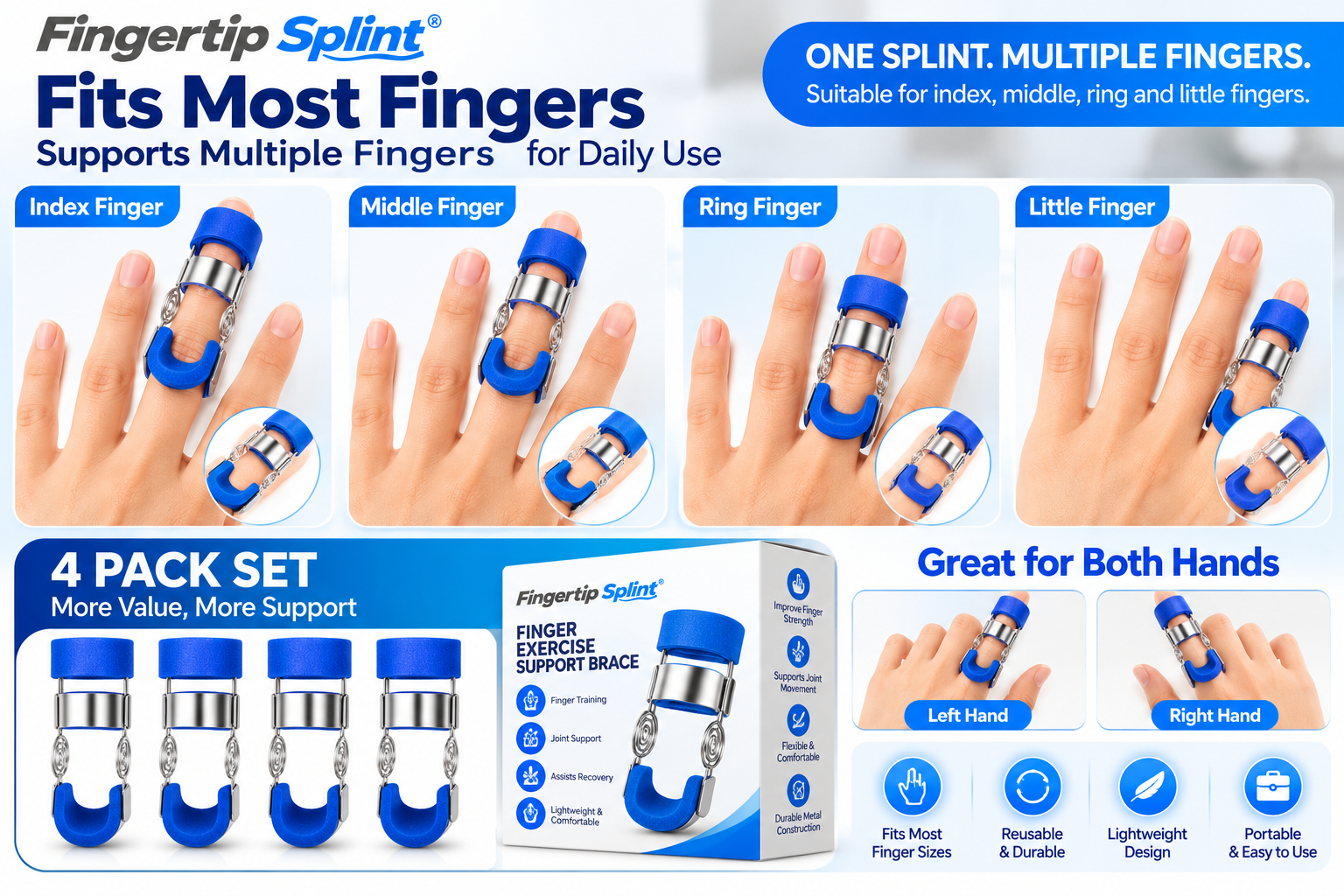
| Finger Coverage | One finger per device |
| Package Quantity | 1 piece, subject to supplier confirmation |
| Spring Resistance | Not specified |
| Assistance or Resistance Direction | Requires manufacturer verification |
| Metal Composition | Not verified |
| Cushion Composition | Not verified |
| Adjustment Mechanism | Confirm exact fitting and adjustment method |
| Compatible Fingers | Not verified for each finger |
| Available Sizes | Not provided |
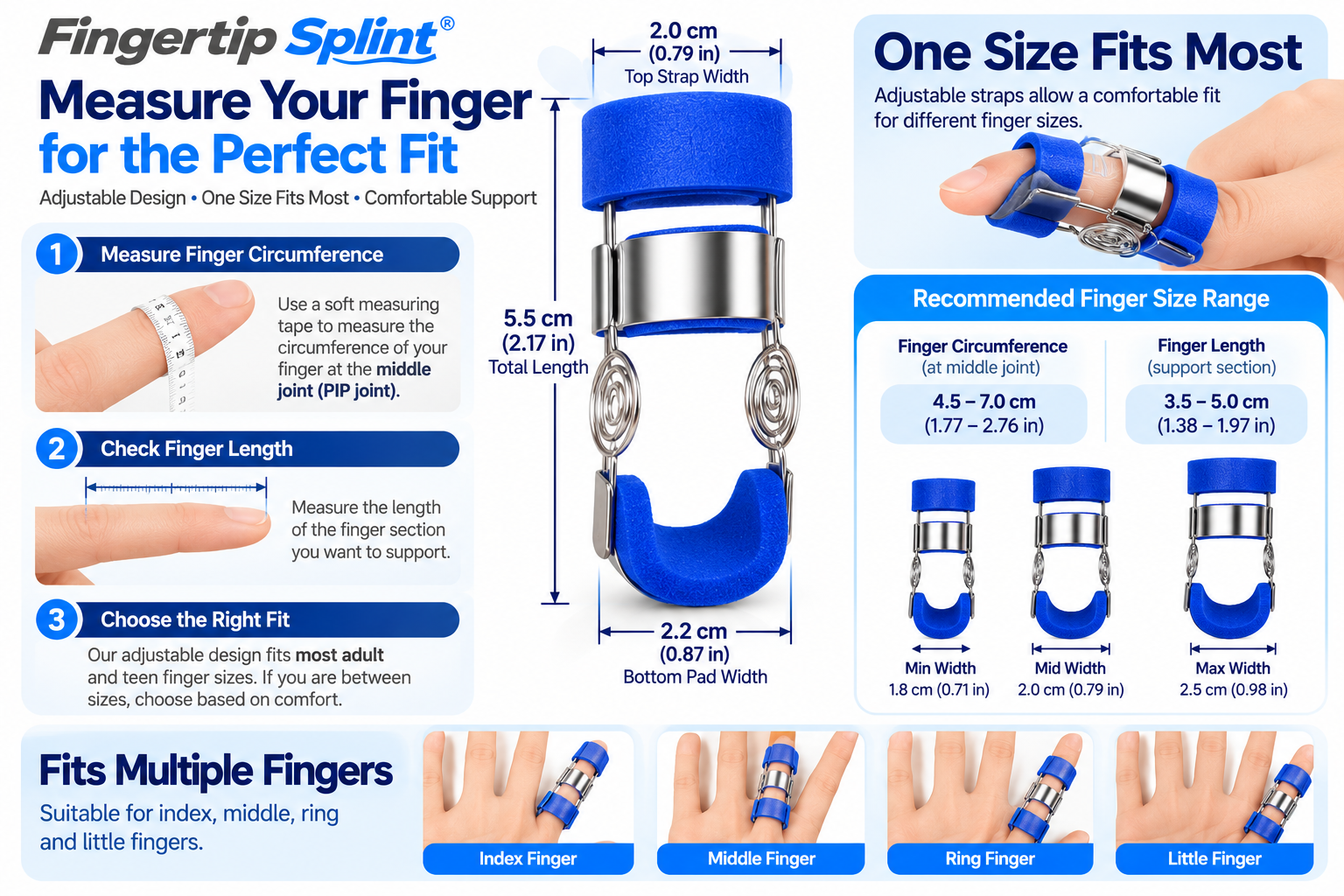
| Product Dimensions | Not provided |
| Product Weight | Not provided |
| Care Instructions | Follow verified manufacturer guidance |
| Intended Function | Controlled finger positioning and movement support when appropriate |
Specification verification: Do not advertise an aluminum core, medical-grade material, specific resistance level, universal finger compatibility or guaranteed recovery results until the supplier provides supporting documentation.
Product Details and Key Features of the Spring-Loaded Finger Exerciser
1. Dual-Spring Finger Support Mechanism
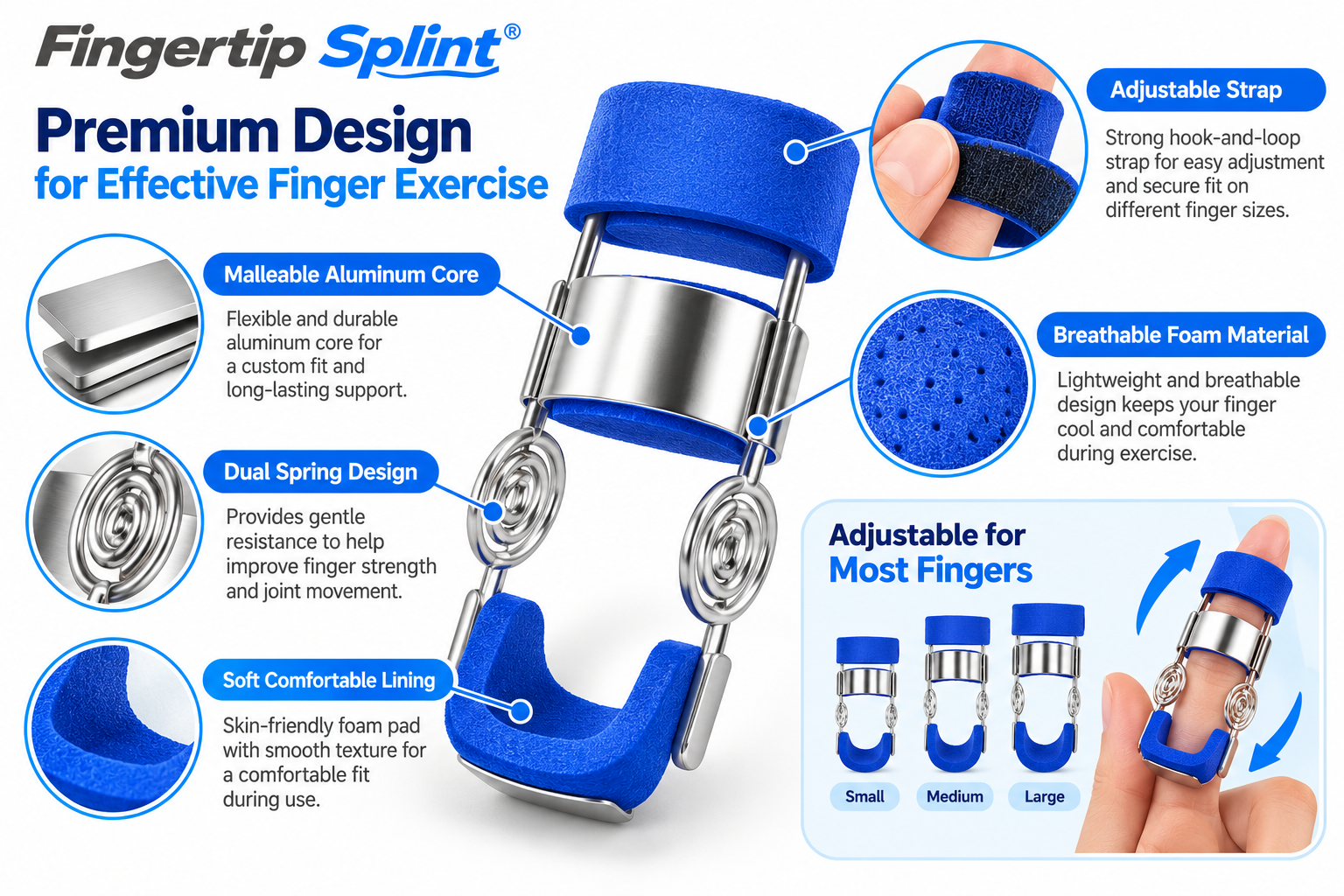
The finger exerciser features two visible coil springs located along the sides of its frame. These springs form part of the dynamic support mechanism and distinguish the device from a simple rigid finger splint.
2. Structured Metal Frame
The metal components connect the spring mechanism and the finger contact sections. Their shape helps position the device around the selected finger.
3. Blue Cushioned Finger Supports
Blue contact pads are positioned at the ends of the device. Their purpose is to provide contact areas between the frame and the finger.
4. Compact Single-Finger Construction
The product is designed to be fitted to one finger at a time. This focused construction differs from larger hand exercisers that engage several fingers simultaneously.
5. Dynamic Support Rather Than Static Immobilization
A dynamic orthosis uses a mechanical element, such as a spring, to apply force during positioning or movement. The direction and magnitude of that force are important to safe use.
6. Controlled Finger Movement Applications
Where clinically appropriate, a spring-loaded finger orthosis may be included in a structured hand therapy program. The exact exercise method should be selected by a qualified professional.
7. Finger Joint Positioning
The device’s contact supports help position the finger relative to the spring frame. Proper alignment is essential to avoid unwanted pressure or joint loading.
8. Finger Fit Considerations
Finger length, width, joint position and the distance between support points all influence fit. An unsuitable device can create pressure even when it appears to stay in place.
9. Contact Pressure Awareness
Spring-loaded supports can concentrate force at relatively small contact areas. Users should monitor the skin for redness, tenderness or pressure marks.
10. Spring Force Considerations
Higher resistance is not necessarily beneficial. Excessive force may aggravate an injured joint or tendon. Use only the force level appropriate for the prescribed exercise or positioning goal.
11. Finger Extension and Flexion
Finger movement includes flexion, which bends the finger, and extension, which straightens it. The spring mechanism must be assessed to determine which movement it assists or resists.
12. Potential Hand Therapy Accessory
The product may be relevant to hand therapy discussions, but it should not be described as a replacement for professional rehabilitation.
13. Metal Component Inspection
Inspect the coil springs and metal frame regularly for deformation, looseness, exposed edges or damage. Discontinue use if any component appears unsafe.
14. Cushioned Contact Point Maintenance
Keep the cushioned sections clean and intact. Damaged padding may increase friction or localized pressure against the finger.
15. Reusable Product Design
The product appears to have a reusable mechanical construction. Its service life depends on materials, maintenance and frequency of use.
16. Professional Exercise Planning
A clinician or certified hand therapist can determine whether spring-assisted positioning is appropriate and establish exercise duration, repetitions and progression.
How to Use the Finger Exerciser Splint – User Manual
Important: The following is a general fitting and safety guide, not a prescribed rehabilitation program. Confirm the device’s intended movement direction and spring force before exercising.
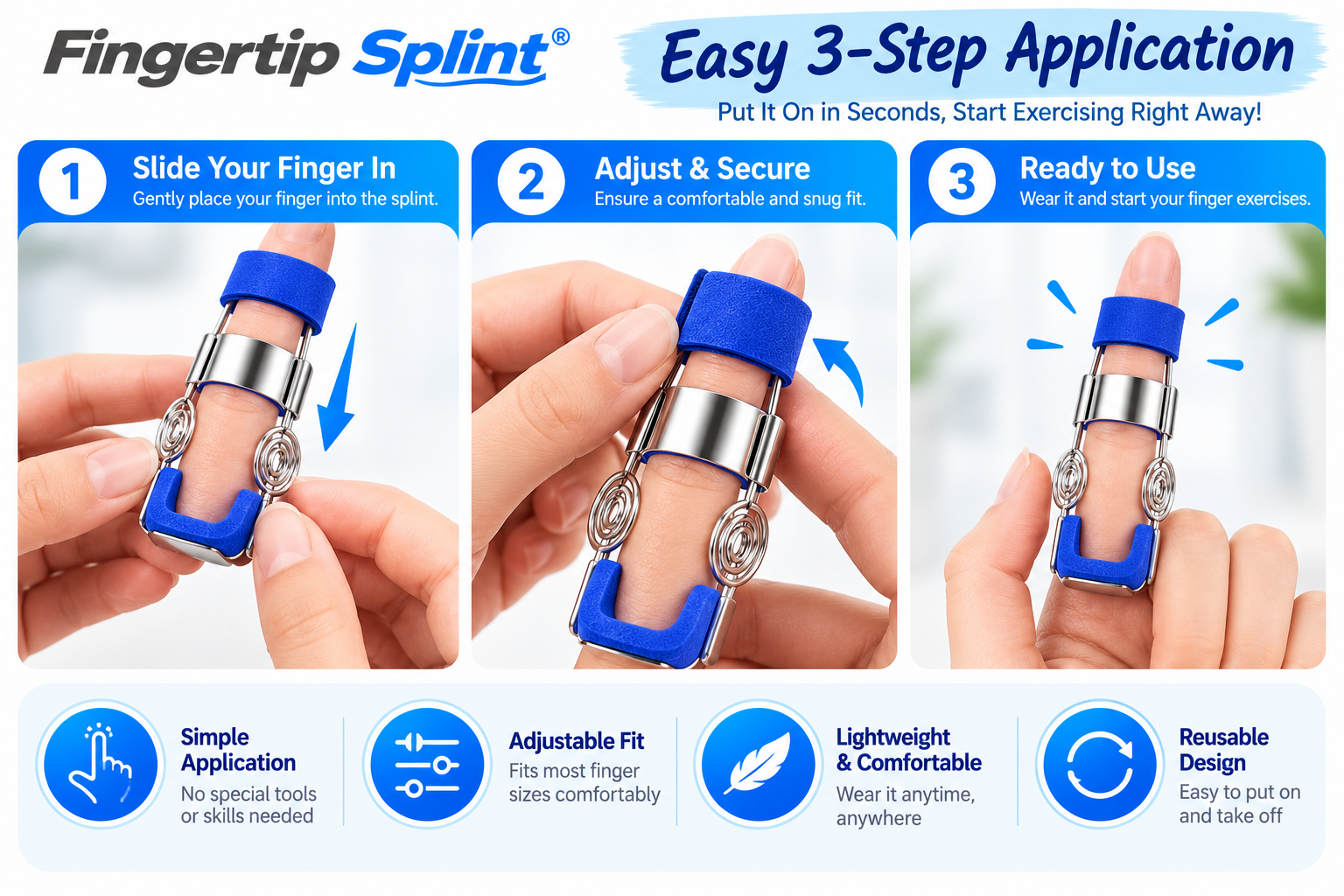
Step 1: Confirm the Correct Device
Check that the finger exerciser is suitable for the intended finger and the recommended therapy goal. Do not use it for an undiagnosed locked finger or recent injury without medical advice.
Step 2: Inspect the Springs and Frame
Examine both metal coil springs, the frame and the blue cushioned supports. Do not use the device if any part is damaged, sharp or unstable.
Step 3: Check Finger Measurements
Measure the finger according to the manufacturer’s sizing instructions. Confirm that the support contact points align with the intended areas.
Step 4: Prepare the Finger
Ensure the skin is clean and dry. Check for swelling, wounds, irritation or other conditions that may make contact pressure unsafe.
Step 5: Position the Finger Carefully
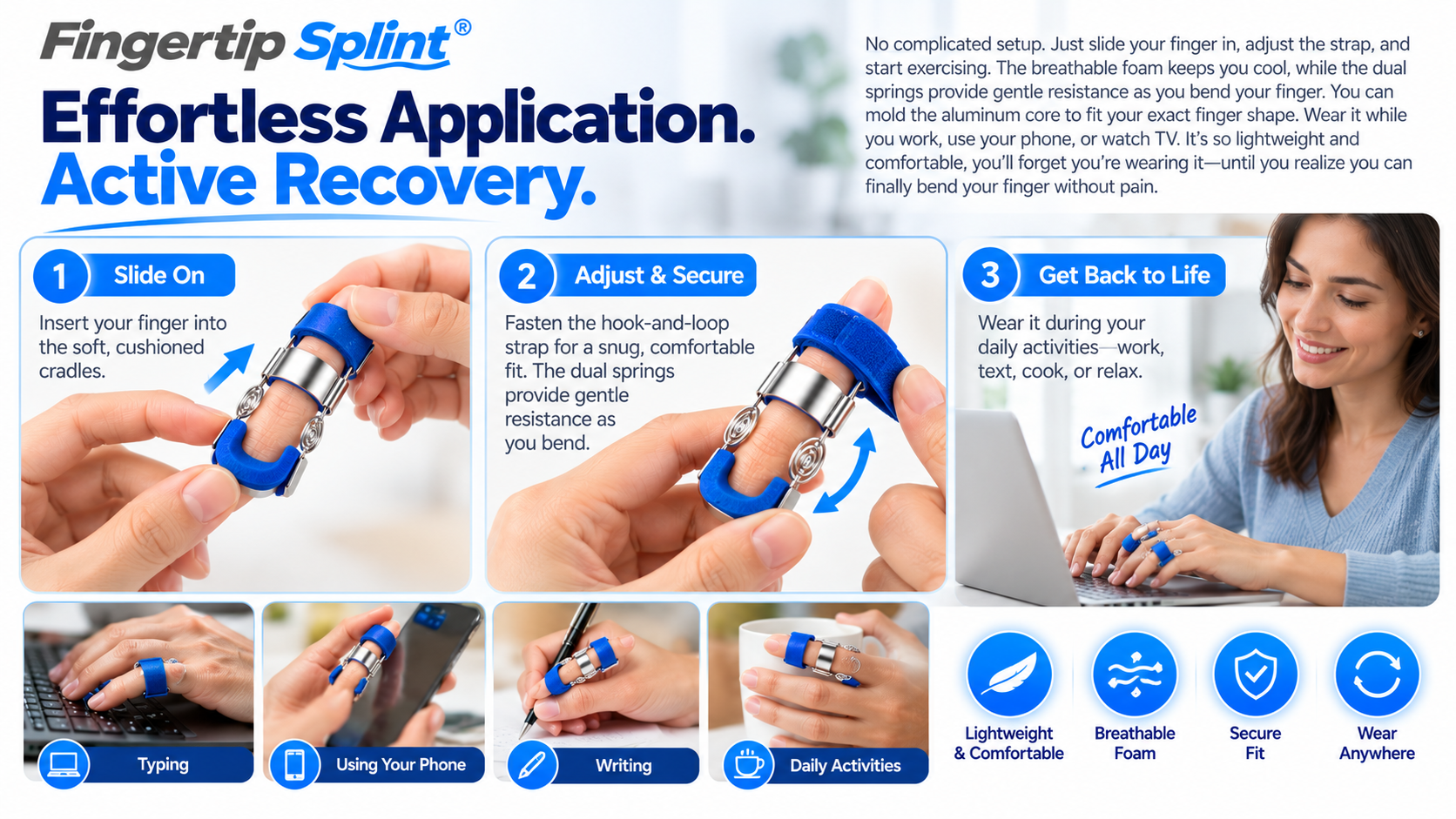
Place the finger into the device according to the verified manufacturer’s fitting diagram. Do not force the finger into a painful position.
Step 6: Align the Support Points
Check that the cushioned sections rest at the intended locations and do not press excessively on a joint or sensitive area.
Step 7: Secure Any Adjustable Components
If the supplied model includes an adjustable fastening component, secure it according to the manufacturer’s instructions. Do not overtighten.
Step 8: Verify Spring Direction
Before movement, confirm whether the device assists extension, resists flexion or performs another specified function. Do not guess based on appearance.
Step 9: Follow a Recommended Movement Program
Perform only the movements, repetitions and duration advised by a qualified healthcare professional. Avoid forcing movement against pain or mechanical locking.
Step 10: Monitor Comfort
Stop immediately if you experience sharp pain, increased swelling, numbness, tingling, skin discoloration or excessive pressure.
Step 11: Remove the Device Gently
Release any fastening components and carefully remove the device without twisting or pulling the finger.
Step 12: Check the Skin
Inspect the contact areas after use. Persistent redness, skin breakdown or tenderness may indicate an unsuitable fit or force level.
Step 13: Clean According to Manufacturer Instructions
Use the cleaning method approved for the device. Avoid exposing springs and metal components to unnecessary moisture or harsh chemicals.
Step 14: Store Safely
Keep the finger exerciser in a clean, dry place where the springs and frame cannot be crushed or bent.
Step 15: Reassess the Fit
Finger swelling and range of motion may change during recovery. Reassess the fit with a qualified professional when necessary.
Understanding Finger Exerciser Splints and Dynamic Finger Orthoses
What Is a Finger Exerciser Splint?
A finger exerciser splint is a support device that incorporates a mechanical or elastic element to influence finger positioning or movement. Unlike a static splint, a dynamic design can apply force as the finger changes position.
How Does a Spring-Loaded Finger Splint Work?
A spring-loaded finger splint uses a spring mechanism to generate force. Depending on the design, this force may assist a movement, resist a movement or maintain a positioning force.
For this specific product, the manufacturer should confirm the spring’s intended direction and force range before the device is used in an exercise program.
What Is the Difference Between Finger Flexion and Extension?
Finger flexion refers to bending a finger toward the palm. Finger extension refers to straightening it. These movements involve different muscles, tendons and joints.
A device intended to assist extension should not automatically be used as a flexion strengthening device.
Dynamic Finger Splint vs. Static Finger Splint
A static finger splint maintains a relatively fixed position. A dynamic finger splint uses an elastic or spring element to apply force during movement or positioning.
Both designs have legitimate uses. Static splinting is not inherently harmful, and dynamic splinting is not always appropriate.
Can a Finger Exerciser Help With Finger Stiffness?
Some forms of finger stiffness are managed with supervised movement exercises or specialized orthoses. However, the cause of stiffness must be identified before selecting a device.
Joint contracture, tendon injury, swelling, arthritis and postoperative restrictions may require different approaches.
Is This Finger Exerciser Suitable for Trigger Finger?
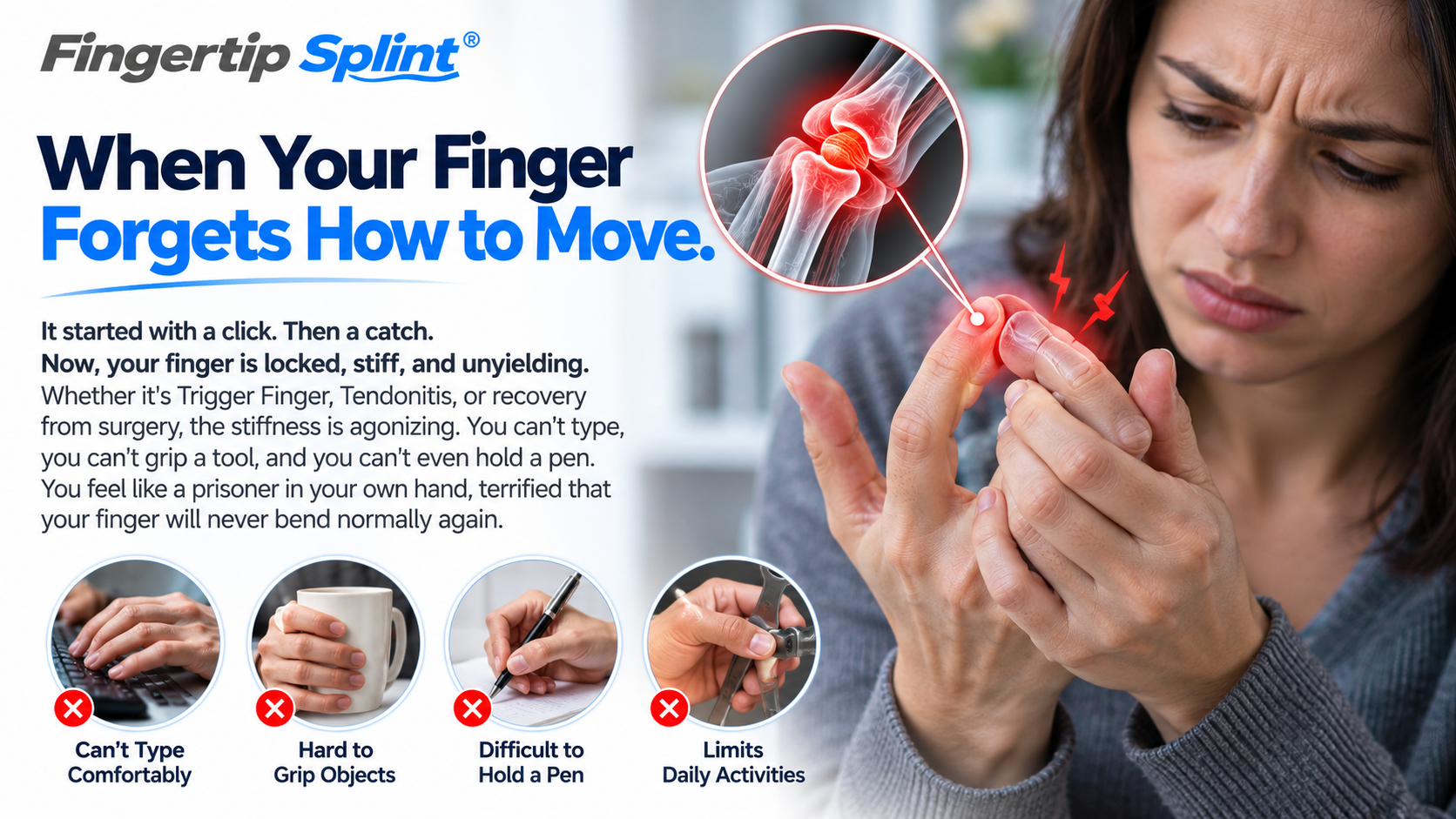
Trigger finger can cause catching, clicking or locking during finger movement. Management may include activity modification, splinting, injections or other treatment depending on severity.
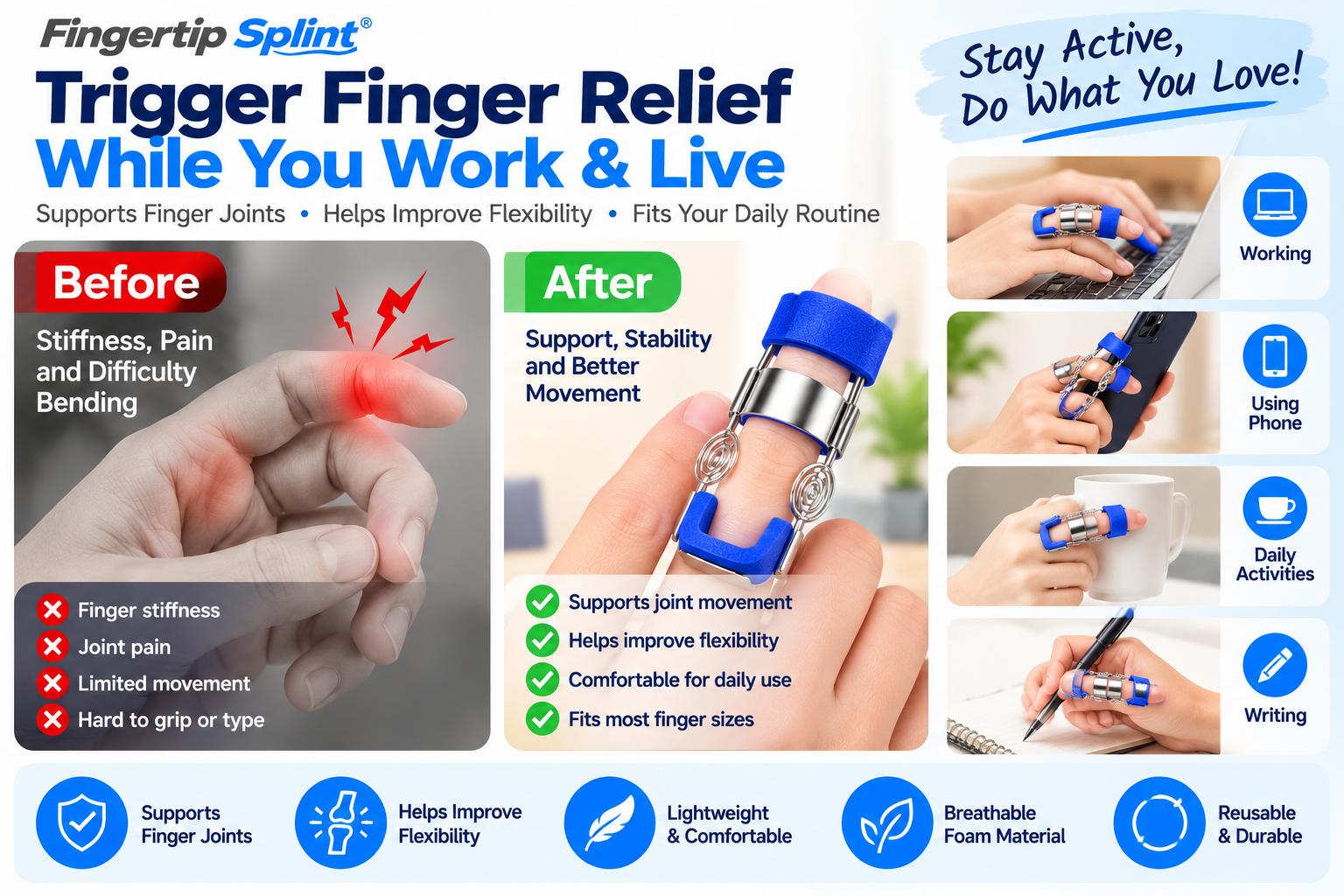
A spring-loaded exercise device is not automatically suitable for trigger finger and may aggravate symptoms if it applies force inappropriately.
For additional information, see the NHS guide to trigger finger.
Can It Be Used After Finger Surgery?
Postoperative finger rehabilitation is highly specific. Certain tendon repairs and joint procedures require strict movement restrictions.
Use this device after surgery only if the treating surgeon or hand therapist has approved the exact orthosis and exercise protocol.
Can It Help With Tendon Injuries?
Some tendon injuries require immobilization, while others involve carefully controlled movement under professional supervision. Using an unsuitable spring force or movement direction can interfere with healing.
Can It Improve Finger Strength?
Appropriate resistance exercises can be part of strength training, but this product’s resistance characteristics have not been verified. Improvement in strength cannot be guaranteed for an individual user.
Can It Improve Finger Flexibility?
Flexibility depends on joint structure, soft tissue condition and the cause of restricted movement. A suitable exercise program may address certain limitations, but outcomes vary.
Does the Device Straighten a Locked Finger?
No guaranteed correction has been established. Do not force a locked finger straight using the device.
Can It Replace Hand Therapy?
No. A finger exerciser may be used as an accessory within a therapy plan, but it does not replace professional assessment or individualized rehabilitation.
Is the Device Suitable for Arthritis?
Arthritis affects joints in different ways. Some joints may benefit from protective positioning, while others require carefully selected movement exercises.
Learn more from the NHS arthritis overview.
Can It Be Used for Everyday Hand Activities?
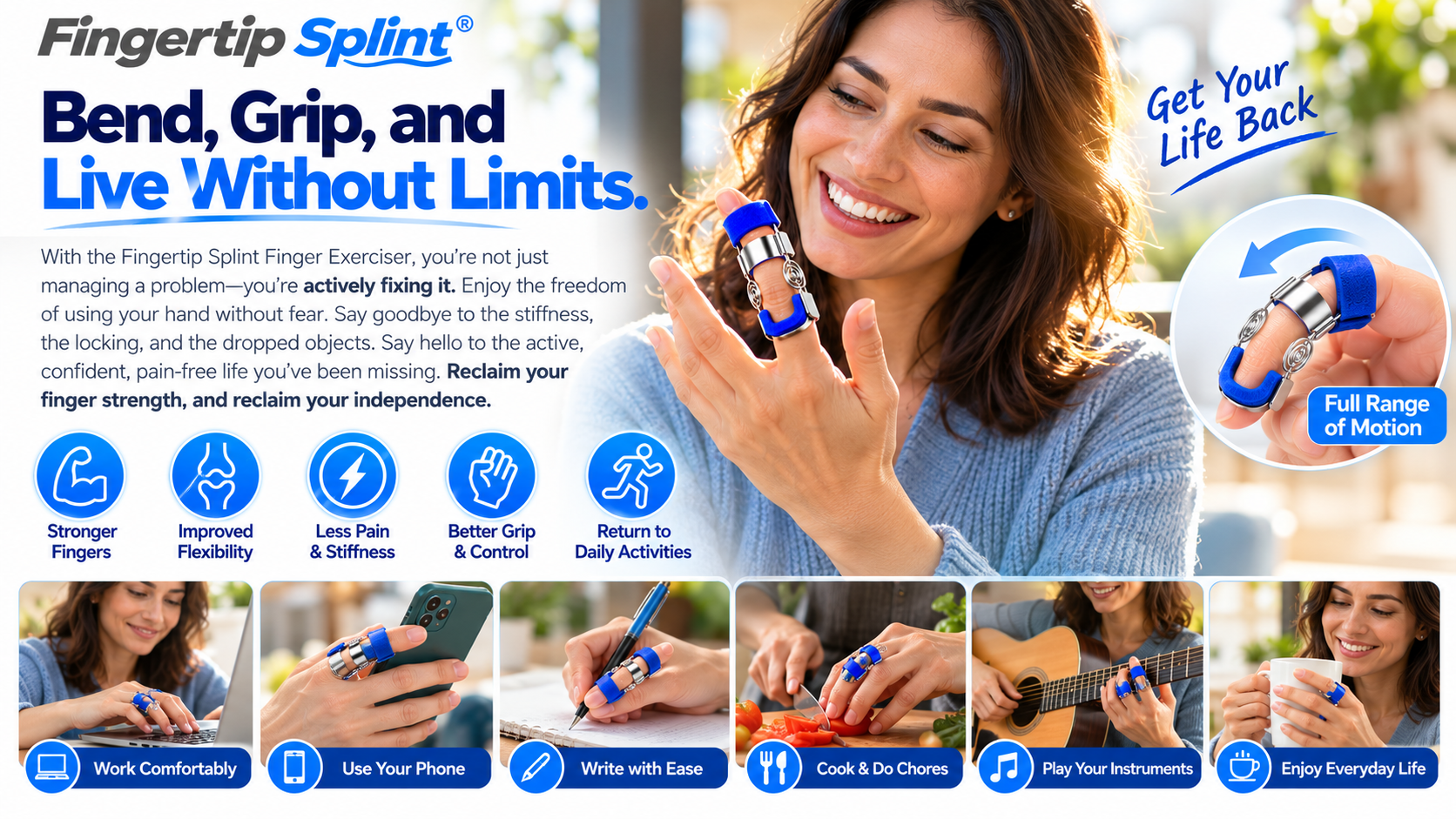
Although promotional images show typing, writing and phone use, wearing a spring-loaded finger orthosis during these tasks may not be appropriate for every person.
Use during daily activities should follow the intended application and professional guidance.
Can I Wear the Finger Exerciser All Day?
Continuous wear has not been established as appropriate. Dynamic orthoses can create sustained pressure and should be used according to a defined schedule.
How Do I Know If the Fit Is Correct?
The device should align with the intended finger structures without excessive pressure, slipping or twisting. A hand therapist can assess fit and mechanical action.
Why Does Spring Resistance Matter?
Spring force affects how much pressure or movement assistance the device applies. Excessive force can aggravate symptoms or stress healing tissues.
Why Is Finger Joint Alignment Important?
Incorrect alignment may place pressure on sensitive structures or apply force in an unintended direction. Correct positioning is particularly important with spring-loaded devices.
What Should I Do If My Finger Becomes Painful?
Stop using the device. Seek professional advice if symptoms persist or worsen, especially if there is swelling, locking, numbness or loss of movement.
Where Can I Explore Other Finger Support Products?
Browse the Fingertip Splint collection of finger splints and hand support accessories to compare different support designs.
Frequently Asked Questions About the Finger Exerciser Splint
1. What is a finger exerciser splint?
It is a finger support device that incorporates a mechanism intended to influence finger movement or positioning.
2. Does this finger exerciser have two springs?
Yes. The supplied product images show two visible metal coil springs.
3. Is this a static or dynamic finger splint?
Its spring-loaded construction is consistent with a dynamic finger orthosis.
4. Does it exercise the entire hand?
No. The product is designed around a single finger rather than the entire hand.
5. How many pieces are included?
The product is described as 1PCS. Confirm the package quantity with the supplier.
6. Is the finger exerciser adjustable?
The exact adjustment mechanism and fitting range require manufacturer confirmation.
7. Does it have cushioned finger supports?
Yes. Blue cushioned contact sections are visible in the supplied images.
8. Is the frame made of aluminum?
The exact metal composition has not been verified.
9. Can I bend the metal frame to customize the fit?
Do not bend or reshape the frame unless the manufacturer specifically confirms that adjustment is permitted.
10. What is the spring resistance level?
No verified resistance specification has been provided.
11. Does it assist finger extension?
The exact direction of spring assistance or resistance must be verified with the manufacturer.
12. Can I use it for trigger finger?
Only if a qualified professional confirms that the device is appropriate for your condition.
13. Can it permanently straighten a bent finger?
No permanent correction has been established for this product.
14. Can it help with finger stiffness?
Some finger stiffness conditions may benefit from supervised movement programs, but suitability depends on the cause.
15. Is it suitable for tendonitis?
Consult a healthcare professional before using a spring-loaded orthosis for a tendon condition.
16. Can I use it after finger surgery?
Only with approval from the treating surgeon or hand therapist.
17. Is it suitable for arthritis?
Suitability depends on the affected joints, symptoms and intended treatment plan.
18. Can I wear it while typing?
Typing compatibility varies and may not be appropriate during a prescribed movement or positioning program.
19. Can I use my phone while wearing it?
Some activities may be possible, but they should not interfere with the intended function or prescribed use.
20. Can I wear it while sleeping?
Do not use it overnight unless the manufacturer and an appropriate healthcare professional recommend doing so.
21. Is the device suitable for all fingers?
Universal finger compatibility has not been verified. Check the fitting specifications before ordering.
22. Is it suitable for both hands?
Left-hand and right-hand compatibility should be confirmed with the supplier.
23. Does it come in different sizes?
The available size range has not been provided.
24. How long should I use it per session?
Session duration should follow an individualized exercise or orthosis-wearing plan.
25. How many repetitions should I perform?
No universal repetition count is appropriate. Follow professional guidance based on your condition.
26. What should I do if the spring feels too strong?
Stop using the device and seek fitting advice. Do not force movement against excessive resistance.
27. What should I do if the device causes numbness?
Remove it immediately. Persistent numbness or circulation changes require medical evaluation.
28. Can I wash the finger exerciser?
Follow manufacturer-approved cleaning instructions to avoid damaging the springs, frame or cushions.
29. Is this a medical-grade device?
No medical-grade material certification or regulatory approval has been independently verified.
30. Can I order finger exerciser splints in bulk?
For commercial purchasing and wholesale inquiries, visit our Request a Quote page.
Related Blog Articles About Finger Exerciser Splints and Joint Support
Finger Exerciser Splint: Uses, Benefits and Joint Support
Explore the construction of finger exerciser splints, their potential support applications and important fitting considerations.
Read: Finger Exerciser Splint Uses, Benefits and Joint Support
How a Finger Training Brace Supports Finger Movement
Learn about the difference between finger positioning devices, spring-assisted orthoses and other finger training accessories.
Read: How a Finger Training Brace Supports Finger Movement
Finger Straightener Orthosis: Features and Daily Use
Discover common finger orthosis features, fitting requirements and practical considerations for daily handling and maintenance.
Read: Finger Straightener Orthosis Features and Daily Use
For more information about hand support accessories, explore the Fingertip Splint Blog.
Explore More Finger Splints and Hand Support Accessories
At Fingertip Splint, we offer a range of finger supports, hand braces, wrist stabilizers and related support accessories.
Visit our finger splint and hand support shop to compare different product types and construction features.
For ordering questions and general product information, browse our Frequently Asked Questions.
Wholesale Finger Exerciser Splints and Distributor Inquiries
Are you looking for finger exerciser splints, finger training orthoses or related hand support accessories for commercial purchasing or resale?
Contact Fingertip Splint to inquire about available product configurations, packaging, minimum order quantities, current inventory and wholesale pricing.
Explore our medical finger splint supplier information and learn about finger splint distribution opportunities.
Request a Wholesale Quote
Provide your required quantity, shipping destination, preferred packaging and any technical specifications needed for your order.
Important Safety Information and Product Disclaimer
The Fingertip Splint Finger Exerciser is a spring-loaded finger support accessory. It is not a substitute for medical diagnosis, professional hand therapy, prescribed rehabilitation or a custom-fitted orthosis.
Do not use this device to force a locked, painful, injured or surgically repaired finger into movement. The correct spring force, movement direction, finger compatibility and fitting range must be established before use.
Stop using the product if it causes pain, swelling, numbness, tingling, skin discoloration, pressure injury or worsening finger function.
Consult a qualified healthcare professional for persistent finger locking, progressive stiffness, tendon injuries, recent surgery or unexplained loss of movement.
Claims disclaimer: This product has not been independently verified to cure trigger finger, repair tendons, reverse contractures, eliminate pain or guarantee improved finger strength and mobility.
Supplier verification required: Confirm material composition, spring resistance, movement direction, supported finger sizes, adjustment method, package quantity, care instructions and any medical device certifications before publishing final technical claims.
Reviews
There are no reviews yet.