
You are in the middle of a game. A basketball catches your fingertip. A volleyball smashes into your hand. A cricket ball hits your finger while fielding. The pain is sharp, the finger swells, and you are not sure whether to keep playing, tape it up, or see a doctor. An adjustable finger splint for sports may help support and protect an injured finger — but only when it is appropriate for the injury. This guide explains what a splint does, when it may help, how to choose one safely, and when medical assessment is more important than buying a product. For a broader range of finger support options, explore the full FingerTipSplint range.
Table of Contents
- Why Finger Injuries Are Common in Sports
- What Is an Adjustable Finger Splint?
- Adjustable Finger Splint for Sports: Uses and Benefits
- Which Sports May Involve Finger Splint Use?
- Splint vs. Finger Sleeve vs. Buddy Taping
- How to Choose and Fit an Adjustable Finger Splint
- Finger Injury Recovery and Return-to-Sport Timeline
- Common Finger Splint Mistakes Athletes Should Avoid
- When to See a Doctor for a Sports Finger Injury
- Is an Adjustable Finger Splint Right for You?
- Frequently Asked Questions
An adjustable finger splint may help support and protect an injured finger during recovery by limiting movement in the way the device is designed to do. It may be used for selected sprains, fractures, or tendon injuries, but the correct splint and wearing schedule depend on the diagnosis. It does not automatically make sports participation safe.
Why Finger Injuries Are Common in Sports
Finger injuries happen in almost every sport. Catching, blocking, gripping, tackling, falls, and direct impacts all put the fingers at risk. A basketball player catches a hard pass. A volleyball player lands awkwardly on a fingertip. A cricket player injures a finger while fielding. A badminton player grips a racket with force.
What Happens When a Finger Gets Jammed?
A jammed finger occurs when the finger is forced into an awkward position, often by a ball or another player. The ligaments, tendons, or bones may be injured. According to the Mayo Clinic’s guide to jammed fingers, sports impacts can cause a sprain but may also conceal a fracture or dislocation.
Common Sports Movements That Put Fingers at Risk
- Basketball: Rebounds, passes, and ball impacts.
- Volleyball: Blocking, setting, and fingertip contact.
- Cricket: Catching, fielding, and wicketkeeping.
- Badminton and racket sports: Gripping and impact.
- Contact sports: Collisions and hand protection.
Why Swelling Alone Cannot Tell You How Serious an Injury Is
Swelling is a common sign of injury, but it does not tell you whether the injury is a mild sprain, a fracture, or a tendon problem. According to the AAOS guide to sprained fingers, ligament injuries can cause swelling, pain, and instability, and accurate diagnosis matters for appropriate treatment.
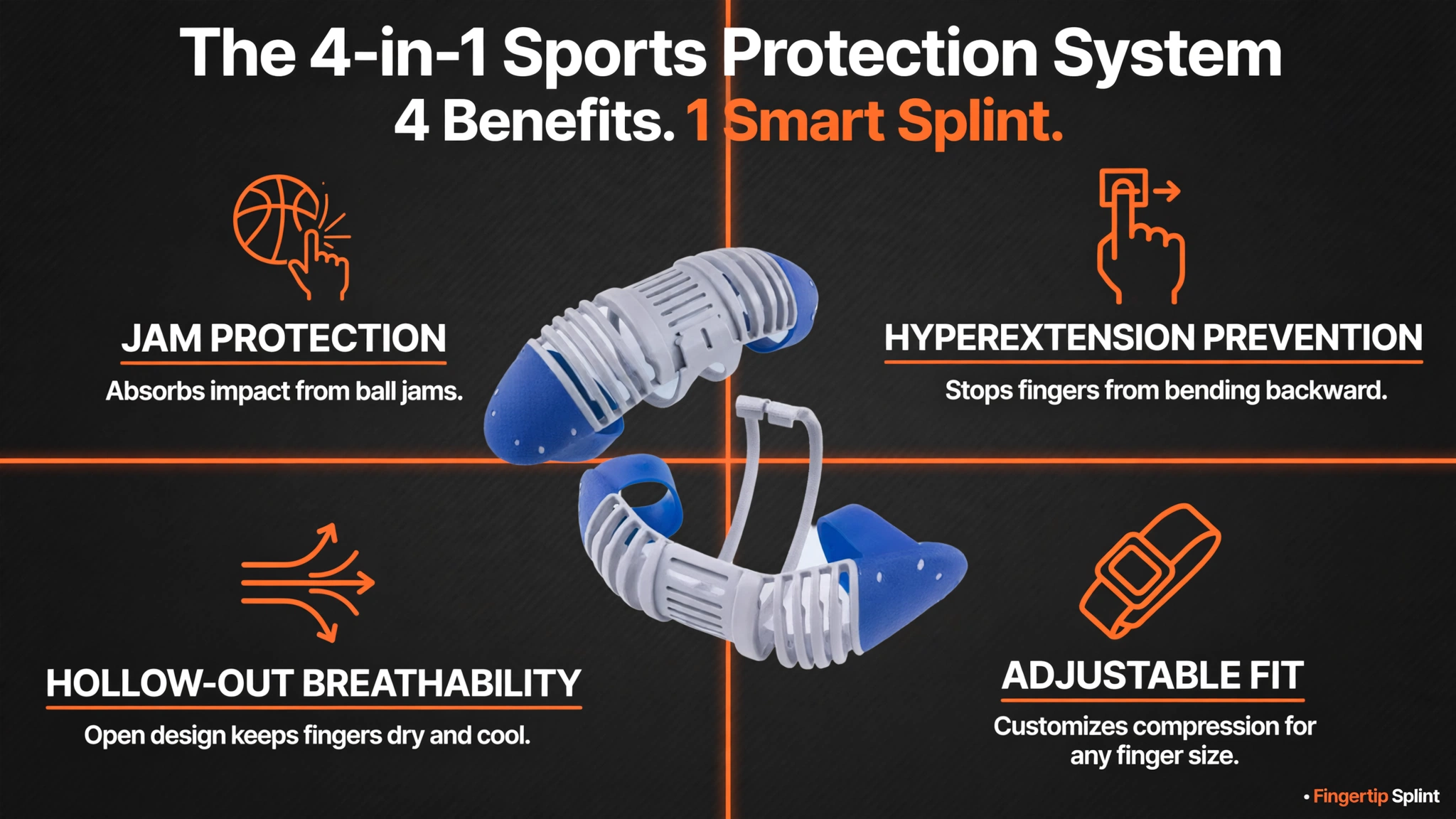
What Is an Adjustable Finger Splint and How Does It Work?
A finger splint is a device intended to support or limit movement in a selected part of the finger. Adjustable straps or closures may allow the fit to be changed, but adjustability does not mean the device is suitable for every injury.
Support, Stabilization, and Movement Restriction
Different splints provide different levels of support. Some are designed to stabilize a joint, while others limit movement more completely. According to the Cleveland Clinic’s guide to finger splints, splint types vary in their uses, fit, and potential risks.
Why Fit and Positioning Matter
The splint should fit the affected finger and joint. Incorrect positioning can create pressure points or fail to provide the intended support.
Adjustable Splint vs. Flexible Finger Sleeve
An adjustable splint is designed to support or limit movement. A flexible finger sleeve provides coverage and light compression. They serve different purposes and are not interchangeable. For a closer look at how sleeves support finger protection, the article on how adjustable finger sleeves support finger protection provides useful context.
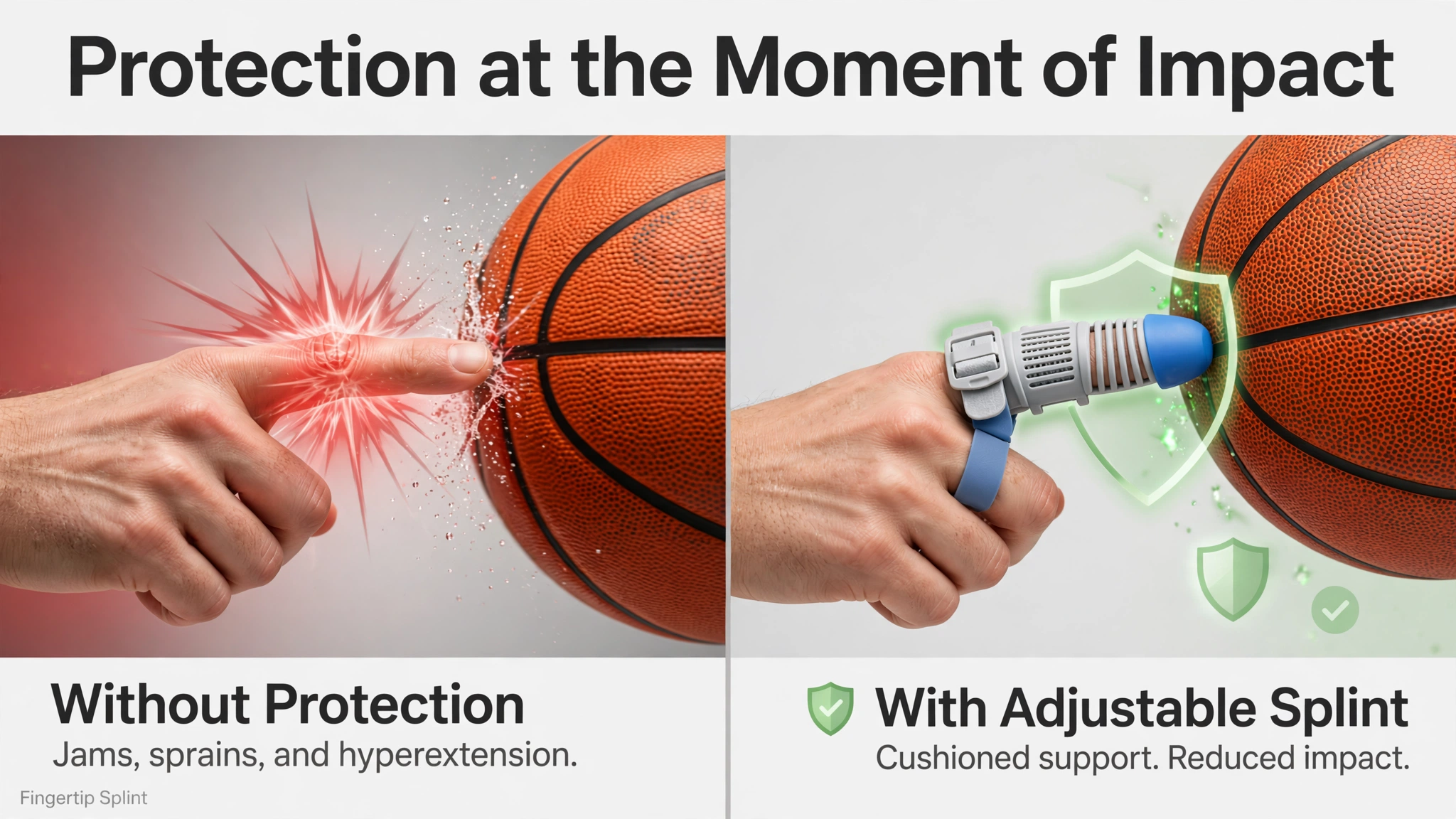
Adjustable Finger Splint for Sports: Uses and Benefits
The potential benefits of an adjustable finger splint depend on the injury, the device design, and how it is used. Here is what a splint may offer.
Supporting Selected Finger Sprains and Soft-Tissue Injuries
A splint may help support a sprained finger by limiting movement that provokes pain. However, not every sprain requires a splint, and not every splint suits every sprain.
Protecting an Injured Finger During Prescribed Recovery
When a clinician has recommended a specific support, a splint may help protect the finger during recovery. The wearing schedule should follow professional guidance.
Helping Limit Unwanted Movement When Appropriate
Some splints are designed to limit movement in a specific direction. This can help protect a healing structure, depending on the injury.
Providing a More Adjustable Fit as Swelling Changes
Adjustable straps may allow the fit to be modified as swelling changes, when the design permits. However, excessive tightening can cause problems.
Why a Splint Cannot Guarantee Injury Prevention or Faster Recovery
A splint supports the finger while worn. It does not prevent all injuries, guarantee faster recovery, or automatically make sports participation safe. According to the Cleveland Clinic’s information on jammed fingers, some injuries may be more serious than they initially appear.
How an Adjustable Finger Splint Supports an Injured Finger
Select a feature below to learn more about it.
Which Sports May Involve Finger Splint Use?
Different sports put the fingers at risk in different ways. The following examples explain injury mechanisms, not a blanket recommendation to wear the same splint for every activity.
Basketball — Rebounds, Passes, and Ball Impacts
Basketball involves constant hand contact with the ball. A finger can be jammed when catching a hard pass or colliding with another player.
Volleyball — Blocking, Setting, and Fingertip Contact
Volleyball players use their fingertips to block and set, which puts the fingers at risk of impact and hyperextension. For a related support design, the article on hollow-out finger braces for basketball and volleyball explains how open-frame braces differ from full immobilizing splints.
Cricket — Catching, Fielding, and Wicketkeeping
Cricket involves catching a hard ball, often at high speed. Finger injuries are common, especially in fielding and wicketkeeping.
Badminton and Racket Sports — Gripping and Impact
Badminton and racket sports involve forceful gripping and repeated impact, which can stress the fingers and tendons.
Contact Sports — Collisions and Hand Protection
Contact sports expose the hands to collisions and direct impacts. The need for protection depends on the sport, the rules, and the individual injury.
Adjustable Finger Splint vs. Finger Sleeve vs. Buddy Taping
Different options serve different purposes. Here is how they compare.
| Option | Intended Function | Movement Allowed | Possible Use | Limitations |
|---|---|---|---|---|
| Adjustable finger splint | Support or limit movement | Limited, depending on design | Selected sprains, fractures, tendon injuries | May not suit every injury or activity |
| Finger sleeve | Coverage and light compression | Mostly unrestricted | Minor protection, light support | Does not limit movement significantly |
| Buddy taping | Support by taping to adjacent finger | Partially restricted | Temporary support for some injuries | May not provide adequate stabilization |
These options are not interchangeable. A splint that limits movement serves a different purpose from a sleeve or tape. For more information on flexible protection versus movement restriction, see how adjustable finger sleeves support finger protection.
How to Choose and Fit an Adjustable Finger Splint
Choosing the right splint requires matching the device to your injury and needs.
Check Which Finger and Joint Need Support
Confirm that the splint is designed for the affected finger and joint. Different injuries may require different support.
Avoid Excessive Tightness
The splint should feel secure but not tight. Excessive tightness can cause numbness, tingling, or circulation problems.
Check Sensation, Skin Colour, and Comfort
After fitting, check that your finger feels comfortable and that the skin colour is normal. If you experience numbness, tingling, or changes in colour, remove the splint and reassess.
Follow Clinician and Manufacturer Instructions
Follow the instructions provided by your clinician or the manufacturer. The correct position and wearing schedule depend on the specific injury.
Finger Injury Recovery and Return-to-Sport Timeline
Recovery depends on the injury, the diagnosis, the stability of the joint, the treatment plan, pain, swelling, movement, and grip function. There is no universal week-by-week timeline.
Stage 1: Assessment and Protection
Determine whether the injury is a sprain, fracture, dislocation, or tendon injury. Protect the finger and obtain appropriate assessment.
Stage 2: Follow the Prescribed Plan
Use the recommended support for the instructed duration. Monitor swelling, skin condition, sensation, and symptoms.
Stage 3: Restore Movement and Function
When appropriate, follow professional guidance on regaining movement, strength, and grip. Prolonged immobilization can cause stiffness.
Stage 4: Return to Sport
Resume training only when the injury, function, and sport-specific demands allow it and any required clinical clearance has been obtained.
According to the NHS guide to broken fingers, return to sport should follow appropriate assessment and advice. Wearing a splint alone does not establish readiness to play.
Common Finger Splint Mistakes Athletes Should Avoid
Some mistakes can delay recovery or cause further injury. Here are the most common ones.
Playing before the injury has healed can worsen the damage.
Solution: Follow professional guidance on return-to-play.
A jammed finger may involve a fracture or dislocation.
Solution: Seek assessment if symptoms are severe or persistent.
Excessive tightness can cause numbness or circulation problems.
Solution: Fasten the splint securely but not tight.
Different injuries require different support designs.
Solution: Follow clinical guidance on the correct splint.
These are warning signs of circulation or nerve problems.
Solution: Remove the splint and seek advice.
Removing support too early can delay healing.
Solution: Follow the prescribed schedule.
It is understandable to fear missing a match. But pushing through an unassessed injury can create longer-term problems.
When Should You See a Doctor for a Sports Finger Injury?
Some finger injuries require prompt medical assessment. Seek advice if you experience:
- Deformity of the finger
- Severe pain
- Inability to bend or straighten the finger
- Significant swelling
- Numbness
- A finger that turns pale or blue
Is an Adjustable Finger Splint the Right Choice for Your Sports Injury?
If you are considering an adjustable finger splint, the FingerTipSplint Adjustable Finger Splint is one option to evaluate. This guide does not claim that it treats every sports injury or guarantees recovery. What it offers is a design intended to support or limit movement in a selected part of the finger.
Potentially Appropriate
A clinician has identified an injury for which the particular splint is suitable, and its design provides the prescribed support.
Needs Assessment First
The finger is swollen, painful, difficult to move, or the injury has not been diagnosed.
Not Enough on Its Own
A suspected fracture, dislocation, tendon injury, or unstable joint may require a specific treatment plan rather than a generic brace.
Explore the Adjustable Finger Splint
If you are looking for finger support for a sports injury, review the FingerTipSplint Adjustable Finger Splint, check its intended use and fit guidance, and decide whether it matches your needs.
View the Product Browse All ProductsFrequently Asked Questions
Not automatically. A splint may interfere with catching, gripping, ball control, and safe hand function. Whether you can play depends on the injury, the device, the rules of the sport, and clinical advice. Do not use a splint to mask pain or bypass assessment.
It may help support a jammed finger if the injury has been assessed and the splint is appropriate for the specific injury. However, a jammed finger may involve a fracture or dislocation, so professional assessment is recommended before relying on a splint.
Neither is universally better. An adjustable splint may provide more controlled support or movement restriction, while buddy taping can provide temporary support. The right choice depends on the injury and clinical advice.
The splint should feel secure but not tight. If you experience numbness, tingling, or changes in finger colour, the splint is too tight or incorrectly positioned. Remove it and seek advice if symptoms persist.
This depends on the injury, the device, and the rules of the sport. A splint may interfere with setting, blocking, and ball control. Do not assume a splint makes it safe to play. Seek clinical advice before returning to sport.
This depends on the injury and the treatment plan. Follow the instructions of your clinician or the manufacturer. There is no universal wearing schedule that applies to every injury.
Seek medical advice for deformity, severe pain, inability to bend or straighten the finger, significant swelling, numbness, or a finger that turns pale or blue. Do not simply buy a splint and wait when a fracture, dislocation, or tendon injury may be present.
Make a Safer Decision About Your Finger Injury
An adjustable finger splint may help support and protect an injured finger when it is appropriate for the injury. But it does not replace diagnosis, guarantee recovery, or automatically make sports participation safe.
Use this guide as a framework: understand the injury, check the product specifications, follow professional guidance for fit and wear, and seek medical assessment for warning signs. The splint may provide support, but it is not a substitute for appropriate care.
For readers who want to explore support products, the FingerTipSplint shop offers a selection. For more hand-care education, visit the FingerTipSplint blog. For personalized assistance, you can request a quote or review the frequently asked questions.
Your hands carry you through everything. Choosing the right support — and knowing when to seek professional advice — is part of caring for them well.