
Your fingers do more work than you realise. They grip your phone, type on a keyboard, lift shopping bags, catch a basketball, and set a volleyball. When a finger starts to feel sore, swollen, or uncomfortable, the instinct is often to wrap it, tape it, or buy the first sleeve you find online. But an adjustable finger sleeve is not a one-size-fits-all answer, and understanding what it can and cannot do matters. This guide explains how adjustable finger sleeves may support finger protection during daily activities and sports, how to choose the right fit, when a sleeve is not enough, and when a finger problem deserves clinical assessment. For a broader view of available finger-support products, explore the full FingertipsSplint range.
Table of Contents
- Why Finger Protection Matters in Everyday Life
- What Are Adjustable Finger Sleeves?
- How Adjustable Finger Sleeves Support Finger Protection
- Who May Benefit From Adjustable Finger Sleeves?
- How to Choose the Right Size and Adjust the Fit
- Sleeves vs. Splints vs. Guards
- Using Finger Sleeves During Sports and Daily Activities
- Common Mistakes to Avoid
- Cleaning, Maintenance, and Replacement
- How to Decide Whether an Adjustable Finger Sleeve Is Right for You
- Frequently Asked Questions
An adjustable finger sleeve is a wearable support designed to fit around a finger, with some styles allowing the user to adjust the tightness or positioning. Depending on its materials and construction, it may provide light cushioning, compression, or protection from friction. It is not a substitute for medical evaluation or a rigid splint when an injury requires immobilization.
Why Finger Protection Matters in Everyday Life
Fingers are small, but they carry a large share of daily function. Think about how often you use them without thinking: unlocking a phone, holding a cup, turning a key, carrying a bag, or gripping a steering wheel. Each of these actions depends on a delicate balance of movement, sensation, and strength. When a finger is sore, swollen, or uncomfortable, even simple tasks can become frustrating.
In sport, the demands increase. A basketball player catches a hard pass and absorbs force through the fingertips. A volleyball player blocks a spike and feels the impact travel through the hand. A gym user grips a barbell or a kettlebell. In each case, the fingers need both movement and protection. A support that restricts too much can interfere with performance, while a support that offers too little may not help.
Why Choosing Support Based Only on Appearance or Price Can Be a Mistake
Many buyers choose a finger sleeve because it looks comfortable, is inexpensive, or appears in a search result. But the label on a product does not tell you how much support it provides. Two sleeves that look similar may have different materials, different levels of compression, and different intended uses. Choosing based on appearance or price alone can lead to a product that slips, pinches, or does not provide the type of support you actually need.
What This Guide Will Help You Understand
This guide explains what adjustable finger sleeves are, how their fit and design may support finger protection, and when a sleeve is not enough. It is written for general buyers, recreational athletes, and anyone who wants to make a more informed decision before purchasing finger support. If you are comparing different designs, the finger support shop is a useful starting point.
What Are Adjustable Finger Sleeves?
An adjustable finger sleeve is a wearable support that fits around a finger. Some styles include a closure, strap, or adjustable band that allows the user to customise the fit. Others are stretchy tubes that slide over the finger without a separate adjustment mechanism. The term “adjustable” is used broadly, so it is important to check the actual product description.
Common Materials
- Fabric or textile: Often breathable and comfortable for daily wear.
- Elastic: Provides compression and stretch for a snug fit.
- Silicone: May offer cushioning and grip.
- Padded textile: Adds a layer of protection against friction or minor knocks.
How Adjustable Closures May Help
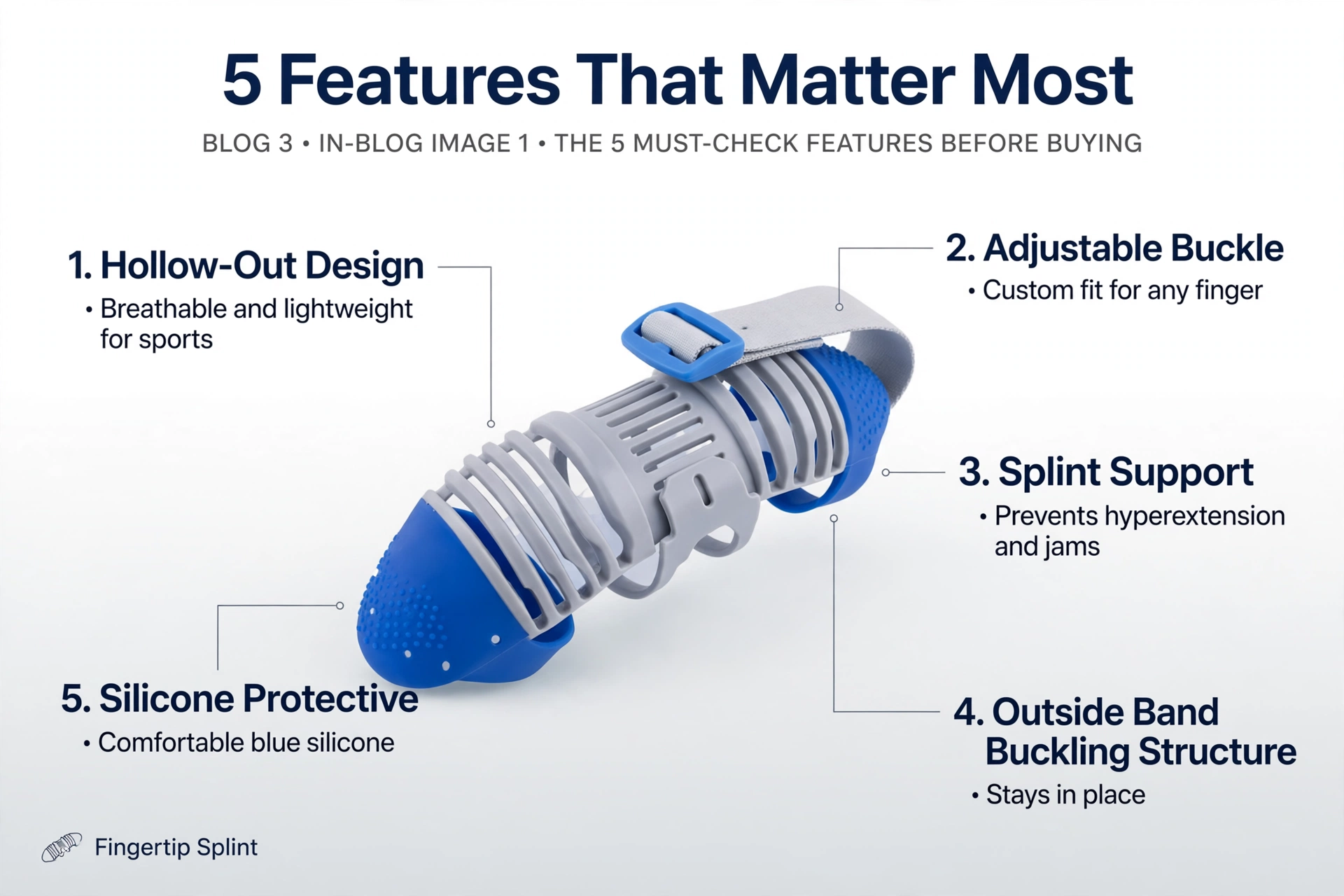
A closure or strap may help the sleeve stay in position and allow the user to customise the tightness. This can be useful for people who find standard finger covers difficult to keep in place. However, adjustable does not mean tighter is better. The goal is a secure fit without pressure, numbness, or tingling.
The Difference Between a Compression Sleeve, a Protective Cover, and a Rigid Splint
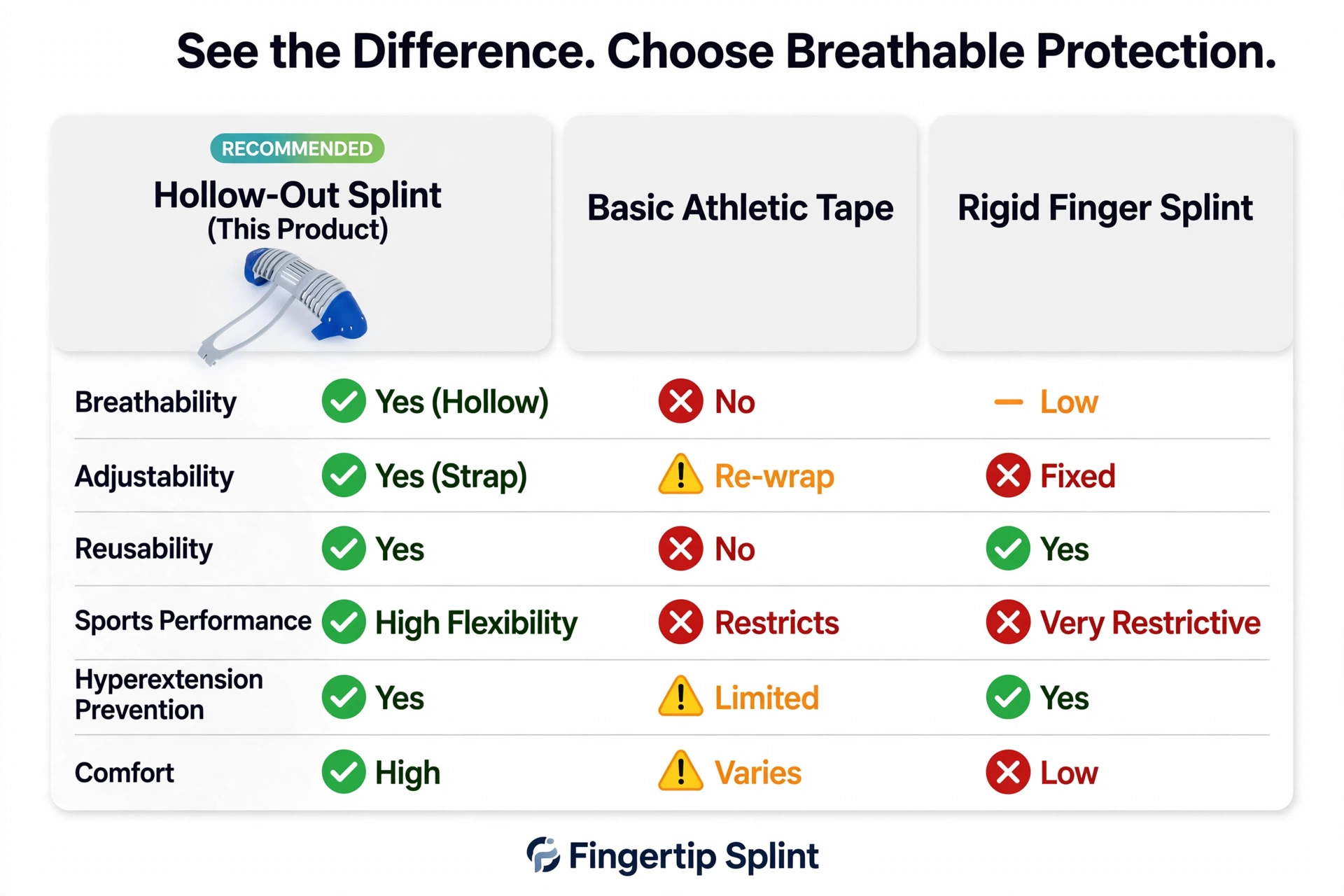
A compression sleeve is designed to apply mild pressure and may help with comfort during activity. A protective cover focuses on cushioning or coverage. A rigid splint is designed to hold a finger or joint in a specific position and may restrict movement significantly. These are different categories of support, and they are not interchangeable. The adjustable finger splint is an example of a more structured option for readers who need more support than a sleeve provides.
How Adjustable Finger Sleeves Support Finger Protection
This is the core of the article. Adjustable finger sleeves may support finger protection in several realistic ways, but it is important not to overstate what they can do. A sleeve is not a medical device that prevents all injuries, and it is not a substitute for clinical assessment when an injury is significant.
Cushioning
Some designs include padding or silicone elements that may reduce direct rubbing against surfaces. This can be useful for people who experience friction during repetitive tasks or sport. Cushioning may improve comfort, but it does not stabilise a joint or prevent a fracture.
Fit Adjustment
Straps or closures may help the sleeve stay in position when correctly fitted. A sleeve that slips can be distracting and may not provide consistent coverage. Adjustability can help users find a fit that works for their finger shape and activity.
Comfort
Suitable materials may make certain activities more comfortable by reducing friction or providing a light layer between the skin and an object. Comfort is a legitimate benefit, but it should not be confused with structural support.
Light Coverage
A sleeve can cover part of the finger, depending on its shape. This may help protect against minor knocks or scrapes. It does not provide the same protection as a rigid guard or splint.
Movement
Flexible designs may allow more movement than rigid splints. This can be useful for activities that require fine hand function. However, more movement does not mean equivalent stabilisation. If a clinician has recommended immobilisation, a sleeve is not a substitute.
| What a Sleeve May Do | What Requires a Clinician-Recommended Brace or Splint |
|---|---|
| Provide light cushioning or coverage | Stabilise a suspected fracture or dislocation |
| Improve comfort during repetitive tasks | Immobilise a joint after a significant injury |
| Help keep a light layer in place with adjustable fit | Support a tendon injury that requires a specific position |
| Offer mild compression | Provide rigid protection against direct impact |
Who May Benefit From Adjustable Finger Sleeves?
Adjustable finger sleeves may suit a range of everyday and recreational scenarios. Suitability depends on the product and the user’s condition.
People Seeking Extra Coverage From Everyday Friction
If you work with your hands, play a musical instrument, or spend long hours typing, a light sleeve may help reduce friction and improve comfort. It is a simple layer of protection, not a treatment.
Recreational Athletes Looking for a Comfortable Layer of Support
Some basketball and volleyball players wear a sleeve for light coverage during practice. It may help with comfort, but it does not guarantee protection from ball impacts. For more sport-specific guidance, see the adjustable finger splint uses and benefits for sports.
People Performing Repetitive Hand Tasks
Repeated gripping, lifting, or tool use can cause discomfort. A sleeve may provide a light layer of protection, but persistent pain deserves assessment. The NHS guidance on finger pain lists symptoms that may need medical attention.
Users Who Find Standard Finger Covers Difficult to Keep in Position
Adjustable closures may help a sleeve stay in place. This can be useful for people with different finger shapes or those who are active. Always follow the manufacturer’s sizing and fitting instructions.
People Recovering From an Injury — Only Where Appropriate
A sleeve may be appropriate at certain stages of recovery if a clinician has advised it. It is not a substitute for a splint or brace when immobilisation is required. Persistent pain, swelling, numbness, or reduced movement deserves assessment rather than simply adding more compression.
How to Choose the Right Size and Adjust the Fit
Fit is the most important factor in whether a sleeve is comfortable and useful. A sleeve that slips, pinches, or feels too tight is unlikely to help.
Key takeaway: adjustable means customisable, not that tighter is better. The Cleveland Clinic finger-splint guidance explains fitting considerations and potential problems that can apply to finger supports generally.
Adjustable Finger Sleeves vs. Finger Splints vs. Finger Guards
Buyers often confuse these three categories. A clear comparison can help you identify which product category best matches your needs.
| Feature | Adjustable Finger Sleeve | Finger Splint | Finger Guard |
|---|---|---|---|
| Main purpose | Depends on material and design; often light coverage or support | Holds a finger or joint in a prescribed position | Usually protects a specific area from contact |
| Flexibility | Often flexible | Varies; may restrict movement substantially | Varies |
| Adjustability | Only if the design includes a closure or strap | Depends on the model | Depends on the model |
| For suspected fracture | Not a substitute for assessment and appropriate immobilisation | May be prescribed as part of treatment | Generally not a substitute for treatment |
If you need more structured support, the adjustable finger splint is a different category of product. For sport-specific design differences, the hollow-out finger brace for basketball and volleyball guide explains how open-frame braces differ from sleeves.
Using Finger Sleeves During Sports and Daily Activities
The activity you are doing affects whether a sleeve is suitable. A sleeve that works well for typing may not stay in place during a basketball game. A sleeve that feels comfortable during a gym session may interfere with ball handling.
Basketball and Volleyball
Ball handling, grip, sweat, and equipment rules may affect whether a sleeve is suitable. Some leagues have rules about hand and finger protection. Check with your coach or league officials before wearing a sleeve in competition. For related guidance, see the finger splint sports guide.
Gym Activities
Gripping weights or equipment can place stress on the fingers. A sleeve may provide light cushioning, but it does not replace proper technique or grip training.
Office Work and Household Tasks
Typing, carrying, and cleaning can involve repetitive finger use. A light sleeve may improve comfort, but persistent discomfort deserves attention.
Hobbies
Musical instruments, crafts, and gardening can place specific demands on the fingers. Choose a sleeve that does not interfere with the movements your hobby requires.
Common Mistakes to Avoid
Even a well-designed sleeve can cause problems if used incorrectly. Here are the most common mistakes.
A sleeve that is too small or too large may slip or pinch.
Action: Follow the manufacturer’s sizing instructions.
Excessive tightness can reduce circulation and cause numbness.
Action: Adjust gradually and check for warning signs.
Many sleeves provide light coverage, not structural support.
Action: Match the product to the support you need.
Worn or damp materials may irritate the skin or lose their fit.
Action: Clean and replace the sleeve as instructed.
Persistent symptoms may indicate a more serious injury.
Action: Seek medical advice.
A possible fracture, dislocation, or tendon injury needs clinical evaluation.
Action: Stop and seek assessment.
Seek medical advice if you notice deformity, severe pain or swelling, inability to bend or straighten the finger, numbness, or unusual colour changes. The NHS guidance on broken fingers and the AAOS guide to sprained fingers provide further context.
Cleaning, Maintenance, and Replacement
Proper care helps a sleeve last longer and reduces the risk of skin irritation. Follow the product’s specific washing instructions, and dry the sleeve fully before reuse. Inspect straps and seams for wear, and replace the sleeve if it loses elasticity or becomes damaged.
Do not assume that a sleeve can be washed in the same way as other clothing. Some materials may lose their shape or elasticity if washed incorrectly. If the product label gives specific instructions, follow them.
How to Decide Whether an Adjustable Finger Sleeve Is Right for You
Use this simple decision guide before buying.
- Is the goal light coverage, cushioning, or compression?
- Does the product offer the type of support actually needed?
- Is there an injury that needs professional assessment?
- Can the user wear it without numbness, skin irritation, or circulation concerns?
- Do the size, material, closure, and care instructions suit the user’s routine?
If you are still comparing options, the finger support shop lets you review product details before buying. For common buyer questions, the frequently asked questions page is a useful resource.
Explore Adjustable Finger Sleeve Features
Select a feature below to learn more about it.
Find the Right Finger Support for Your Needs
Choosing a finger sleeve should start with the type of support you need, not simply the product name. Review the product’s intended use, fit instructions, and limitations before deciding whether it suits your situation. If your finger is painful, swollen, deformed, or difficult to move, seek appropriate medical advice before relying on a sleeve.
Compare Finger Support Options Read Finger Support FAQsFrequently Asked Questions
Uses vary by construction. Some sleeves provide light coverage, cushioning, or compression. Not every model stabilises a joint. Check the product description and intended use before buying.
A sleeve may improve comfort and provide light coverage, but it cannot guarantee injury prevention. A direct impact can still cause damage. Check league rules and test the sleeve during practice before using it in a game.
A jammed finger can involve different injuries, including sprains, fractures, or tendon damage. Severe pain, swelling, deformity, or limited movement warrants assessment. Do not rely on a sleeve alone for an unassessed jammed finger.
A sleeve is typically flexible and may provide light coverage or compression. A splint is designed to hold a finger or joint in a specific position and may restrict movement. They serve different purposes and are not interchangeable.
It should fit according to its instructions without causing numbness, tingling, skin changes, or increased discomfort. Adjust gradually and check for warning signs after fitting.
Wear time depends on the design, skin response, condition, and medical guidance. Do not assume continuous wear is appropriate for every product. Follow the manufacturer’s instructions and remove the sleeve if you notice irritation or discomfort.
Seek medical advice for suspected fractures, deformity, severe pain or swelling, inability to move the finger, numbness, or signs of infection. Persistent or worsening symptoms also warrant assessment. The AAOS mallet finger guide is one example of a tendon injury that may require a specific splinting plan.
Conclusion: Choose Support That Matches Your Needs
Adjustable finger sleeves can be a useful option for light coverage, cushioning, or compression, but they are not a universal solution. Their suitability depends on the product’s construction, the activity, and the condition of the finger. If you are dealing with persistent pain, swelling, or reduced movement, seek medical advice before relying on a sleeve. For more guidance, explore more finger-support guidance in the blog library and review the frequently asked questions about finger supports.