
After a long workday, a walk, household chores, or prolonged sitting, your knees may feel stiff or uncomfortable. You want a convenient way to relax at home, but you are not sure which product features are worth paying for — or whether a heated massager is even right for you. This guide explains what a smart heated knee massager can do, how to build a responsible daily comfort routine, what to check before buying, and when knee discomfort needs professional attention. For a broader view of comfort and support products, explore the full FingerTipSplint range.
Table of Contents
- Why Everyday Knee Discomfort Can Affect Your Routine
- What Makes a Heated Knee Massager “Smart”?
- How Heat May Support Daily Knee Comfort
- Potential Benefits of Using One at Home
- Featured Product Guide
- How to Build a Responsible Daily Comfort Routine
- Heated Massager vs. Heating Pad vs. Knee Brace
- Common Mistakes to Avoid
- Who May Benefit From Considering One?
- Doctor Advice — When Knee Discomfort Needs Assessment
- What to Check Before Buying
- Combining Comfort Measures With a Healthy Routine
- Frequently Asked Questions
A smart heated knee massager is a wearable device designed to provide warmth and, depending on the model, additional massage functions. It may offer temporary comfort for some types of stiffness, but it does not treat every cause of knee pain. Choose a model with clear instructions and use it according to safety guidance.
Why Everyday Knee Discomfort Can Affect Your Routine
Everyday knee discomfort shows up in small but frustrating ways. You notice it when you stand up after sitting for a while. You feel it after a long walk or a day of household chores. It may make it harder to relax in the evening because you cannot find a comfortable position.
Everyday Situations
- Stiffness after sitting: The knee feels tight when you first move after resting.
- Discomfort after ordinary activity: A walk, shopping trip, or gardening session leaves the knee feeling achy.
- Difficulty relaxing after work: You want to unwind but the knee discomfort makes it hard.
- Wanting a convenient accessory: You want something easy to use at home without complicated setup.
Why the Cause Matters
Knee symptoms can arise from overuse, osteoarthritis, tendon problems, injuries, and other conditions. The right response depends on the symptoms and their cause. According to NHS guidance on knee pain, some symptoms require medical assessment.
What Makes a Heated Knee Massager “Smart”?
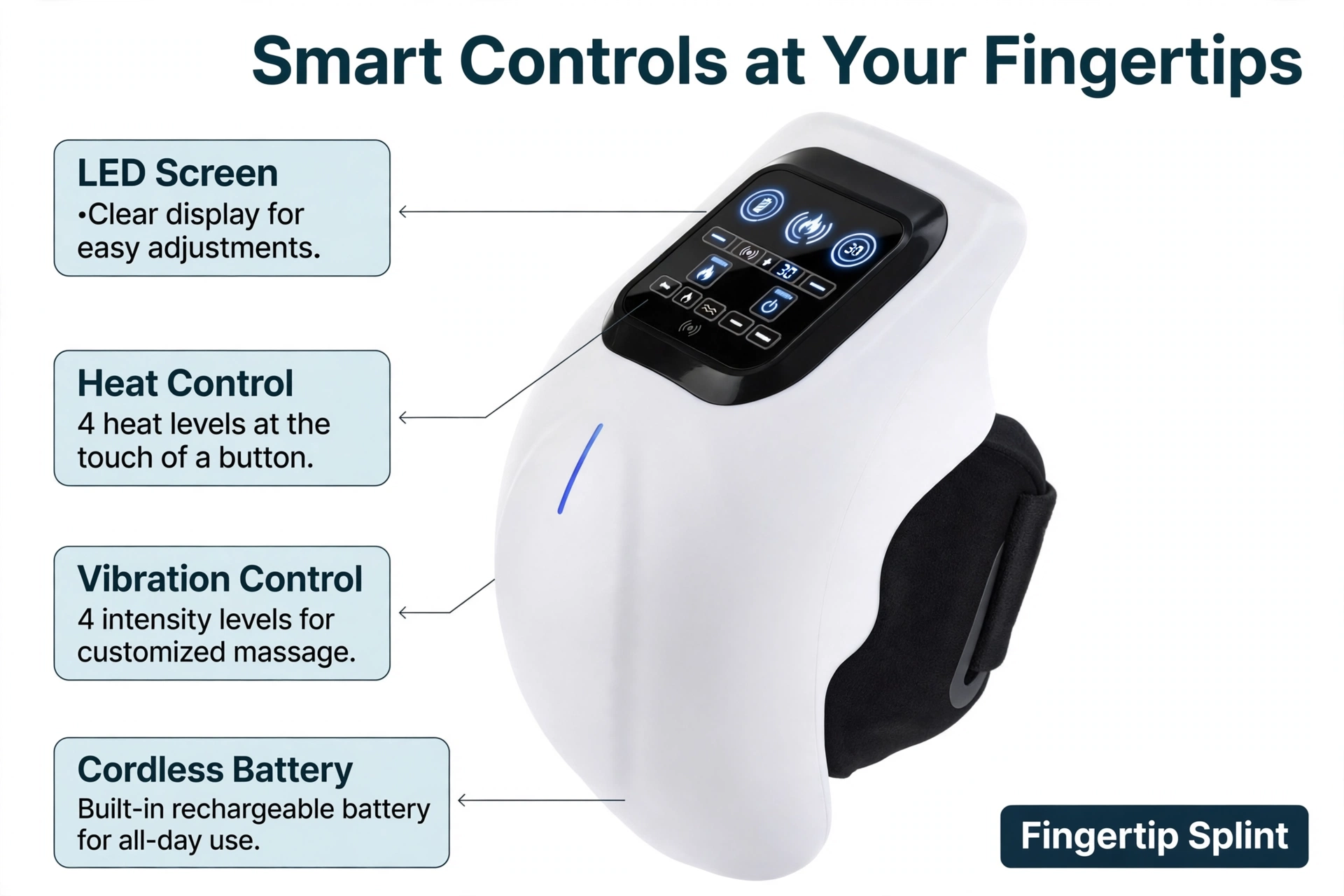
The word “smart” is often used in product marketing, but its meaning varies. From a buyer’s perspective, it may refer to adjustable settings, a digital display, multiple operating modes, or convenient controls.
What “Smart” Typically Means
In many consumer devices, “smart” means the device has a digital interface, multiple settings, or convenient controls. It does not necessarily mean the device uses sensors, artificial intelligence, or automatic temperature regulation.
Advertised Features of the Featured Product
- Digital LED display: Helps users see the selected setting, if the display shows it clearly.
- Cordless design: Reduces dependence on a continuously attached power cable.
- Four heat settings: Offers a choice of warmth levels.
- Four vibration intensity levels: Lets users select a preferred massage intensity.
- Advertised infrared function: The product listing advertises infrared light.
- Adjustable straps: Help position the device around the knee.
For specifications and images, see the featured knee massager’s product page.
How Heat May Support Daily Knee Comfort
Warmth can play a practical role in a comfort routine, but it is important to understand what it can and cannot do.
Why Warmth May Feel Soothing
Warmth can feel comfortable for some people experiencing stiffness. This is a subjective comfort effect — it does not necessarily mean that an injury or joint condition is healing. According to Cleveland Clinic’s explanation of heat and ice for arthritis, warmth is often used for stiffness, while cold may be more suitable for certain painful or swollen situations.
When Heat May Not Be Appropriate
Heat may be inappropriate around fresh injuries, swelling, hot or red joints, damaged skin, and areas with reduced temperature sensation. Seek medical advice where suitability is uncertain.
Heat for Daily Comfort vs. Medical Treatment
A heated device may be an optional comfort measure. It is not a substitute for prescribed treatment, rehabilitation, or assessment of persistent symptoms.
Explore the Smart Heated Knee Massager
Select a feature below to learn more about it.
Potential Benefits of Using a Heated Knee Massager at Home
The potential benefits of a heated knee massager are practical and relate to convenience and user experience.
Convenience
A wearable format may fit into a suitable relaxation routine.
Adjustable Settings
Users may be able to select a comfortable heat or vibration level.
Combined Functions
A single device may provide warmth and a massage sensation.
Cordless Operation
May reduce the inconvenience of a continuously connected cable.
Ease of Routine
A device with straightforward controls may be easier for some users to operate consistently.
According to the Mayo Clinic’s osteoarthritis treatment overview, managing joint conditions may involve several approaches. A heated device is one optional comfort measure, not a treatment on its own.
Featured Product Guide — The 3-in-1 Cordless Heated Knee Massager
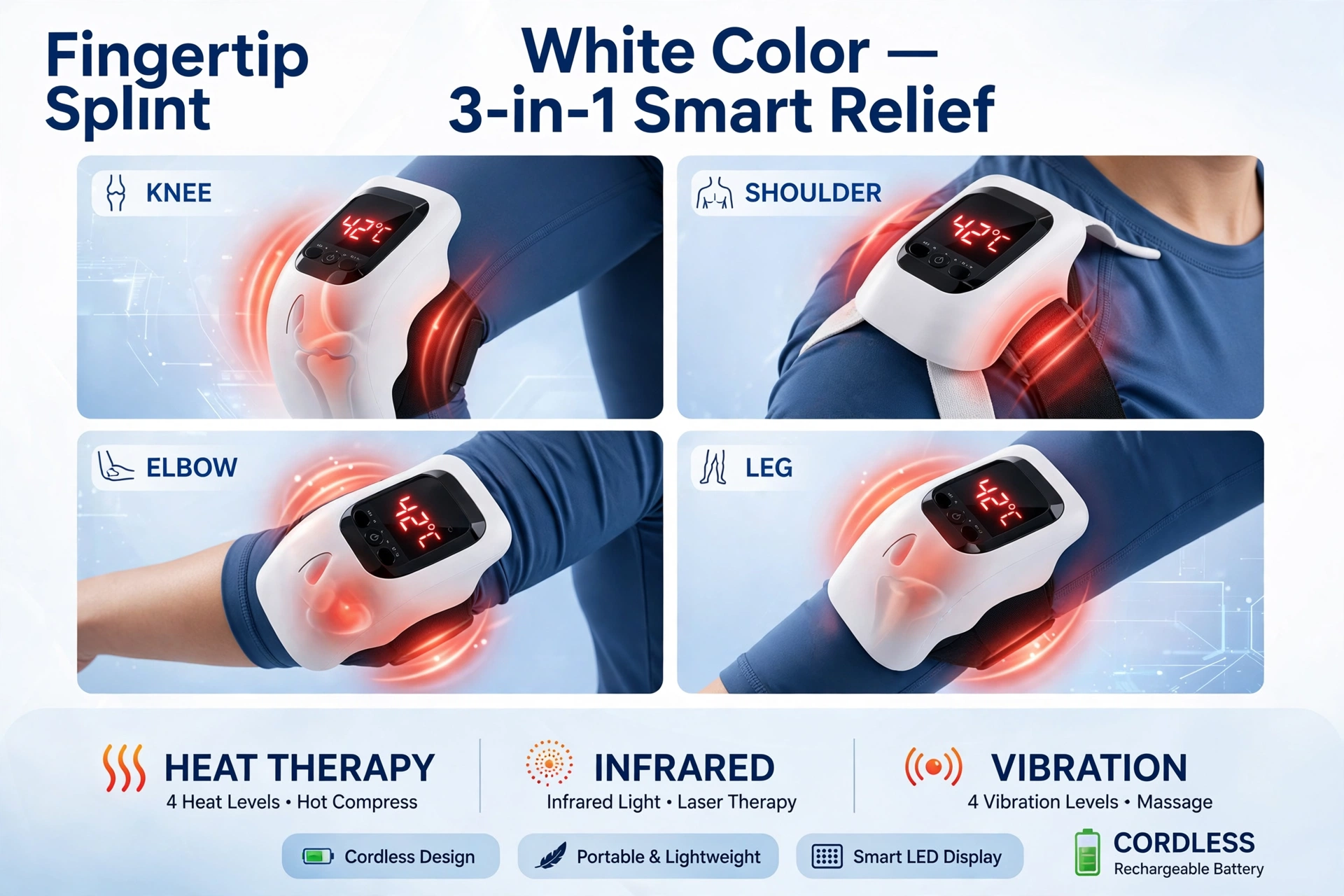
If you are considering a smart heated knee massager, the FingerTipSplint 3-in-1 Cordless Heated Knee Massager is one option to evaluate. The device combines heat, vibration, and an advertised infrared function in a wearable design.
Listed Functions
- Heat: Four advertised settings.
- Vibration: Four advertised intensity levels.
- Infrared: Advertised light function. The technical details are not fully verified, so a specific therapeutic effect cannot be confirmed.
Buyer Questions to Consider
- Fit: Is the fit suitable for the intended user’s knee?
- Controls: Are the controls understandable?
- Session limits: Are heat settings and session limits clearly explained?
- Battery details: Does the manufacturer specify battery runtime and charging time?
- Care: Are cleaning instructions and safety precautions available?
- Support: Is there a clear return policy and customer-support process?
For a more focused explanation of the three functions, the article on 3-in-1 heated knee massager uses and benefits provides additional context. And for a detailed feature comparison, see cordless knee massager with heat, vibration, and infrared.
How to Build a Responsible Daily Comfort Routine
A responsible daily comfort routine is one that prioritises safety, realistic expectations, and appropriate use of the device.
Before Using the Device
Read the instructions, inspect the device and straps, and check the skin. Avoid using heat on an area with reduced sensation unless a clinician has confirmed it is appropriate.
During Use
Position the device according to the manufacturer’s directions. Start with a low, comfortable setting and follow the specified session duration. Do not tighten straps excessively or ignore burning and irritation.
After Use
Turn the device off, inspect the skin, and clean the product as instructed. Note whether discomfort has improved, stayed the same, or worsened.
Making Daily Use Sensible
Daily use is not automatically suitable for everyone. Follow the product instructions and seek professional guidance when symptoms are persistent or when medical conditions affect heat safety. According to WebMD’s overview of heat and cold therapy for arthritis pain, product-specific instructions take priority.
Heated Knee Massager vs. Heating Pad vs. Knee Brace
Different products serve different purposes. Here is how they compare.
| Product | Main Purpose | Important Consideration |
|---|---|---|
| Heated knee massager | Wearable warmth and possibly vibration | Fit, controls, session limits, and safe heat use |
| Heating pad | Local warmth | Temperature control and safe placement |
| Knee brace | Support or movement restriction, depending on design | Correct brace type for the condition |
| Cold pack | Cooling for certain injuries or swelling | Appropriate use and skin protection |
A heated massager is not a replacement for a brace when structural support is needed. Likewise, a brace is not automatically the right option for every type of discomfort. According to Johns Hopkins Medicine’s cold therapy guide, heat and cold serve different purposes.
Common Mistakes to Avoid
Some mistakes can make the device less safe or less comfortable. Here are the most common ones.
Starting too hot can cause discomfort or skin irritation.
Solution: Start with the lowest comfortable setting.
The label does not replace the need to follow safety instructions.
Solution: Check the manufacturer’s documentation for safety controls.
Heat may not be appropriate for a new injury with swelling.
Solution: Seek guidance before using heat on a new injury.
Sleeping with the device on can lead to skin damage.
Solution: Never sleep with the heating function operating.
Excessive pressure can reduce circulation and cause discomfort.
Solution: Fasten the straps without excessive pressure.
The advertised feature does not establish a therapeutic effect.
Solution: Treat infrared claims cautiously and seek professional advice.
Using the device for longer than the instructions allow or continuing despite burning, irritation, or worsening symptoms is also unsafe. Stop and seek advice if problems occur.
Who May Benefit From Considering a Heated Knee Massager?
Some buyers may appreciate the product’s format, while others should seek advice first.
Who May Benefit
- Adults looking for a home-use warmth accessory
- People who value adjustable controls
- Those who prefer a wearable device rather than holding a heating pad in place
Pause and Ask a Professional First
Seek advice before using a heated device if you have reduced sensation, circulation concerns, recent surgery, significant injury, or a hot and swollen joint.
Doctor Advice — When Knee Discomfort Needs Assessment
A consumer comfort device should not be the first response to serious symptoms. Seek prompt medical assessment if:
- The knee is severely painful
- The knee is badly swollen or deformed after an injury
- You cannot bear weight
- The knee becomes hot and red with fever or feeling unwell
What to Check Before Buying
Before purchasing a smart heated knee massager, use this checklist to evaluate whether it matches your needs.
- Verified product features and specifications
- Comfortable fit and adjustable straps
- Understandable controls and display
- Clearly stated operating limits
- Battery runtime and charging details, if documented
- Cleaning and storage instructions
- Warranty, return policy, and available customer support
Combining Comfort Measures With a Healthy Routine
Depending on the condition, a clinician may recommend suitable movement, strengthening, activity adjustments, or other treatment alongside comfort measures.
A heated massager does not restore joint health or replace individualized care. According to the Mayo Clinic’s arthritis and exercise guidance, suitable physical activity can be an important part of joint management. Readers with a diagnosed condition should follow their individualized care plan.
Frequently Asked Questions
A smart heated knee massager is used to provide warmth and, depending on the model, vibration massage. It may offer temporary comfort for some types of stiffness, but it does not treat every cause of knee pain.
Gentle warmth may provide temporary comfort for some types of knee stiffness. However, stiffness has different causes, and the device does not address the underlying condition. If stiffness is persistent or worsening, seek medical advice.
Daily use may be appropriate for some people, but it depends on the device, your skin sensitivity, and your symptoms. Follow the manufacturer’s instructions and check the skin regularly.
Look for verified product features, comfortable fit, understandable controls, clearly stated operating limits, battery and charging details, cleaning instructions, and a clear return policy. Compare the actual specifications rather than the marketing name.
Neither is universally better. A heated massager offers wearable convenience and additional functions, while a heating pad provides local warmth. The right choice depends on your preferences and needs.
Some people with arthritis may find gentle warmth comforting, but suitability depends on the individual and the specifics of their condition. Seek professional advice before using heat if you have reduced sensation or circulation concerns.
Avoid using a heated knee massager if you have a recent injury with swelling, damaged skin, impaired sensation, circulation problems, or a condition affecting temperature awareness. Seek medical advice before use.
Make Comfort a Considered Choice
A smart heated knee massager offers convenient operation, adjustable settings, and the possibility of a soothing warmth experience for suitable users. But the best choice depends on your symptoms, safety needs, and expectations — not simply the number of functions.
Use this guide as a framework: understand what the device can and cannot do, check the specifications, follow safe-use instructions, and seek medical advice for persistent or concerning symptoms. The device may provide temporary comfort, but it does not replace professional assessment or prescribed treatment.
For readers who want to explore comfort products, the FingerTipSplint shop offers a selection. For more hand and joint care education, visit the FingerTipSplint blog. For personalized assistance, you can request a quote or review the frequently asked questions.
Your comfort matters. Choosing the right accessory — and knowing when to seek professional advice — is part of caring for your knees well.