
Dynamic Finger Extension Splint: What Is It and How Does It Work?
You keep seeing terms like “dynamic finger extension splint,” “finger extension trainer,” and “finger rehabilitation splint” — but what do they actually mean? A dynamic finger extension splint is designed around controlled support and movement, rather than simply holding the finger in one completely fixed position. This guide explains the mechanism, the components, and how the design interacts with finger movement.
What This Guide Covers
- Quick Answer
- What Is a Dynamic Finger Extension Splint?
- What Does “Dynamic” Actually Mean?
- 3D Interactive: How the Mechanism Works
- Anatomy of a Dynamic Splint
- How the Mechanism Interacts With Finger Movement
- Interactive: See the Dynamic Mechanism
- Dynamic vs Static Finger Splints
- Dynamic Doesn’t Mean “Automatic Recovery”
- How Adjustment Changes the Experience
- Fit: Why Positioning Matters
- Materials and Mechanical Components
- Everyday Activities
- Product Spotlight
- Common Mistakes
- Recovery and Reassessment Framework
- Who Might Consider a Dynamic Finger Extension Splint?
- Doctor Advice: What Should You Know?
- Interactive: Do You Understand How Dynamic Support Works?
- Quick Tips
- FAQ
- Conclusion
Quick Answer: What Is a Dynamic Finger Extension Splint and How Does It Work?
A dynamic finger extension splint is a finger-support device designed with components that can provide an extension-oriented force or positioning while still allowing some controlled movement, depending on the construction. Its exact behavior depends on the mechanism, fit, adjustment, finger involved, and intended use.
If you want the broader context of extension support designs, the reference Dynamic Finger Splints Explained: Understanding Extension Support covers the wider category. This article focuses specifically on what a dynamic finger extension splint is and how the mechanism works.
What Is a Dynamic Finger Extension Splint?
The term breaks into four parts, and understanding each one clarifies what the product is. This is the foundation for everything that follows.
Dynamic
Indicates that the design involves movement or an applied force that changes as the finger moves, depending on construction. Dynamic does not simply mean “soft,” “flexible,” or “adjustable.”
Finger
The device is designed around a particular finger and hand anatomy. The finger involved affects the specific dimensions and mechanism.
Extension
The design is oriented toward supporting extension-related positioning or movement. Extension refers to the straightening direction of the finger.
Splint
A support device intended to assist positioning, protection, or movement management. The specific function depends on the design.
Important distinction: Dynamic does not simply mean “soft,” “flexible,” or “adjustable.” The word describes a mechanical design approach — not just a material property. Not every dynamic splint works the same way.
What Does “Dynamic” Actually Mean?
This is the article’s central educational concept. Understanding the difference between static and dynamic support clarifies why this product category exists.
Static Support
A structure maintains a relatively fixed position. Static splints are designed to hold the finger in a specific configuration, limiting movement to achieve positioning.
Dynamic Support
A mechanism can provide an active or elastic force that interacts with movement. Dynamic splints are designed around the relationship between movement and the force applied.
Important: Actual behavior depends on the specific product construction. Different dynamic splints use different mechanisms and produce different effects. The sequence above illustrates the concept, not a universal mechanism.
How a Dynamic Finger Extension Splint Works: 3D Interactive
This interactive shows the key components of a dynamic finger extension splint and how they work together. Tap each component to see what it contributes.
Interactive 3D: Inside a Dynamic Splint
Tap each component to see what it contributes
1. Finger Support Section
The part of the splint designed to interact with the finger. Its shape and position determine how the splint contacts and supports the finger. Positioning matters — the support section needs to align with the intended finger area.
Illustration is educational; actual mechanisms vary by product design.
Anatomy of a Dynamic Finger Extension Splint
Each physical component of a dynamic finger extension splint contributes to how the product behaves. Understanding what each component does helps buyers evaluate specific products.
Finger Contact Area
Where the splint contacts the finger. Positioning matters because incorrect placement can alter how the mechanism interacts with movement.
Support Body
Provides the structural foundation. Its shape and rigidity determine how the splint holds its form and interacts with the finger.
Dynamic Element
The component that creates the movement-supporting behavior. May be elastic, spring-like, tension-based, or another mechanical design depending on the product.
Adjustment System
Allows positioning or tension to be modified according to the product’s instructions. Adjustment changes how the splint interacts with movement.
Straps and Closures
Help secure the device in position. Their placement affects comfort and how the mechanism functions during wear.
Movement Zone
The part of the design intended to accommodate movement. Its dimensions determine the range within which the dynamic element can respond.
How the Dynamic Mechanism Interacts With Finger Movement
This is the deepest technical section. Understanding the sequence helps clarify what makes a dynamic splint different from a static one.
Important: The sequence describes the general concept of how a dynamic mechanism works. Different products use different mechanisms, and the specific effect depends on the design. Not every dynamic splint works the same way.
Interactive: See the Dynamic Mechanism
Click each element to understand why “dynamic” is different from simply wearing a finger sleeve. This is an educational tool, not a medical recommendation.
See the Dynamic Mechanism
Click each element to reveal a short explanation.
For a deeper look at how adjustable extension splints support finger movement, the reference How an Adjustable Finger Extension Splint Supports Finger Movement covers the topic in more detail.
Dynamic vs Static Finger Splints
This comparison shows how dynamic and static designs typically differ. The key is not to say one is universally better — different designs serve different purposes.
| Characteristic | Dynamic Splint | Static Splint |
|---|---|---|
| Movement interaction | Designed to interact with movement | Often maintains a more fixed position |
| Mechanical behavior | May use tension or elastic components | Generally relies on rigid or static structure |
| Extension assistance | May provide extension-oriented force | Depends on design |
| Adjustability | Product-specific | Product-specific |
| Movement freedom | Product-specific | Product-specific |
| Use | Depends on purpose | Depends on purpose |
For a detailed comparison, the reference Dynamic vs Static Finger Splints: What’s the Difference? covers the trade-offs in more depth.
Dynamic Doesn’t Mean “Automatic Recovery”
This is an important safeguard. Understanding what a dynamic splint is — and what it isn’t — helps buyers have realistic expectations.
What a Dynamic Splint Is
- A support device
- A mechanical design
- A movement-management tool
- A product requiring appropriate fit and use
What It Is Not Automatically
- A cure
- A guaranteed rehabilitation solution
- Appropriate for every finger problem
- A substitute for professional assessment
Important: A dynamic splint is a support product. It does not diagnose or treat a medical condition on its own. Always follow the manufacturer’s instructions and seek appropriate professional guidance when relevant.
How Adjustment Changes the Experience
Adjustment is one of the key features of an adjustable dynamic splint. Understanding the relationship between adjustment and the wearing experience helps buyers use the product appropriately.
Important: Do not assume that tightening the splint further will always produce a better result. Excessive tension is not automatically beneficial. Follow the manufacturer’s fitting and adjustment instructions, and use professional guidance when the device has been recommended for a specific rehabilitation plan.
For a deeper exploration of adjustment, the reference Adjustable Finger Rehabilitation Splint: How Does It Work? covers the topic in detail.
Fit: Why the Mechanism Only Works as Intended When Positioned Correctly
A dynamic splint’s mechanism depends on correct positioning to function as intended. Understanding the fit factors helps buyers evaluate specific products.
Alignment
The dynamic mechanism needs to contact and align with the intended finger area. Misalignment can alter how the mechanism interacts with movement.
Size
The device needs to correspond to the manufacturer’s sizing guidance. Incorrect size affects positioning and comfort.
Position
Incorrect placement can alter how the mechanism interacts with movement. Follow the manufacturer’s positioning instructions.
Comfort
Pressure, rubbing, or excessive tightness should not simply be ignored. Persistent discomfort warrants reassessment.
Movement
The user should understand what movements the product is intended to support or limit. This helps evaluate whether the product is functioning as intended.
For a detailed look at fit and features, the reference Finger Extension Splint Guide: Features, Fit and Everyday Use covers the topic in more detail.
Materials and Mechanical Components
Dynamic finger extension splints use different materials and mechanical components. Understanding these components helps buyers evaluate specific products.
Common Components
- Elastic elements
- Flexible materials
- Rigid or semi-rigid components
- Straps
- Padding and contact areas
- Fasteners
- Tension mechanisms
Key Question
Which component creates the movement-supporting behavior? A good product description should explain this. Do not assume a specific material unless it is confirmed from the actual product page.
Everyday Activities
A dynamic finger extension splint may interact with a variety of everyday activities depending on its design, fit, and intended use. This section focuses on practical interaction, not medical treatment promises.
Writing
Finger positioning and grip. Consider whether the splint interferes with pen grip or allows the movement required for handwriting.
Typing
Keyboard and mouse movement. Consider profile and comfort over extended sessions.
Smartphone Use
Fine finger movements. Consider whether the splint allows the movements required for tapping and swiping.
Reading
Holding books or devices. Consider comfort during sustained holding.
Light Household Activities
Only where appropriate for the specific product and situation. Consider whether the design matches the demands of the activity.
Rehabilitation Exercises
Only according to professional or manufacturer guidance where applicable. Do not use the splint for exercises outside its intended use.

Product Spotlight: Dynamic Finger Extension Splint
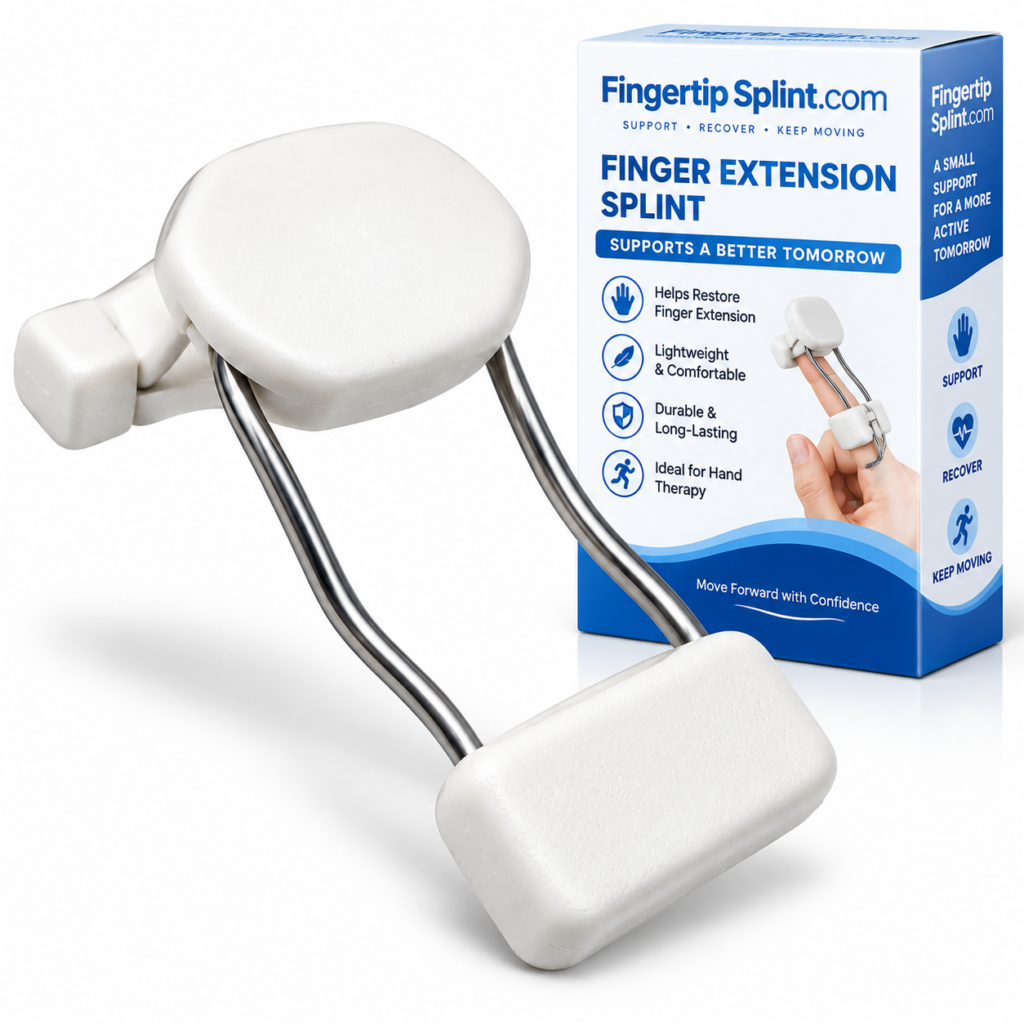
After understanding the mechanism, here is a specific product to examine. The Dynamic Finger Extension Splint – Adjustable Finger Rehabilitation Trainer for Joint Support is one example of a dynamic finger-extension design. Evaluate it using the framework taught in this guide.
Dynamic Finger Extension Splint
- Dynamic finger-extension design
- Adjustable construction
- Finger support and positioning
- Rehabilitation-oriented product positioning
- Full product specifications available on the product page
Evaluating the Product Using the Mechanism Framework
Dynamic Design
Review the dynamic finger-extension design shown on the product page. Check how the mechanism is described and what components contribute to movement support.
Adjustability
Review the adjustable construction. Check how the adjustment works, what it changes, and whether it stays secure during movement.
Finger Support
Review the finger support and positioning characteristics described. Confirm the product is designed for the finger you intend to use it on.
Fit
Review the sizing and fit information provided. Compare your measurements against any stated range before relying on adjustment.
Intended Use
Review the rehabilitation-oriented product positioning. Consider whether the design matches your intended use and follow appropriate professional guidance where applicable.
For a broader look at choosing a dynamic finger splint, the reference What to Consider When Choosing a Dynamic Finger Splint covers selection criteria. For a buyer-focused guide, see Dynamic Finger Extension Trainer: A Buyer’s Guide to Fit and Support.
Common Mistakes
These mistakes come up frequently when people use dynamic finger extension splints. Avoiding them improves the experience.
Dynamic and static designs serve different purposes. Neither is universally better.
Check: whether the design matches your intended use.
More tension is not automatically better. Excessive tension can cause discomfort and concerning symptoms.
Check: follow the manufacturer’s adjustment instructions.
The mechanism needs to sit according to the product instructions to function as intended.
Check: positioning and alignment with the intended finger area.
Sizing directly affects positioning and comfort.
Check: measure and compare to the manufacturer’s sizing chart.
Persistent pain, numbness, tingling, or significant discoloration should not be dismissed.
Check: remove the splint and seek appropriate advice if symptoms persist.
Especially important for physical work or sports.
Check: the manufacturer’s stated intended use.
Mechanisms differ between products.
Check: the specific product’s design and documentation.
A support product doesn’t establish what underlying problem a person has.
Check: whether professional assessment is appropriate.
Recovery and Reassessment Framework
Because recovery depends on the underlying problem, this section provides a reassessment framework rather than a week-by-week healing timeline. Healing time cannot be predicted from the splint alone — it depends on the underlying problem, severity, treatment plan, and individual circumstances.
Stage 1 — Initial Fitting
Focus on sizing, positioning, and comfort. Follow the manufacturer’s fitting instructions. Confirm the splint is positioned correctly.
Stage 2 — Early Use
Monitor how the finger and device interact. Note any changes in comfort or positioning.
Stage 3 — Activity Integration
Use according to the intended plan. Follow professional guidance where applicable.
Stage 4 — Reassessment
Review movement, symptoms, and device fit. Note whether the product is functioning as intended.
Stage 5 — Progression or Adjustment
Only according to appropriate professional or manufacturer guidance.
Stage 6 — Longer-Term Review
Determine whether continued use is still appropriate. Review whether the original problem is improving or whether reassessment is needed.
Remember: Healing time cannot be predicted from the splint alone. It depends on the underlying problem, severity, treatment plan, and individual circumstances.
Who Might Consider a Dynamic Finger Extension Splint?
This section is informational rather than diagnostic. Different people come to this product category for different reasons, and suitability depends on individual circumstances.
People Who Have Been Advised to Use One
Some people arrive at this product after a healthcare professional has recommended a dynamic finger support as part of a broader plan.
People Researching Extension Support
Others are researching finger extension support in general and want to understand what a dynamic design is before speaking with anyone.
People Comparing Mechanisms
Some readers want to understand the difference between dynamic and static mechanisms before deciding what to ask about.
General Buyers
General buyers may want product information before making a decision. This article provides general education, not individualized medical advice.
Important: Suitability for a specific injury or condition should be determined by an appropriate healthcare professional. This article is educational and does not diagnose or prescribe.
Doctor Advice: What Should You Know Before Using a Dynamic Finger Splint?
This section is written with an EEAT (Experience, Expertise, Authoritativeness, Trustworthiness) perspective. It does not provide individualized medical advice, but it does explain what a healthcare professional may consider when evaluating whether a dynamic finger splint is appropriate.
1. Is the underlying problem known?
A support product does not establish what underlying problem a person has. Understanding the problem is an important first step before selecting any device.
2. Is this type of support appropriate?
Dynamic and static designs serve different purposes. A professional can help determine which type of support is appropriate for a given situation.
3. Is the device correctly fitted?
Fit affects positioning, comfort, and how the mechanism interacts with movement. A professional can help confirm correct fitting.
4. Is the tension or position appropriate?
More tension is not automatically better. A professional can help determine appropriate adjustment.
5. Are symptoms improving or worsening?
Reassessment is an important part of any recovery plan. Persistent or worsening symptoms warrant professional attention.
Warning Signs That Warrant Professional Assessment
- Severe or worsening pain
- Significant swelling
- Visible deformity
- Major loss of movement
- Persistent numbness or tingling
- Concerning skin or circulation changes
- Symptoms that are not improving
For general information about finger injuries and hand conditions, see the Mayo Clinic overview of finger injuries. For broader hand anatomy and condition information, the Cleveland Clinic hand anatomy resource provides useful context. For an orthopedic perspective, the AAOS hand and wrist conditions library is a widely referenced resource. For general public health information about hand injuries and recovery, the NHS hand pain guidance offers a practical overview. For additional medical reference information, see MedlinePlus hand injuries and disorders. For clinical and anatomy-focused context, Johns Hopkins Medicine hand conditions provides further reading. General educational context is also available through WebMD’s overview of finger injuries and Healthline’s general finger injury information. For peer-reviewed literature, NCBI PubMed Central hosts open-access research where appropriate. For a broader orthopedic reference, Orthobullets provides structured clinical summaries.
Important: This article does not provide individualized medical advice. Always consult an appropriate healthcare professional regarding your specific situation.
Interactive: Do You Understand How Dynamic Support Works?
This short educational quiz helps reinforce the concepts covered in this guide. It is not a medical assessment.
Dynamic Support Knowledge Check
Q1. What does “dynamic” primarily describe?
Q2. Does dynamic automatically mean suitable for every finger problem?
Q3. Does tighter automatically mean more effective?
Quick Tips Before Using a Dynamic Finger Extension Splint
Buyer Checklist: What to Verify Before Purchasing
Use this checklist to evaluate any dynamic finger extension splint before purchasing. Click each item to mark it as reviewed.
Frequently Asked Questions
A dynamic finger extension splint is a finger-support device designed with components that can provide an extension-oriented force or positioning while still allowing some controlled movement, depending on the construction. Unlike a purely static splint, which maintains a relatively fixed position, a dynamic splint is designed around the relationship between movement and the force it applies. Its exact behavior depends on the mechanism, fit, adjustment, finger involved, and intended use.
The mechanism typically works in a sequence. The finger is positioned inside the splint. As the finger moves, the dynamic component responds by changing its tension or position according to the design. This can apply an extension-oriented force that encourages movement toward extension. The exact result depends on the mechanism, fit, and adjustment. Reassessment helps determine whether the product is functioning as intended.
The word “dynamic” describes a mechanical design approach — not a material property. A dynamic splint is defined by how its components interact with movement. It may use elastic, spring-like, tension-based, or other mechanical components depending on the product. Dynamic does not simply mean “soft,” “flexible,” or “adjustable.” Not every dynamic splint works the same way.
A static splint is typically designed to maintain a relatively fixed position, often relying on a rigid or static structure. A dynamic splint is designed to interact with movement, and may use tension or elastic components to apply an extension-oriented force. The key point is that neither is universally better. Different designs serve different purposes, and the appropriate choice depends on the specific situation and professional guidance.
Depending on the design, yes. A dynamic splint is designed around the relationship between movement and applied force, which typically means some controlled movement is accommodated within the design. However, the exact range and type of movement allowed depends on the specific product. Some dynamic splints are designed to allow more movement than others. Always follow the manufacturer’s instructions and professional guidance where applicable.
Fit depends on alignment, size, position, comfort, and the intended movement. The dynamic mechanism needs to contact and align with the intended finger area. The device needs to correspond to the manufacturer’s sizing guidance. Incorrect placement can alter how the mechanism interacts with movement. Pressure, rubbing, or excessive tightness should not simply be ignored. Follow the manufacturer’s fitting instructions and seek professional guidance where applicable.
Ask a healthcare professional if the underlying problem is not known, if you are unsure whether this type of support is appropriate, if the device does not fit correctly, if you are unsure about tension or positioning, or if symptoms are not improving. Also seek professional assessment for severe or worsening pain, significant swelling, visible deformity, major loss of movement, persistent numbness or tingling, or concerning skin or circulation changes. A support product does not diagnose or treat a medical condition on its own.
Conclusion: Understanding the Mechanism Is the First Step
A dynamic finger extension splint is defined less by the word “splint” and more by how its mechanical components interact with finger movement. Understanding that mechanism helps buyers understand the product, evaluate its fit and adjustment, and recognize when professional guidance may be necessary.
This article has covered what a dynamic finger extension splint is, what “dynamic” actually means, the key components, how the mechanism interacts with finger movement, how it differs from static support, how fit and adjustment change the experience, and what to consider before purchasing. The goal has been to provide a clear, educational foundation for anyone researching this product category.
Ready to Explore the Dynamic Finger Extension Splint?
If you are researching an adjustable dynamic design, review the product specifications, sizing information, and intended-use details before purchasing. The Dynamic Finger Extension Splint – Adjustable Finger Rehabilitation Trainer for Joint Support is one example of a dynamic finger-extension design. Evaluate it using the framework covered in this guide.
View the Dynamic Finger Extension SplintNeed information about other finger support products? Explore the FingerTipSplint shop. For general questions, see the FingerTipSplint FAQ.