
Dynamic vs Static Finger Splints: What’s the Difference?
You keep seeing terms like “dynamic finger splint,” “static finger splint,” “finger extension splint,” and “finger support brace” — and you may wonder whether these are basically the same thing. Dynamic and static splints can both provide finger support, but they differ fundamentally in how they interact with movement. This guide compares them side by side: movement, support, adjustability, design, fit, and everyday use. It explains what each design is intended to do — without declaring one universally better.
What This Comparison Covers
- Quick Answer
- Dynamic vs Static at a Glance
- What Is a Static Finger Splint?
- What Is a Dynamic Finger Splint?
- How They Affect Finger Movement
- 3D Interactive: Split Comparison
- Detailed Comparison Table
- The Mechanical Difference
- Adjustability Comparison
- Fit: Why Both Types Need Positioning
- Interactive: Movement Difference Explorer
- When Does Movement Matter?
- Everyday Activity Comparison
- Common Misunderstandings
- How to Compare the Two
- Interactive: Which Features Matter?
- Product Spotlight
- What Should You Consider Before Choosing?
- Quick Comparison Checklist
- FAQ
- Conclusion
Quick Answer: What Is the Difference Between Dynamic and Static Finger Splints?
Static splints generally hold a finger or joint in a relatively fixed position, while dynamic splints incorporate a mechanism intended to provide support while allowing or assisting a degree of movement, depending on the design. Fit, purpose, and professional guidance remain important.
If you want the foundational mechanism explanation first, the reference Dynamic Finger Extension Splint: What Is It and How Does It Work? covers that in detail. If you want the broader concept, the reference Dynamic Finger Splints Explained: Understanding Extension Support explains extension support itself. This article focuses specifically on comparing the two designs.
Dynamic vs Static Finger Splints at a Glance
Before going deep, here is an immediate visual comparison. The two designs serve different purposes — the key is not to say one is universally better.
Static Finger Splint
Primary concept: Position holding
Relatively fixed support. Designed to limit or prevent certain movements. Structure maintains a particular position. Often simpler mechanically.
Stabilization-orientedDynamic Finger Splint
Primary concept: Supported movement
Incorporates a dynamic component depending on design. Can provide directional support. May permit or assist some movement. Often includes adjustable elements.
Movement-orientedExact function varies by device design.
What Is a Static Finger Splint?
A static finger splint is designed around a relatively fixed structure. Its primary purpose is to maintain a particular position or limit movement at the supported area. Understanding this from first principles clarifies what static splints are designed to do.
Main Characteristics
- Rigid or semi-rigid structure
- Relatively fixed positioning
- Limited movement at the supported area
- Often used when maintaining a particular position is important
Common Misunderstanding
“Static” does not necessarily mean the entire hand becomes immobile. A static finger splint may be designed to restrict movement at one specific joint or finger segment. The rest of the hand may remain fully mobile.
This distinction matters when comparing designs. A static splint is not a single universal design — it is a category of designs that share a focus on maintaining position or restricting movement at a specific area. The exact level of restriction depends on the specific device.
For general information about hand and finger anatomy, the Cleveland Clinic hand anatomy resource provides a clear starting point. For a broader orthopedic perspective on hand and wrist conditions, the AAOS hand and wrist conditions library is widely referenced.
What Is a Dynamic Finger Splint?
A dynamic finger splint incorporates a mechanical element or flexible mechanism that interacts with movement. Rather than simply holding a fixed position, a dynamic design is built around the relationship between the finger and the applied support.
Main Characteristics
- Uses a mechanical element or flexible mechanism
- Can provide directional force or support
- Depending on design, some movement may remain possible
- Adjustment may allow positioning to be changed
Important Distinction
Dynamic does not mean the finger moves normally. It means the design is built around interacting with movement — the amount and direction depend on the specific device. Not every dynamic splint works the same way.
For a deeper explanation of the mechanism behind dynamic designs, the reference How an Adjustable Finger Extension Splint Supports Finger Movement covers the topic in detail.
How Dynamic and Static Splints Affect Finger Movement
This is the core section of the comparison. Understanding how each design interacts with movement clarifies why both exist.
Static Approach
Dynamic Approach
Important: Do not assume that dynamic splints “restore movement.” A dynamic design can be engineered to interact with movement differently from a static design, but the amount and direction of movement depend on the specific device. A comparison article should explain design differences — not promise outcomes.
This is where the two designs diverge most clearly. A static splint is designed around maintaining a particular position. A dynamic splint is designed around interacting with movement. Neither approach is inherently better — the appropriate choice depends on what the device is intended to do.
Dynamic vs Static Finger Splint: How Support Interacts With Movement
This 3D interactive comparison shows how each design approaches support. Tap each panel to see what it contributes.
Interactive 3D: Split Comparison
Tap each panel to explore the design approach
STATIC
Fixed support
Finger, joint, rigid support, anchor points, and restricted movement. The structure maintains a relatively fixed position.
Stabilization-orientedDYNAMIC
Movement-oriented support
Finger, joint, support structure, dynamic tension element, directional force, and movement arc. The mechanism interacts with movement.
Movement-orientedDynamic Support
A dynamic design incorporates a mechanical element that can change its interaction with the finger as the finger moves. Depending on the design, this may allow or assist some movement. The exact movement permitted depends on the device design and intended purpose.
The exact movement permitted depends on the device design and intended purpose.
Detailed Comparison Table
This table compares dynamic and static finger splints across the factors that matter most to buyers. The goal is not to declare a winner — different designs serve different purposes.
| Feature | Dynamic Finger Splint | Static Finger Splint |
|---|---|---|
| Movement | May allow or assist controlled movement | Usually restricts movement more |
| Position | Can provide directional positioning | Holds a relatively fixed position |
| Mechanical element | Often present | Usually simpler |
| Adjustability | Often available, depending on model | Varies |
| Support style | Movement-oriented | Stabilization-oriented |
| Flexibility | Depends on design | Usually more limited |
| Fit | Important | Important |
| Everyday activities | Depends on movement requirements | Depends on level of restriction |
| Tension | May be adjustable on some designs | Usually less mechanically variable |
| Appropriate use | Depends on condition and design | Depends on condition and design |
Note: This table does not rank designs. “Better” does not appear because the appropriate choice depends on the specific situation. A comparison should inform — not prescribe.
Dynamic vs Static: The Mechanical Difference
For technically curious readers, the mechanical difference is worth understanding. The key is that both designs interact with the finger — they just do so differently.
Static Support
A relatively fixed structure maintains a position. The design does not change its mechanical behavior as the finger moves. Think of it as a structure that mainly holds a position.
Dynamic Support
A mechanical element can change its interaction with the finger as the finger moves. Think of it as a design that is built to interact with movement.
This difference is not about complexity being “better.” A simpler static design may be more appropriate for a situation where maintaining a fixed position is the goal. A dynamic design may be more appropriate when the goal involves interaction with movement. The appropriate choice depends on the intended function.
Adjustability Comparison
Adjustability is a factor that buyers often weigh when comparing the two designs. It is important to clarify two distinctions that frequently cause confusion.
Static Splints
Some static splints are molded, some are fixed-size, some are strap-adjustable, and some are semi-rigid. Adjustability varies widely within the static category.
Dynamic Splints
Dynamic splints may include adjustable straps, elastic elements, springs, tension components, or positioning mechanisms. Adjustability also varies within the dynamic category.
Important distinctions: Adjustable does not automatically mean dynamic. And dynamic does not automatically mean highly adjustable. These are separate design characteristics. A splint can be adjustable without being dynamic, and dynamic without being highly adjustable.
This distinction matters when comparing products. If adjustability is important for your situation, check whether the specific product offers it — regardless of whether it is classified as dynamic or static. For a deeper look at adjustment, the reference Adjustable Finger Rehabilitation Splint: How Does It Work? covers the topic in detail.
Fit: Why Both Types Need Correct Positioning
Both dynamic and static designs depend heavily on fit. A sophisticated splint with poor fit can be less useful than a correctly fitted simpler design for its intended purpose. This is a factual design principle, not a product ranking.
A Poor-Fitting Static Splint May:
- Slip out of position
- Create pressure points
- Fail to maintain intended positioning
A Poor-Fitting Dynamic Splint May:
- Shift the support mechanism
- Create unwanted pressure
- Alter how the dynamic component interacts with the finger
Key principle: A sophisticated splint with poor fit can be less useful than a correctly fitted simpler design for its intended purpose. Fit is a foundational factor regardless of design category.
For a detailed look at fit and features, the reference Finger Extension Splint Guide: Features, Fit and Everyday Use covers the topic in more detail.

Interactive: Movement Difference Explorer
Move the slider below to explore how the two design approaches differ. This is an educational visualization, not a product recommendation.
Move the Slider
Static ←────────→ Dynamic
When Does Movement Matter?
Rather than answering with specific diagnoses, this section organizes the comparison around functional requirements. This is safer and more useful than prescribing a design for a named condition.
If the goal involves maintaining a fixed position
A static design may be researched. The design is oriented toward maintaining a position or restricting movement at a specific area.
If the design needs to interact with movement
A dynamic design may be considered. The design is oriented toward interacting with movement through a mechanical or support component.
If the desired movement or restriction is not clear
Professional guidance can help determine what type of support is appropriate. This is not a decision that a comparison article can make for an individual situation.
Important: This section is organized around functional requirements, not specific diagnoses. It does not say “use static for X and dynamic for Y.” The appropriate design depends on the specific situation and professional recommendations where applicable.
Everyday Activity Comparison
This section compares how each design category may interact with everyday activities. The wording uses “may” and “depends” because actual function depends on the specific device and situation.
| Activity | Dynamic Considerations | Static Considerations |
|---|---|---|
| Typing | Movement may be easier depending on design | Restriction may affect key reach |
| Writing | Depends on finger positioning | May feel more restrictive |
| Phone use | Consider flexibility and comfort | Consider restricted finger movement |
| Light tasks | Check stability and comfort | Check whether restriction interferes |
| Exercise | Depends strongly on device and condition | Depends strongly on device and condition |
Important wording: “May” and “depends” — not guaranteed functionality. Everyday activity compatibility depends on the specific device, fit, and underlying situation.
Common Misunderstandings
Several misunderstandings come up frequently when people compare dynamic and static finger splints. Addressing them helps clarify the comparison.
Movement depends on the specific design. Dynamic describes a design approach, not a guaranteed level of movement.
The splint may restrict a specific joint or movement. The rest of the hand may remain mobile.
Complexity is not automatically suitability. The appropriate design depends on what the device is intended to do.
Static designs serve many purposes. The appropriate choice depends on the specific situation — not on a broad assumption about severity.
Excessive tension can cause discomfort and is not automatically appropriate. Follow the manufacturer’s instructions.
The appropriate design depends on the situation. A splint should not be treated as a universal solution.
How to Compare Dynamic and Static Splints
Instead of giving a winner, this section provides a decision framework. Asking these questions helps readers make an informed comparison for their own situation.
Interactive: Compare the Features You Need
Select the features that matter for your situation. This tool helps you understand which design characteristics to investigate — it does not replace professional advice.
Compare the Features You Need
Product Spotlight: A Dynamic Design to Examine
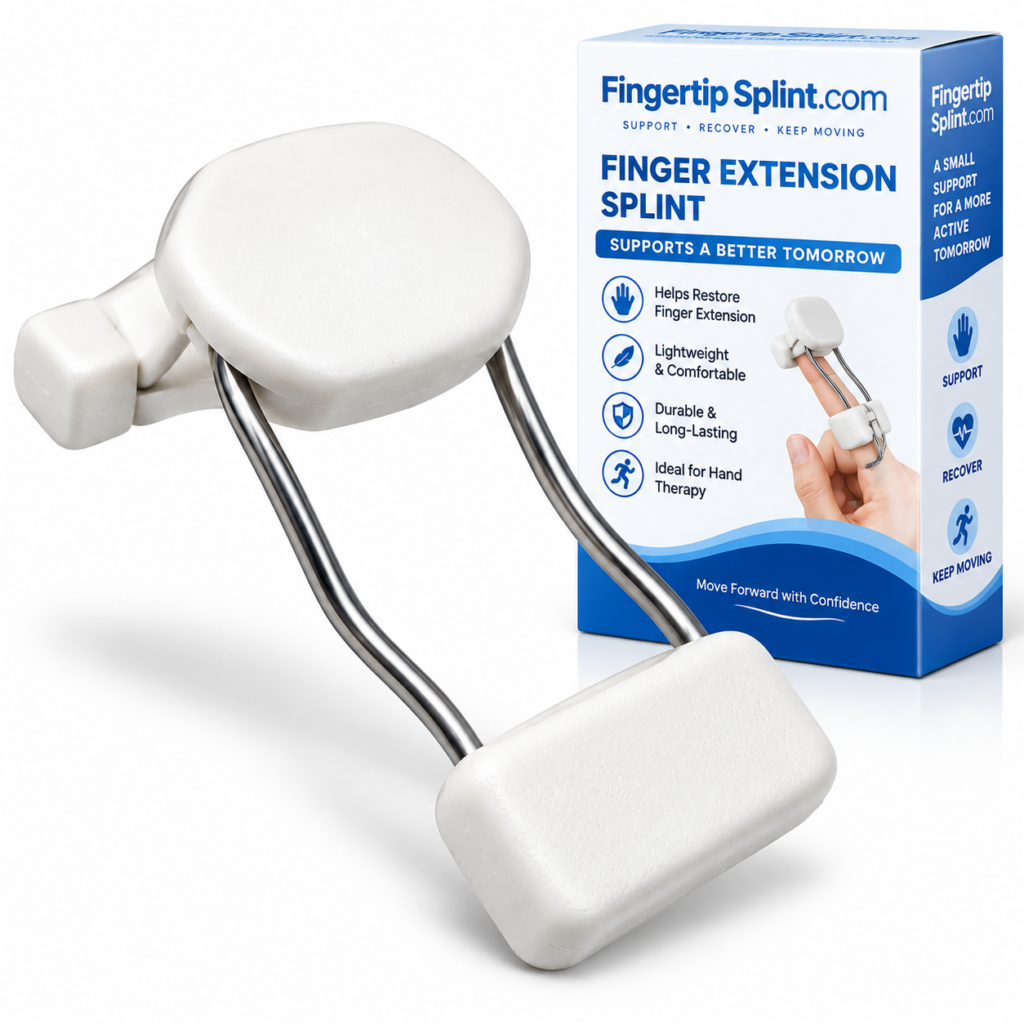
After understanding the comparison, here is a specific product to examine. The Dynamic Finger Extension Splint – Adjustable Finger Rehabilitation Trainer for Joint Support is one example of an adjustable dynamic finger-extension design. It is not declared “the best” — it is presented as a dynamic design to examine if you are comparing dynamic and static approaches.
Dynamic Finger Extension Splint
- Dynamic finger-extension design
- Adjustable construction
- Finger support and positioning
- Rehabilitation-oriented product positioning
- Full product specifications available on the product page
Why This Product Sits on the Dynamic Side of the Comparison
Dynamic Design
The product is described as having a dynamic finger-extension design. This places it in the dynamic-support category, where the design is oriented toward interacting with movement rather than simply holding a fixed position.
Adjustable Construction
The adjustable construction allows positioning to be modified according to the product’s instructions. Note: adjustability is a separate characteristic from dynamic vs static.
Rehabilitation-Oriented Positioning
The product is positioned as rehabilitation-oriented. Consider whether this matches your intended use and follow appropriate professional guidance where applicable.
Fit and Positioning
Review the sizing and fit information provided. Fit is foundational regardless of design category — a well-fitted simpler design can be more useful than a sophisticated poorly-fitted one.
For a buyer-focused guide, the reference What to Consider When Choosing a Dynamic Finger Splint covers selection criteria in more detail.
What Should You Consider Before Choosing a Finger Splint?
This section is written with an EEAT (Experience, Expertise, Authoritativeness, Trustworthiness) perspective. It does not provide individualized medical advice, but it does explain what a healthcare professional may consider.
Finger or joint involved
The specific finger and joint affect the appropriate design. Different fingers and joints have different movement characteristics.
Desired movement
What movement is intended? Maintain position, restrict movement, permit some movement, or provide directional support?
Required restriction
What movement needs to be restricted? The level of restriction affects whether a dynamic or static design may be appropriate.
Device fit
Fit affects positioning, comfort, and how the device interacts with the finger. A poorly fitting device may not function as intended.
Comfort
Comfort affects whether the device can be worn as intended. Persistent discomfort warrants reassessment.
Swelling
Significant swelling may affect fit and may warrant professional assessment.
Pain
Severe or worsening pain warrants professional assessment. A splint should not be used to mask significant symptoms.
Numbness or tingling
Numbness or tingling may indicate nerve involvement and should be assessed professionally.
Existing injury
The presence and nature of an injury affect the appropriate approach. A splint is a support device, not a diagnosis.
Professional recommendations
Professional recommendations are an important factor. A comparison article can explain design differences, but it cannot determine which splint is appropriate for an individual’s specific injury or condition.
Warning Signs That Warrant Professional Assessment
- Severe or worsening pain
- Significant swelling
- Visible deformity
- Major loss of movement
- Persistent numbness or tingling
- Concerning skin or circulation changes
- Symptoms that are not improving
For general information about finger injuries and hand conditions, see the Mayo Clinic overview of finger injuries. For broader hand anatomy and condition information, the Cleveland Clinic hand anatomy resource provides useful context. For an orthopedic perspective, the AAOS hand and wrist conditions library is a widely referenced resource. For general public health information, the NHS hand pain guidance offers a practical overview. Additional medical reference information is available through MedlinePlus hand injuries and disorders. For clinical and anatomy-focused context, Johns Hopkins Medicine hand conditions provides further reading. General educational context is also available through WebMD’s overview of finger injuries and Healthline’s general finger injury information. For peer-reviewed literature, NCBI PubMed Central hosts open-access research where appropriate. For a broader orthopedic reference, Orthobullets provides structured clinical summaries.
Important: A comparison article can explain design differences, but it cannot determine which splint is appropriate for an individual’s specific injury or condition. Always consult an appropriate healthcare professional regarding your specific situation.
Quick Comparison Checklist
Before choosing between dynamic and static support, check the following. Click each item to mark it as reviewed.
Quick Tips for Comparing Finger Splints
Frequently Asked Questions
Static splints generally hold a finger or joint in a relatively fixed position, while dynamic splints incorporate a mechanism intended to provide support while allowing or assisting a degree of movement, depending on the design. The key difference is in how they interact with movement — static designs focus on maintaining position or restricting movement, while dynamic designs are built around interacting with movement. Fit, purpose, and professional guidance remain important for both.
It depends on the specific design. Dynamic splints are designed to interact with movement, which may mean more movement is possible than with a static design. However, not all dynamic splints allow the same amount of movement. Some dynamic designs may permit or assist a significant range of motion; others may interact with movement in more limited ways. The exact amount depends on the device’s construction and intended purpose.
A static finger splint is designed around a relatively fixed structure. Its primary purpose is to maintain a particular position or limit movement at the supported area. It does not necessarily mean the entire hand becomes immobile — a static finger splint may be designed to restrict movement at one specific joint or finger segment. The exact level of restriction depends on the specific device.
A finger splint is dynamic when it incorporates a mechanical element or flexible mechanism that interacts with movement. Rather than simply holding a fixed position, a dynamic design is built around the relationship between the finger and the applied support. The word “dynamic” describes a design approach — not a material property. Not every dynamic splint works the same way, and the specific mechanism varies between products.
Adjustability varies between dynamic splints. Some dynamic designs include adjustable straps, elastic elements, tension components, or positioning mechanisms. Others may have more limited adjustability. Importantly, adjustable does not automatically mean dynamic, and dynamic does not automatically mean highly adjustable. These are separate design characteristics. Check the specific product to see what adjustability it offers.
Neither design is universally better. Suitability depends on the intended movement, required restriction, design, fit, and underlying situation. A static design may be more appropriate when maintaining a fixed position is the goal. A dynamic design may be more appropriate when the goal involves interacting with movement. A comparison article can explain design differences, but it cannot determine which splint is appropriate for an individual’s specific injury or condition.
The appropriate design depends on the finger and joint involved, the intended movement or restriction, the underlying problem, fit, and professional recommendations where applicable. If you are unsure, speak with a healthcare professional. A comparison article can inform your understanding of design differences, but it cannot replace individualized advice. Also seek professional assessment for severe or worsening pain, significant swelling, visible deformity, major loss of movement, persistent numbness or tingling, or concerning skin or circulation changes.
Conclusion: Two Designs, Two Different Purposes
Dynamic and static finger splints are not the same thing — but neither is universally better. Static splints are designed around maintaining a relatively fixed position or restricting movement. Dynamic splints are designed around interacting with movement. The key is to understand what each design is intended to do and how its characteristics match the intended use.
This comparison has covered movement, support, adjustability, design, fit, and everyday use. It has clarified that adjustability is a separate characteristic from dynamic vs static, that fit matters for both designs, and that a sophisticated splint with poor fit can be less useful than a correctly fitted simpler design for its intended purpose.
Explore Dynamic Finger Extension Support
Now that you understand the difference between dynamic and static designs, explore the specifications and fit considerations of adjustable dynamic finger support. The Dynamic Finger Extension Splint – Adjustable Finger Rehabilitation Trainer for Joint Support is one example of a dynamic finger-extension design. Evaluate it using the comparison framework covered in this guide.
View the Dynamic Finger Extension SplintNeed information about other finger support products? Explore the FingerTipSplint shop. For general questions, see the FingerTipSplint FAQ. For B2B inquiries, see the medical finger splint supplier page or request a quote.