
Your finger needs protection or support, but you are not sure which self-adhesive protector to choose, how much support you need, or how to tell whether the fit is right. This guide walks you through finger compatibility, support area, adhesion, breathability, material, mobility, sizing, and the mistakes that lead to buying the wrong product.
If you need thumb-specific support, start with our self-adhesive thumb splint buying guide. This article focuses on choosing a general finger protector.
Table of Contents
- Choosing Is Not Just About Size
- What Is a Self-Adhesive Finger Protector?
- 10 Features to Check
- Step-by-Step Selection
- Interactive Fit Checker
- Protector vs Sleeve vs Splint
- 3D Finger Protector Anatomy
- Everyday Activities
- How to Apply Correctly
- When a Protector May Not Be Enough
- 10 Buying Mistakes
- Protection for Different Use Cases
- Product Evaluation
- Doctor Advice
- Recovery and Reassessment
- Buyer Checklist
- 7 Quick Tips
- FAQ
The Real Problem: Choosing a Finger Protector Is Not Just About Size
Most buyers start by looking at size, and that is only one part of the decision. A finger protector that fits in circumference but covers the wrong area will not help. A protector with the correct coverage but the wrong support level will either restrict too much or provide too little. The confusion usually comes from not knowing which features matter for a specific finger and situation.
Why People Buy the Wrong Finger Support
Finger sleeve vs protector
These are different product categories. A sleeve provides flexible coverage, while a protector may offer more targeted protection or support.
Adhesive patch vs splint
A patch is designed for support or protection, while a splint is often designed for more structured positioning or immobilization.
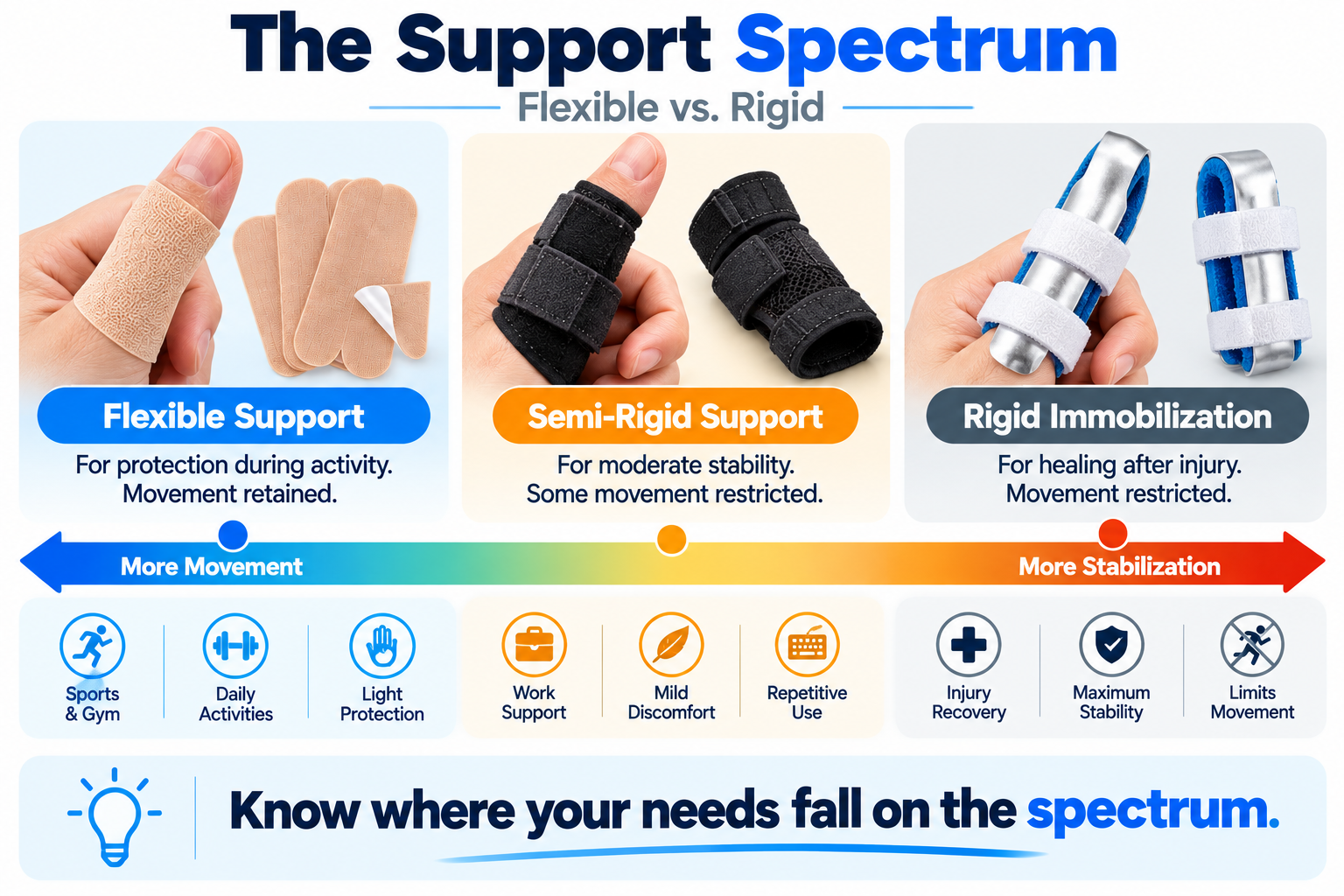
Flexible vs structured support
Flexible designs allow more movement. Structured designs provide more restriction. Neither is automatically better.
Protection vs immobilization
Coverage and support are not the same as immobilization. These serve different purposes.
One-size products vs measured products
One-size products may not fit every finger. Measured products are usually more reliable for comfort and positioning.
Comfort vs excessive tightness
Tight is not the same as supportive. Excessive pressure can cause new problems.
Protection and Immobilization Are Not the Same
A flexible finger protector may provide coverage or support during daily activities. It is not designed to immobilize the finger the way a structured splint might. Some injuries require a more structured splint or professional assessment. Do not assume that every adhesive protector can treat an injury.
What Is a Self-Adhesive Finger Protector?
A self-adhesive finger protector is a support or protection product that uses an adhesive or self-fastening mechanism to stay in position on the finger. It is typically low-profile and can provide coverage, cushioning, or targeted support depending on the design.
How Self-Adhesive Finger Supports Work
The protector contacts the skin and uses adhesive or a self-fastening mechanism to maintain placement. The support or coverage area is designed around specific parts of the finger. Movement around the finger depends on the design, and pressure distribution depends on the fit and the material.
Where a Finger Protector Can Provide Support
Fingertip
Coverage for the very tip of the finger, often used for protection during contact activities.
Finger shaft
Coverage along the length of the finger, useful for protection from rubbing or pressure.
PIP joint area
The middle joint. A common area for sports injuries and a common target for support.
DIP joint area
The joint closest to the fingertip. Specific injuries here may need specific splinting.
MCP area
Where the finger meets the hand. Support here affects grip and hand function differently.
Side of finger
Coverage along one side, often used for protection against rubbing or impact.
Around a pressure area
Targeted cushioning around a specific contact point, useful for repetitive tasks.
Full finger
Comprehensive coverage, usually for maximum protection rather than mobility.
Self-Adhesive vs Traditional Finger Splint
| Feature | Self-Adhesive Protector | Traditional Finger Splint |
|---|---|---|
| Application | Usually quick | May require positioning |
| Profile | Often low-profile | Can be bulkier |
| Mobility | Depends on design | Often more restricted |
| Adjustability | Adhesive and placement dependent | Depends on design |
| Daily activities | Potentially convenient | Depends on design |
| Immobilization | Product-dependent | Often greater |
| Fit | Important | Important |
These are general design differences, not universal rules. Always follow the specific product’s instructions.
10 Features to Check Before Choosing a Self-Adhesive Finger Protector
1. Correct Finger Compatibility
The same product is not automatically suitable for every finger. Index, middle, ring, and little fingers have different circumferences and different functional demands. A protector sized for the index finger may not fit the pinky comfortably, and vice versa.
2. Correct Support Area
Ask where exactly the protector needs to sit. A product covering the wrong area may be uncomfortable or ineffective for its intended purpose. Confirm that the coverage matches the area you need protected or supported.
3. Adhesive Security
Consider secure attachment, edge lifting, sweat, repeated movement, reapplication, and skin compatibility. If the protector repeatedly slips or irritates the skin, the fit or material may not be right for you.
4. Breathability
Air circulation, moisture management, sweat handling, long-duration wear, and skin comfort all matter. A breathable design allows some airflow through the material, which can reduce heat buildup during extended wear. For a deeper look at how breathability interacts with fit and activity, see our guide on breathable thumb support patch features and fit.
5. Material and Skin Contact
Consider softness, flexibility, surface texture, potential irritation, and personal sensitivity. A very soft product may not provide the amount of structure or coverage someone actually needs. Soft does not automatically mean better.
6. Mobility
Protection, support, and mobility exist in balance. A finger protector should not automatically restrict every movement. Check bending, straightening, grip, pinching, typing, and holding objects to confirm that the movements you need remain possible.
7. Size and Fit
Signs of a good fit
- Secure
- Comfortable
- Does not slide excessively
- Does not create excessive pressure
- Allows intended movement
Signs it is too tight
- Numbness
- Tingling
- Significant discoloration
- Increasing discomfort
- Excessive pressure
8. Low-Profile Design
A low-profile design can matter for typing, phone use, writing, office work, household tasks, and light activities. Bulk that interferes with daily tasks means the protector will not be worn consistently.
9. Intended Activity
Different buyers may need finger protection during office work, typing, household activities, repetitive hand movements, craft work, light exercise, or everyday tasks. Match the design to your actual activity, not just to the look of the product.
10. Care and Reusability
Check manufacturer care instructions, skin cleaning, drying, adhesive performance, replacement guidance, and signs of wear. A protector that cannot be maintained hygienically will not be used consistently.
How to Choose the Right Finger Protector Step by Step
Step 1 — Identify the Finger
Which finger needs support? Index, middle, ring, or little finger. Confirm the intended finger before comparing products. Each finger has a different circumference and different functional demand.
Step 2 — Identify the Support Area
Fingertip
Coverage for the very tip of the finger, often for protection during contact activities.
Finger joint
Support around the PIP or DIP joint, depending on the specific need.
Side of finger
Coverage along one side, often for rubbing or impact protection.
Full finger
Comprehensive coverage, usually for maximum protection rather than mobility.
Step 3 — Define Your Main Goal
What Is Your Main Goal?
Select your priority and we will show you what to look for. This tool helps compare product characteristics, not diagnose your condition.
- Coverage that matches the area you need to protect
- Durable material that withstands repeated use
- Secure adhesion that does not lift at the edges
- Comfortable skin contact during extended wear
- Appropriate for your intended activity
Interactive Finger Protector Fit Checker
Click each item to check your fit. If you cannot confirm most of these, the fit needs adjustment.
Finger Protector vs Finger Sleeve vs Finger Splint
Finger Protector
Primarily provides protection or coverage. Designed around cushioning or shielding a specific area. Usually the lightest option.
Finger Sleeve
Flexible coverage that can provide light compression or support depending on the design. Usually more flexible than a structured splint.
Finger Splint
Structured positioning or stabilization. Designed to limit movement in specific ways, often used for recovery from injury.
| Consideration | Protector | Sleeve | Splint |
|---|---|---|---|
| Primary purpose | Protection or coverage | Compression or light support | Structured positioning |
| Mobility | Usually high | Usually high | Variable, often lower |
| Support level | Light to moderate | Light | Moderate to structured |
| Typical use | Daily protection | Everyday support | Recovery or specific injuries |
| Fit priority | Coverage area | Comfort | Positioning |
Use this table to identify which category matches your situation. If you need structured positioning or immobilization, a splint may be more appropriate. If you need protection or coverage, a protector is usually the right category. For trigger finger or mallet finger, see our dedicated finger splint for trigger and mallet finger guide.
3D Interactive Finger Protector Anatomy
Before you evaluate any product, it helps to know what you are looking at. The interactive 3D component explorer below breaks down the parts of a self-adhesive finger protector. Click each component to see what it does and why it matters.
Finger Protector Component Explorer
Click a component to learn what it does and why it matters when you are buying.
Self-Adhesive Finger Protector for Everyday Activities
The right protector depends on what you actually do with your hands. This section covers practical usability, not medical treatment claims.
Typing and computer work
A low-profile protector that does not interfere with finger movement is more practical for typing. Check that the adhesive does not lift during repeated keystrokes.
Writing and studying
Grip and finger mobility matter. A protector that restricts the writing hand will be removed during study sessions.
Phone use
Thumb and finger movement for scrolling, tapping, and swiping. If the protector interferes, it will not be worn during phone use.
Household tasks
Cooking, cleaning, and lifting involve moisture and repeated hand use. Choose a design that stays secure and handles moisture.
Repetitive hand activities
Assembly work, craft work, or repetitive gripping. A protector that stays in place during repeated movement is essential.
General daily protection
Everyday tasks where a finger needs coverage or light support. Choose based on your actual routine rather than the product’s appearance.
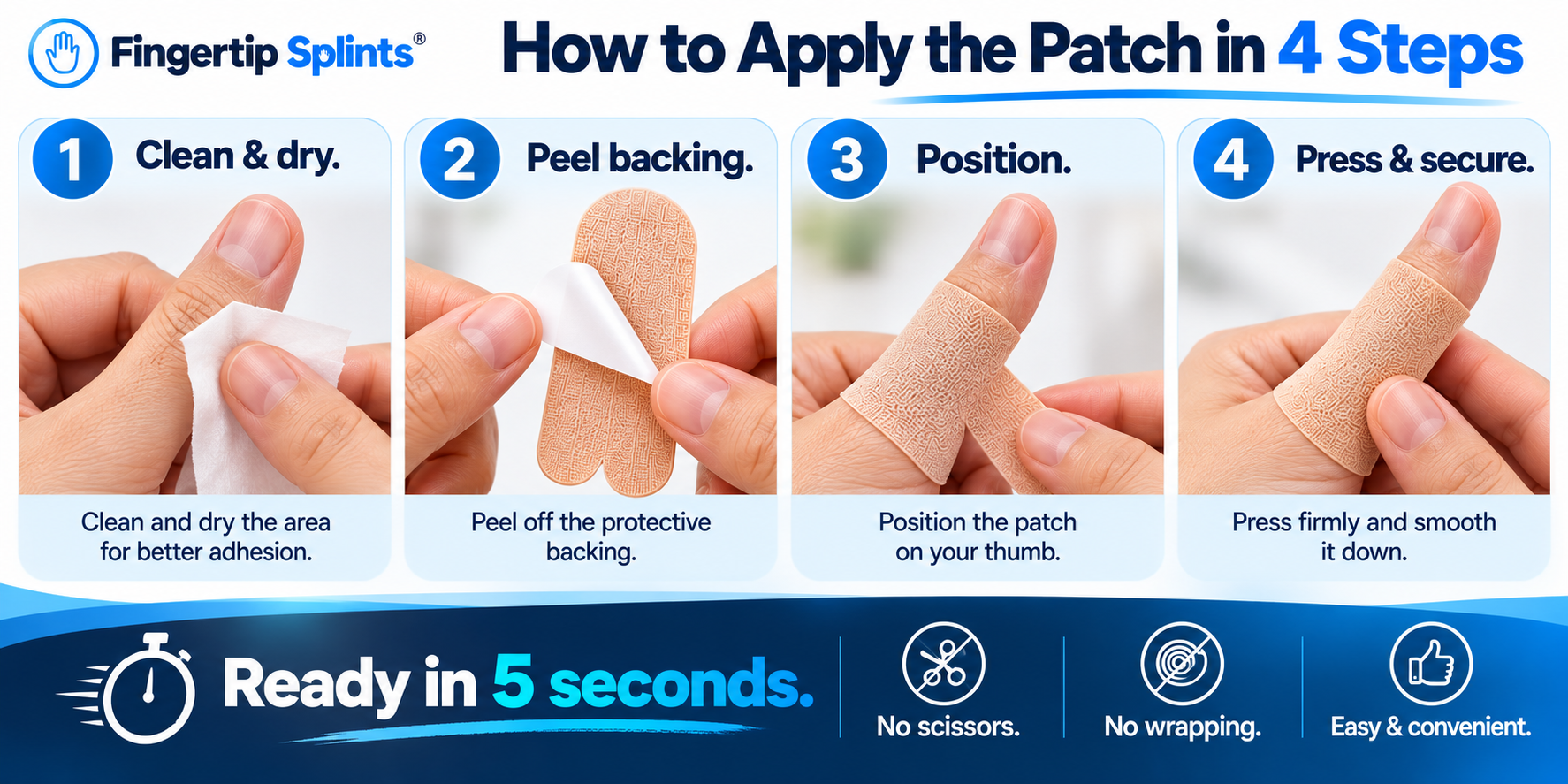
How to Apply a Self-Adhesive Finger Protector Correctly
Follow these six steps for correct application, then recheck after wear.
When a Self-Adhesive Finger Protector May Not Be Enough
- Significant injury
- Visible deformity
- Severe or worsening pain
- Major swelling
- Persistent numbness or tingling
- Significant loss of movement
- Suspected fracture or dislocation
- Symptoms that are not improving
The Cleveland Clinic finger splint resource notes that different finger splints serve different purposes and that the appropriate type depends on the injury and intended stabilization. A flexible protector is not designed for the level of immobilization that some injuries require.
Stop Using a Protector If It Causes Concerning Symptoms
Increasing tightness is not a solution. If the protector causes numbness, tingling, discoloration, or increasing pain, remove it and reassess the fit. If symptoms continue, seek appropriate medical advice.
10 Common Finger Protector Buying Mistakes
A sleek product is not automatically appropriate. Look at coverage and construction.
The same product is not automatically suitable for every finger. Confirm the intended finger.
Sizing varies by brand and finger. Follow the specific product’s sizing guidance.
Excessive pressure does not improve support. It creates new problems.
Heat and moisture affect comfort during extended wear. Consider the material and ventilation.
More coverage is not always better. Match the coverage area to your actual need.
A protector that interferes with your work or hobbies will not be worn consistently.
These are different product categories. A protector is not a substitute for structured immobilization.
Redness, itching, or irritation are signs the fit or material needs reassessment.
Significant injuries require professional evaluation, not just a product purchase.
Finger Protection for Different Use Cases
For office and computer work
Low-profile design with finger freedom for typing and mouse use. The protector should not interfere with keystrokes.
For students and writing
Comfort during extended writing sessions. Grip and finger mobility matter for holding a pen or pencil.
For household activities
Secure fit and moisture handling during cooking, cleaning, and lifting. Choose a design that stays in place.
For repetitive finger movements
Assembly work, craft work, or repeated gripping. A protector that stays in place during repeated movement is essential.
For general daily protection
Everyday tasks where a finger needs coverage or light support. Choose based on your actual routine.
For light activity
Walking, light exercise, or gentle movement. A low-profile design is usually more practical than a bulky one.
How to Evaluate the FingerTipSplint Self-Adhesive Finger Protector
Use this section as a worked example of how to evaluate a self-adhesive finger protector against the criteria in this guide. The product being evaluated is the breathable support patch from FingerTipSplint.
Fingertip Splint Thumb Breathable Support Patch
- Finger compatibility: Designed for finger and fingertip support applications
- Adhesive design: Self-adhesive format for quick, strap-free application
- Material: Breathable construction intended for extended wear
- Breathability: Material designed for airflow and moisture management
- Coverage: Check the product page for specific coverage details
- Support: Targeted support for the intended application area
- Mobility: Low-profile design intended to preserve useful finger movement
- Profile: Low-bulk design that does not interfere with daily tasks
- Application: Simple application following manufacturer instructions
- Daily usability: Intended for everyday support and activity use
Who May Find This Product Relevant?
Buyers looking for a low-profile, breathable finger protector for daily activities. People who want a simple, strap-free format. Users who need targeted support or protection for a specific finger area. Those who prefer to avoid the bulk of a traditional splint for everyday use.
What to Check Before Ordering
Review the product specifications, confirm the intended finger, check the sizing guidance, review the application instructions, and confirm the care information. For buyers comparing different finger support solutions, explore the medical finger splint supplier resources. For wholesale or business inquiries, use the request-a-quote page.
Doctor and Hand Specialist Advice
This section is written in the tone of a practical professional checklist. It is not a diagnosis and does not replace an in-person assessment.
Why the Correct Support Depends on the Problem
Different finger problems require different support designs. A flexible protector may be appropriate for coverage and light support. A structured splint may be needed for immobilization after injury. The right choice depends on the underlying problem, not on which product looks best.
Why Fit Matters
A protector that does not fit correctly will not provide consistent coverage or support. Excessive pressure can cause skin problems, numbness, or discoloration. The Cleveland Clinic finger splint resource identifies skin problems and nerve impingement among potential complications of improperly used finger splints.
Why Prolonged Immobilization Is Not Automatically Better
More restriction is not always the right answer. Some situations benefit from movement and function. Others require immobilization. The appropriate approach depends on the specific injury and professional guidance.
When Professional Evaluation Makes Sense
Additional trusted resources include the Mayo Clinic trigger finger diagnosis and treatment page, the Mayo Clinic thumb arthritis overview, the AAOS OrthoInfo trigger finger page, the MedlinePlus finger injuries resource, the NHS finger injuries page, the WebMD splints overview, and the Healthline finger injury resource.
Recovery and Reassessment: What to Monitor
This is a reassessment framework, not a promised week-by-week healing schedule. Duration depends on the underlying problem and professional guidance.
Stage 1 — Initial Protection
Check fit, coverage, and comfort. Confirm the protector stays in place and does not create pressure points.
Stage 2 — Comfort and Fit Check
Monitor skin, sensation, and positioning during daily use. Adjust or remove the protector if any concerning symptoms develop.
Stage 3 — Activity Reassessment
Ask whether the protector supports your daily activities and whether the coverage area is still appropriate.
Stage 4 — Professional Review if Symptoms Persist
If symptoms persist, worsen, or interfere with function, seek professional assessment rather than continuing to self-treat.
Self-Adhesive Finger Protector Buyer Checklist
Click each item to confirm. Aim to check all 10 before buying.
7 Quick Tips for Choosing a Finger Protector
Frequently Asked Questions
A self-adhesive finger protector is a support or protection product that uses an adhesive or self-fastening mechanism to stay in position on the finger. It is typically low-profile and can provide coverage, cushioning, or targeted support depending on the design. It is not designed to immobilize the finger the way a structured splint might.
Self-adhesive designs are popular because they are quick to apply and do not require straps or complex closures. They can be useful for daily protection, light support, and situations where a low-profile option is preferred. However, they are not a substitute for structured medical immobilization when that is required.
Start by identifying the finger and the specific area you need protected or supported. Then define your main goal: protection, support, comfort, mobility, or coverage. Check the product’s sizing and application instructions. Confirm that the coverage area matches your need and that the material is appropriate for your activity.
Do not assume tighter means better. Monitor skin and sensation during use. If symptoms persist, worsen, or involve significant injury, seek professional assessment before relying on the product.
Restriction varies by design. A flexible protector typically allows more movement, while a more structured design may restrict more. The correct balance depends on the purpose of the protector and your daily activities. A protector that unnecessarily restricts the movement you need for work or daily tasks will not be worn consistently.
If you need structured immobilization, a splint may be more appropriate than a protector. If you need coverage and light support, a flexible protector is usually the right category.
It should be secure and comfortable, not excessively tight. You should be able to wear it for the intended period without numbness, tingling, significant discoloration, or increasing pain. A protector that creates excessive pressure is not providing better support — it is creating new problems.
If concerning symptoms occur, remove the protector and reassess the fit rather than tightening it further. The Cleveland Clinic finger splint resource advises seeking medical attention when splint users develop severe pain, worsening swelling, discoloration, or changes in sensation.
It depends on the product and your activity. A breathable, low-profile protector may be comfortable for extended wear, especially if it does not interfere with your daily tasks. A more structured design may be less comfortable for all-day use.
Monitor skin and sensation during wear. If you notice redness, itching, numbness, or other changes, remove the protector and reassess. Prolonged wear without reassessment is not recommended, and symptoms that persist should be evaluated professionally.
A finger protector is primarily designed for coverage, cushioning, or light support. A finger splint is designed for structured positioning or stabilization, often to limit movement during recovery from injury. The Cleveland Clinic finger splint resource notes that different splints serve different purposes and that the appropriate type depends on the injury and intended stabilization.
A protector is not a substitute for a splint when immobilization is required. If you need structured support, choose a splint. If you need protection or light support, a protector is usually the right category.
It depends on the injury. A lightweight protector may be appropriate for minor irritation or for protecting a finger during daily activities. It is not designed for significant injuries that require immobilization or professional assessment.
Seek medical advice if you have significant trauma, visible deformity, severe or worsening pain, major swelling, persistent numbness or tingling, significant loss of movement, or symptoms that are not improving. Proper assessment matters for both treatment and return-to-activity decisions.
From Confusion to Confident Selection
You came here unsure which finger protector to buy. Now you understand exactly what features, fit, support level, mobility, and intended use you need to compare. Evaluate the Fingertip Splint Thumb Breathable Support Patch against the criteria in this guide before deciding.
Explore FingerTipSplint’s finger and thumb support range, browse the medical finger splint supplier resources, check the FingerTipSplint FAQ, or use the request-a-quote page for wholesale or business inquiries.
View the Product Explore Finger SupportConclusion: Start With the Finger, Not the Product Photo
The right self-adhesive finger protector is the one that fits your finger, covers the intended area, stays comfortable during your daily activities, and preserves the movement you need. A low-profile breathable design can be an excellent option for everyday protection, provided you understand what it is designed to do and what it is not designed to replace. Before you buy, identify the finger, confirm the support area, check the sizing guidance, and verify that the design matches your routine.
If symptoms persist, worsen, or involve significant trauma, deformity, severe pain, numbness, or loss of function, do not simply buy a stronger product. Seek appropriate medical evaluation. For medical finger splint supply and distribution, see the medical finger splint supplier page and the finger splint distributor page. For the full FingerTipSplint range, visit the FingerTipSplint homepage.