
Your finger does not straighten normally. You have seen adjustable finger straighteners online, but product descriptions make similar-looking devices sound completely different. What should you actually look for? This guide walks you through the straightening mechanism, support position, adjustability, finger compatibility, fit, comfort, mobility, materials, daily use, and when professional assessment matters. For a broader look at the FingerTipSplint ecosystem, start at the FingerTipSplint homepage.
Table of Contents
- Why Is the Finger Bent?
- Straightener vs Splint vs Brace
- 10 Features to Look For
- How a Straightener Works
- 3D Straightener Infographic
- How to Choose the Right One
- Interactive Selection Tool
- Adjustable vs Fixed
- How Tight Should It Be?
- Recovery and Reassessment
- 10 Common Mistakes
- Who Should Consider One
- Doctor Advice
- Fit Checker
- Product Guide
- Straightener vs Trigger Finger Brace
- Buyer Checklist
- 7 Quick Tips
- FAQ
Check the correct finger compatibility, intended support position, adjustment range, sizing, comfort, material, stability, and movement allowed by the design. A finger straightener should not simply be tightened as much as possible. Fit and intended positioning matter, and persistent or significant finger deformity or movement problems may require professional assessment.
Why Is the Finger Bent?
A bent appearance can be associated with different underlying issues. Understanding this context matters because a straightener designed for one type of positioning problem is not automatically appropriate for every cause of a bent finger.
A Bent Finger Can Have Different Causes
Injury
A fall, impact, or sports injury can affect the finger’s structure or the tissues that straighten it.
Joint stiffness
Prolonged immobility or inflammation can reduce the finger’s ability to straighten fully.
Tendon problems
Tendons that extend or flex the finger can be affected by injury, inflammation, or mechanical issues.
Swelling
Swelling around joints or tendons can temporarily affect the finger’s resting position.
Previous trauma
Past injuries can leave lasting changes to joint structure or soft tissue.
Joint conditions
Arthritis and other joint conditions can affect finger positioning over time.
Why the Cause Matters
A straightener designed for one type of positioning problem is not automatically appropriate for every cause of a bent finger. Different causes may require different support approaches, and some situations may benefit from professional assessment before product selection. The Mayo Clinic trigger finger symptoms and causes page describes one common cause of finger movement problems, but it is not the only one.
Do Not Assume Every Bent Finger Is Trigger Finger
A finger that appears bent does not automatically mean trigger finger. Other conditions and injuries can produce similar appearances. If you are specifically evaluating trigger finger support, our guide on the best adjustable trigger finger brace covers that specific fit and sizing intent.
Finger Straightener vs Finger Splint vs Finger Brace
Product names can be confusing. Ecommerce terminology is not always standardized, and different sellers may use the same terms to describe different designs.
Finger Straightener
Focuses on products designed to influence or support finger positioning. Usually intended to encourage a more extended finger position.
Finger Splint
Emphasizes stabilization and positioning. Often designed for more structured support during recovery from injury.
Finger Brace
A broader term that can cover everything from flexible sleeves to structured splints. The least specific of the three.
Why Product Names Can Be Confusing
Some products labeled as “straighteners” function more like splints. Some “braces” are essentially straighteners. The name alone does not tell you what the product is designed to do.
What Matters More Than the Name
| Consideration | What to Check |
|---|---|
| Intended position | What position does the product support or encourage? |
| Support area | Which part of the finger does it act on? |
| Adjustment | How can the fit or position be modified? |
| Fit | How does the product accommodate different finger sizes? |
| Material | What is the construction, and how does it feel against the skin? |
| Movement | What movement remains possible with the product in place? |
| Instructions | Does the manufacturer provide clear use and care guidance? |
10 Features to Look For in an Adjustable Finger Straightener
This is the core buyer-guide section. Each feature is something you can verify or ask about before purchasing.
1. Correct Finger Compatibility
Check whether the product is designed for the index, middle, ring, or little finger. Do not assume one straightener works equally well on every finger. Finger circumference, length, and joint position differ.
2. Straightening or Positioning Mechanism
Ask exactly what the product is designed to adjust or support. Does it actually control position, or does it simply provide coverage? The article should teach buyers to look beyond marketing language and verify the mechanism.
3. Adjustability
Consider the adjustment range, straps, knob mechanisms, closures, and position adjustment. Adjustable does not mean unlimited. The product still has design limitations. If the adjustment mechanism does not hold its setting, the adjustability is not useful.
4. Support Position
Where the support acts on the finger matters. Consider the joint area, finger length, support frame, and contact points. A straightener designed for one joint will not stabilize another.
5. Fit and Sizing
Finger circumference
Measure according to the manufacturer’s instructions for the specific finger.
Finger length
Some products are designed for specific finger lengths, not just circumferences.
Manufacturer size chart
Compare your measurement with the specific product’s chart. Sizing varies by brand.
Adjustment range
Even adjustable products have a size range. Confirm the range accommodates your finger.
6. Comfort
Consider padding, skin contact, edges, pressure points, material, and breathability. A straightener that is uncomfortable will not be worn consistently. Comfort is not a luxury — it is a requirement for consistent use.
7. Stability
A straightener is not useful if it constantly moves away from its intended position. Look for a secure closure, stable straps, a reliable adjustment mechanism, and a design that stays in place during normal activities.
8. Mobility
Understand the difference between supporting a position and completely restricting movement. Some designs allow more movement than others. The right balance depends on the purpose of the straightener and your daily needs.
9. Low-Profile Design
A low-profile design matters for typing, writing, phone use, and light daily tasks. Bulk that interferes with daily tasks means the straightener will not be worn consistently.
10. Intended Use
Check whether the product is designed for daytime use, nighttime use, short-duration use, or activity-specific support. Follow the manufacturer’s instructions for wearing schedule.
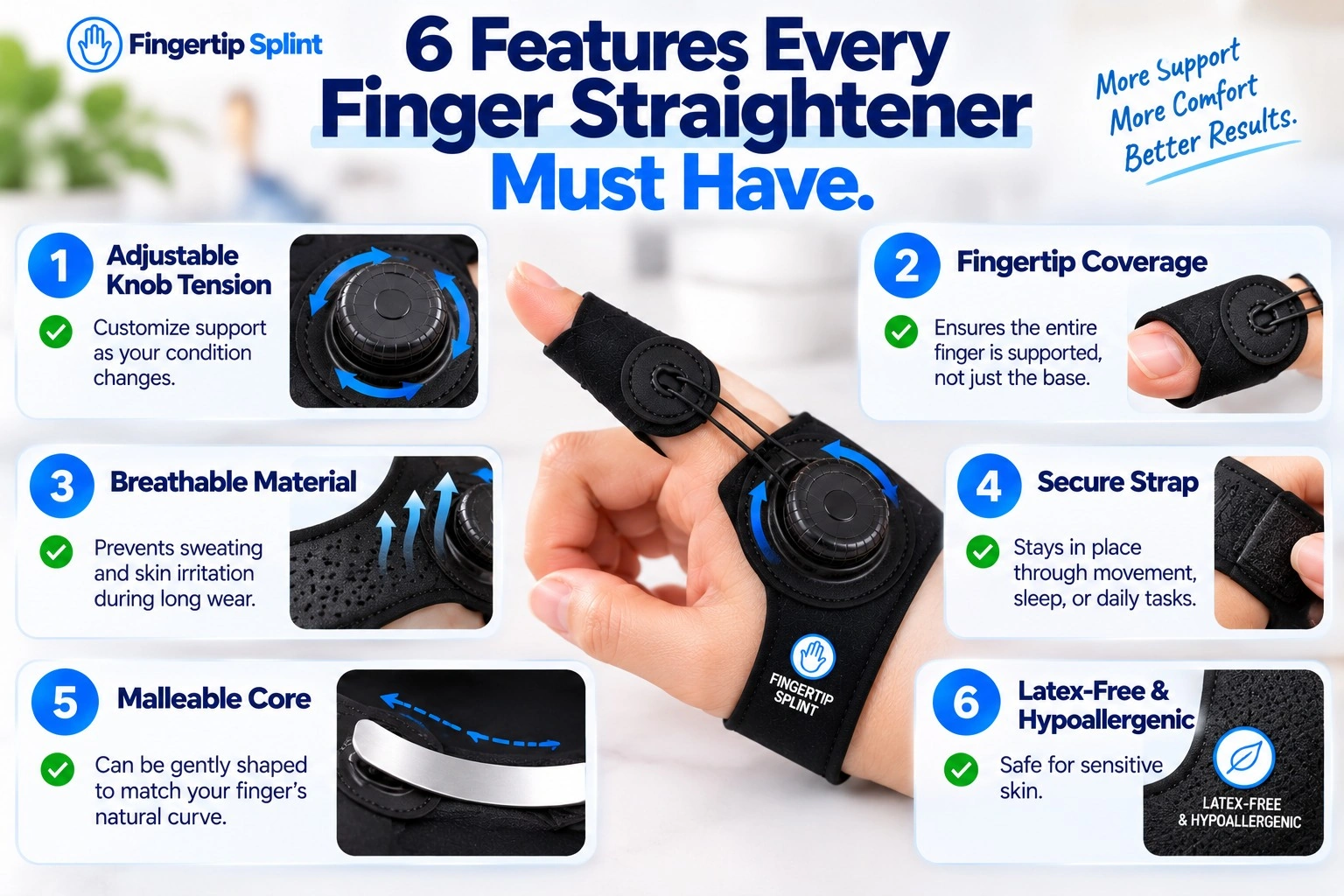
How an Adjustable Finger Straightener Works
Support Structure
The support frame or surface interacts with the finger to encourage or maintain a position. The structure determines where the support acts and how it maintains that support during use.
Adjustment Mechanism
Straps, knobs, or other mechanisms allow you to modify the fit or position within the manufacturer’s intended range. The adjustment mechanism should be easy to use, hold its setting, and not create pressure points.
Contact Points
Pressure and support are distributed through the contact points. The design of these contact areas determines comfort and whether pressure points form during extended wear.
Movement Zone
The movement zone is the part of the design that leaves room for finger movement. Different designs allow different amounts of movement. Consider whether the movement allowed matches your daily needs.
3D Interactive Finger Straightener Infographic
The interactive 3D component explorer below breaks down the parts of an adjustable finger straightener. Click each component to see what it does and why it matters.
Finger Straightener Component Explorer
Click a component to learn what it does and why it matters when you are buying.
Conceptual positioning: a straightener supports a position — it does not guarantee permanent correction. Results depend on the underlying cause and professional guidance.
How to Choose the Right Adjustable Finger Straightener
Step 1 — Identify Which Finger Needs Support
Index, middle, ring, or little finger. Confirm the intended finger before comparing products.
Step 2 — Identify Where the Finger Bends
Which joint is affected? The DIP joint is closest to the fingertip. The PIP joint is the middle joint. The MCP joint is where the finger meets the hand. Different joints require different support designs.
Step 3 — Understand Your Main Goal
What Is Your Main Goal?
Select your priority and we will show you what to look for. This is a shopping decision tool, not a medical diagnosis.
- Support structure that encourages the intended position
- Adjustability to fine-tune the position within a range
- Correct joint coverage
- Secure fit that stays in place
- Comfort for the intended wear period
Step 4 — Check Product Compatibility
Confirm the product is designed for your finger and your situation. Do not assume one design works for every finger.
Step 5 — Measure
Use a flexible measuring tape and follow the manufacturer’s specific measurement method. Compare your measurement with the product’s size chart.
Step 6 — Compare Adjustment Range
Even adjustable products have a size range. Confirm the range accommodates your finger and provides useful adjustment for your needs.
Step 7 — Check Contact Areas
Look at where the product contacts the finger. The contact points should align with the area that needs support and should not create pressure points.
Step 8 — Review Intended Use
Check whether the product is designed for daytime use, nighttime use, short-duration use, or activity-specific support. Follow the manufacturer’s instructions.
Interactive Finger Straightener Selection Tool
Select your finger and your main concern. The tool returns what to compare — it does not diagnose your condition.
Select your finger and your main concern to see what product characteristics to compare.
Adjustable vs Fixed Finger Straightener
| Feature | Adjustable | Fixed |
|---|---|---|
| Position customization | Usually greater | Usually limited |
| Fit adjustment | Available depending on design | Limited |
| User control | Higher | Lower |
| Setup | May require adjustment | Often simpler |
| Support position | Adjustable depending on design | Predetermined |
| Complexity | Potentially higher | Potentially simpler |
When Adjustability May Be Useful
If you need to fine-tune the position, if your finger size changes, or if you want more control over the support level, an adjustable design can be beneficial.
When Simplicity May Matter More
A fixed straightener has no adjustment learning curve and may be quicker to apply. It is not automatically inferior. The right choice depends on your situation.
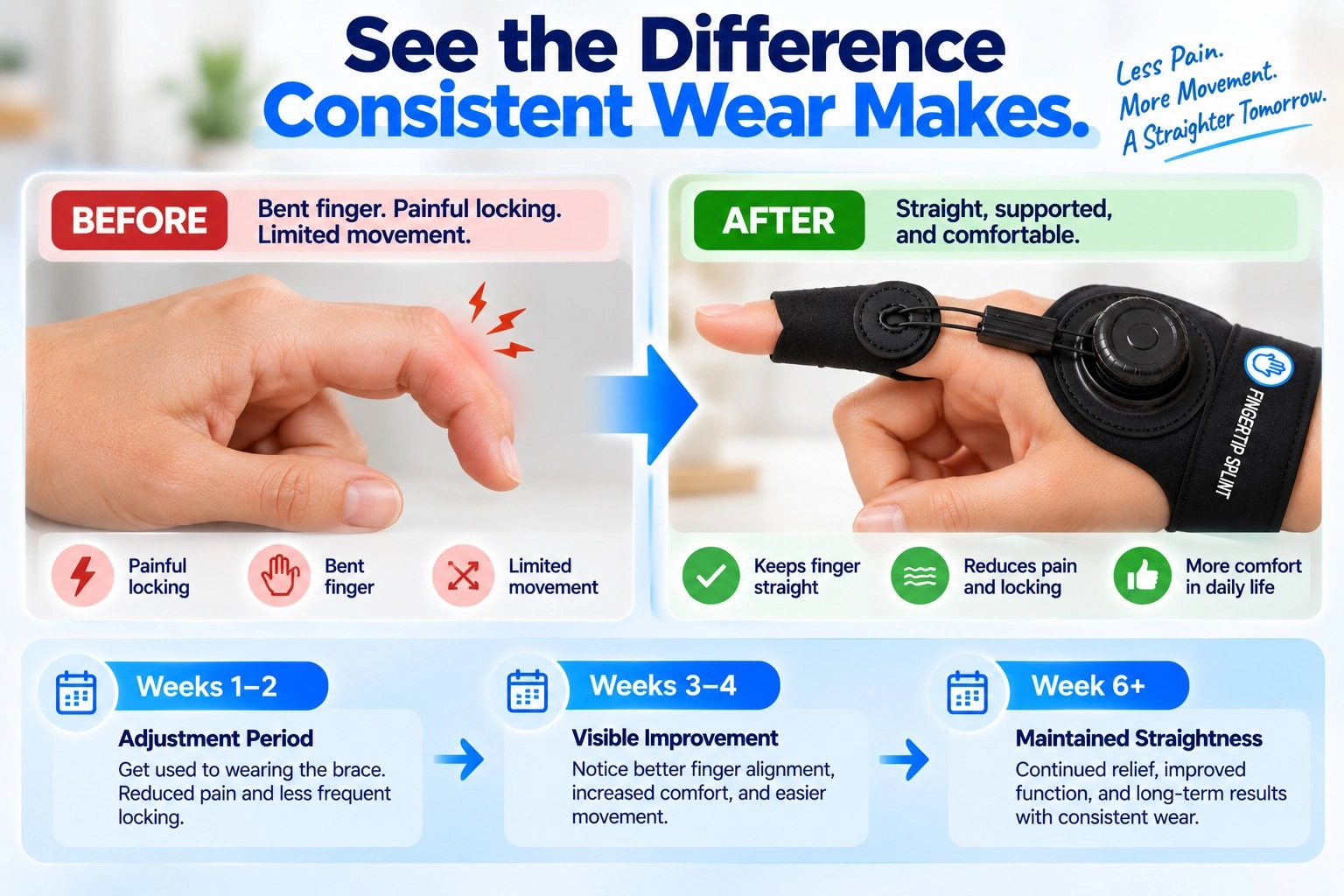
How Tight Should a Finger Straightener Be?
The answer matters for both comfort and function. Excessive tightness is not better support.
Secure Does Not Mean Extremely Tight
Excessive pressure is not automatically better. A straightener that is too tight can cause numbness, tingling, discoloration, and increasing pain, none of which help the underlying problem.
Signs of an Appropriate Fit
Stable
Stays in place without sliding excessively during normal activity.
Comfortable
Can be worn for the intended period without pressure points or irritation.
Intended position maintained
Provides consistent support without shifting or rotating.
No concerning pressure symptoms
No numbness, tingling, discoloration, or increasing pain during wear.
Signs of Excessive Pressure
- Numbness
- Tingling
- Significant discoloration
- Increasing pain
- Excessive pressure
What to Do if the Straightener Feels Too Tight
Follow the manufacturer’s instructions and discontinue use or seek appropriate advice if concerning symptoms occur. Do not simply tighten the straightener further.
Recovery Timeline and Reassessment
This is a reassessment framework, not a promised healing schedule. Duration depends on the underlying cause and professional guidance.
Stage 1 — Initial Fit
Check position, comfort, skin response, and stability. If the straightener does not stay in place or causes pressure points, address that before extended wear.
Stage 2 — Early Reassessment
Ask whether the finger is comfortable, whether the device remains positioned, and whether symptoms are changing.
Stage 3 — Functional Reassessment
Consider daily movement, grip, typing, writing, and other relevant activities. Does the straightener allow what you need to do?
Stage 4 — Professional Reassessment
If the finger remains significantly bent, painful, swollen, numb, or difficult to move, professional evaluation may be appropriate.
10 Mistakes People Make When Buying a Finger Straightener
Different causes and locations may require different support approaches.
What to check: match the design to your specific situation.
A product can look appropriate without matching your finger or needs.
What to check: verify coverage, sizing, and intended use.
A straightener sized for one finger may not fit another comfortably.
What to check: confirm the intended finger before buying.
Guessing your size leads to poor fit and reduced comfort.
What to check: measure and compare with the specific product’s chart.
Excessive pressure does not improve support and can create new symptoms.
What to check: secure and comfortable, not tight.
A straightener can cover the finger without supporting the right joint.
What to check: confirm the support area aligns with the intended joint.
Adjustable expands the range but does not eliminate compatibility limits.
What to check: verify the adjustment range accommodates your finger.
Pressure points, rough edges, and irritation matter for consistent wear.
What to check: padding, edges, and material before extended use.
A straightener supports a position — it does not guarantee permanent correction.
What to check: understand the intended function and realistic expectations.
Symptoms that persist or worsen deserve professional assessment.
What to check: don’t simply buy a stronger device.
Who Might Consider an Adjustable Finger Straightener?
People comparing finger-positioning products
Buyers who want to understand how different straighteners compare before choosing.
People looking for adjustable support
Those who want to fine-tune the fit rather than accept a single fixed size.
People who want a customizable fit
Those whose finger size or support needs change during wear.
People comparing finger brace designs
Buyers who want to understand how straighteners, splints, and braces differ.
Doctor Advice — Don’t Choose a Straightener Before Understanding the Problem
This section is written in the tone of a practical professional checklist. It is not a diagnosis and does not replace an in-person assessment.
A Bent Finger Is a Symptom, Not a Diagnosis
A bent finger can have different causes. The appropriate treatment cannot be determined from appearance alone. The Mayo Clinic trigger finger diagnosis and treatment guidance notes that diagnosis involves physical examination and assessment of finger movement, pain, and locking.
Position Matters
Where the finger bends and how it moves provide important information. A straightener designed for one joint will not stabilize another.
Fit Matters
A straightener that does not fit correctly will not provide consistent positioning or support.
Prolonged Restriction Is Not Automatically Better
More restriction is not always the right answer. Some situations benefit from movement and function. The appropriate approach depends on the specific injury and professional guidance.
Persistent Symptoms Deserve Attention
Additional trusted resources include the Cleveland Clinic finger splint resource, the AAOS OrthoInfo trigger finger page, the ASSH trigger finger resource, the MedlinePlus finger injuries resource, the NHS finger injuries page, the WebMD splints overview, and the Healthline finger injury resource.
Interactive Finger Straightener Fit Checker
Click each item to check your fit. If you cannot confirm most of these, the fit needs adjustment.
Product Guide — FingerTipSplint Adjustable Finger Straightener
Use this section as a worked example of how to evaluate an adjustable finger straightener against the criteria in this guide. The product being evaluated is the FingerTipSplint Adjustable Finger Straightener.
Fingertip Splint Adjustable Finger Straightener
- Adjustable design: Allows fine-tuning of fit and position within the intended range
- Straightening/positioning mechanism: Designed to support a more extended finger position
- Support structure: Frame intended to maintain the device’s shape and provide structural support
- Adjustment mechanism: Knob or strap-based adjustment depending on the specific model
- Finger compatibility: Check the product page for specific finger compatibility
- Fit: Check the product page for sizing and application guidance
- Comfort: Cushioned contact surface intended for extended wear
- Daily usability: Low-profile design intended for everyday support
What Buyers Should Check on the Product Page
Verify size, dimensions, materials, intended finger, adjustment instructions, product images, and intended use. For buyers comparing different finger support options, explore the finger splint shop. For clinics, distributors, and healthcare supply purchasing, see the medical finger splint supplier page and the finger splint distributor page.
Why Product Evaluation Should Be Feature-Based
Rather than claiming one product is the best finger straightener, use a feature-based evaluation. Here is how this design compares with the characteristics discussed in this guide. That approach is stronger for EEAT and avoids unsupported medical superiority claims.
Adjustable Finger Straightener vs Trigger Finger Brace
These product categories are sometimes confused, but they serve different search intents and product contexts.
Trigger Finger Brace
A trigger finger brace focuses on trigger-finger-specific support. For that specific intent, see our guide on how to choose the right fit for an adjustable trigger finger brace.
Finger Straightener
A finger straightener focuses on broader positioning and straightening terminology. A reader searching for a straightener may not actually have trigger finger.
Why They Should Not Be Treated as Identical
A product labeled as a straightener may or may not be appropriate for trigger finger, and a trigger finger brace may or may not function as a straightener. The design, support level, and intended use differ. For a deeper look at knob-based design and brace construction, see our guide on trigger finger brace buying guide for knob design, fit, and support.
Buyer Checklist — Before You Order
Click each item to confirm. Aim to check all 11 before buying.
7 Quick Tips for Choosing a Finger Straightener
Frequently Asked Questions
An adjustable finger straightener is a support device designed to influence or support finger positioning. It typically uses a frame or support structure combined with an adjustment mechanism (such as straps or a knob) to help maintain a more extended finger position within the manufacturer’s intended range.
It is not a diagnostic device and does not guarantee permanent correction. The appropriate use depends on the underlying cause of the bent finger and professional guidance where needed.
A finger straightener supports a position — it does not guarantee permanent correction. The difference between supporting a position and permanently correcting a bend matters. Results depend on the underlying cause.
Some situations may improve with appropriate support, while others may require professional assessment and different treatment approaches. Do not assume that a straightener will permanently straighten every bent finger.
Measure your finger according to the manufacturer’s specific instructions. Compare your measurement with the product’s size chart. Confirm the intended finger compatibility and check the adjustment range to ensure it accommodates your finger.
Sizing varies by brand and finger. Do not guess based on another person’s size or on general hand size.
It should be secure and comfortable, not excessively tight. You should be able to wear it for the intended period without numbness, tingling, significant discoloration, or increasing pain. Excessive tightness is not better support — it creates new problems.
If concerning symptoms occur, remove the straightener and reassess the fit rather than tightening it further. If symptoms persist, seek appropriate medical advice.
This depends on the product, its intended use, and your individual circumstances. A low-profile straightener may be comfortable for extended wear, while a more structured design may be more appropriate for specific periods. Follow the manufacturer’s instructions and your healthcare professional’s guidance on wearing schedule.
Monitor skin and sensation during wear. If you notice redness, itching, numbness, or other changes, remove the straightener and reassess.
They can overlap in design, but they have different search and product contexts. A finger straightener focuses on broader positioning and straightening terminology. A trigger finger brace focuses on trigger-finger-specific support.
A reader searching for a straightener may not actually have trigger finger. The two categories should not automatically be treated as interchangeable. Match the product to your specific situation and needs.
Seek medical advice if you have significant or sudden deformity, severe pain, major swelling, numbness or tingling, significant loss of movement, suspected fracture or dislocation, or persistent or worsening symptoms.
A visible bent finger can have different causes, so the appropriate treatment cannot be determined from appearance alone. Proper assessment matters for both treatment and return-to-activity decisions. The Mayo Clinic trigger finger diagnosis and treatment guidance notes that treatment depends on symptom severity and duration.
Choose Support Based on Fit and Purpose
A good finger straightener is not simply the tightest or most rigid option. The right choice starts with understanding the finger, support position, adjustment range, fit, comfort, and intended use. Evaluate the FingerTipSplint Adjustable Finger Straightener against the criteria in this guide before deciding.
Explore the finger splint and support products, check the finger splint FAQs, or use the request-a-quote page for bulk or business purchasing. For medical finger splint supply, see the medical finger splint supplier page.
View the Product Explore Finger SupportConclusion: A Bent Finger Needs the Right Support, Not Just a Tighter Brace
The right adjustable finger straightener is the one that fits your finger, supports the intended area, adjusts within a useful range, and can actually be worn during the activities you do. Before you buy, identify the finger, understand where it bends, check the manufacturer’s sizing guidance, confirm the support position and adjustment range, and verify that the straightener stays comfortable during the intended wearing period.
If symptoms persist, worsen, or involve significant deformity, severe pain, numbness, or loss of function, do not simply buy a stronger device. Seek appropriate medical evaluation. For medical finger splint supply and distribution, see the medical finger splint supplier page and the finger splint distributor page. For the full FingerTipSplint range, visit the FingerTipSplint homepage.