
Your finger gets jammed while catching a pass. The ball hits your fingertip unexpectedly. You want support, but you still need to dribble, pass, and shoot. A bulky guard can interfere with grip and movement. This guide helps you choose a finger splint guard that balances protection, fit, mobility, and basketball activity. For a broader view of the FingerTipSplint range, start with the FingerTipSplint homepage.
Table of Contents
- Why Basketball Players Need Finger Protection
- Guard vs Tape vs Buddy Taping
- 8 Features to Look For
- How to Choose the Right Guard
- Interactive Fit Test
- 3D Finger Protection Infographic
- How a Guard Affects Performance
- Practice vs Game Day
- How to Put On and Check
- 10 Common Mistakes
- When a Guard May Not Be Enough
- Guard for Sprain, Jam, or Suspected Injury
- Product Guide
- Buying Checklist
- Doctor Advice
- Quick Tips
- FAQ
A suitable basketball finger guard should balance adequate protection, secure fit, comfortable movement, appropriate coverage, and compatibility with basketball activities. No single product is medically best for every injury. Match the guard to your specific finger, activity, and support need, and follow the manufacturer’s instructions for correct application.
Why Basketball Players Need Finger Protection
Common Basketball Finger Problems
Basketball finger injuries often come from jammed fingers while catching a pass, accidental ball impact to the fingertip, awkward catches, collisions with other players, falls, and repeated finger stress during play. The AAOS hand and finger fracture resource notes that finger injuries in sports are common and can range from minor to significant.
Why Finger Injuries Can Affect Gameplay
Ball handling
Discomfort or limited movement affects grip and control during dribbling.
Passing
An injured finger changes how the ball is released and received.
Catching
Reduced confidence or movement affects how the player receives a pass.
Shooting
Finger positioning and release point are affected by pain or restricted movement.
Defense
Reaching, deflecting, and hand positioning are affected.
Confidence
Anticipating pain changes how a player approaches contact.
Protection Is Not the Same as Treatment
Finger Splint Guard vs Basketball Finger Tape vs Buddy Taping
| Option | Main Purpose | Protection | Mobility | Adjustability | Basketball Use |
|---|---|---|---|---|---|
| Finger splint guard | Support and protection | High, varies | Varies | Varies | Situation-dependent |
| Finger tape | Light support | Low to moderate | Usually higher | Moderate | Common |
| Buddy taping | Supports injured finger with adjacent finger | Moderate | Reduced | Low | Injury-dependent |
| Finger sleeve | Cushioning and protection | Low to moderate | High | Low | General protection |
The correct option depends on the injury and activity. For a comparison of sprain and dislocation-specific considerations, see our guide on finger splints for sprains and dislocations.
8 Features to Look for in a Basketball Finger Splint Guard
1. Secure Fit
The guard should remain positioned during dribbling, passing, shooting, and catching. A guard that shifts or rotates will not provide consistent protection.
2. Appropriate Finger Coverage
Fingertip, middle finger, and joint coverage each serve different purposes. Match the coverage to the area that needs protection.
3. Support Without Excessive Restriction
More rigid does not automatically mean better. A guard that restricts necessary movement interferes with basketball performance.
4. Low-Profile Construction
Important for basketball because bulky equipment can interfere with ball contact, grip, catching, and hand positioning.
5. Comfortable Materials
Consider skin contact, seams, edges, moisture management, and friction. A guard that causes irritation will not be worn consistently.
6. Adjustability
Useful when the player needs to fine-tune the fit for different fingers or activities.
7. Secure Fastening
The guard should not constantly slide or rotate during play. The fastening method affects how well it stays in position.
8. Activity Compatibility
Ask whether it works for the player’s actual basketball activity rather than simply looking protective.
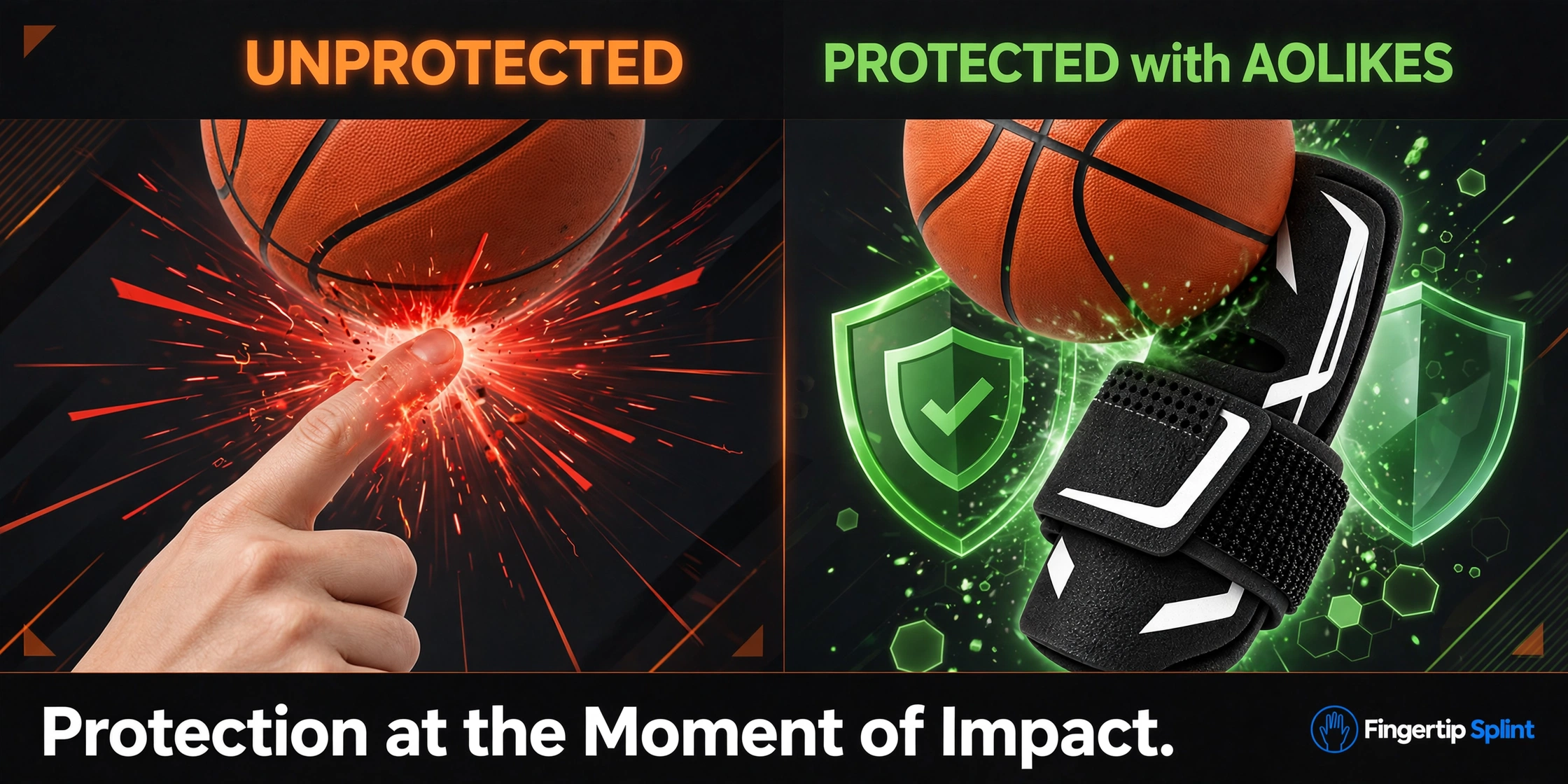
How to Choose the Right Finger Splint Guard for Basketball
Step 1: Identify the Finger
Index, middle, ring, or little finger. Each has a different circumference and different functional role in basketball.
Step 2: Identify the Area Needing Protection
Fingertip, joint, middle section, or multiple areas. Coverage should match the area that experiences impact or stress.
Step 3: Consider Your Basketball Activity
Different demands: shooting, dribbling, rebounding, defense, training, or casual play. Match the guard’s characteristics to your primary activity.
Step 4: Decide How Much Movement You Need
Step 5: Check the Size
Incorrect sizing can create slipping, rubbing, pressure, and uncomfortable movement. Measure and compare with the specific product’s guidance.
Basketball Finger Guard Fit Test
Answer four questions to check whether the guard is appropriate for basketball. This is a practical fit test, not a medical assessment.
Answer all four questions to see whether the guard is appropriate for basketball.
3D Interactive Infographic — Basketball Finger Protection
The interactive 3D component explorer below shows how a finger splint guard protects the finger during basketball. Click each component to see what it does and why it matters.
Basketball Finger Guard Explorer
Click a component to learn what it does and why it matters during basketball.
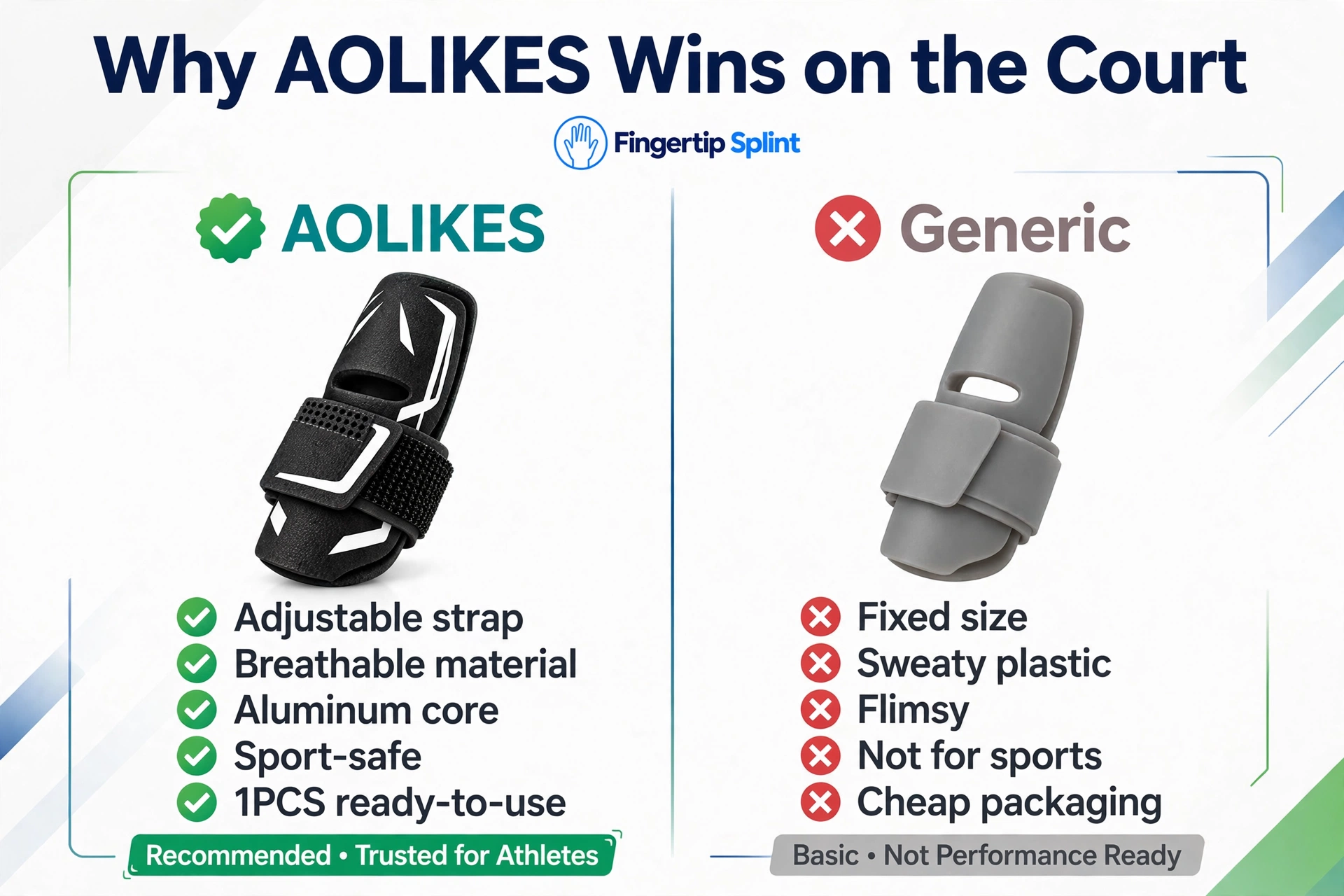
How a Finger Splint Guard Can Affect Basketball Performance
Dribbling
Can the guard change how the player contacts the ball? A bulky guard may alter the feel of the ball and affect dribbling control. A low-profile guard preserves more natural ball contact.
Passing
Can the player comfortably control the ball? A guard that interferes with grip or release may affect passing accuracy.
Shooting
Does the protected finger interfere with normal hand positioning? Shooting requires specific finger placement and release. A guard that adds bulk or restricts movement can affect the shot.
Catching
Does the guard remain secure when receiving a fast pass? Impact stress during catching can shift a poorly fitted guard.
Defense
Can the player move the hand naturally? Defensive movements involve reaching, deflecting, and quick hand positioning.
Finger Splint Guard for Practice vs Game Day
| Situation | Main Priority |
|---|---|
| Practice | Comfort and controlled protection |
| Skill drills | Mobility and fit |
| Casual basketball | Comfort and protection |
| Competitive play | Activity compatibility |
| Contact-heavy situations | Appropriate protection and professional guidance |
How to Put On and Check a Finger Splint Guard
10 Common Mistakes Basketball Players Make
A guard can look protective without matching the finger or activity.
What to do instead: check fit, coverage, and activity compatibility.
A guard that is too loose or too tight will not provide consistent protection.
What to do instead: measure and compare with the product’s chart.
Excessive pressure can cause numbness, tingling, or discoloration.
What to do instead: secure and comfortable, not tight.
Skin irritation develops when the guard rubs against the finger.
What to do instead: check skin after each wear.
More restriction is not automatically better support.
What to do instead: match the support level to your situation.
A guard that feels fine at home may not perform during competitive play.
What to do instead: test during practice first.
Symptoms that persist or worsen deserve professional assessment.
What to do instead: don’t simply cover the area and continue playing.
A worn or damaged guard may not provide the same protection or fit.
What to do instead: inspect before each use and replace when needed.
Incorrect application reduces effectiveness and comfort.
What to do instead: read and follow the product guidance.
A guard is a support tool, not a diagnosis or treatment.
What to do instead: seek professional evaluation for significant injuries.
When a Finger Splint Guard May Not Be Enough
- Visible deformity
- Severe or increasing pain
- Substantial swelling
- Significant loss of movement
- Numbness or altered sensation
- Major bruising
- Symptoms that don’t improve
- Suspected fracture or dislocation
- Repeated injury to the same finger
The Mayo Clinic finger injury overview notes that significant finger injuries require proper assessment. Some injuries require professional evaluation and potentially a different type of immobilization or treatment.
Finger Splint Guard for a Sprain, Jammed Finger or Suspected Injury
Mild Symptoms
Protection and activity modification may sometimes be part of management, depending on the injury. A finger guard may provide support during healing, but the appropriate approach depends on the specific injury.
More Significant Injury
Professional assessment may be necessary. A finger that looks like a simple jam can sometimes involve more significant injury. Do not assume that a commercial guard is sufficient for every situation.
Why You Should Not Guess the Injury
Finger injuries can involve bones, ligaments, tendons, or joints. Determining the correct management requires proper assessment. For an injury-focused guide, see our article on finger splints for sprains and dislocations.
Product Guide — AOLIKES Sport Finger Splint Guard
Use this section as a worked example of how to evaluate a basketball finger guard against the criteria in this guide. The product being evaluated is the AOLIKES Sport Finger Splint Guard from FingerTipSplint.
AOLIKES Sport Finger Splint Guard
- Designed for: Sport finger protection and support
- Protection: Guard structure intended to reduce impact on the finger
- Fit: Check the product page for specific sizing information
- Adjustability: Check the product page for adjustment details
- Coverage: Designed for finger joint or fingertip protection
- Low-profile construction: Intended to minimize interference with movement
- Intended use: Basketball and other sports activities
What the Product Is Designed For
The AOLIKES Sport Finger Splint Guard is designed to provide protection and support for the finger during sports activities. It is a protective guard, not a diagnostic device or a treatment for injury.
Who May Consider It
Basketball players
Those who want finger protection during practice and play.
Sports participants
Those in activities involving ball contact or hand impact.
Players with a recovering finger
Those who have been cleared to return to activity and need protection.
Buyers wanting low-profile protection
Those who prefer a guard that does not interfere with ball handling.
Key Features to Examine
Check the coverage area, support structure, fastening method, materials, and intended use. For a broader buying guide, see our article on the basketball finger guard buying guide for fit, protection, and support.
Basketball Compatibility
Evaluate whether the guard stays secure during dribbling, passing, shooting, and catching. Confirm that it does not interfere with ball handling or grip. For buyers comparing different finger protection options, explore the FingerTipSplint shop.
What It Does Not Replace
A commercial guard does not replace professional assessment for significant injuries. If you have visible deformity, severe pain, major swelling, numbness, or significant loss of movement, seek medical evaluation rather than relying on a guard alone.
Basketball Finger Guard Buying Checklist
Click each item to confirm. Aim to check all 10 before buying.
Doctor Advice: What Matters More Than the Brand?
This section is written in the tone of a practical professional checklist. It is not a diagnosis and does not replace an in-person assessment.
Fit
The guard must fit the finger correctly to provide consistent support and protection.
Appropriate support
Support should match the situation, not be maximum by default.
Injury severity
Significant injuries require professional assessment, not just a guard.
Activity requirements
The guard must be compatible with basketball movements.
Skin tolerance
The material should not cause irritation during use.
Reassessment
Symptoms that persist or worsen deserve professional evaluation.
Additional trusted resources include the Cleveland Clinic finger splint resource, the ASSH flexor tendon injury resource, the MedlinePlus finger injuries page, the NHS finger injuries guidance, the WebMD finger injuries overview, and the Healthline finger injury resource.
Basketball Finger Protection: Quick Tips
Frequently Asked Questions
There is no universal best guard for every player or injury. The right choice depends on the finger, the area needing protection, the support level required, and basketball activity compatibility. Look for secure fit, appropriate coverage, low-profile construction, comfortable materials, and secure fastening.
For a broader buying guide, see our article on the basketball finger guard buying guide for fit, protection, and support.
Suitability depends on the injury, the guard design, and applicable basketball or league rules. Some guards are designed for sports use and preserve finger movement; others are intended for rest. Always check applicable league or facility rules concerning braces, taping, or protective equipment.
Follow professional advice on return to play after any significant injury.
It can, depending on the guard’s design and fit. A bulky guard may alter the feel of the ball and affect hand positioning during shooting. A low-profile guard designed for basketball use preserves more natural movement.
Test the guard during practice before relying on it in a game.
It should be secure and comfortable, not excessively tight. You should be able to wear it without numbness, tingling, significant discoloration, or increasing pain. Excessive tightness does not improve protection and can create new problems.
If concerning symptoms occur, remove the guard and seek appropriate advice.
Neither is automatically better. A finger guard offers more structured protection, while tape offers light support with more flexibility. The right choice depends on the injury and the activity.
For an injury-focused guide, see our article on finger splints for sprains and dislocations.
It depends on the severity of the injury. A finger guard may provide protection during healing for a mild injury. However, a finger that looks like a simple jam can sometimes involve more significant injury. Seek professional assessment if symptoms are significant or do not improve.
Do not assume a commercial guard is sufficient for every situation.
Stop playing and seek professional assessment if you have visible deformity, severe or increasing pain, substantial swelling, significant loss of movement, numbness or altered sensation, major bruising, or symptoms that don’t improve.
Repeated injury to the same finger also warrants professional evaluation. Do not simply cover the area and continue playing.
Protect the Finger Without Losing the Game
A basketball finger guard should balance protection, fit, mobility, and activity compatibility. Do not choose a guard simply because it looks protective. Evaluate the AOLIKES Sport Finger Splint Guard against the criteria in this guide before deciding.
Explore the FingerTipSplint shop for other support options, check the FingerTipSplint FAQ, or use the request-a-quote page for bulk or business purchasing. For medical finger splint supply, see the medical finger splint supplier page.
View the Product Explore Finger ProtectionFinal Takeaway: Match the Guard to the Game
The best finger splint guard for basketball is the one that fits your finger, provides appropriate protection, stays secure during play, preserves the movement you need, and does not interfere with ball handling. Before you buy, check the coverage area, support level, materials, fastening method, and activity compatibility. Test the guard during practice before relying on it in a game.
If symptoms persist, worsen, or involve visible deformity, severe pain, major swelling, numbness, or significant loss of movement, do not simply cover the area and continue playing. Seek appropriate medical evaluation. For medical finger splint supply and distribution, see the medical finger splint supplier page and the finger splint distributor page. For the full FingerTipSplint range, visit the FingerTipSplint homepage.