
Your finger feels uncomfortable during everyday activities. Maybe a brace you purchased previously slips. Maybe you are unsure which type of support to choose. You want something that fits properly and provides the right level of protection. This guide helps you evaluate a 3PCS finger support brace set based on its verified design, intended use, sizing, and adjustment features. Start with our finger-support solutions to explore the full range.
Table of Contents
- Quick Answer
- Understanding Finger Support
- What Does a 3PCS Set Include?
- Adjustable Fit: Size and Design
- Brace vs Splint vs Buddy Taping
- Everyday Protection
- Featured Product
- Step-by-Step Fit and Safety Check
- Common Mistakes
- Who May Benefit
- When to Seek Medical Advice
- Interactive Buyer Guide
- 3D Infographic
- FAQ
- CTA
What Are 3PCS Finger Support Braces Used For?
3PCS finger support braces provide multiple support pieces for buyers to evaluate according to fit, intended use, and the area requiring support. Before choosing a set, check its sizing, fastening, and support design. For a suspected fracture, dislocation, severe pain, or significant swelling, seek medical assessment before relying on a retail brace.
Understanding Finger Support and Joint Protection
Finger joints, ligaments, tendons, and surrounding soft tissues work together to allow movement and grip. When one of these structures is irritated or injured, support may help limit unwanted movement or protect the area.
Why Different Problems Need Different Support
Different problems may require different types of support. A minor impact may benefit from light protection. Overuse discomfort may benefit from gentle support. A clinician-assessed sprain may require specific positioning. A finger injury requiring prescribed immobilization may need a more structured splint.
Symptoms Can Have Different Causes
Similar symptoms can have different causes. A brace should not be selected as a substitute for diagnosis. If you have unexplained pain, swelling, or difficulty moving the finger, seek professional assessment.
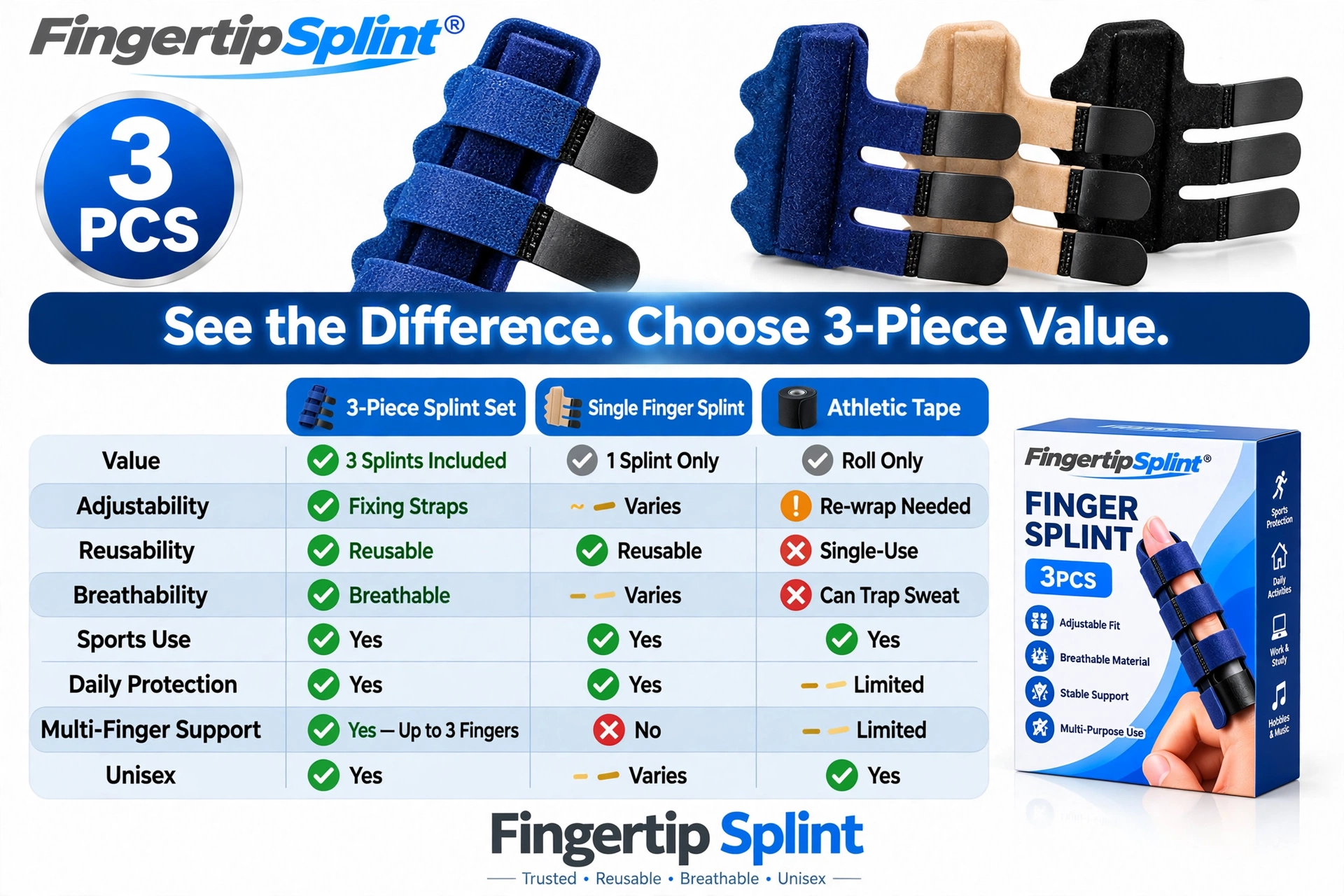
What Does a 3PCS Finger Support Brace Set Include?
The “3PCS” description means the set contains three pieces. The number of pieces supplied does not, by itself, indicate which fingers each item fits or what degree of immobilization it provides.
What Buyers Should Understand
- Number of pieces included
- Fastening system
- Material
- Intended support area
- Which fingers each piece fits
Confirm the Contents
Before ordering, confirm the contents of the package and whether the product matches your needs. Review the product listing for specific details. Do not assume that dimensions, materials, sizes, or compatibility details are the same across all products.
For a related product, explore our 3PCS Adjustable Finger Splint Set.
Adjustable Fit: How to Choose the Right Size and Design
Fit is the most important factor determining whether a finger support brace will be comfortable and effective. A brace that is too loose may shift. One that is too tight can create pressure, discomfort, or circulation concerns.
Following the Manufacturer’s Sizing Instructions
Check the product listing for sizing guidance. Follow the manufacturer’s instructions for measuring and selecting a size.
Checking the Intended Finger and Joint Coverage
Confirm that the brace covers the area that needs support. Different fingers and joints may require different sizes or designs.
Understanding Adjustability
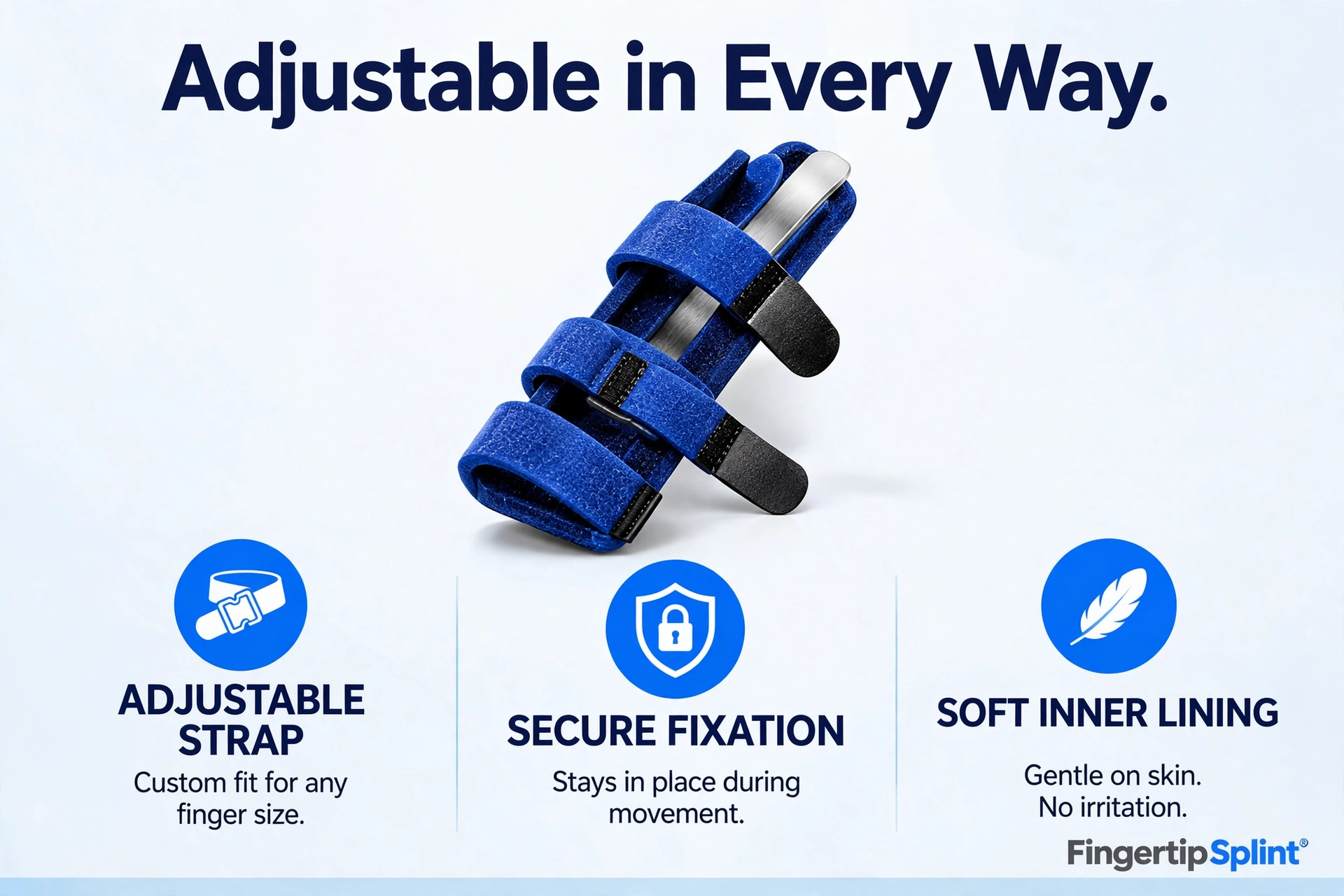
Adjustable features allow you to customize the fit. Check which parts of the brace are adjustable and how the fastening system works.
Avoiding Wrinkles, Rubbing, and Concentrated Pressure
After positioning the brace, check for wrinkles, rubbing, or concentrated pressure. Smooth out any irregularities and adjust the fit if needed.
Considering Swelling and Changes in Comfort
Swelling may affect how the brace fits. Check the fit periodically and adjust as needed. If the brace causes new discomfort, remove it and reassess.
Asking a Clinician for Help
If you are unsure about the correct positioning or fit, ask a clinician for help. Do not guess if the positioning is unclear.
Finger Brace vs Finger Splint vs Buddy Taping
Different support options serve different purposes. Compare them by their intended role and limitations.
| Support Option | Main Consideration |
|---|---|
| Adjustable finger brace | Check its support area, fit, and intended use. |
| Structured finger splint | May restrict movement more; positioning depends on the injury. |
| Buddy taping | Appropriate for selected injuries when recommended and applied correctly. |
| General finger sleeve | May provide a different level of coverage and support than a structured splint. |
A more rigid product is not automatically better. The best option depends on the affected structure, the degree of movement restriction required, and any clinical instructions. For a sports-use context, see our 3-piece adjustable finger splint set for sports support article.
Everyday Protection: What Can a Finger Support Brace Help With?
Appropriate support may help limit unwanted movement or protect a finger in selected situations. The degree of support depends on the brace design and the reason for use.
Common Daily Contexts
- Light household activities
- Desk work or typing
- Clinician-approved activity during recovery
What a Brace Cannot Do
Some tasks may remain unsuitable while the finger is injured or immobilized. Do not assume that a brace prevents injuries, eliminates pain, speeds up healing, or allows unrestricted use. A brace provides support while it is worn. It does not replace medical assessment.
Featured Product: 3PCS Adjustable Finger Splint Set
3PCS Adjustable Finger Splint Set
This set contains three adjustable splints. It is an option to evaluate based on your specific support needs.
- Three adjustable splints in one set
- Adjustable design for a custom fit
- Designed for finger support
- Suitable for daily wear with proper care
- Reusable with proper care
Who May Want to Consider This Set
Readers looking for multiple adjustable finger splints may find this set useful. It may be appropriate for people who want options for different fingers or who need a backup splint.
What to Verify Before Ordering
Buying Checklist
Step-by-Step Fit and Safety Check
Follow this general, instruction-led process for fitting and checking your finger support brace.
Step 1 — Read the Product Instructions
Confirm that the device is suitable for the intended use.
Step 2 — Check Sizing and Support Area
Verify that the brace is the right size and covers the area that needs support.
Step 3 — Position the Brace as Directed
Do not force a painful or deformed finger into position. Follow the manufacturer’s instructions.
Step 4 — Fasten Securely Without Excessive Pressure
A secure fit is not the same as a tight fit. Follow the fitting instructions.
Step 5 — Check Comfort, Skin Contact, and Sensation
Check for changes in sensation or finger color. If you notice problems, remove the brace and reassess.
Step 6 — Follow the Recommended Wear Schedule and Care Instructions
Follow the manufacturer’s guidance on wear time and care.
- New numbness or tingling
- Worsening pain
- Increasing swelling
- Skin damage
- A pale, blue, or cold finger
A clinician’s instructions take priority over generic product guidance. Do not simply tighten or reposition a prescribed splint.
Common Mistakes When Buying or Using Finger Braces
Avoid these common errors to get the most benefit from your finger support.
1. Choosing a Brace Based on Appearance
A brace that looks supportive may not provide the support you need. Evaluate the actual design and intended use.
2. Assuming All Three Pieces Fit Every Finger
Check the sizing and compatible fingers before ordering.
3. Buying Without Checking Sizing and Intended Use
Size affects fit and comfort. Check the sizing guide and intended use before ordering.
4. Tightening the Fastening System to Compensate for Poor Fit
Tightening a poorly fitting brace can cause numbness, tingling, and skin damage. Reassess the size and positioning instead.
5. Wearing a Brace Despite Increasing Pain or Numbness
If you notice increasing pain, numbness, or tingling, remove the brace and seek advice.
6. Assuming a Brace Makes an Injured Finger Safe for Sport
A brace does not make an injured finger safe for continued play. Seek medical clearance before returning to sport.
7. Changing Prescribed Immobilization Without Advice
Do not independently change a prescribed immobilization position. Contact your clinician if the brace is causing problems.
8. Delaying Medical Assessment Because the Brace Feels Supportive
A brace provides support while it is worn. It does not diagnose or treat the underlying injury. Seek assessment if symptoms persist.
Who May Benefit, and When Is Medical Advice Necessary?
A three-piece adjustable set may be worth considering for users whose support needs match its verified design. It is not appropriate for every injury or every user.
Who May Benefit
Readers looking for multiple adjustable finger splints for everyday support or protection may find this set useful.
When to Seek Medical Advice
- Suspected fracture or dislocation
- Visible deformity
- Severe or increasing pain
- Open wounds
- Difficulty moving the finger
- Altered sensation and circulation
People with reduced sensation or circulation, diabetes, or skin problems should ask for individualized advice about brace use and monitoring. Choosing the product is secondary to determining whether the finger needs assessment or a specific treatment plan.
When Should You Consult a Healthcare Professional About Finger Pain?
Some situations require professional assessment rather than self-selected support.
For authoritative background on sprains and initial care, see the NHS sprains and strains guidance. For information on finger injuries and orthopedic treatment considerations, see the AAOS OrthoInfo and the ASSH HandCare resources. For condition-specific guidance on symptoms and evaluation, see the Mayo Clinic and Cleveland Clinic health library. For patient-friendly information on fractures, joint injuries, and care, see MedlinePlus. Johns Hopkins Medicine health library and Healthdirect Australia provide additional patient education. WebMD and Healthline provide supplementary consumer education. The American Academy of Family Physicians provides clinical patient education resources.
What Should You Check Before Choosing Finger Support?
Interactive Buyer Guide
This guide helps you decide what to check next. It does not diagnose a condition.
What is your main reason for looking at finger support?
What matters most when comparing products?
Are any warning signs present?
Select your answers above to see guidance.
Explore Finger Support: Fit, Joint Coverage and Protection
Interactive 3D Hand and Finger View
Click each part to learn about joints, adjustability, fit, and safety.
Illustration for understanding finger support options. Actual fit and coverage vary by product.
Frequently Asked Questions
A 3PCS set contains multiple support pieces that may be used for different fingers or support needs. The intended use depends on the product’s design and specifications. Review the product details before ordering.
Follow the manufacturer’s sizing instructions and measure as directed. Do not guess based on appearance. If you are between sizes, consider the product’s adjustability.
A set may provide options for different fingers or support needs. Check the product’s sizing and compatible fingers before ordering.
A finger support brace may provide light support or protection. A finger splint may provide more structured support and restrict movement more. The right choice depends on your specific needs.
It should be secure without causing numbness, tingling, or color changes. Follow the fitting instructions. Do not tighten the brace to prevent slipping.
It depends on the design and your condition. Some tasks may remain unsuitable while the finger is injured or immobilized. Follow your clinician’s guidance on activity restrictions.
A suspected fracture requires prompt medical assessment. Do not rely on a brace alone. A clinician can determine the appropriate treatment.
Wear duration depends on the condition, product instructions, and clinician guidance. Follow professional advice on how long to wear the brace.
Remove the brace and seek medical advice immediately. Numbness, color changes, or a cold finger may indicate a problem requiring prompt attention.
It depends on the injury and your clinician’s guidance. A brace does not make an injured finger safe for continued play. Seek medical clearance before returning to sport.
Seek professional advice for persistent or worsening pain, reduced function, significant swelling, deformity, an open injury, or symptoms following an injury. People with reduced sensation or circulation problems should also seek individualized advice.
Review Your Options and Choose With Confidence
Compare Support Options Before You Buy
Looking for adjustable finger support? Explore the 3PCS Finger Splint Set and review its fit, support design, and intended use before choosing the right option for your needs.
Explore the full browse finger splints and hand-support products collection to compare options, read our best 3-piece finger splint set for daily hand support article for broader guidance, or request a product quote for business or wholesale inquiries. For answers to common questions, visit the FingertipsSplint FAQ page.
Explore the 3PCS Finger Splint Set Read More Finger-Support ArticlesMake an Informed Decision About Finger Support
The right finger support brace depends on the affected finger, the joint requiring support, the level of support needed, and the treating clinician’s recommendations. A brace can provide support while it is worn, but it cannot replace medical assessment or prescribed treatment.
If you have a suspected fracture, dislocation, or significant injury, seek professional assessment before choosing a brace. Do not assume that wearing a brace makes an injured finger safe for continued play. For mild discomfort or a previously assessed issue, a properly fitted brace may be part of your support routine.
For more detailed guidance, see our 3-piece adjustable finger splint set for sports support and our best 3-piece finger splint set for daily hand support articles. For general information, visit FingertipsSplint’s finger-support solutions.