
If wrist or thumb pain is making your daily routine harder, you are not alone. Typing for hours, holding a phone, cooking, writing, driving, or opening jars can all become painful when your wrist and thumb are not properly supported. This guide explains how to choose the best compression wrist thumb brace for daily support, what compression should feel like, how to avoid common mistakes, and when to seek medical advice. For a broader overview of hand and wrist support solutions, start with FingerTipSplint.
Table of Contents
- Why Daily Wrist and Thumb Support Matters
- What Makes the Best Compression Brace?
- Understanding Compression, Fit, and Comfort
- Everyday Activities Where Support Helps
- Compression Brace vs. Other Support Options
- Product Spotlight — Compression Wrist Thumb Brace
- How to Put On and Adjust a Wrist Thumb Brace
- Common Mistakes When Choosing a Brace
- Who May Benefit From Wrist and Thumb Support?
- Doctor Advice — When a Brace Is Not Enough
- Daily Support and Recovery: What Timeline to Expect
- Best Product Recommendation and Buying Checklist
- Quick Tips for Everyday Wrist and Thumb Support
- Frequently Asked Questions
The best compression wrist thumb brace for daily support should fit securely, provide an appropriate level of support, and allow the movement needed for your routine. Before buying, compare thumb and wrist coverage, adjustability, material, sizing, and care instructions. Compression should never cause numbness, tingling, increased pain, or changes in hand colour or temperature.
Why Daily Wrist and Thumb Support Matters
Think about the last time you typed for an hour without a break, scrolled through your phone for too long, or spent an afternoon cooking. Your wrist and thumb were working constantly. Now imagine doing those activities with a nagging ache that never fully goes away. That is the reality for millions of adults who live with wrist and thumb discomfort.
According to NHS guidance on wrist pain, persistent discomfort in the wrist and thumb is one of the most common reasons adults seek medical advice. The challenge is that many people wait until the pain starts limiting their daily activities before seeking help. They push through, adapt, and gradually do less — without realizing that a well-fitted support brace might have made a difference much earlier.
The causes of wrist and thumb pain are varied. WebMD’s overview of hand pain causes notes that joint conditions, tendon problems, nerve compression, and injuries can all produce similar symptoms. This overlap is why self-diagnosis is risky. A brace that helps one condition may not help another — and in some cases, the wrong brace can make things worse.
If you are also dealing with finger or hand pain alongside wrist and thumb discomfort, exploring the full range of available support products can help you understand what options exist and how different designs address different problems.
What Makes the Best Compression Wrist Thumb Brace for Daily Support?
Choosing the best compression wrist thumb brace is not about finding the strongest or tightest product. It is about matching the brace to your needs. Here are the main selection criteria:
Thumb and Wrist Coverage
Some braces support only the thumb. Others support the thumb and wrist together. Still others extend further up the forearm. The right coverage depends on where your pain is and what movement you need to support. A brace that covers the thumb but leaves the wrist free may be appropriate for isolated thumb pain. A combined support may be better for conditions that affect both structures.
Fit and Adjustability
Adjustable straps allow you to customize the fit. But adjustability is only useful if the brace also holds its position during activity. A brace that loosens or shifts during use will not provide consistent support.
Material and Breathability
Compression braces are typically made from elastic, neoprene, or breathable synthetic blends. Each material has different properties. Neoprene provides warmth and compression but can trap moisture. Breathable materials reduce moisture buildup but may provide less warmth. If you have sensitive skin, choose a material that minimizes irritation risk.
Ease of Fastening
If a brace is difficult to put on, you are less likely to wear it consistently. Look for designs with simple, secure fastening mechanisms that you can manage independently.
Movement Allowed
Compression braces are designed to allow movement while providing support. They are not the same as rigid splints that immobilize the joint. If you need significant movement restriction, a compression brace may not be enough.
Understanding Compression, Fit, and Comfort
Compression is one of the most misunderstood aspects of wrist and thumb braces. Many people assume that tighter compression provides better support. This is not true. Excessive compression can compress nerves and blood vessels, leading to numbness, tingling, and worsening symptoms.
Adjustable straps help you customize the fit. But even with adjustable straps, you need to check the size chart and verify that the brace fits your wrist and thumb dimensions. A brace that is too small will not fit properly regardless of how you adjust the straps.
According to NHS guidance on tendonitis, supportive devices can be part of a conservative management approach, but they should not cause additional symptoms. If you develop numbness, tingling, worsening pain, or changes in hand colour or temperature, stop wearing the brace and seek advice.
For readers who want a deeper look at how fit and comfort interact, the article on compression wrist brace buying guide: fit and comfort covers these considerations in detail.
Everyday Activities: Where Wrist and Thumb Support Fits In
A compression wrist thumb brace can be useful during a range of daily activities. The appropriate support depends on the brace design, the underlying condition, and whether the support interferes with the task.
- Desk work: Typing, using a mouse, writing, or holding a phone for extended periods.
- Cooking and meal preparation: Chopping, stirring, lifting pans, or opening containers.
- Light household tasks: Folding laundry, cleaning, or gardening.
- Driving: Supporting the wrist and thumb during steering and gear changes.
- Writing and drawing: Supporting the thumb and wrist during fine motor tasks.
For readers who need support during more demanding activities, the article on wrist thumb support strap for golf and active use covers activity-specific considerations.
Compression Wrist Thumb Brace vs. Other Support Options
Compression braces are one option among many. Understanding how they compare to other designs can help you choose the right one.
| Feature | Flexible Wrist Wrap | Compression Brace | Adjustable Wrist & Thumb Brace | Rigid Thumb Spica |
|---|---|---|---|---|
| Compression | Light | Moderate | Adjustable | Minimal |
| Cushioning | Minimal | Moderate | Moderate | Minimal |
| Immobilization | None | Minimal | Moderate | High |
| Best for | Mild discomfort | Daily support | Variable support needs | Acute injury, post-surgical |
Compression, cushioning, and immobilization are different functions. A compression brace provides gentle support and warmth during activity. It is not the same as a rigid splint that restricts movement completely. The right option depends on the intended purpose and any diagnosis — not on which brace looks strongest.
Product Spotlight — Compression Wrist Thumb Support Brace
If you are looking for a compression-based option to evaluate, the Compression Wrist Thumb Support Brace from FingerTipSplint is one product to consider. This guide does not claim that it treats arthritis, cures carpal tunnel syndrome, or guarantees pain relief. What it offers is a compression design intended to provide support during daily activities.
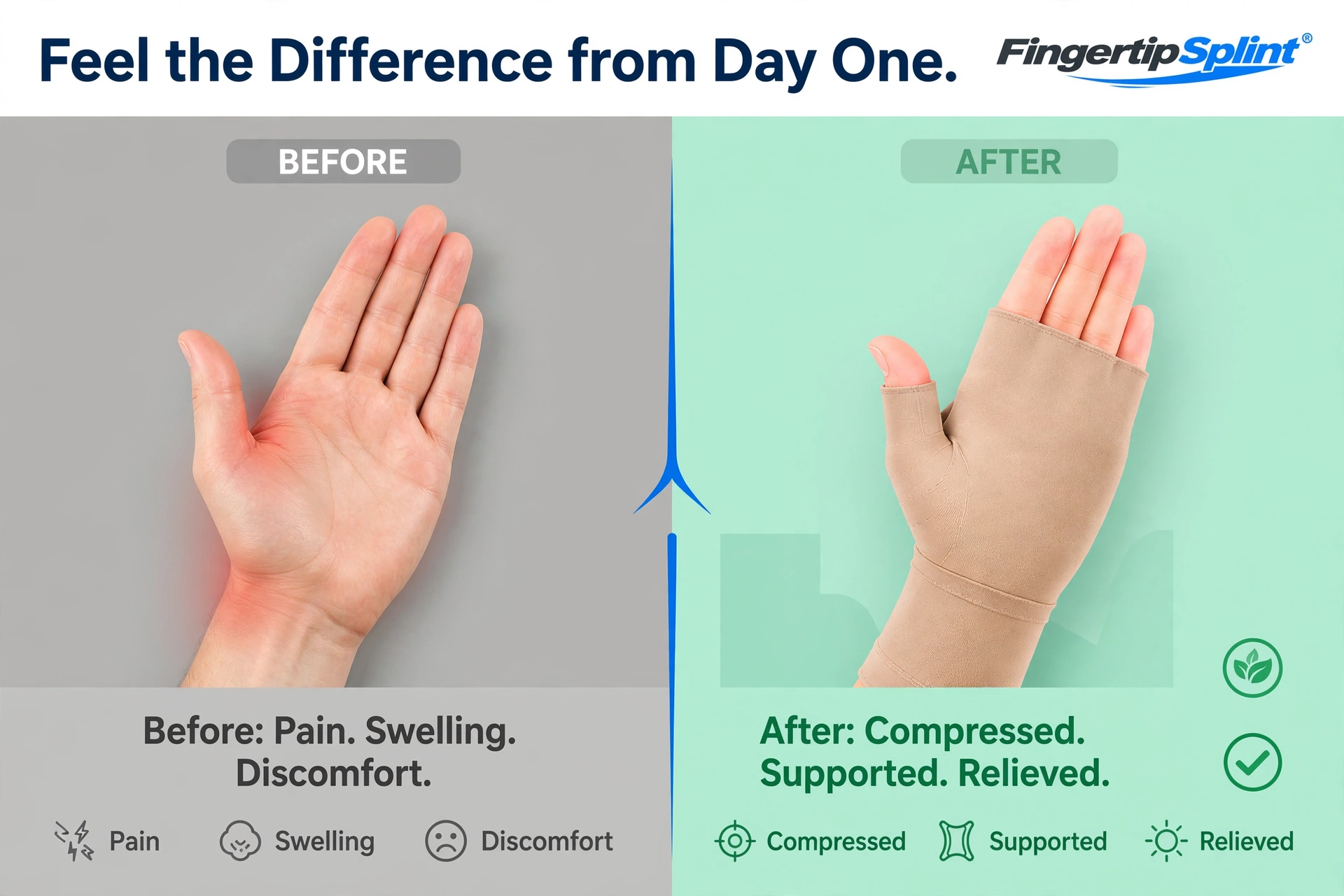
Before purchasing, review the product listing for:
- Materials and construction
- Sizing and fit guidance
- Thumb and wrist coverage
- Adjustability and fastening mechanism
- Care and cleaning requirements
- Intended use and any limitations
For readers who want to explore related products and support options, the FingerTipSplint shop provides a full overview. Healthcare providers and distributors can find additional information through the medical finger splint supplier page.
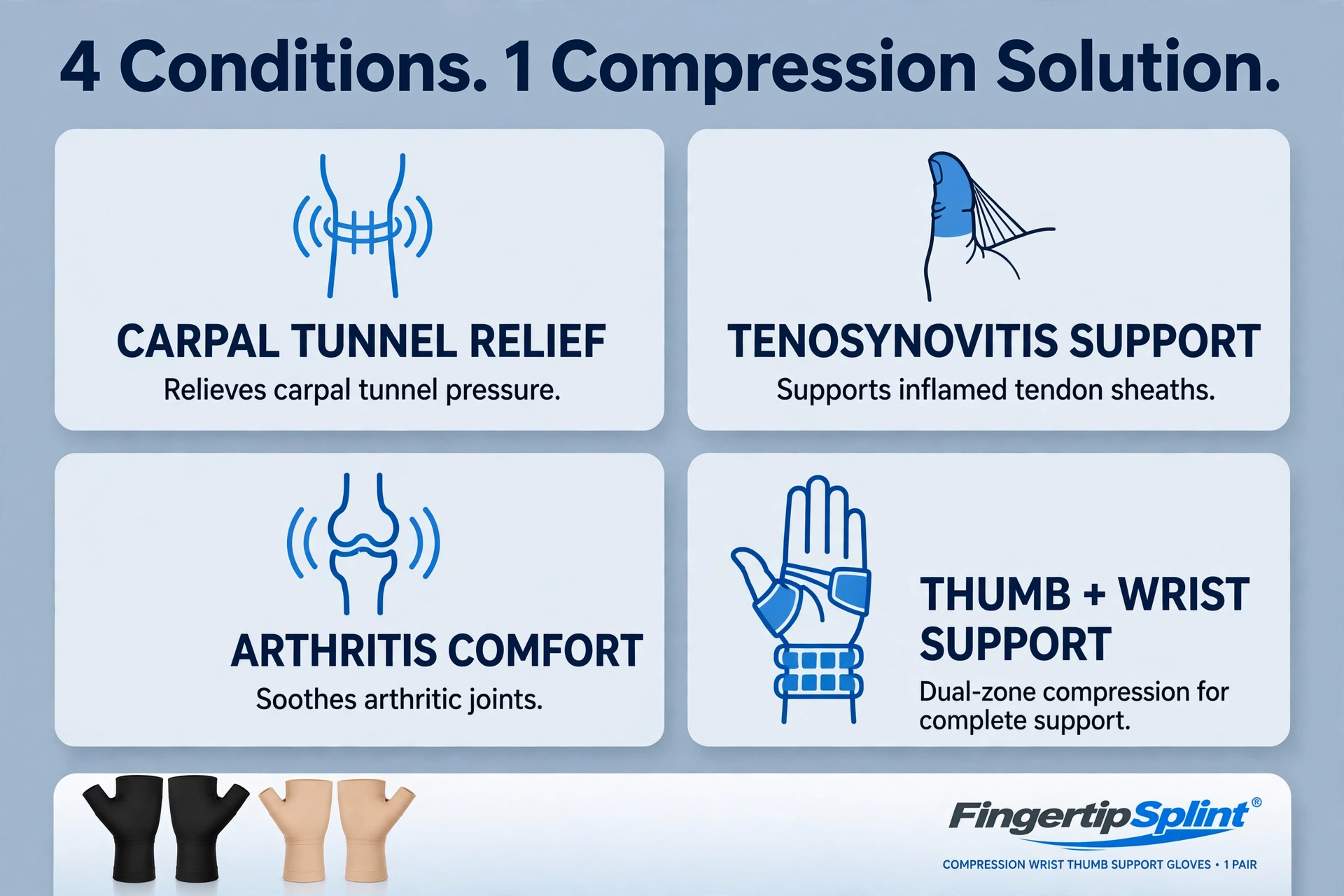
Explore the Wrist Thumb Brace Components
Select a component below to see what to check for each.
How to Put On and Adjust a Wrist Thumb Brace
Proper wear and adjustment are essential for comfort and safety. Follow these steps based on the product’s design and the manufacturer’s instructions.
Step 1: Read the product instructions. Before putting on the brace, read the manufacturer’s instructions. This will tell you how to position the brace, how tight to make it, and how to care for it.
Step 2: Position the brace correctly. Follow the design of the brace. If it covers the thumb and wrist, ensure the thumb opening sits comfortably at the base of the thumb and the wrist section wraps around the wrist joint.
Step 3: Adjust the straps. The brace should feel secure but not tight. You should be able to move your fingers freely. If you feel numbness, tingling, or throbbing, loosen the straps or remove the brace.
Step 4: Check for pressure points and circulation. After wearing the brace for a short period, check your skin for redness, indentations, or irritation. If you notice any of these, adjust the fit or discontinue use.
Step 5: Reassess during activity. The brace should remain comfortable during your daily activities. If it shifts, loosens, or causes discomfort, readjust it or consider a different design.
Common Mistakes When Choosing a Compression Brace
Many people choose a compression wrist thumb brace without understanding what to look for. Here are the most common mistakes and how to avoid them.
A brace that is too small can compress nerves and blood vessels. One that is too large will not provide effective support.
Solution: Measure according to the manufacturer’s size guide.
Tighter is not better. Excessive compression can cause numbness, tingling, and skin irritation.
Solution: Aim for secure but comfortable, not tight.
Numbness, tingling, or worsening pain are warning signs that something is wrong. Ignoring them can lead to more serious problems.
Solution: Stop using the brace and seek advice if symptoms occur.
A brace that looks supportive in a photograph may not match your needs. Coverage, sizing, and material all matter.
Solution: Review the product listing carefully before purchasing.
A brace is a support tool, not a treatment. It does not cure conditions or replace appropriate medical care.
Solution: Use a brace as part of a broader management plan.
A brace should not prevent you from performing necessary activities safely. If it does, it is not the right support for that task.
Solution: Match the brace to the activity and seek professional guidance if needed.
Who May Benefit From Wrist and Thumb Support?
A compression wrist thumb brace may be suitable for adults who want convenient support during selected everyday activities. It is not a one-size-fits-all solution, and suitability varies depending on the underlying condition.
People who may find a compression brace helpful include:
- Adults who experience occasional wrist or thumb discomfort during daily tasks
- People who want supportive compression during desk work, cooking, or light household activities
- People who are looking for a comfortable alternative to rigid splints for mild symptoms
- People who have been advised to use a support as part of a broader management plan
According to Mayo Clinic’s guidance on thumb arthritis, splinting is one option in the management of thumb arthritis, but the appropriate design depends on the affected joint and the individual’s needs. Similarly, Mayo Clinic’s information on hand and wrist tendonitis notes that treatment approaches vary depending on the specific tendon involved.
Doctor Advice — When a Brace Is Not Enough
A compression wrist thumb brace is a support tool, not a treatment. There are situations where it is not enough — and where professional assessment is necessary.
Seek medical advice if you experience:
- Persistent pain that does not improve with rest and conservative measures
- Significant swelling
- Reduced hand function that affects daily activities
- Pain after an injury
- Numbness or tingling that does not resolve
- Uncertainty about the cause of your symptoms
Seek urgent medical evaluation for:
- Severe pain
- Visible deformity after injury
- A cold, pale, or blue hand
- Signs of impaired circulation or nerve function
- Fever with joint pain and swelling
For readers who want to understand more about specific conditions, Mayo Clinic’s information on De Quervain tenosynovitis explains diagnosis and treatment options for thumb-side wrist pain.
Daily Support and Recovery: What Timeline Should You Expect?
There is no universal recovery timeline for wrist and thumb pain. Timelines depend on the cause, the treatment plan, and individual factors. However, here is a general framework for thinking about your progress:
Early Stage: Identify the Cause and Review the Fit
Determine what is contributing to your symptoms. If a brace is appropriate, ensure that it fits correctly and follow the product instructions or professional guidance. According to NHS guidance on tendonitis, mild tendon problems may improve over a few weeks with rest and activity modification.
Ongoing Stage: Monitor Symptoms and Function
Assess whether daily activities are becoming easier, staying the same, or becoming more difficult. Adjust activities as needed and seek advice if symptoms worsen. For conditions like arthritis, Harvard Health’s article on hand pain from arthritis notes that management may require longer-term strategies.
Review Stage: Reassess If Progress Stalls
Persistent or recurring symptoms may require a different support design, a revised care plan, or professional evaluation. Do not assume that wearing a brace longer is always the answer. According to MedlinePlus guidance on wrist sprain aftercare, following a structured aftercare plan can help support recovery.
For additional context on wrist injuries and disorders, MedlinePlus provides an overview of wrist injuries and disorders that can help you understand the range of possible causes.
Best Product Recommendation and Buying Checklist
To decide whether a compression wrist thumb brace is right for you, use this buying checklist:
- Fit: Does the brace fit securely without excessive pressure? Have you followed the manufacturer’s sizing guide?
- Coverage: Does it cover the area you need supported — thumb only, or thumb and wrist?
- Compression level: Does the compression feel supportive without causing numbness, tingling, or discomfort?
- Adjustability: Can you adjust the straps for a comfortable fit?
- Material: Is the material comfortable and compatible with your skin?
- Care: Can you follow the cleaning and maintenance instructions easily?
- Suitability: Is the support level appropriate for your condition and activities?
If you are looking for a compression wrist thumb brace to evaluate, review the FingerTipSplint Compression Wrist Thumb Support Brace, check its specifications against your needs, and decide whether its design suits your daily support requirements.
Quick Tips for Everyday Wrist and Thumb Support
Looking for a Wrist and Thumb Support for Your Daily Routine?
Explore the FingerTipSplint Compression Wrist Thumb Support Brace, review its fit and care instructions, and check whether its design matches your support needs.
View the Product Browse All ProductsFrequently Asked Questions
The best choice depends on the support needed, fit, thumb and wrist coverage, material, and intended use. There is no universal winner. Look for a brace that fits securely without excessive pressure, provides appropriate support, and allows the movement you need for your daily activities. Review the product specifications before buying.
This depends on the brace design and the task. The brace should not create pressure, interfere with normal movement, or increase symptoms. If you find that the brace interferes with typing or phone use, stop or modify the activity. A low-profile compression brace is often more suitable for desk work.
It should be secure but not excessively tight. Warning signs that the brace is too tight include numbness, tingling, swelling, worsening pain, and changes in hand colour or temperature. If you experience any of these, loosen or remove the brace and seek advice if symptoms persist.
A suitable splint may help some people with thumb arthritis, but the appropriate design depends on the joint and condition. According to Mayo Clinic, splinting is one option in thumb arthritis management. Discuss brace options with your healthcare provider to ensure the design matches your condition.
A brace may be part of a care plan for selected tendon problems, but it does not identify the cause or replace appropriate treatment. The right brace and duration of use depend on the specific tendon involved and professional guidance.
Duration depends on the condition, brace design, and professional advice. There is no single schedule that applies to everyone. Do not assume that all-day or overnight wear is appropriate. Follow the guidance of your healthcare provider and the product’s intended use instructions.
Seek assessment for persistent symptoms, swelling, loss of function, or pain after injury. Urgent evaluation is warranted for severe pain, visible deformity, significant colour changes, or loss of sensation. Early assessment can help identify the cause and guide appropriate treatment.
Conclusion: Choose Support That Fits Your Routine
Choosing the best compression wrist thumb brace for daily support is about matching the product to your needs. A brace that fits well, provides appropriate support, and suits your activities can make a meaningful difference in how you manage everyday tasks.
Remember that a compression brace is a support tool, not a treatment. It can provide comfort and support, but it does not replace appropriate medical assessment for persistent or worsening symptoms. If you are unsure whether a brace is right for you, seek professional guidance.
For readers who want to explore support options, the FingerTipSplint shop offers a range of products. For personalized assistance, you can request a quote or review the frequently asked questions.
Your hands are involved in almost everything you do. Choosing the right support is an investment in your daily comfort and function.