
When your fingers no longer move as comfortably as they used to, everyday tasks become harder. Struggling to close a fist, difficulty holding a cup, discomfort while typing, or fingers that feel stiff after inactivity — these are common frustrations that can affect your independence and quality of life. If you are unsure whether you need exercise, support, or a medical assessment, a finger exerciser splint is one option to understand. But not every finger problem requires the same device. This guide explains what a finger exerciser splint does, who may benefit, how it differs from other finger supports, and how to choose one safely. For a broader range of finger and hand support products, explore the full FingerTipSplint range.
Table of Contents
- What Is a Finger Exerciser Splint?
- Common Reasons People Look for Support
- Potential Benefits of a Finger Exerciser Splint
- Finger Exerciser vs. Finger Brace vs. Finger Straightener
- How to Choose the Right Finger Exerciser Splint
- How to Use a Finger Exerciser Splint Safely
- Recovery Expectations: Why Movement Improves at Different Rates
- Common Mistakes and When to Seek Medical Advice
- Is the 1PCS Finger Exerciser Splint Right for You?
- Frequently Asked Questions
A finger exerciser splint is a device designed to support or guide finger positioning or movement, depending on its construction. It may be used as part of a condition-specific hand-care or rehabilitation plan. The appropriate device depends on the affected joint, the underlying problem, and whether movement assistance or movement restriction is required.
What Is a Finger Exerciser Splint?
A finger exerciser splint is a device designed to support finger positioning, assist a specific movement, or guide rehabilitation exercises. But products sold under similar names can have very different functions — and choosing the wrong one can delay recovery or cause new problems.
Different Devices, Different Functions
- Finger exercise aids: Designed to help perform specific movements, often with resistance or guidance.
- Dynamic extension orthoses: Apply gentle tension to assist finger extension during rehabilitation.
- Static finger splints: Hold a joint in a specific position, often to protect an injury or reduce movement.
According to the Cleveland Clinic’s explanation of how finger splints work, different splints serve different purposes — some support positioning, while others assist movement or restrict it.
Why the Name Is Not Enough
Buyers should inspect the actual product mechanism and intended use rather than relying on the product name. A device labeled “finger exerciser” may not be suitable for every finger problem. A finger that needs to be immobilized after an injury should not be exercised without professional guidance.
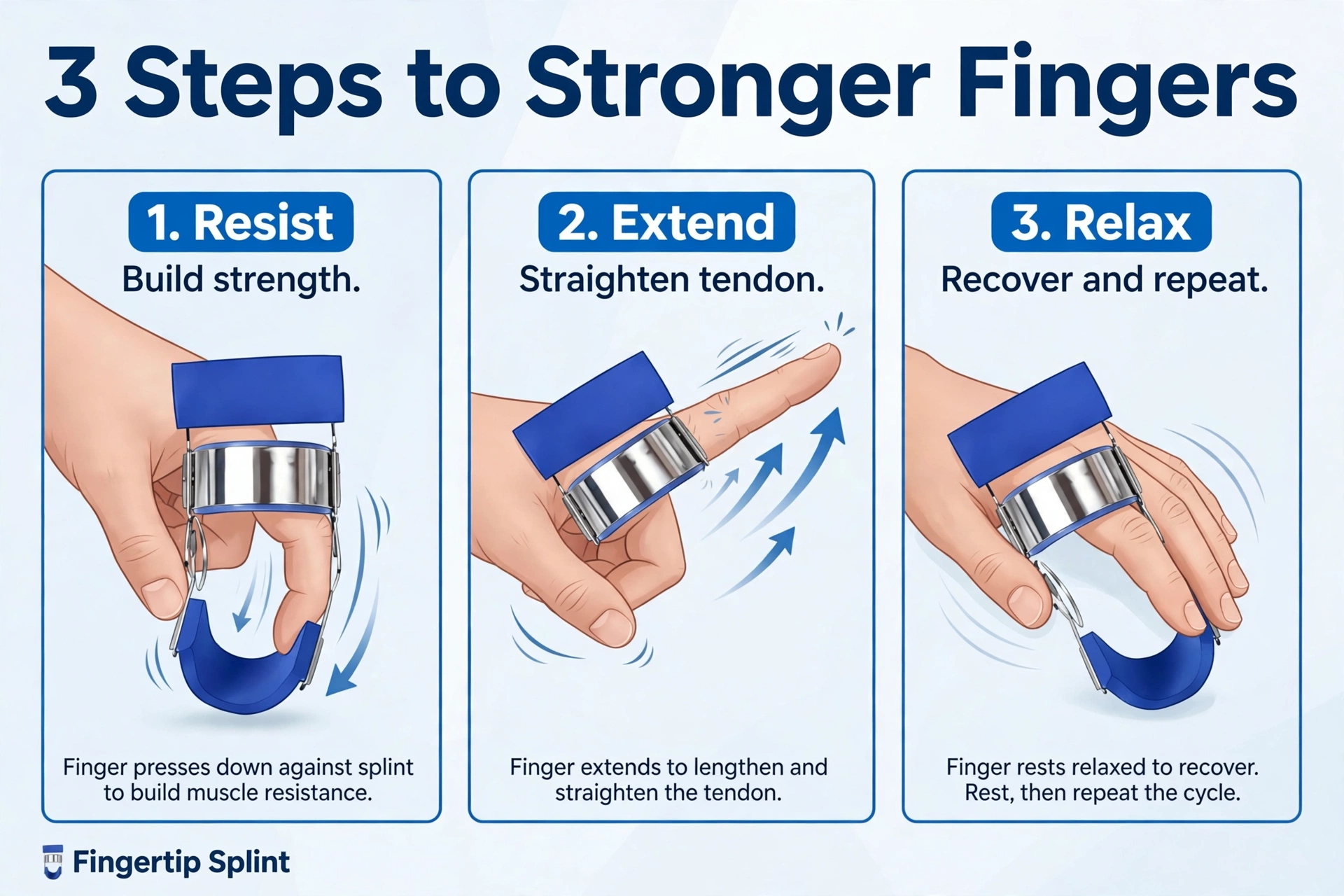
Common Reasons People Look for Finger Movement and Joint Support
People seek finger support for many different reasons. Understanding the underlying problem helps determine whether an exerciser splint is appropriate.
Stiffness After Injury
After a finger injury, stiffness is common. If the injury requires immobilization, exercise should not begin until healing has progressed enough. If the injury allows gentle movement, an exercise splint may be part of rehabilitation.
Limited Movement Following Immobilization
Prolonged immobilization can lead to stiffness and reduced range of motion. According to NHS guidance on finger pain, persistent symptoms should be assessed by a healthcare professional to identify the cause.
Selected Tendon or Joint Problems
Conditions such as trigger finger or tendon injuries may affect how the finger moves. Each condition has specific treatment needs. For example, NHS information on trigger finger explains that splinting may be recommended in some cases, but the type of splint matters.
Difficulty Completing Daily Hand Movements
If you cannot close a fist, hold a cup, or type comfortably, an exercise splint may help — but only if the underlying cause is appropriate. If the problem is a locked finger or a mallet finger, a different approach may be needed. NHS guidance on mallet finger explains that a specific splint worn continuously may be required.
Potential Benefits of a Finger Exerciser Splint
When the device is appropriate, a finger exerciser splint may offer several benefits. However, the device itself does not guarantee stronger fingers, restored movement, or reduced pain.
Guiding a Specific Movement
Some exerciser splints are designed to guide a finger through a specific range of motion. This can be helpful during structured rehabilitation.
Assisting a Prescribed Rehabilitation Exercise
When a hand therapist or clinician has recommended a specific exercise, the splint may help the user perform it more consistently. According to Cambridge University Hospitals guidance on active finger exercises, gentle movement exercises can be part of hand therapy.
Supporting a Selected Position
Some splints support the finger in a selected position, which may reduce discomfort or protect a healing structure.
Helping Follow a Structured Hand-Therapy Plan
For people undergoing hand therapy, an exercise splint can help maintain consistency between appointments. However, the device should be prescribed or recommended by a clinician.
Explore Finger Movement and Support
Select an area below to learn about its role and safety considerations.
Finger Exerciser Splint vs Finger Brace vs Finger Straightener
Different finger devices serve different purposes. Understanding the differences helps you choose the right one.
| Device Type | Intended Purpose | Movement Allowed | Typical Use |
|---|---|---|---|
| Finger exerciser splint | Assists or guides movement | Some movement | Rehabilitation exercises |
| Finger brace | Supports or protects the finger | Varies by design | Injury support, daily activities |
| Finger straightener orthosis | Holds finger in a specific position | Limited movement | Post-injury, deformity management |
| Static finger splint | Immobilizes a joint | Minimal movement | Fracture, tendon injury protection |
A finger straightener is not necessarily an exercise device, and a brace that immobilizes a joint should not be used as a substitute for a prescribed movement program. For more detail on how a finger training brace supports movement, the article on how a finger training brace supports finger movement provides additional context.
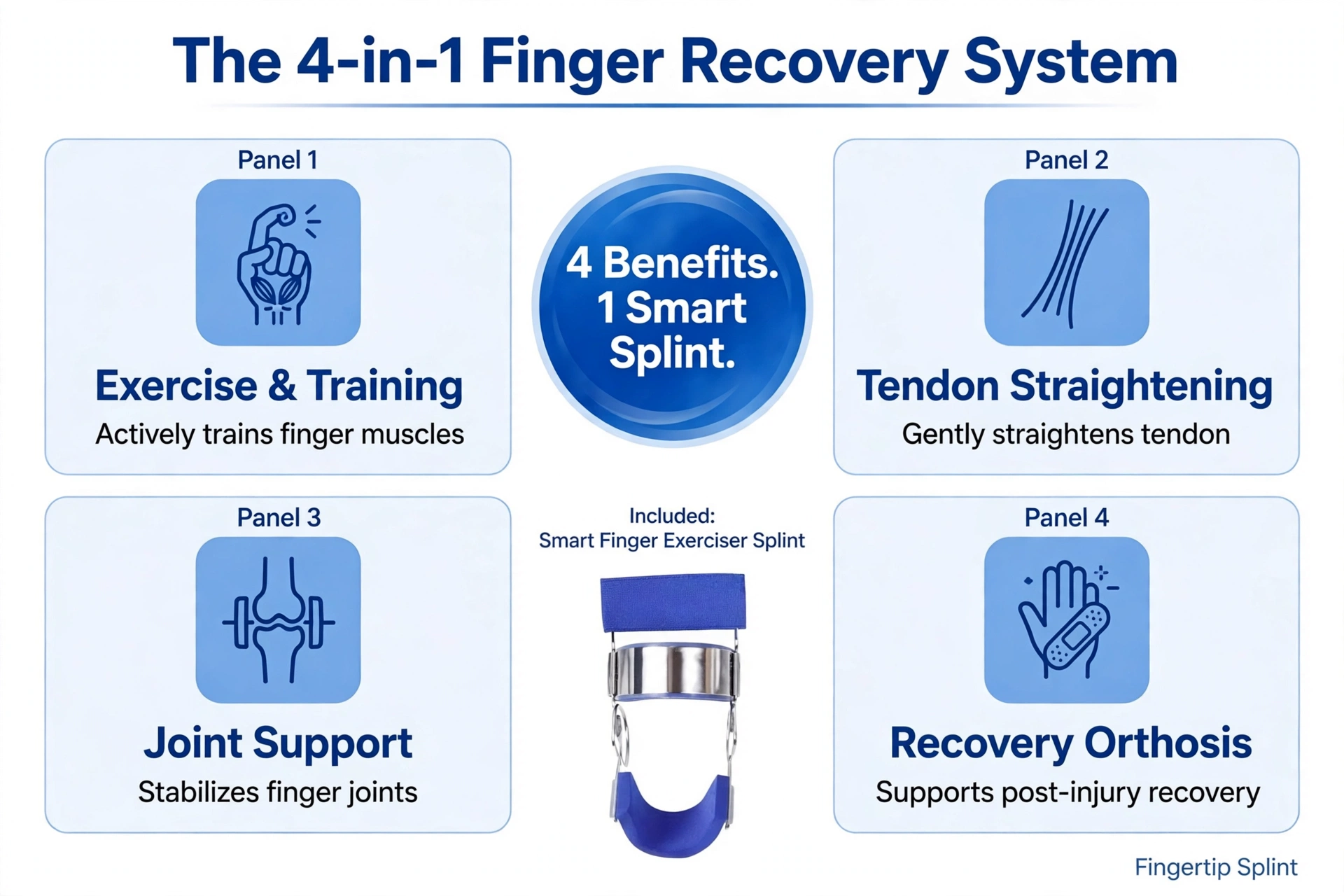
How to Choose the Right Finger Exerciser Splint
Choosing the right splint requires matching the device to your specific problem. Here are the factors that matter most.
Affected Finger and Joint
Which finger and which joint are involved? The appropriate support depends on where the problem is.
Intended Movement
What movement does the splint need to assist? Check that the device’s design matches the movement you need.
Sizing and Adjustability
Choose a size that fits your finger. Check whether the splint is adjustable and how the adjustment works.
Comfort
The splint should feel comfortable without causing pressure, numbness, or skin irritation. Softer materials are generally more comfortable for extended wear.
Ease of Cleaning
Can you follow the manufacturer’s cleaning instructions? Proper care affects hygiene and durability.
Compatibility with Daily Tasks
Consider the activities you need to perform. A splint that works well for typing may not be suitable for heavier gripping.
Manufacturer’s Instructions
Read the instructions carefully. If the splint applies a spring, tension, or extension force, the force and adjustment range must match the intended use.
How to Use a Finger Exerciser Splint Safely
Safe use is essential for comfort and effectiveness. Follow this step-by-step process based on the product’s design and the manufacturer’s instructions.
Step 1: Follow fitting instructions. Position the splint as directed. It should sit correctly on the finger without forcing the joint.
Step 2: Check skin and sensation. Look for redness, irritation, or pressure marks. Check for numbness or tingling.
Step 3: Use the intended movement without forcing. Follow the prescribed exercise plan. Do not force a stiff or painful finger into a position it cannot tolerate.
Step 4: Monitor the finger. After use, check the finger for swelling, redness, or changes in sensation.
Step 5: Stop and seek advice if problems occur. If you experience sharp pain, worsening swelling, numbness, skin damage, or changes in finger colour, remove the splint and seek advice.
Do not invent a universal number of repetitions, daily sessions, or wearing hours. A rehabilitation schedule should depend on the device, diagnosis, and clinician’s advice.
Recovery Expectations: Why Finger Movement Improves at Different Rates
There is no fixed recovery timeline for finger movement. Progress varies with the type and severity of injury, swelling, tendon involvement, time spent immobilized, and consistency with an appropriate care plan.
Initial Assessment: Understand the Problem
Before starting any exercise program, understand the cause of your finger stiffness or movement difficulty. Professional assessment can help identify the problem.
Early Rehabilitation: Gentle Movement
When appropriate, gentle movement exercises may help maintain or improve range of motion. According to University Hospitals Coventry and Warwickshire NHS Trust guidance on finger rehabilitation, the approach should be tailored to the injury.
Follow-Up: Reassess Progress
A hand therapist may assess movement, comfort, function, and progress over follow-up visits. Adjustments to the exercise plan may be needed.
Gradual rehabilitation is different from injuries that require strict immobilization. Follow professional guidance rather than assuming your finger should be exercised.
Common Mistakes and When to Seek Medical Advice
Some mistakes can turn a helpful device into a source of additional problems. Here are the most common ones.
Forcing movement can cause pain and injury.
Solution: Follow professional guidance and gentle movement principles.
A device designed for movement assistance may not be appropriate for an injury that needs immobilization.
Solution: Match the device to your condition and needs.
Excessive tension can cause pain or injury.
Solution: Follow the manufacturer’s instructions for tension settings.
Increased swelling may indicate that the exercise is too aggressive.
Solution: Stop and reassess with professional advice.
The wrong device may delay healing or worsen the injury.
Solution: Follow clinical guidance on immobilization.
Worsening symptoms require reassessment.
Solution: Stop and seek medical advice.
For more information on trigger finger treatment, NHS Inform guidance on trigger finger and North Tees and Hartlepool NHS Foundation Trust hand therapy guidance provide useful context.
Is the FingertipsSplint 1PCS Finger Exerciser Splint Right for You?
If you are considering a finger exerciser splint, the 1PCS Finger Exerciser Splint from FingerTipSplint is one option to evaluate. This guide does not claim that it straightens every finger, restores joint function, or cures tendon and joint conditions. What it offers is a design intended to support finger movement or positioning.
Before purchasing, verify the following details on the product listing:
- Intended use: What is the device designed to do? Does it assist movement, support positioning, or restrict movement?
- Mechanism: How does it work? Does it apply tension, provide support, or hold a position?
- Finger coverage: Which finger(s) is it designed for?
- Sizing: Does the product provide sizing guidance?
- Material and care: What materials is it made of? Can you follow the cleaning instructions?
- Adjustability: Can the tension or position be adjusted?
If the product’s mechanism or intended use is unclear from the listing, check with the seller or a qualified hand-care professional before purchasing.
For additional options, browse the FingerTipSplint shop or review the frequently asked questions.
Explore the 1PCS Finger Exerciser Splint
If finger stiffness or reduced movement is affecting your daily activities, review the 1PCS Finger Exerciser Splint, check its intended use and fit details, and decide whether its design matches your needs.
View the Product Browse All ProductsFrequently Asked Questions
A finger exerciser splint is used to support or guide finger positioning or movement, depending on its construction. It may be used as part of a condition-specific hand-care or rehabilitation plan. It is not a universal solution for every finger problem.
It may help when used as part of an appropriate rehabilitation plan. The device itself does not guarantee improved movement. Outcomes depend on the condition, the device design, fit, and consistent use according to professional guidance.
No. A finger exerciser splint is designed to assist or guide movement, while a finger straightener orthosis holds the finger in a specific position. They serve different purposes and are not interchangeable.
This depends on the cause of the stiffness or swelling. Some conditions benefit from gentle movement, while others require rest or immobilization. Professional assessment is recommended before using an exercise splint on a stiff or swollen finger.
There is no universal schedule. The appropriate duration depends on the device, your condition, and professional guidance. Follow the manufacturer’s instructions and your clinician’s recommendations rather than assuming a specific wear time.
Finger exercises should not cause sharp pain. Mild discomfort may occur, but sharp pain, worsening swelling, or numbness are warning signs. Stop and seek advice if you experience these symptoms.
Seek medical advice for persistent or worsening stiffness, a finger that locks or catches, or difficulty with daily activities. Seek urgent assessment for a finger that suddenly cannot straighten after injury, looks deformed, has severe pain, or loses sensation.
Conclusion: Match the Device to the Problem
A finger exerciser splint can be a useful tool when it matches the specific problem and is used as part of an appropriate rehabilitation plan. But it is not a universal solution, and it does not replace professional assessment or hand therapy.
Use this guide as a framework: understand why your finger is stiff or limited, review the product’s actual specifications, choose a device that matches your needs, and follow professional guidance for use. Stop using the splint if it causes pain or irritation, and seek professional advice if symptoms persist.
For readers who want to explore support products, the FingerTipSplint shop offers a selection. For more hand-care education, visit the FingerTipSplint blog. For personalized assistance, you can request a quote or review the frequently asked questions.
Your hands carry you through everything. Choosing the right support — and knowing when to seek professional advice — is part of caring for them well.