
When finger movement becomes difficult, everyday tasks can feel frustrating and even painful. You may struggle to bend a finger, straighten it fully, grip a cup, type comfortably, or perform small tasks that used to be automatic. You might be wondering whether a finger training brace could help — and whether it is the right type of support for your problem. This guide explains how a finger training brace works, what controlled movement means, how it differs from a protective splint or a straightening orthosis, and how to choose and use one safely. For a broader view of finger and hand support products, explore the full FingerTipSplint range.
Table of Contents
- Why Finger Movement Can Become Difficult
- What Is a Finger Training Brace?
- How Does a Finger Training Brace Support Movement?
- Potential Benefits of a Finger Training Brace
- Who May Benefit From Finger Movement Support?
- Finger Training Brace vs. Finger Splint vs. Straightener
- How to Choose the Right Finger Training Brace
- How to Use a Finger Training Brace Safely
- What to Expect When Working on Finger Movement
- Is a Finger Exerciser Splint the Right Support Option?
- Frequently Asked Questions
A finger training brace is a support device designed to help guide, stabilize, or assist finger positioning, depending on its design. It may be used alongside a clinician-recommended hand therapy plan, but different braces serve different purposes. The right option depends on the affected joint, the cause of restricted movement, and the required level of support.
Why Finger Movement Can Become Difficult
Finger movement can become difficult for many reasons. Understanding the cause matters before choosing a support device.
Common Causes
- Stiffness after an injury: After a finger injury, stiffness is common, especially after a period of immobilization.
- Swelling: Swelling can restrict comfortable joint movement.
- Tendon and ligament problems: Injuries to tendons or ligaments can affect how the finger bends or straightens.
- Conditions such as trigger finger or arthritis: These can cause catching, locking, or stiffness. NHS information on trigger finger explains the symptoms and treatment options.
- Previous fracture: A fracture can heal with stiffness or altered movement patterns.
Why Identifying the Cause Matters
Movement difficulties have different causes and treatments. For example, NHS guidance on finger pain recommends medical assessment for severe finger pain, loss of movement, altered colour or shape, and new loss of sensation.
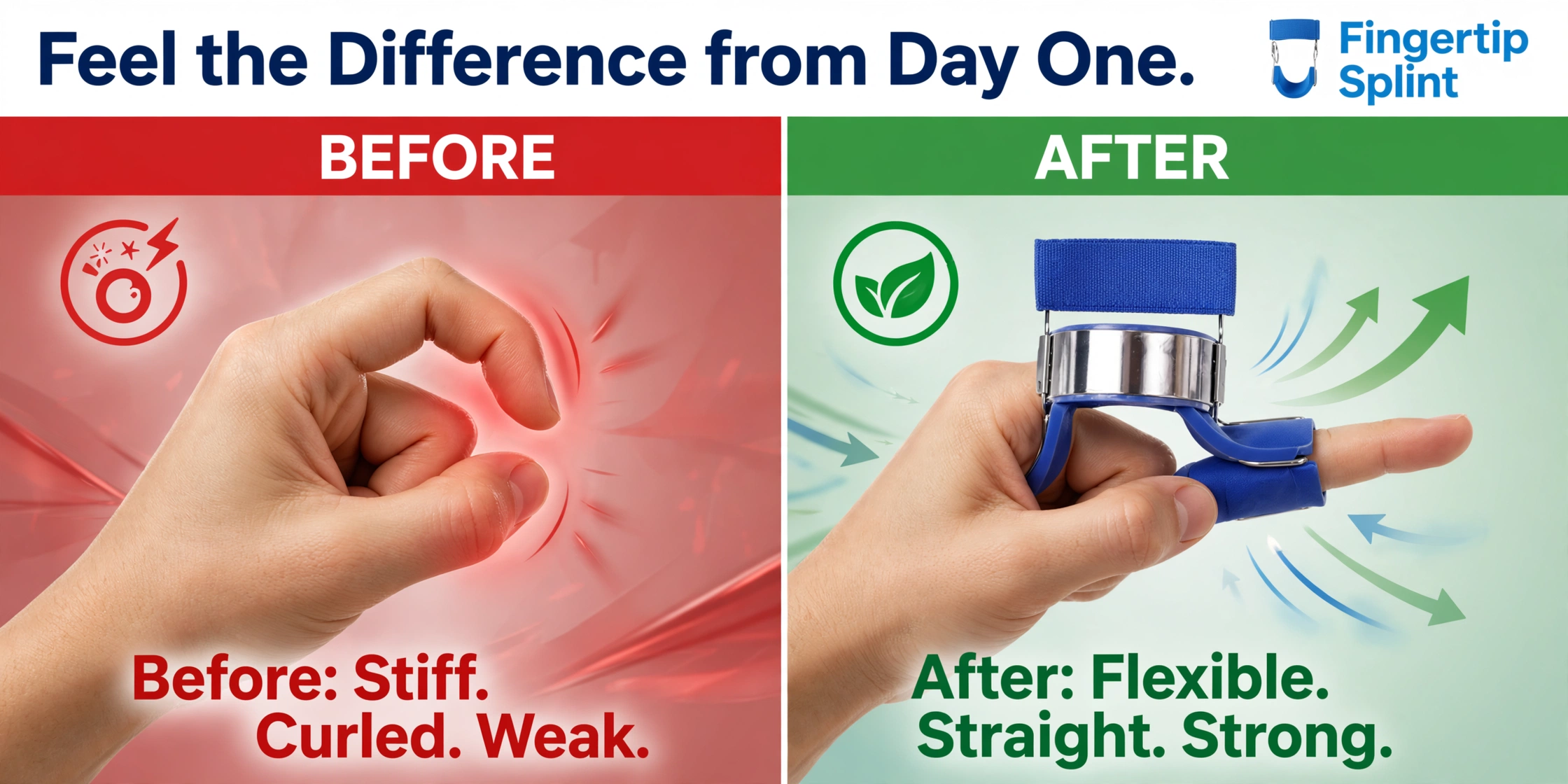
What Is a Finger Training Brace?
The term “finger training brace” is a broad shopping term, not one standardized design. Depending on its construction and purpose, a device may stabilize a joint, guide finger positioning, limit a particular movement, or assist prescribed movement exercises.
Main Design Categories
- Static support: Holds a finger or joint in a set position.
- Dynamic support: Uses a hinge, spring, or another mechanism to allow selected movement with assistance.
- Exercise or positioning aid: Helps support a particular movement or position when suitable for the user’s needs.
According to the Cleveland Clinic’s guide to finger splints, dynamic finger splints can permit supported movement and may be useful when a healthcare provider recommends particular stretches or movements. Other splints are intended to immobilize the injured area instead.
Explore How Finger Support Works
Select an area below to learn about its role and safety considerations.
How Does a Finger Training Brace Support Finger Movement?
A finger training brace supports movement through several mechanisms. The right mechanism depends on the specific problem and treatment goal.
Provides Targeted Support
A well-matched brace may support a selected joint or help maintain a prescribed position. The exact effect depends on which joint the device covers and how it is designed.
Guides a Specific Movement
Some dynamic designs permit movement with assistance, while other braces deliberately restrict movement to protect an injury. Understanding the difference is essential — these functions should not be confused.
Complements a Suitable Exercise Plan
A brace may form part of a clinician-directed rehabilitation plan. It does not replace appropriate exercises, diagnosis, or follow-up. According to Cambridge University Hospitals guidance on active finger exercises, hand therapy exercises target individual finger joints and should be adapted to the person’s injury.
Helps Maintain a Chosen Position
Appropriate positioning may support a treatment goal. However, a consumer brace does not automatically restore a normal range of motion or permanently straighten a finger.
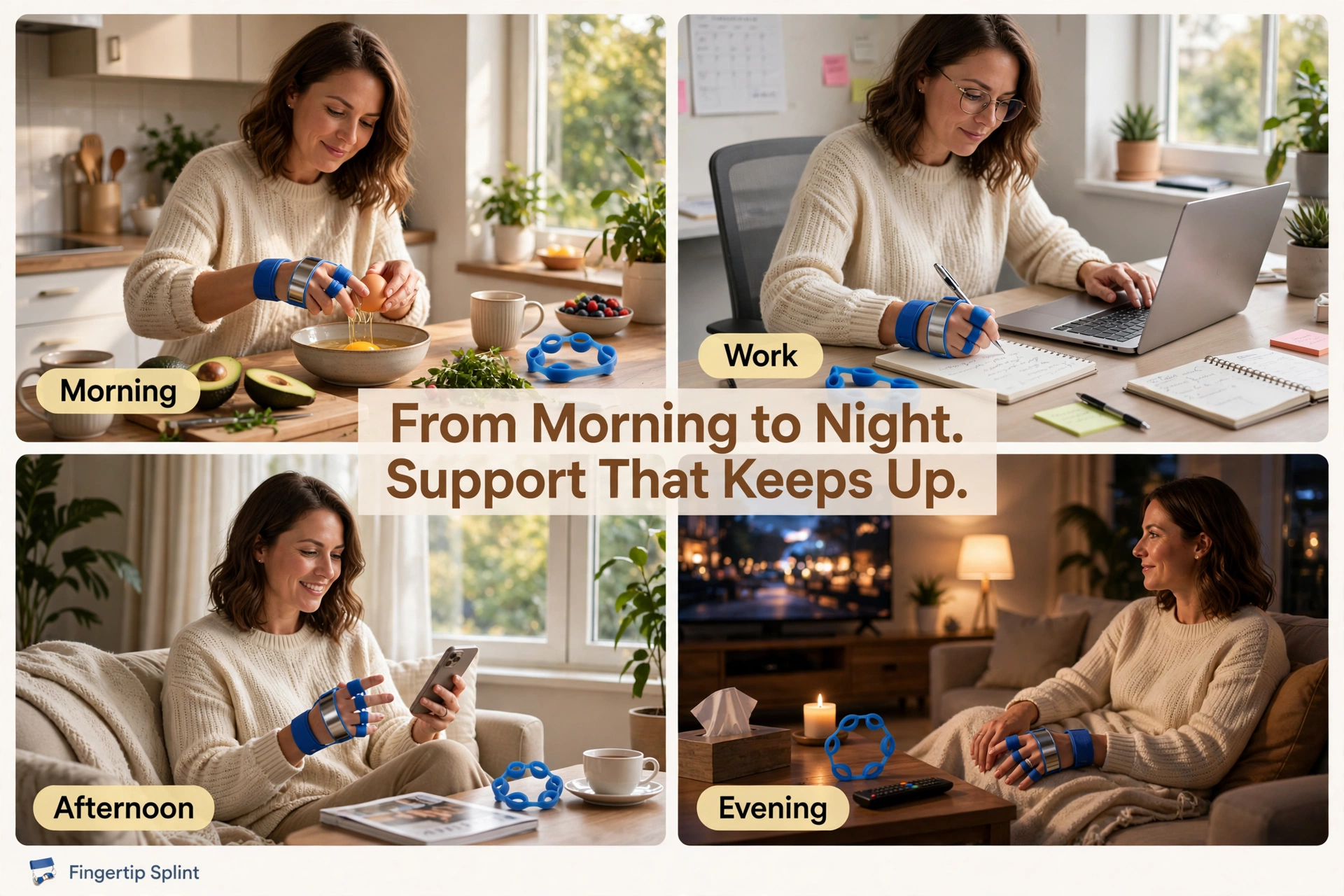
Potential Benefits of a Finger Training Brace
The potential benefits of a finger training brace depend on the specific device and the user’s condition.
Targeted Support for a Particular Joint
A brace designed for a specific joint may provide support where it is needed most.
Assistance with Prescribed Positioning or Movement
Some braces assist with a prescribed movement or position, helping the user follow a treatment plan.
A More Structured Approach to Hand-Therapy Activities
A brace may help structure exercise activities, especially when the user is following a clinician’s plan.
Support During Suitable Daily Tasks
Where the design and clinician’s instructions allow, a brace may provide support during appropriate daily tasks.
Potential Help with Protecting an Injured Finger
When immobilization is indicated, a protective splint may help protect an injured finger. This is different from a training brace designed for movement.
According to NHS information on mallet finger, a specific splinting protocol should not be replaced with generic finger exercises.
Who May Benefit From Finger Movement Support?
Suitability for a finger training brace depends on assessment and device design. Here is how different concerns might be approached.
| Reader’s Concern | Useful Discussion Angle |
|---|---|
| Finger stiffness | Whether supervised movement or positioning support may be appropriate |
| Difficulty straightening a finger | Why the cause and affected joint need to be identified |
| Triggering or catching | Trigger finger has specific treatment options |
| Arthritis-related discomfort | Joint support without promising to reverse arthritis |
| Recovery after an injury | Injury-specific instructions and the right stage of recovery |
For further reading, NHS information on trigger finger and NHS guidance on finger pain provide useful context. Readers with a recent injury, suspected fracture, tendon injury, or surgery should follow their clinician’s instructions first.
Finger Training Brace vs. Finger Splint vs. Finger Straightener
Different devices serve different purposes. Here is how they compare.
| Device Category | Main Purpose | Key Consideration |
|---|---|---|
| Finger training brace | May assist or guide a selected movement, depending on design | Check the intended movement and joint |
| Protective finger splint | Supports or immobilizes an injured area | May restrict movement deliberately |
| Finger straightener | Helps maintain or guide a straighter position | The cause of bending and the required correction matter |
| Dynamic finger orthosis | Allows selected movement with mechanical assistance | Often requires appropriate fitting and professional guidance |
Product names overlap in online shops, so buyers should judge the device by its construction, intended use, fit, and instructions — not its name alone. The Cleveland Clinic guide to finger splints is a useful authoritative reference for this comparison. For more on finger straightener orthosis features and daily use, see the article on finger straightener orthosis features and daily use.
How to Choose the Right Finger Training Brace
Choosing the right brace requires matching the device to your specific problem. Here is a buyer’s checklist.
1. Purpose
Is the device intended for positioning, protection, assisted movement, or exercise? Check the product’s intended use.
2. Affected Joint
Does it support the fingertip joint, middle joint, knuckle, or several fingers? Check the coverage.
3. Fit and Adjustability
Can it be secured without excessive pressure or slipping? Check the sizing and adjustment options.
4. Movement Design
Does the design allow the movement needed, or does it intentionally restrict it? Match the design to your treatment goal.
5. Comfort and Skin Contact
Are the edges, straps, and contact points comfortable? Check for smooth edges and breathable materials.
6. Instructions
Does the seller explain fitting, cleaning, and intended use? If not, look for a product with clearer guidance.
7. Professional Guidance
Is the underlying problem diagnosed, particularly after an injury? Seek professional assessment if the cause is unclear.
How to Use a Finger Training Brace Safely
Safe use is essential for comfort and effectiveness. Follow this general safety sequence.
Step 1: Confirm the device’s purpose. Understand what the brace is designed to do before using it.
Step 2: Follow clinician’s guidance. Follow any instructions about the correct position and amount of movement.
Step 3: Secure without overtightening. The brace should be secure but not tight enough to cause numbness or tingling.
Step 4: Check skin and finger regularly. Look for pressure, rubbing, or unusual marks.
Step 5: Do not force movement. Do not force a finger to bend or straighten against resistance.
Step 6: Stop and seek advice if symptoms worsen. Do not begin exercises or remove an injury splint unless the treatment instructions allow it. Stop using the device and seek advice if you experience numbness, tingling, colour changes, or skin damage.
A finger that is deformed after an injury, suddenly cannot move, becomes numb, or changes colour needs prompt medical assessment — not a trial-and-error brace purchase.
What to Expect When Working on Finger Movement
Progress varies depending on the original cause, injury severity, swelling, joint stiffness, tendon involvement, adherence to the treatment plan, and whether the brace is suitable.
Instead of a fixed recovery timeline, here is what a reader may monitor over time:
- How comfortably the finger moves within the permitted range.
- Whether daily tasks become easier — gripping, typing, or holding objects.
- Whether swelling or discomfort is improving or worsening.
- Whether the prescribed movement can be completed correctly.
- Whether the clinician recommends changes to the support or exercise plan.
According to Gloucestershire Hospitals NHS Foundation Trust guidance on hand fractures, healing and return of strength are different milestones: even after a fracture heals, full strength may take longer to return.
Is a Finger Exerciser Splint the Right Support Option?
If you are considering a finger training brace, the 1PCS Finger Exerciser Splint from FingerTipSplint is one option to evaluate. This guide does not claim that it permanently straightens fingers or cures any condition. What it offers is a design intended to support finger positioning or movement.
Before purchasing, verify the following details on the product listing:
- Intended use: What is the device designed to do?
- Mechanism: How does it work? Does it apply tension, provide support, or hold a position?
- Finger coverage: Which finger(s) is it designed for?
- Sizing: Does the product provide sizing guidance?
- Material and care: What materials is it made of? Can you follow the cleaning instructions?
- Adjustability: Can the tension or position be adjusted?
If the product’s mechanism or intended use is unclear from the listing, check with the seller or a qualified hand-care professional. For more context, the article on finger exerciser splint uses and benefits provides additional information.
For additional options, browse the FingerTipSplint shop or review the frequently asked questions.
Explore the Finger Exerciser Splint
If finger stiffness or reduced movement is affecting your daily activities, review the 1PCS Finger Exerciser Splint, check its intended use and fit details, and decide whether its design matches your needs.
View the Product Browse All ProductsFinger Training Brace FAQs
A finger training brace is designed to help guide, stabilize, or assist finger positioning, depending on its design. Some devices assist movement, while others restrict it to protect an injury. The right device depends on your specific problem and treatment goal.
It may help when used as part of an appropriate rehabilitation plan. However, stiffness has different causes, and the right approach depends on the underlying problem. Professional assessment is recommended before starting exercises or using a brace for stiffness.
No. A finger training brace is designed to assist or guide movement, while a finger splint is often designed to protect or immobilize a joint. They serve different purposes and are not interchangeable.
This depends on the device and your treatment plan. A dynamic brace may be designed for exercise, while a protective splint may be intended to restrict movement. Follow the instructions provided by your clinician or the manufacturer.
There is no universal schedule. Wear time depends on the diagnosis and device. Follow your clinician’s or the manufacturer’s instructions rather than assuming a specific duration is appropriate for every finger problem.
A finger straightener may help maintain or guide a straighter position, but the cause of the bending and the required correction matter. A brace does not guarantee permanent straightening, and some conditions require specific treatment.
Seek medical assessment for persistent or worsening stiffness, a finger that locks or catches, or difficulty with daily activities. Seek urgent assessment for a finger that suddenly cannot move after injury, looks deformed, has severe pain, or loses sensation.
Choose Finger Support Based on the Movement You Need
The right finger brace depends on whether the goal is protecting an injury, maintaining a position, or assisting selected movement. A finger training brace may help when it matches the specific problem and is used as part of an appropriate rehabilitation plan.
Use this guide as a framework: understand why finger movement is difficult, review the product’s actual specifications, choose a device that matches your needs, and follow professional guidance for use. Stop using the brace if it causes pain or irritation, and seek professional advice if symptoms persist.
For readers who want to explore support products, the FingerTipSplint shop offers a selection. For more hand-care education, visit the FingerTipSplint blog. For personalized assistance, you can request a quote or review the frequently asked questions.
Your hands carry you through everything. Choosing the right support — and knowing when to seek professional advice — is part of caring for them well.