
You are mid-game. A basketball jams your finger during a rebound. A volleyball smashes into your fingertips during a block. The finger hurts, swells, and you are not sure whether to keep playing, tape it, or see a doctor. A hollow-out finger brace for basketball and volleyball may offer support while leaving parts of the finger exposed, but its suitability depends on the brace design, the injury, and the demands of the sport. This guide helps you understand what a hollow-out brace does, how it differs from other supports, what to check before buying, and when medical assessment is the right next step. For a broader range of finger-support products, explore the full FingerTipSplint range.
Table of Contents
- Why Basketball and Volleyball Players Experience Finger Injuries
- What Is a Hollow-Out Finger Brace?
- Benefits for Basketball Players
- Benefits and Limitations for Volleyball Players
- Hollow-Out Brace vs. Adjustable Splint vs. Sleeve
- How to Choose the Right Hollow-Out Finger Brace
- Can You Play Through a Finger Injury With a Brace?
- Finger Brace Mistakes and When to Seek Medical Advice
- Compare Finger Support Options
- Frequently Asked Questions
A hollow-out finger brace is a finger-support device with an open-frame or cut-out design. Depending on its construction, it may support selected parts of a finger while leaving other areas exposed. Basketball and volleyball players should choose a brace based on the injury, fit, movement needs, and sport rules — not appearance alone.
Why Basketball and Volleyball Players Experience Finger Injuries
Basketball and volleyball both place tremendous force on the fingers. In basketball, catching a hard pass, contesting a rebound, or blocking a shot can jam or bend a finger into an awkward position. In volleyball, blocking a spike or setting the ball puts the fingertips at risk of hyperextension and direct impact.
Common Finger Injuries in Basketball
- Jammed fingers: Catching a hard pass or colliding with another player.
- Sprains: Ligament injuries from forced bending.
- Fractures: Direct impacts or awkward landings.
- Dislocations: Severe forces pushing the finger out of alignment.
Common Finger Injuries in Volleyball
- Fingertip jam: Blocking a spike with the fingers extended.
- Hyperextension: Setting or receiving a ball that pushes the finger backward.
- Tendon injuries: Repeated impact on the fingers during play.
- Ligament sprains: Catching the ball awkwardly.
Why a Jammed Finger Should Not Automatically Be Treated as Minor
A finger that looks “just swollen” may still have a fracture or dislocation. According to the AAOS guide to sprained fingers, ligament injuries can cause swelling, pain, and instability, and accurate diagnosis matters for appropriate treatment. The NHS guidance on broken fingers also emphasises that persistent pain, deformity, or difficulty moving the finger warrants professional assessment.
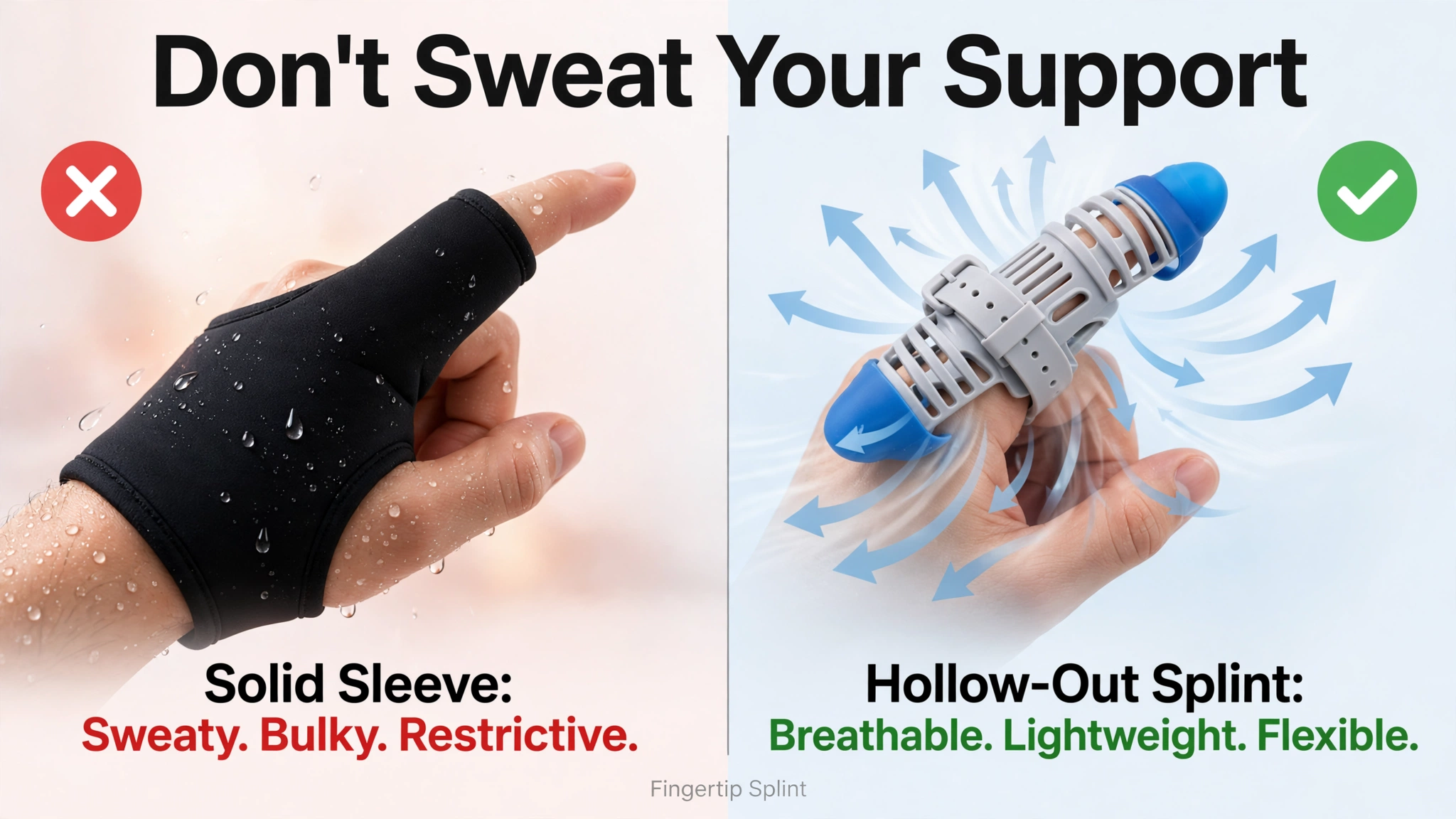
What Is a Hollow-Out Finger Brace?
A hollow-out finger brace is a finger-support device with an open-frame or cut-out design. Unlike a fully covered brace, it leaves parts of the finger exposed, which may allow for ventilation, flexibility, or specific support patterns depending on the design.
How the Open-Frame Design Differs from a Fully Covered Brace
An open-frame design may provide support to specific areas of the finger while leaving other areas free. The amount and type of support depend on the actual structure of the brace, not just the label on the product.
Which Areas of the Finger Are Supported?
This varies by product. Some hollow-out braces support the middle joint, others focus on the base of the finger, and some provide broader coverage. Check the product description and images to understand which areas are supported.
Why a Hollow-Out Design Does Not Automatically Mean Better Comfort or Performance
A hollow-out design is not automatically better than a fully covered brace. Comfort and performance depend on the fit, the material, the specific support needs, and the demands of your sport. For a related support option, see adjustable finger splint uses and benefits for sports.
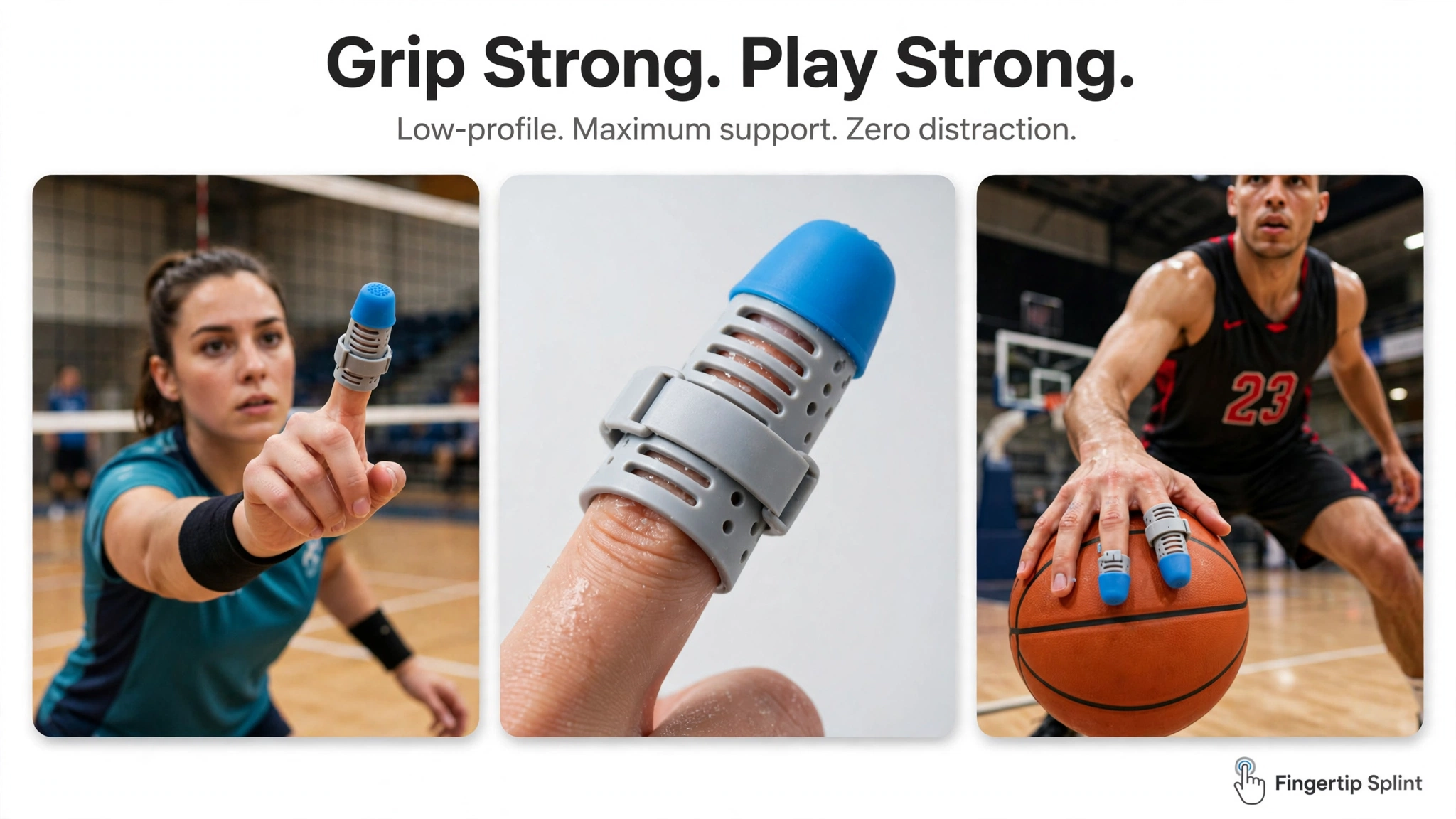
Benefits of a Hollow-Out Finger Brace for Basketball
The potential benefits of a hollow-out finger brace for basketball depend on the specific design and whether it suits the injury.
Considering Support Without Fully Covering the Finger
Some players prefer the feel of a more open design because it may allow a more natural feel of the ball. However, this does not mean it is suitable for every injury.
Fit and Movement Considerations for Catching and Gripping
A brace that fits well should allow you to catch and grip the ball without slipping or causing discomfort. If the brace interferes with your ability to control the ball, it may not be appropriate for play.
What Basketball Players Should Check Before Training
- Does the brace stay in place during movement?
- Does it interfere with catching, gripping, or ball control?
- Is it comfortable during activity, not just at rest?
- Does it comply with the rules of your league?
Why a Brace Cannot Guarantee Protection From Ball Impacts
A brace supports the finger while worn, but it does not prevent all injuries. A direct impact can still cause damage, and a brace is not a substitute for proper technique, injury assessment, or recovery time.
Explore a Hollow-Out Finger Brace: Design, Fit, and Sports Use
Select a feature below to learn more about it.
Benefits and Limitations for Volleyball Players
Volleyball players have specific demands: blocking, setting, serving, and digging all require precise hand function. A hollow-out brace may or may not suit these demands.
Finger Support for Blockers
Blockers absorb direct impact at the net. A brace may offer some support, but it cannot eliminate the force of a spike. Blockers should check whether the brace stays secure during jumping and hand contact.
Fit Considerations for Setters and Servers
Setters and servers need fine control of the fingertips. A brace that restricts finger movement may interfere with ball placement. Test the brace during practice before using it in competition.
Why Unrestricted Movement and Medical Support Are Not the Same Thing
A brace that allows full movement may feel comfortable, but it may not provide the stability an injured finger needs. Conversely, a supportive brace may restrict movement. The right balance depends on the injury and the stage of recovery.
Checking Competition Rules Before Wearing a Brace
Some leagues have rules about hand and finger protection. Check with your coach or league officials before wearing a brace in competition. The HealthyChildren.org sports injury resource offers age-appropriate context for younger players and parents.
Hollow-Out Finger Brace vs. Adjustable Finger Splint vs. Finger Sleeve
Buyers often confuse these three support types. They are not interchangeable, and each has a different role.
Open-Frame Brace: Design and Coverage
A hollow-out or open-frame brace provides targeted support while leaving parts of the finger exposed. It may suit players who want some support without full coverage, but the amount of support depends on the design.
Adjustable Finger Splint: Support and Movement Restriction
An adjustable finger splint typically provides more structured support and may restrict movement to protect an injured joint. It is often used after an injury when stability is the priority. Learn more in this guide to adjustable finger splint uses and benefits for sports.
Finger Sleeve: Flexible Coverage and Fit
A finger sleeve offers flexible, lightweight coverage. It may provide mild compression and protection, but it generally offers less rigid support than a splint. For a closer look, see how adjustable finger sleeves support finger protection.
How to Narrow the Choice Based on Intended Use
Start with the injury and the activity. If a clinician has recommended immobilisation, a splint may be appropriate. If you need mild protection during activity, a sleeve or open-frame brace may be considered. Always follow professional advice.
| Support Type | Coverage | Movement Restriction | Typical Use |
|---|---|---|---|
| Hollow-out / open-frame brace | Partial, targeted | Low to moderate | Support during sport, depending on design |
| Adjustable finger splint | Broader, structured | Moderate to high | Post-injury stability, clinician-guided |
| Finger sleeve | Full, flexible | Low | Mild compression and protection |
How to Choose the Right Hollow-Out Finger Brace
Choosing the right brace starts with understanding your injury and your sport. Here are the key criteria.
Check Which Finger and Joint Need Support
Different fingers and joints have different support needs. A brace designed for the middle joint may not suit a fingertip injury. Confirm the brace is intended for the affected area.
Understand the Product’s Intended Purpose
Read the product description carefully. Some braces are designed for post-injury support, others for preventive use during sport. Match the product to your situation.
Check Fit Without Creating Pressure
A well-fitting brace should be secure but not tight. Check for numbness, tingling, or colour changes after fitting. The Cleveland Clinic finger-splint guidance explains fitting considerations and potential problems.
Confirm Whether the Brace Is Suitable for Sports Participation
Not all braces are designed for sport. Check whether the brace stays secure during movement and whether it complies with league rules. If you are buying for a team or clinic, the medical finger splint supplier page and finger splint distributor information may help with bulk orders.
Can You Play Through a Finger Injury With a Hollow-Out Brace?
This is one of the most common questions from players who do not want to miss a game. The honest answer is: it depends on the injury.
Why Pain Tolerance Is Not Proof of Recovery
Some players can tolerate significant pain, but pain tolerance does not mean the injury has healed. Playing through an unassessed injury can worsen damage.
What to Consider Before Returning to Practice
- Has the injury been assessed by a clinician?
- Has the swelling and pain reduced?
- Can you move the finger through its normal range without sharp pain?
- Does the brace stay secure during sport-specific movements?
Signs That Mean You Should Stop Playing and Seek Assessment
Stop playing and seek medical advice if you notice deformity, severe pain or swelling, inability to bend or straighten the finger, numbness, or unusual colour changes. The NHS guidance on finger pain lists symptoms that need assessment.
Finger Brace Mistakes and When to Seek Medical Advice
Even a well-designed brace can cause problems if used incorrectly. Here are the most common mistakes.
Mistake 1: Wearing the Brace Too Tight
Excessive tightness can reduce blood flow and cause numbness or tingling. A brace should be secure but not restrictive.
Mistake 2: Using the Wrong Support for the Injury
A lightweight sleeve is not a substitute for a splint after a significant injury. Match the support to the injury and follow clinical advice.
Mistake 3: Ignoring Numbness or Tingling
Numbness, tingling, or colour changes are warning signs. Remove the brace and seek advice if symptoms persist.
Mistake 4: Returning to Play Too Early
Returning before the injury has healed can worsen damage and prolong recovery. Follow a structured return-to-play plan.
Mistake 5: Assuming a Brace Prevents All Injuries
A brace supports the finger, but it does not prevent all injuries. Proper technique, rest, and medical assessment remain essential.
The finger looks bent or out of alignment.
Action: Seek medical assessment immediately.
Swelling that does not reduce or is accompanied by severe pain.
Action: Get the finger assessed.
You cannot bend or straighten the finger.
Action: Stop playing and seek advice.
Tingling, numbness, or colour changes in the finger.
Action: Remove the brace and seek advice.
Compare Finger Support Options Before Your Next Game
Choosing a finger brace should start with the type of support you need, not simply the sport you play. Review the product’s intended use, fit instructions, and limitations before deciding whether it suits your situation.
Featured Product: Adjustable Finger Splint
The adjustable finger splint offers structured support with adjustable fit. It may suit players who need more stability during recovery. Compare it with the hollow-out brace and finger sleeve options to find the right match for your injury and activity level.
Bundle Strategy: Why One Support May Not Be Enough
Recovery often involves different stages. A more supportive splint may be appropriate early on, while a lighter sleeve or open-frame brace may suit later stages. Having more than one option can help you adapt as your finger heals. Browse finger support options to compare designs.
Quick Tips Before You Buy
Ready to Compare Finger Support Options?
Choosing a finger brace should start with the type of support you need, not simply the sport you play. Review the product’s intended use, fit instructions, and limitations before deciding whether it suits your situation. If your finger is painful, swollen, deformed, or difficult to move, seek appropriate medical advice before returning to the court.
Compare Finger Support Options Read Finger Support FAQsFrequently Asked Questions
A hollow-out finger brace is an open-frame or cut-out style of finger support. Its intended use depends on the exact design and the injury it is designed to support. Check the product instructions and seek clinical advice when the injury is significant or has not been diagnosed.
It may be suitable for some basketball players, depending on the injury and the brace design. A hollow-out brace may offer support while leaving parts of the finger exposed, but it cannot guarantee protection from ball impacts. Check fit, movement, and league rules before using one in play.
Some volleyball players may find a hollow-out brace useful, but suitability depends on the demands of blocking, setting, serving, and digging. A brace that feels comfortable at rest may behave differently when a ball strikes the hand. Test it during practice and check competition rules.
They serve different purposes. An adjustable finger splint typically provides more structured support and may restrict movement to protect an injured joint. A hollow-out brace may offer lighter, targeted support. The right choice depends on the injury and clinical advice.
A brace supports the finger while worn, but it does not prevent all injuries. A direct impact can still cause damage. A brace is not a substitute for proper technique, injury assessment, or recovery time.
Pain tolerance is not proof of recovery. A suspected fracture, dislocation, or tendon injury needs assessment. Returning to sport depends on the injury and recovery plan. Stop playing and seek medical advice if you notice deformity, severe pain, numbness, or inability to move the finger.
Seek medical advice if you notice deformity, severe pain or swelling, inability to bend or straighten the finger, numbness, tingling, or unusual colour changes. Persistent or worsening symptoms also warrant assessment. The NHS guidance on broken fingers and AAOS mallet finger guide provide further context.
Conclusion: Support Your Finger, Protect Your Game
A hollow-out finger brace for basketball and volleyball may offer support while leaving parts of the finger exposed, but its suitability depends on the brace design, the injury, and the demands of the sport. Do not assume a brace prevents injuries or allows you to play through an unassessed injury. Start with medical assessment if the finger is painful, swollen, deformed, or difficult to move. Then compare support options based on your needs, fit, and intended use. For more guidance, explore more finger-support guidance in the blog library and review the frequently asked questions about finger supports.