Updated for 2026
Rotator Cuff Tear Pain Relief at Home: When to Use Ice, Heat, and a Shoulder Wrap
Rotator cuff tear pain relief at home starts with understanding what your shoulder is telling you: sharp soreness, swelling, weakness, stiffness, night pain, or pain when lifting your arm can all point to different stages of irritation and recovery. The right home-care routine can help you manage discomfort, protect the shoulder, and avoid making the injury worse.
A rotator cuff tear can feel frightening because it affects simple daily movements: reaching into a cabinet, putting on a shirt, sleeping on your side, carrying groceries, working at a desk, or returning to the gym. Many people try a regular ice bag first, only to find that it slips off the shoulder, does not cover the painful area, or forces them to hold it in place when they already feel weak or sore.
This guide explains when to use ice, when heat may help, how a shoulder wrap supports home comfort, and what mistakes to avoid. It also shows why a reusable shoulder ice pack wrap can be a practical home recovery tool for people who need targeted cold therapy, gentle compression, and hands-free support.
Medical Disclaimer and Trust Note
This article is for educational and product-guidance purposes only. It does not diagnose, treat, cure, or replace care from a licensed medical professional. A rotator cuff tear can range from mild tendon irritation to a partial tear or full-thickness tear. Some people improve with nonsurgical care, while others need imaging, injections, physical therapy, or surgery depending on the severity of the injury.
If your shoulder pain is severe, sudden, related to a fall, linked with visible deformity, accompanied by numbness, weakness, fever, chest pain, or inability to lift the arm, seek medical care quickly. For evidence-based information, you can review resources from Mayo Clinic, WebMD, and Healthline.
Table of Contents
Quick Answer Why Rotator Cuff Pain Is So Frustrating Ice vs Heat for Rotator Cuff Tear Pain Home Pain Relief Options Compared Recommended Shoulder Wrap Solution Benefits of a Rotator Cuff Ice Pack Wrap Step-by-Step Home Use Guide Recovery Timeline Common Mistakes Who Should Use a Shoulder Wrap Doctor-Style Advice Bundle Strategy Quick Tips FAQ ConclusionQuick Answer: Rotator Cuff Tear Pain Relief at Home
For rotator cuff tear pain relief at home, ice is commonly used for newer pain, swelling, and post-activity soreness, while heat may help stiffness and tight muscles later. A shoulder ice pack wrap can make home care easier because it contours around the shoulder, stays secure, and provides gentle compression.
Why Rotator Cuff Tear Pain Relief at Home Is So Difficult
The rotator cuff is a group of muscles and tendons that helps keep the upper arm bone centered in the shoulder socket. It helps you lift, rotate, reach, push, pull, and stabilize the shoulder during daily movement. When this area becomes irritated, strained, or torn, the pain can interrupt almost everything you do. Unlike a sore calf or wrist, the shoulder is hard to rest completely because it is involved in dressing, sleeping, driving, bathing, typing, lifting, and even getting out of bed.
Many people first notice pain when they reach overhead, lift something away from the body, place the arm behind the back, or lie on the affected side at night. Others feel a dull ache after workouts, yard work, cleaning, sports, or repetitive overhead tasks. The emotional side matters too. Shoulder pain creates fear because people wonder if the tear is getting worse, whether they will need surgery, or whether they should stop using the arm entirely.
The biggest challenge with home care is that people often use the wrong tool for the shape of the shoulder. A regular ice bag can cool the area, but it may not stay in place. A flat gel pack may work on the back or knee, but the shoulder is rounded. If the cold pack slips, leaves gaps, or forces you to hold it with the opposite hand, your recovery routine becomes frustrating. That is why many people search for a rotator cuff ice pack or shoulder cold therapy wrap instead of a basic ice pack.
A good home approach is not about forcing the shoulder to “heal overnight.” It is about reducing unnecessary irritation, controlling pain after activity, protecting the joint during rest, and knowing when symptoms require medical attention. A reusable wrap can support that routine, especially when paired with activity modification, gentle movement approved by a clinician, and consistent recovery habits.
If you are building a home recovery plan, it helps to start with the product category most relevant to this problem: the shoulder ice pack wrap guide. You can also explore related support products through the Fingertip Splint shop.
Rotator Cuff Tear Pain Relief at Home: When to Use Ice vs Heat
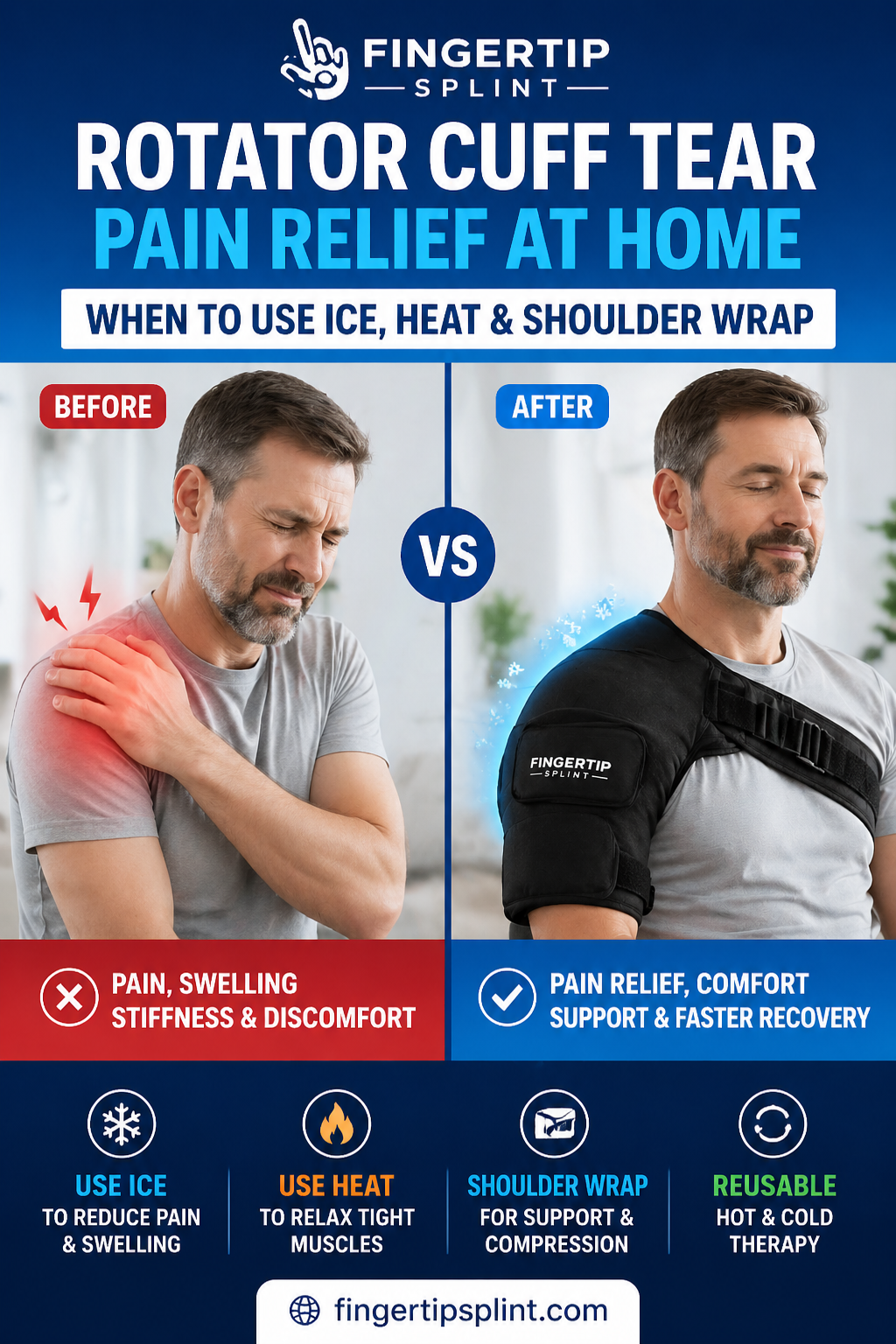
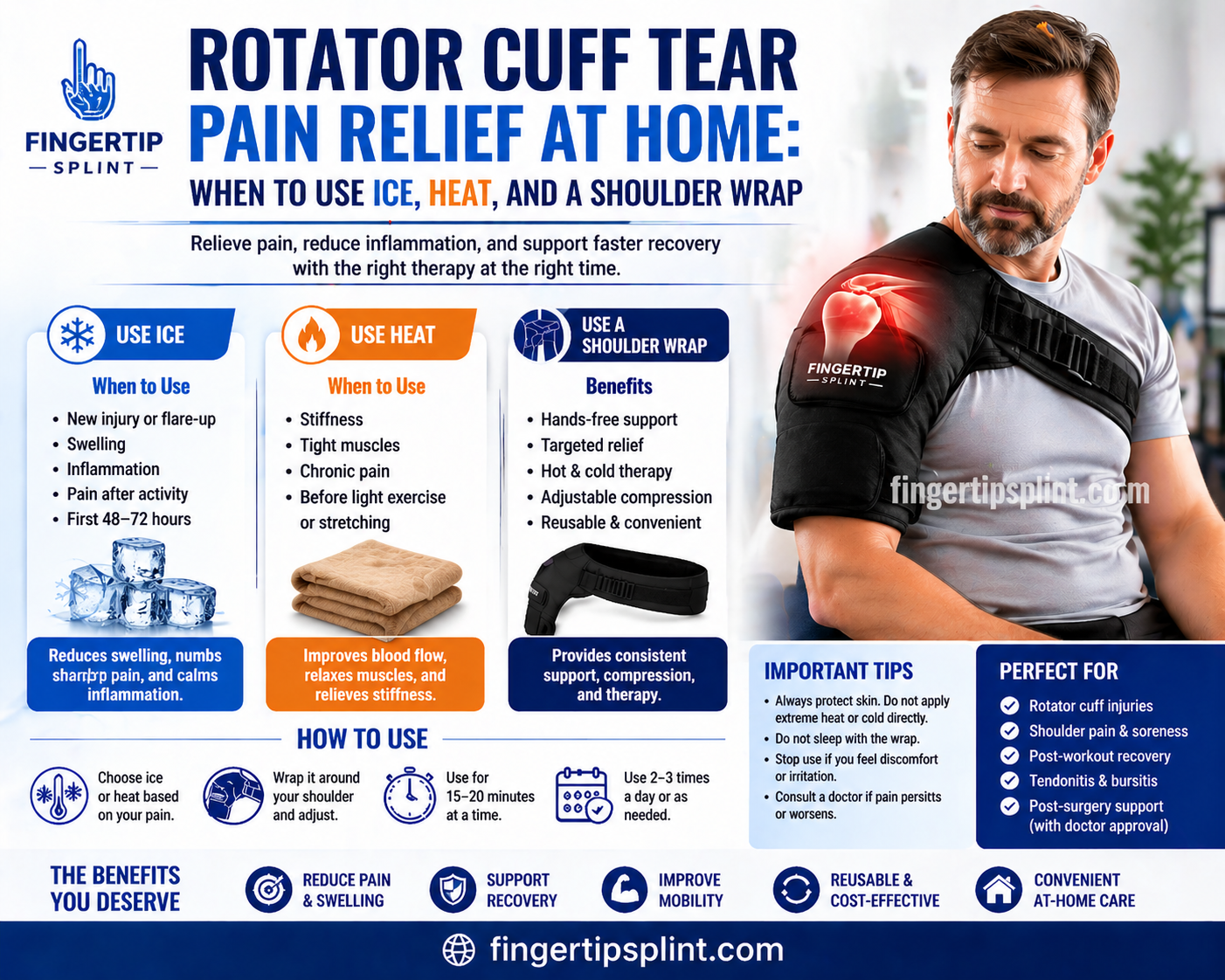
One of the most common questions is whether to use ice or heat for rotator cuff pain. The safest answer is that it depends on what you are feeling and where you are in the irritation cycle. Ice and heat do different things. Cold therapy is commonly used when the shoulder feels irritated, swollen, recently strained, or sore after activity. Heat is commonly used when the shoulder feels stiff, tight, or tense without obvious swelling.
Use ice when the pain feels fresh, sharp, hot, or reactive. For example, if your shoulder becomes sore after a workout, after lifting a box, after sleeping awkwardly, or after repetitive reaching, cold therapy may help calm the area. Ice can also be useful when soreness appears after physical therapy or approved exercises. The goal is not to freeze the shoulder. The goal is controlled cooling that helps the area feel calmer and more manageable.
Use heat when the main problem is stiffness or muscle guarding. Some people with rotator cuff problems wake up with a tight shoulder or feel restricted before stretching. In that situation, gentle warmth may feel more comfortable before light movement. Heat can help relax tight muscles around the shoulder, neck, and upper back. However, heat should not be used aggressively over new swelling or fresh injury unless a healthcare professional has advised it.
The practical problem is that symptoms can change. You may need ice after activity and heat later when stiffness is the bigger issue. That is why a reusable hot and cold product can be useful. A shoulder ice pack wrap that also supports warm therapy gives you flexibility without needing two separate products.
Think of it this way: ice is often the “calm it down” option, while heat is often the “loosen it up” option. If the shoulder is angry after movement, cold usually makes more sense. If the shoulder feels stiff and guarded later, heat may be more comfortable. If symptoms worsen with either method, stop and ask a clinician for guidance.
Comparison: Ice Bag vs Gel Pack vs Shoulder Wrap vs Cold Therapy Machine
Home shoulder care becomes easier when you choose the right tool. The product should match the problem. A rotator cuff tear or irritation usually needs coverage around the shoulder and upper arm. A tool that slips, leaks, feels too heavy, or requires constant hand support may not be realistic for daily use.
| Option | Best For | Main Problem | Best Use Case |
|---|---|---|---|
| Loose ice bag | Quick cooling | Messy, slips easily, difficult to position | Temporary use when no wrap is available |
| Flat gel pack | General cold therapy | Does not contour well around the shoulder | Flat body areas like back, thigh, or knee |
| Shoulder ice pack wrap | Rotator cuff pain, shoulder soreness, swelling, stiffness | Must be adjusted correctly for comfort | Hands-free home shoulder therapy |
| Cold therapy machine | Some post-surgical recovery plans | More expensive, bulky, less convenient for everyday use | Doctor-directed recovery after certain procedures |
A shoulder compression ice pack is often the most practical middle ground for everyday home care. It is more targeted than a loose bag of ice, simpler than a machine, and more secure than a flat gel pack. It lets you sit, rest, read, watch TV, or recover after activity without holding a pack against the shoulder the entire time.
For ecommerce buyers, convenience is a major decision factor. If a product is difficult to apply, people stop using it. If it feels secure and comfortable, they are more likely to use it consistently. Consistency is what turns a recovery product from a drawer item into a daily support tool.
Recommended Solution: Fingertip Splint Shoulder Ice Pack Wrap
The recommended solution for people seeking rotator cuff tear pain relief at home is the Fingertip Splint Shoulder Ice Pack Wrap. It is designed to provide reusable hot and cold therapy with adjustable compression for the shoulder and upper arm area.
This wrap is especially useful for people who are tired of loose ice packs that slide off, flat packs that do not cover the shoulder curve, or bulky recovery tools that are hard to use daily. The shoulder-specific design helps keep therapy where it is needed most, while the adjustable strap supports hands-free use.
Use it cold for soreness, swelling, and post-activity discomfort. Use it warm when stiffness and tightness are the main concern. For users managing rotator cuff discomfort, tendonitis or bursitis discomfort, gym soreness, office-related shoulder tension, or doctor-approved post-surgery support, this product gives a practical home-care option.
Shop Shoulder Ice Pack WrapBenefits of Using a Rotator Cuff Ice Pack Wrap at Home
1. Better Shoulder Coverage Than a Standard Ice Pack
The shoulder is curved, mobile, and difficult to cover with a flat pack. A dedicated wrap provides better contact around the shoulder and upper arm. This matters because pain from rotator cuff irritation is often felt around the outside, front, or back of the shoulder. If the cold therapy does not touch the painful area consistently, the user may not feel supported.
2. Hands-Free Support During Rest
When your shoulder hurts, holding an ice pack in place can be tiring. A wrap lets you apply therapy while resting. That hands-free design is valuable for people who want to sit on the couch, work at a desk, or relax after exercise without constantly repositioning the pack.
3. Adjustable Compression
Gentle compression helps keep the wrap secure. It also gives the shoulder a supported feeling, which many people appreciate when the joint feels vulnerable. Compression should never be painfully tight. The goal is secure contact, not restriction.
4. Hot and Cold Flexibility
Rotator cuff pain is not the same every day. Some days the shoulder feels sore and reactive; other days it feels stiff and guarded. A reusable shoulder wrap that supports hot and cold therapy lets you adapt to the symptom pattern instead of buying separate products.
5. Reusable Value
A reusable shoulder ice pack is more practical than disposable cold packs for people who expect repeated soreness or ongoing recovery. It is a home-care product you can use after workouts, after long workdays, during flare-ups, or when your doctor or physical therapist approves temperature therapy as part of your routine.
How to Use a Shoulder Wrap for Rotator Cuff Tear Pain Relief at Home
Step 1: Identify the Main Symptom
Before using cold or heat, ask what you are feeling. Is the shoulder newly sore, swollen, or irritated after activity? Cold may be the better first choice. Is the shoulder mostly stiff or tight without obvious swelling? Heat may feel better. This simple decision prevents one of the biggest mistakes: using the wrong temperature for the wrong symptom.
Step 2: Prepare the Wrap Correctly
For cold therapy, chill the gel wrap according to the product instructions. For heat therapy, warm it only as directed. Do not overheat a gel pack. Do not apply extreme temperature directly to sensitive skin. Proper preparation keeps the experience comfortable and reduces the risk of skin irritation.
Step 3: Place the Wrap Over the Pain Area
Position the wrap so the therapeutic area sits over the sore shoulder and upper arm. If discomfort is around the side of the shoulder, align the wrap there. If discomfort is more toward the back of the shoulder, adjust placement slightly so the cold or warmth reaches the target area.
Step 4: Adjust the Strap
The strap should feel secure but not tight. You should not feel numbness, tingling, or increased pain. If you do, loosen it or remove it. The goal is gentle compression and stable positioning.
Step 5: Use Controlled Sessions
Many people use cold therapy in short sessions, often around 15 to 20 minutes, then allow the skin to return to normal temperature. Follow your clinician’s advice if you are recovering from a diagnosed tear or surgery. Do not sleep with cold therapy unless specifically instructed by a medical professional.
Step 6: Track How Your Shoulder Responds
After each session, notice whether pain calms down, stays the same, or worsens. If symptoms keep returning, get worse, or limit daily life, the next step should be medical evaluation. Home care is useful, but it should not hide a worsening injury.
Recovery Timeline: What Home Pain Relief May Look Like Week by Week
Every rotator cuff injury is different. Age, tear size, activity level, posture, sleep position, physical therapy, and medical history all influence recovery. The timeline below is a general educational guide, not a medical plan.
| Timeframe | Common Experience | Home-Care Focus | Shoulder Wrap Role |
|---|---|---|---|
| First few days | Sharp soreness, inflammation, pain after movement | Rest from aggravating activity, cold therapy, medical evaluation if severe | Use cold therapy for controlled comfort sessions |
| Week 1 | Lingering pain, trouble sleeping, fear of movement | Avoid painful overhead activity, use short cold sessions after irritation | Hands-free shoulder cold therapy wrap support |
| Weeks 2 to 4 | Less sharp pain but stiffness may appear | Clinician-approved mobility, possible heat for stiffness | Switch between cold and heat based on symptoms |
| Weeks 4 to 8 | Gradual return of comfort if mild injury responds | Physical therapy and strengthening if prescribed | Use after exercise or activity flare-ups |
| Longer term | Recurring soreness with activity or incomplete recovery | Follow-up care, imaging if needed, avoid ignoring weakness | Use as part of a broader recovery toolkit |
People who train regularly often need a full recovery mindset rather than one isolated product. If you also experience lower-leg overuse discomfort, this guide on shin pain running mistakes explains how repetitive stress and training habits can contribute to pain. For broader support products, the orthopedic splints section may also be useful.
Common Mistakes That Make Rotator Cuff Pain Worse
Mistake 1: Trying to Push Through Sharp Pain
Pain is information. If a movement causes sharp shoulder pain, forcing through it can make irritation worse. This is especially important with overhead lifting, heavy pressing, throwing, or repeated reaching. A safer approach is to stop the aggravating movement and seek guidance if pain persists.
Mistake 2: Using Heat Too Early on a Fresh Flare-Up
Heat may feel relaxing, but it is not always the right first choice when the shoulder feels newly irritated or swollen. In those moments, cold therapy is often the more appropriate comfort strategy. Heat is usually better when stiffness and tightness are the main issues.
Mistake 3: Icing for Too Long
Longer cold sessions are not automatically better. Excessive cold exposure can irritate skin and cause discomfort. Use controlled sessions and protect the skin. If the skin becomes overly numb, painful, pale, or irritated, stop.
Mistake 4: Using a Poor-Fitting Ice Pack
A flat ice pack that slips off the shoulder can make home care frustrating. Poor fit also reduces contact with the painful area. A dedicated best ice pack for rotator cuff approach means choosing a product shaped for shoulder coverage.
Mistake 5: Avoiding Medical Care When Symptoms Are Serious
Home care can support comfort, but it cannot confirm whether a tear is partial, full-thickness, acute, degenerative, or associated with another shoulder issue. If you have weakness, major range-of-motion loss, night pain that does not improve, or pain after trauma, a healthcare professional should evaluate it.
Mistake 6: Doing Random Exercises Without Guidance
Physical therapy can be very helpful, but exercises should match your injury and stage of recovery. Random online exercises can irritate the shoulder if they are too aggressive or not appropriate for your condition. Ask a clinician or physical therapist what movements are safe for you.
Who Should Consider a Shoulder Ice Pack Wrap?
A shoulder ice pack wrap may be useful for adults who want a reusable hot and cold therapy option for home comfort. It is especially helpful for people who need targeted shoulder coverage and do not want to hold a pack in place manually.
- People with rotator cuff discomfort
- Adults with shoulder soreness after activity
- Gym users and athletes managing post-workout shoulder irritation
- Office workers with shoulder and upper back tension
- People dealing with shoulder stiffness
- People with tendonitis or bursitis discomfort
- People recovering from shoulder strain or injury
- Post-surgery users only when approved by a doctor
If your recovery needs include hand or finger support as well, you may find the medical splint guide helpful. For hand injuries and protective support, this article on orthopedic splints for hand injuries can also support your broader recovery education.
Doctor-Style Advice: When Home Care Is Enough and When to Get Help
Home care is most reasonable when symptoms are mild, improving, and clearly connected to activity soreness or overuse. In these cases, rest from aggravating activities, short cold therapy sessions, gentle movement, and clinician-approved exercises may help comfort and function. The goal is to reduce irritation while maintaining safe movement.
Medical evaluation becomes more important when pain is severe, does not improve, affects sleep for many nights, causes weakness, follows a fall, or prevents you from lifting the arm. A clinician may use a physical exam and imaging to understand whether the rotator cuff is irritated, partially torn, fully torn, or affected by other problems such as arthritis, impingement, bursitis, or tendon degeneration.
A shoulder wrap is a support tool, not a cure. It can help make cold or heat therapy easier and more consistent. It can reduce the frustration of loose ice packs. It can support comfort after activity. But it should be used alongside wise decisions: avoid painful movements, follow professional advice, and do not delay care for serious symptoms.
Best Product Recommendation for At-Home Rotator Cuff Pain Support
The Fingertip Splint Shoulder Ice Pack Wrap is the best protection option for readers who want reusable shoulder therapy at home. It is designed for hot and cold therapy, adjustable compression, and hands-free wear around the shoulder and upper arm.
For people comparing a loose ice bag, a flat pack, and a shoulder-specific wrap, the wrap offers a better balance of coverage, convenience, and usability. It is especially useful when the goal is consistent home comfort without complicated setup.
View ProductBundle Strategy: Build a Smarter Home Recovery Kit
Rotator cuff pain often changes how people use the rest of their body. When one area hurts, you compensate with the other arm, hand, wrist, neck, or back. That is why a smarter home recovery kit focuses on comfort, protection, and daily function.
Your core product for this article is the reusable shoulder ice pack wrap. For broader upper-body support, customers may also explore splints for hand and fingers, especially if gripping, lifting, or work-related hand strain is also part of the problem. A recovery kit does not need to be complicated. It should simply make safe care easier to repeat.
For ongoing education, readers can visit the Fingertip Splint blog or review general product questions on the frequently asked questions page.
Quick Tips for Safer At-Home Shoulder Relief
- Use ice for newer soreness, swelling, and post-activity irritation.
- Use heat when stiffness and tight muscles are the main problem.
- Do not apply extreme cold or heat directly to sensitive skin.
- Keep cold therapy sessions controlled and avoid sleeping with an ice pack.
- Choose a shoulder wrap that stays in place without requiring constant hand support.
- Stop any movement that causes sharp pain or worsening weakness.
- See a doctor if pain follows trauma, limits arm lifting, or does not improve.
Take Control of Shoulder Pain Before It Controls Your Day
Rotator cuff pain can steal sleep, confidence, workouts, work comfort, and simple daily movement. Waiting and hoping it disappears can lead to more frustration, especially when every reach or lift reminds you the shoulder is not right.
A reusable shoulder wrap gives you a simple home tool for cold therapy, heat therapy, and adjustable compression. It does not replace medical care, but it can make your daily comfort routine easier and more consistent.
Buy Shoulder Ice Pack WrapFAQ About Rotator Cuff Tear Pain Relief at Home
Mild rotator cuff pain may improve with rest from painful activity, controlled cold therapy, heat for stiffness, and physical therapy guidance. However, a true tear should be evaluated if pain is severe, persistent, or associated with weakness or loss of motion.
Use ice when the shoulder feels newly sore, swollen, irritated, or painful after activity. Use heat when stiffness and tight muscles are the main problem. If either option makes pain worse, stop and ask a healthcare professional.
Many people use cold therapy in short sessions of about 15 to 20 minutes. Let the skin return to normal temperature before repeating. Follow your doctor’s instructions if you have a diagnosed tear or post-surgical plan.
For shoulder pain, a wrap is often more practical because it contours around the shoulder, covers the upper arm, stays in place, and provides gentle compression. A regular flat ice pack may slide off or miss the painful area.
No. A shoulder wrap does not heal a torn tendon. It can support comfort by making hot and cold therapy easier to apply. Healing and recovery depend on the type and severity of injury and should be guided by a medical professional.
It is generally better not to sleep with an ice pack on because prolonged cold exposure can irritate skin or cause injury. Use controlled sessions while awake unless your clinician specifically tells you otherwise.
You can buy the Fingertip Splint Shoulder Ice Pack Wrap from the official product page here: reusable shoulder ice pack wrap.
Conclusion: Choose a Smarter Way to Support Rotator Cuff Pain at Home
Rotator cuff tear pain relief at home is about making smart, safe choices. Ice may help calm newer soreness and swelling. Heat may help stiffness and tight muscles. A shoulder wrap can make both options easier because it fits the shoulder better than a regular ice pack and stays in place without constant hand support.
The most important lesson is not to ignore your symptoms. If pain is mild and improving, a home routine may help support comfort. If pain is severe, persistent, or connected with weakness, trauma, or loss of motion, get medical guidance. A recovery product is most valuable when it supports a responsible care plan.
For a reusable hot and cold therapy option designed specifically for shoulder comfort, visit the Fingertip Splint Shoulder Ice Pack Wrap. For more recovery products and education, visit Fingertip Splint.