
Updated for 2026
Ice Pack for Shoulder Pain: Complete Buyer Guide to Choosing the Best Shoulder Ice Pack Wrap
An ice pack for shoulder pain can help manage soreness, swelling, stiffness, post-workout discomfort, rotator cuff irritation, and recovery support when used correctly. The challenge is choosing a wrap that actually fits the shoulder, stays in place, provides compression, and works for both cold and heat therapy.
If you are tired of holding a loose ice bag against your shoulder, slipping gel packs under a shirt, or trying to rest while a cold pack slides off your arm, a shoulder-specific wrap can be a better option. This guide explains what to look for, how to use it safely, and why a reusable gel shoulder wrap is often the most practical solution for home recovery.
Medical Disclaimer and Trust Note
This guide is educational and product-focused. It does not replace medical diagnosis or treatment. Shoulder pain can come from muscle strain, tendon irritation, bursitis, arthritis, rotator cuff injury, nerve irritation, or post-surgical recovery needs. If your pain is severe, sudden, worsening, linked with chest pain, numbness, weakness, fever, major trauma, or loss of movement, speak with a healthcare professional quickly.
For general temperature therapy guidance, trusted health resources such as Mayo Clinic, WebMD, and Healthline explain that cold is commonly used for swelling and newer injuries, while heat is often used for stiffness and tight muscles. WebMD notes that cold can reduce swelling and pain, while heat can improve blood flow and comfort. Healthline also notes cold compresses and compression may support swelling control in shoulder discomfort.
Table of Contents
Quick Answer Why Shoulder Pain Is So Hard to Treat Shoulder Ice Pack Comparison Best Product Solution Key Benefits How to Use an Ice Pack for Shoulder Pain Recovery Timeline Common Mistakes Who Should Use It Doctor-Style Advice Bundle Strategy FAQQuick Answer: What Is the Best Ice Pack for Shoulder Pain?
The best ice pack for shoulder pain is a reusable shoulder ice pack wrap that contours around the shoulder, covers the upper arm, offers adjustable compression, and can be used for both cold and heat therapy. A hands-free shoulder cold therapy wrap is usually better than a loose ice bag because it stays in place.
Why Shoulder Pain Needs a Better Solution Than a Regular Ice Pack
Shoulder pain is frustrating because the shoulder is not a flat surface. It is a rounded, highly mobile joint made up of muscles, tendons, ligaments, and soft tissue that work together every time you lift, reach, push, pull, sleep, type, drive, or exercise. A regular flat gel pack may work well on the knee or back, but it often fails on the shoulder because it slides down, leaves gaps, or forces you to hold it in place with your opposite hand.
This is why many people search for a dedicated shoulder ice pack instead of a basic cold pack. When pain sits around the rotator cuff, deltoid, upper arm, or front of the shoulder, you need coverage that wraps around the joint rather than simply resting on top of it. A loose pack may cool one area while missing the exact painful spot. A shoulder wrap solves this by molding around the upper arm and shoulder curve.
Cold therapy is commonly used when the shoulder feels swollen, inflamed, sore after exercise, or irritated after a strain. Heat therapy is often preferred when the shoulder feels tight, stiff, or tense. A reusable hot and cold wrap gives you both options in one product, which is useful because shoulder discomfort can change during recovery. The same person may need cold after activity and heat later for stiffness.
For shoppers comparing recovery tools, the product category page for the shoulder ice pack wrap is the most relevant place to learn about this specific product style. You can also browse other supportive recovery products through the Fingertip Splint shop.
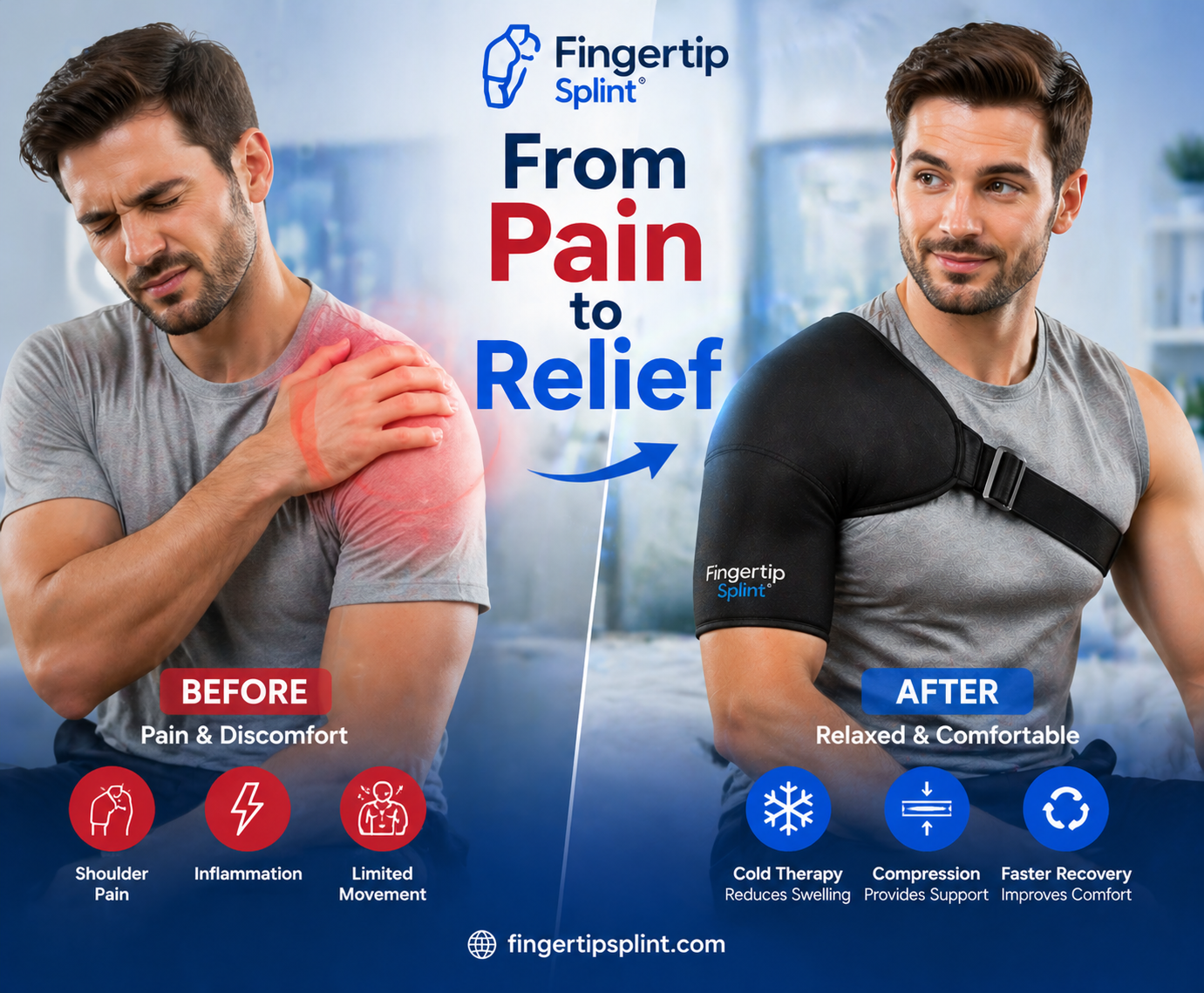
Ice Pack for Shoulder Pain vs Regular Ice Bag vs Cold Therapy Machine
Not every cold therapy option works the same way. A bag of ice is cheap, but it is messy and difficult to position. A flat gel pack is reusable, but it usually does not stay around the shoulder without help. A cold therapy machine can be useful after some surgeries, but it is more expensive, bulkier, and not always practical for everyday soreness or workout recovery.
A shoulder ice pack wrap sits between these options. It gives targeted coverage like a recovery device but keeps the simplicity of a reusable gel pack. For most home users, that balance is the key advantage. You do not need tubes, a machine, or someone else to hold the pack in place. You place the wrap, adjust the strap, and continue resting hands-free.
| Option | Best For | Limitations | Buyer Intent Fit |
|---|---|---|---|
| Loose ice bag | Temporary cooling | Messy, slips easily, hard to compress evenly | Low |
| Flat gel pack | General cold therapy | Poor shoulder fit, often needs to be held in place | Medium |
| Shoulder compression ice pack | Shoulder pain, swelling, rotator cuff discomfort, sports soreness | Must be fitted correctly for comfort | High |
| Cold therapy machine | Some post-surgery recovery plans | Expensive, bulky, less convenient for daily use | Medium to High |
For many people, the best shoulder ice pack is not the most complicated option. It is the one they can use consistently. Recovery tools only help when they fit your routine. If a device is too difficult, too uncomfortable, or too inconvenient, it ends up unused in a drawer. A reusable shoulder ice pack is practical because it can be stored at home, used after workouts, applied during rest, and reused whenever soreness returns.
Recommended Solution: Fingertip Splint Shoulder Ice Pack Wrap
The recommended solution for people looking for an ice pack for shoulder pain is the Fingertip Splint Shoulder Ice Pack Wrap. It is designed for hot and cold therapy, adjustable compression, reusable gel support, and hands-free shoulder coverage.
This product is ideal for people dealing with shoulder soreness, gym-related discomfort, upper arm tension, rotator cuff irritation, tendonitis or bursitis discomfort, and doctor-approved post-surgery recovery support. Unlike a standard ice pack, it wraps around the shoulder and upper arm to keep therapy in the right place.
Shop Shoulder Ice Pack WrapBenefits of Using a Shoulder Ice Pack for Pain Relief
1. Targeted Cold Therapy Where Shoulder Pain Happens
Shoulder pain rarely stays in one tiny spot. It can spread across the front of the shoulder, side of the upper arm, back of the joint, or into the neck area. A shoulder-specific design gives better contact than a flat pack because it follows the shoulder’s natural curve. That matters because cold therapy works best when the painful area gets consistent contact.
2. Adjustable Compression for Better Support
Compression is one reason people prefer a shoulder compression ice pack. Gentle compression helps hold the gel pack in place and may make the shoulder feel more supported during rest. It also reduces the need to constantly reposition the pack. This is especially helpful after workouts, during evening recovery, or while sitting at a desk.
3. Reusable Hot and Cold Therapy
A reusable shoulder ice pack gives you repeated use without buying disposable packs. Cold can be useful after activity or swelling. Heat can be useful when the shoulder feels tight or stiff. A dual-use wrap gives you flexibility as symptoms change. For example, someone with post-workout soreness may use cold first, then heat another day when the shoulder feels tight rather than inflamed.
4. Better Fit for Rotator Cuff Discomfort
Many shoppers look for a rotator cuff ice pack because pain around the shoulder joint can make daily tasks difficult. Reaching overhead, lifting a bag, sleeping on one side, or getting dressed can become uncomfortable. A wrap that covers the shoulder and upper arm is better suited than a small pack because the rotator cuff area needs targeted positioning.
5. More Convenient Than Holding an Ice Bag
Convenience is not a small detail. When people are in pain, they want relief without complicated steps. A wrap lets you sit, rest, read, or relax while therapy stays in place. This hands-free comfort is one of the strongest conversion benefits for customers who have already tried basic ice packs and felt disappointed.
How to Use an Ice Pack for Shoulder Pain Safely
Using an ice pack for shoulder pain correctly is just as important as choosing the right product. Overusing cold therapy, applying it directly to skin, or tightening a strap too much can create discomfort. A safe routine is simple, controlled, and consistent.
Step 1: Chill the Gel Pack Properly
Place the reusable gel shoulder wrap in the freezer according to the product instructions. A properly chilled pack should feel cold but still flexible enough to contour around the shoulder. Flexibility matters because a hard frozen block may not sit comfortably over the joint.
Step 2: Protect the Skin
Never use extreme cold directly against bare skin for long periods. If the wrap has a fabric barrier, use it as designed. If extra sensitivity occurs, add a thin towel layer. Skin protection is especially important for older adults, people with reduced sensation, and anyone with circulation concerns.
Step 3: Position the Wrap Around the Shoulder
Place the cold section over the sore area. For side shoulder soreness, align the gel around the outer shoulder and upper arm. For rotator cuff discomfort, aim for coverage around the top and back of the shoulder. Adjust the strap until the wrap feels secure but not tight.
Step 4: Use Short Sessions
Most general guidance recommends short sessions rather than long continuous icing. Many people use cold therapy for about 15 to 20 minutes at a time, then allow the skin to return to normal temperature before another session. Follow medical instructions if your doctor gave you a specific plan.
Step 5: Switch to Heat When Stiffness Is the Main Issue
If swelling is not the main problem and the shoulder feels stiff, tight, or tense, heat may feel better. A hot and cold shoulder wrap is useful because it supports both stages. For more recovery and protection content, visit the Fingertip Splint blog.
Shoulder Pain Recovery Timeline: When to Use Cold and Heat
Recovery depends on the cause of pain. A mild post-workout ache may improve quickly, while tendon irritation, bursitis, or rotator cuff issues can take longer. The timeline below is general and should not replace medical advice.
| Stage | What You May Feel | Therapy Focus | Product Role |
|---|---|---|---|
| Day 1 to 3 | Sharp soreness, swelling, fresh irritation | Cold therapy, rest, avoid aggravation | Use a shoulder cold therapy wrap for short sessions |
| Days 4 to 7 | Less swelling, lingering soreness | Cold after activity, gentle movement if approved | Use reusable shoulder ice pack after flare-ups |
| Week 2 | Stiffness, tightness, mild discomfort | Heat may help comfort before gentle movement | Use warm shoulder wrap when stiffness dominates |
| Weeks 3 and beyond | Recurring soreness with activity | Prevention, strengthening, recovery routine | Use hot/cold wrap as part of maintenance |
For sports-related recovery, body support matters beyond the shoulder. If you also deal with lower-leg overuse pain, this guide on shin pain running mistakes explains how training errors can lead to recurring discomfort. Athletes often need a full recovery system, not just one product.
Common Mistakes When Using an Ice Pack for Shoulder Pain
Mistake 1: Using Cold for Too Long
Longer is not always better. Excessive icing can irritate skin and may make the shoulder feel overly numb or uncomfortable. Short, controlled sessions are safer and easier to repeat.
Mistake 2: Applying Cold Directly to Skin
Direct ice contact can harm the skin. Always use a fabric layer or the product’s built-in protective material. This is especially important when using very cold gel packs.
Mistake 3: Ignoring Severe Symptoms
An ice pack can support comfort, but it cannot diagnose a tear, fracture, nerve issue, infection, or serious injury. Seek medical care if pain is severe, sudden, spreading, linked with weakness, or not improving.
Mistake 4: Buying a Pack That Does Not Fit the Shoulder
The best ice pack for shoulder pain is not simply the coldest pack. It is the pack that fits. If it slides, gaps, or forces you to hold it manually, you will not use it consistently.
Mistake 5: Forgetting the Role of Movement and Rehab
Temperature therapy can support comfort, but long-term shoulder improvement often requires activity modification, mobility work, strengthening, or physical therapy guidance. For hand and finger injury support, related orthopedic recovery products are available through the medical splint guide.
Who Should Use a Shoulder Ice Pack Wrap?
A shoulder ice pack wrap is best for adults who want reusable hot and cold therapy at home. It is especially useful for people who need targeted shoulder coverage without holding a pack in place.
- Athletes and gym users
- People with shoulder soreness after exercise
- Office workers with shoulder and neck tension
- Adults with shoulder stiffness
- People recovering from shoulder strain or injury
- Post-surgery recovery support, when approved by a doctor
- People with rotator cuff discomfort
- People with tendonitis or bursitis discomfort
- Anyone who wants reusable hot and cold shoulder therapy at home
If your pain comes from sports or repeated activity, you may also find value in broader support topics such as fast shin splint relief and orthopedic splints for hand injuries.
Doctor-Style Advice: When Cold Helps and When Heat Helps
Cold therapy is generally used when the goal is calming swelling, soreness, or fresh irritation. Heat therapy is generally used when the goal is relaxing tight muscles and improving comfort in stiffness. The shoulder is complex, so the right choice depends on what you feel.
Choose cold when the shoulder feels swollen, hot, recently strained, or irritated after activity. Choose heat when the shoulder feels stiff, tight, or tense without obvious swelling. Stop if symptoms worsen. Do not use heat over new swelling unless a clinician tells you to. Do not use cold if you have poor sensation, significant circulation problems, or a condition where cold exposure is unsafe.
After surgery, always follow your surgeon’s protocol. Some people are told exactly how often to use cold therapy, how long to use it, and what movements to avoid. In that case, the product should support the medical plan, not replace it.
Bundle Strategy: Build a Smarter Home Recovery Kit
A shoulder ice pack wrap works best when it is part of a simple recovery system. For upper-body recovery, your main item is the reusable shoulder ice pack wrap. For hand and finger protection, customers can also explore products such as splints for hand and fingers or a medical splint.
This matters because many injuries do not happen in isolation. A gym user may deal with shoulder soreness and finger strain. A worker may have wrist, hand, and shoulder tension from repeated tasks. A smart recovery kit gives support across the areas that take the most stress.
Best Protection Option for Shoulder Pain Support at Home
If you want a practical, reusable, hands-free solution, the Fingertip Splint Shoulder Ice Pack Wrap is the recommended solution. It gives cold therapy, heat therapy, adjustable compression, and shoulder-specific coverage in one easy-to-use wrap.
Do not wait until shoulder soreness starts controlling your sleep, workouts, workday, or daily movement. A simple recovery tool can make your home care routine easier and more consistent.
Buy Shoulder Ice Pack WrapFAQ About Ice Pack for Shoulder Pain
Many people use cold therapy for about 15 to 20 minutes at a time, then allow the skin to return to normal temperature. Follow your doctor’s instructions if you are recovering from surgery or a serious injury.
For shoulder pain, yes, often. A shoulder ice pack wrap fits the rounded shoulder joint better, stays in place, and gives hands-free compression. A regular pack may slide or miss the painful area.
Yes, depending on the symptoms. Cold is commonly used for swelling and fresh soreness. Heat is commonly used for stiffness and tight muscles. A hot and cold shoulder wrap gives both options.
The best ice pack for rotator cuff discomfort is usually a wrap-style product that covers the shoulder and upper arm, stays secure, and offers adjustable compression. A rotator cuff ice pack should not require you to hold it in place.
Only if your doctor or surgeon approves it. Post-surgery recovery plans can be specific. Ask how long to use cold therapy, how often to apply it, and whether compression is allowed.
It is generally better not to sleep with an ice pack on because prolonged cold exposure can irritate skin or cause injury. Use controlled sessions while awake unless your clinician gives different instructions.
You can buy the Fingertip Splint shoulder ice pack wrap from the official product page here: reusable shoulder ice pack wrap.
Conclusion: Choose a Shoulder Wrap That Makes Recovery Easier
An ice pack for shoulder pain should do more than get cold. It should fit the shoulder, stay secure, provide compression, feel comfortable, and support both cold and heat therapy when needed. That is why a reusable shoulder ice pack wrap is a strong choice for athletes, office workers, adults with stiffness, and people managing rotator cuff, tendonitis, bursitis, or injury-related discomfort.
If shoulder pain is limiting your sleep, workouts, work, or daily comfort, take it seriously. Start with safe home care, avoid common mistakes, and choose a recovery tool designed for the shoulder’s shape. For more support products and recovery education, visit Fingertip Splint or browse the frequently asked questions.