
Why Choose Finger Sleeves for Convenient Finger Support?
A support product can be technically useful and still be inconvenient if it’s difficult to wear, bulky, restrictive, or impractical for your routine. This guide is about the convenience angle specifically — what makes a finger sleeve practical for everyday use, when that convenience actually matters, and when it shouldn’t be your main priority.
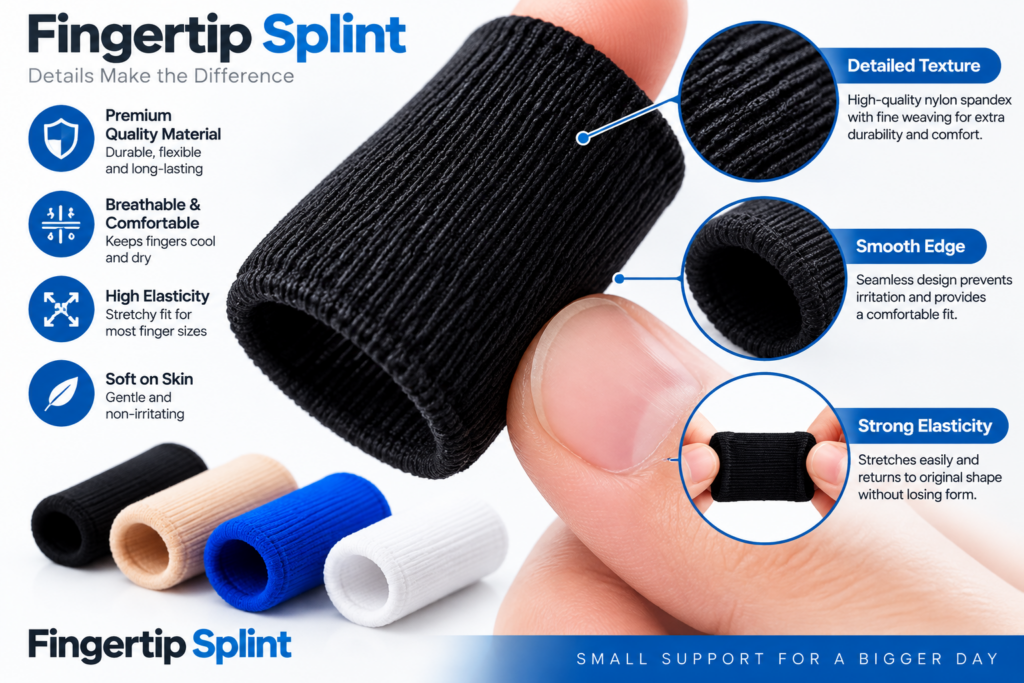
What This Guide Covers
- Quick Answer
- What Makes Support Convenient?
- Easy-to-Use Design
- Flexibility as Convenience
- Low Profile & Everyday Objects
- Work & Study Convenience
- Convenience While Traveling
- Comfort + Convenience
- Portability
- Convenience vs Structure
- When Convenience Isn’t Priority
- Convenience Through the Day
- Convenience Wheel
- Is Convenience Your Priority?
- What Makes a Sleeve Less Convenient
- Convenience Mistakes
- Sleeve vs Structured Support
- Product Spotlight
- Convenience Checklist
- FAQ
Quick Answer: Why Choose Finger Sleeves for Convenient Support?
Finger sleeves can be convenient because sleeve-style designs may provide a simple, flexible, and relatively low-profile way to incorporate finger support into everyday routines. Their suitability depends on the specific design, fit, coverage, intended activity, and the level of structure or movement control required.
That’s the short version. But “convenient” is a broad word — it can mean very different things depending on the user and the situation. Let’s break it down properly. If you’re new to the category, the finger support products collection at FingertipSplint is a good starting point.
What Makes Finger Support “Convenient”?
Convenience isn’t one thing. It’s the combination of several practical characteristics — and a product can be strong in one area but weak in another. Here’s how to define convenience in this category:
1. Ease of Use
How straightforward is it to put on and remove? Does it require help, straps, or complex positioning?
2. Flexibility
Does the design accommodate the movement required for normal activities? Or does it get in the way?
3. Low Bulk
Does it interfere with objects, clothing, keyboards, phones, or other everyday items?
4. Portability
Can it be carried easily when traveling or moving between locations?
5. Everyday Integration
Can it fit naturally into an established routine without constant adjustments?
6. Maintenance
Is cleaning and care straightforward according to manufacturer instructions?
Easy-to-Use Design
For everyday use, simplicity matters. A convenient sleeve tends to be straightforward to put on, position, remove, and store. But not every sleeve is equally easy to use — convenience depends on the specific design and the user’s fit and application.
Convenient Design Characteristics
- Slip-on or simple pull-on design
- No complex straps or closures
- Clear sizing instructions
- Easy to position correctly
- Simple to remove at the end of the day
- Easy to store between uses
Where Complexity Helps
- Adjustable straps for fine-tuned fit
- Multiple fastening points for stability
- Customizable positioning
- Reinforced construction for durability
Complexity isn’t automatically bad — it’s about whether it matches your needs.
Flexibility as a Convenience Factor
Flexibility is one of the biggest convenience advantages of a sleeve-style design. Here’s the distinction:
Support + Movement
A flexible sleeve typically allows natural finger movement. This makes it convenient for activities where you need to keep using your hands — typing, writing, phone use, and daily tasks.
Support + Movement Restriction
A more structured device may restrict movement to stabilize a specific area. This serves a different purpose — but it’s less convenient for activities that require finger movement.
Neither is universally better. If a healthcare professional has recommended movement restriction, follow that guidance. But for general everyday use where flexibility matters, a sleeve-style design is often the more convenient choice. For the full comparison, see Finger Support Sleeve vs Finger Splint: What’s the Difference?
Low-Profile Support and Everyday Objects
Bulk can affect usability more than most buyers expect. A sleeve that adds significant thickness around the finger can interfere with everyday objects — keyboards, pens, phones, and small items you handle regularly.
Here’s what to think about: does the support interfere with the activity you need to perform?
⌨️ Keyboard interaction
✍️ Pen grip
📱 Smartphone touchscreen
📓 Notebook handling
🖱️ Computer mouse use
🔧 Small everyday objects
This is a better way to think about convenience than simply saying “low-profile is better.” The question is whether the sleeve’s profile matches the activities you need to perform.
Convenience During Work and Study
This is where convenience becomes concrete. Tap each activity to see the practical considerations.
Interactive: Work & Study Convenience
Tap each activity to see the convenience considerations
TYPING
Repeated movement
WRITING
Grip & movement
SMARTPHONE
Tapping & swiping
STUDYING
Repeated hand use
DESK WORK
Keyboard & mouse
TRAVEL
Portability
Typing
A flexible sleeve with minimal bulk is usually the most convenient for typing — it preserves finger movement and doesn’t interfere with keyboard contact. A thick or loose sleeve can affect typing rhythm and accuracy.
Convenience While Traveling
Travel is where the portability advantage becomes obvious. A sleeve is small, easy to pack, and doesn’t require special handling — which makes it practical for trips and moving between locations.
Travel-Friendly Characteristics
- Compact size for easy packing
- Simple to store in a travel pouch
- Easy to put on and remove while traveling
- No complex adjustment needed
- Straightforward care away from home
What to Check Before Traveling
- Care instructions for travel conditions
- Whether a spare makes sense
- Storage that protects the sleeve
- Sizing matches (in case you need a replacement)
For a broader look at how sleeves fit into different daily activities, see Understanding Finger Support Sleeves for Everyday Activities.
Comfort + Convenience: Not the Same Thing
Convenience isn’t only about speed. A product can be easy to put on but still inconvenient if it causes discomfort during the intended activity. Here’s the relationship:
Fit
Comfort
Movement
Usability
If comfort breaks down during the intended activity, the sleeve stops being convenient — no matter how easy it was to put on. For a dedicated comfort-focused guide, see How to Choose a Comfortable Finger Sleeve for Support.
Portability: Why Small Support Products Can Be Practical
Size and simplicity affect portability. A finger sleeve is a small item, which means it can travel with you the way other everyday carry items do.
What’s in Your Everyday Carry?
A finger sleeve fits alongside the things you already carry
Phone
Wallet
Keys
Notebook
Finger Sleeve
Portability depends on the specific product’s size and construction. Check product dimensions before buying if portability is a priority.
Convenience vs Level of Structure
This is an important consideration: convenience should not be the only factor in choosing finger support. Here’s the conceptual spectrum:
Key point: Flexible products emphasize movement and everyday usability. Structured products provide more physical stabilization or movement control depending on design. The appropriate option depends on the individual’s circumstances and professional guidance where needed.
When Convenience Should NOT Be Your Main Priority
This is important for anyone considering finger support. If you have any of the following, convenience shouldn’t be the primary decision factor — professional assessment matters more:
🩹 Significant injury
🦴 Visible deformity
📈 Severe or worsening pain
💧 Major swelling
⚡ Persistent numbness or tingling
🚫 Substantial loss of movement
⏳ Symptoms that aren’t improving
For trusted guidance, see the AAOS OrthoInfo hand and wrist conditions library, NHS guide on hand pain, and MedlinePlus hand injuries and disorders. Additional perspectives are available from Mayo Clinic, Cleveland Clinic, and Johns Hopkins Medicine. The NIH provides research-based information, and if a neurological component is involved, NINDS is the specialist resource. For regulatory context on medical devices, the FDA is authoritative, and for general public health information, the CDC is a trusted source.
Interactive: Convenience Through the Day
Tap each moment to see the convenience factor
🌅 Morning — Putting It On
A convenient sleeve is easy to put on without help, complicated positioning, or straps. It goes on smoothly and sits correctly on the first try. This is the first signal of convenience — if application is difficult, the rest of the day won’t feel much better.
Interactive: The Convenience Wheel
Tap each factor to see what it means in practice
👋 Easy to Use
A convenient sleeve is simple to put on, position, and remove. It doesn’t require straps, closures, or complicated application. This matters for daily use — if applying the sleeve is a hassle, you’re less likely to use it consistently.
Interactive: Is Convenience Your Priority?
A general product-navigation tool, not a medical diagnostic quiz.
Select your priority above to see guidance.
What Can Make a Finger Sleeve Less Convenient?
Being honest about this makes the article more useful. Here are the factors that can reduce convenience:
Fit and Application Issues
- Incorrect sizing
- Slipping during use
- Bunching
- Excessive tightness
- Difficult positioning
Design and Routine Issues
- Excessive bulk
- Inadequate coverage
- Material that doesn’t suit the routine
- Care requirements that don’t fit your lifestyle
- Poor match with your main activity
Reframing the message: A sleeve is convenient when its design and fit match your needs. The product itself isn’t automatically convenient — it becomes convenient through the right match.
Common Convenience Mistakes
These seven mistakes are easy to make when convenience is your primary focus. Avoid them:
Small doesn’t mean suitable. Fit, coverage, and activity compatibility matter more than appearance.
Flexibility is a design characteristic, not a guarantee of appropriateness for your specific need.
A wrong-sized sleeve is never convenient — it slips, bunches, or causes pressure.
A sleeve convenient for typing may not work for household tasks. Match the sleeve to your activity.
Less coverage may be sufficient for your intended use. More coverage can add bulk and reduce convenience.
A sleeve that causes discomfort isn’t convenient — it’s a problem. Address it, don’t push through.
A convenient product isn’t automatically the right product for your situation. If a specific type of support has been recommended, follow that guidance.
Finger Sleeve vs Other Support Options
Here’s a quick comparison. Neither is “better” — the right option depends on what you need.
| Feature | Finger Sleeve | More Structured Support |
|---|---|---|
| Flexibility | Often higher | Often lower |
| Bulk | Often lower | Can be higher |
| Movement control | Usually limited | Can be greater |
| Everyday convenience | Design-dependent | Design-dependent |
| Adjustability | Product-dependent | Often available |
| Main consideration | Mobility / usability | Structure / stabilization |
For the full product landscape, see Finger Support Products Explained: Where Do Sleeves Fit In?
Explore Finger Sleeves for Finger Support
After understanding what makes a sleeve convenient, you can evaluate a specific product against your own requirements. Here’s what to check on the FingertipSplint product page:
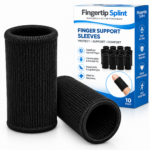
Finger Sleeves for Finger Support
- Flexible sleeve-style design
- Intended for everyday finger support
- Product specifications available on the product page
- Designed for finger coverage and comfort
- Available to explore with current product details
Check the product page for: product design, coverage, sizing information, material, intended use, care instructions, and fit information. These are the same factors that determine whether a sleeve will actually be convenient for your routine.
Convenience Checklist
Walk through each item before choosing. Tap to mark complete.
Frequently Asked Questions
Finger sleeves are considered convenient because sleeve-style designs often provide a simple, flexible, and relatively low-profile way to incorporate finger support into everyday routines. They’re typically easy to put on, easy to carry, and don’t require complex adjustment. But convenience depends on the specific design, fit, and whether the sleeve matches your intended activity. A sleeve only becomes convenient through the right match — not by category alone.
Generally, yes — most finger sleeves are designed to slide onto the finger without straps, buckles, or complex fastening. That simplicity is one of their convenience advantages. However, ease of application depends on the specific design. Some sleeves have tighter stretch or specific positioning requirements. Check the manufacturer’s instructions if you’re unsure about application.
Yes, many people use finger sleeves during everyday activities like typing, writing, smartphone use, office work, and household tasks. Their flexibility and low-profile design make them practical for daily wear. However, comfort during rest may differ from comfort during movement, so it’s worth evaluating the sleeve during the specific activities you do most. Also remember that a support sleeve is not protective equipment.
Yes — flexibility is the defining characteristic of most finger sleeves. They’re designed to allow natural finger movement while providing coverage, light support, or comfort. However, the actual degree of flexibility depends on the specific design and material. A thin, highly elastic sleeve allows near-normal movement, while a thicker or more structured sleeve may reduce movement to some degree.
Many people type with finger sleeves. For typing, prioritize low bulk, flexibility, secure fit, and comfort during repeated movement. A thick or loose sleeve can interfere with typing rhythm and accuracy. A thin, well-fitted sleeve designed for everyday use is usually a better match for keyboard work. Test the sleeve during actual typing before committing to long work sessions.
Yes, but consider grip and dexterity. A sleeve that’s too thick may interfere with pen control. A thin, flexible sleeve that allows natural finger movement is usually a better choice. If you write for extended periods, breathability and comfort during repeated movement become especially important. Test during actual writing — a sleeve that feels fine while resting may feel different after 30 minutes.
Finger sleeves are generally small and lightweight, which makes them easy to pack in a travel pouch, backpack, or personal-care kit. They take up very little space and don’t require special handling. However, portability depends on the specific product’s size and construction. Check product dimensions before buying if portability is a priority for you.
Not necessarily. Low profile refers to how noticeable or bulky the sleeve is, not how much support it provides. A thin sleeve can provide coverage and light support without restricting movement. However, low-profile designs typically don’t provide the same level of movement restriction or stabilization as structured supports. If you need movement control, thickness isn’t the deciding factor — the design category is.
Not universally. Finger sleeves are often more convenient for everyday use because they preserve natural finger movement and are typically low-profile. Splints may be more appropriate when stabilization or movement restriction is needed — in which case “convenience” isn’t the priority. The right option depends on what the support needs to accomplish, not on which is more convenient in general.
No, not generally. A sleeve and a splint serve different purposes. If a medical professional has recommended a splint for immobilization, protection, or stabilization of an injury, a flexible sleeve is not a substitute. Always follow professional advice if you have a diagnosed condition or injury. A sleeve is designed for flexible support, coverage, and comfort — not for movement restriction or stabilization.
Factors that reduce convenience include incorrect sizing, slipping during use, bunching, excessive tightness, difficult positioning, excessive bulk, inadequate coverage, material that doesn’t suit your routine, and care requirements that don’t fit your lifestyle. A sleeve is convenient when its design and fit match your needs. The product itself isn’t automatically convenient — it becomes convenient through the right match.
Remove it. Discomfort is a signal that the fit, size, or design isn’t working for you. Check whether you have the correct size and consider a different design. If you experience numbness, tingling, significant discoloration, or persistent pain, seek appropriate professional advice. Don’t try to push through discomfort — a sleeve that causes discomfort isn’t convenient, and it isn’t doing its job well either.
Start by identifying your main priority — is it easy everyday use, flexibility, portability, low bulk, or comfort? Then check the sleeve against those priorities specifically. Make sure the size is correct, the coverage matches your area of need, and the design allows the movement your activity requires. Follow the manufacturer’s instructions for sizing and care. A convenient sleeve is one that matches your practical requirements, not one that simply looks convenient.
Seek professional advice if you have a significant injury, visible deformity, severe or worsening pain, major swelling, persistent numbness or tingling, substantial loss of movement, or symptoms that aren’t improving. Also seek advice if a healthcare professional has prescribed or recommended a specific support device. A convenience guide can help you compare products, but it can’t diagnose what’s causing your symptoms. Trusted resources include AAOS OrthoInfo, NHS, MedlinePlus, Mayo Clinic, and Cleveland Clinic.
Convenience Is About Matching, Not Maximizing
Finger sleeves become convenient when their design, fit, coverage, and flexibility match your daily routines. Explore the FingertipSplint option and compare it against your own requirements. Easy to Use → Flexible → Low Profile → Portable → Everyday Friendly
The Bottom Line on Convenient Finger Support
Finger sleeves are convenient because sleeve-style designs can be easy to use, flexible, low-profile, portable, and compatible with everyday routines. But convenience isn’t automatic — it’s the result of matching a sleeve’s design to your specific needs, activities, and preferences. A sleeve that works brilliantly for typing may not work well for household tasks. A sleeve that’s easy to put on may still cause discomfort during extended wear.
The most useful approach is to think about convenience in terms of your actual routine: what you do most, what matters most, and what would create friction. When a sleeve matches those factors, it becomes genuinely convenient — not just theoretically so.
For readers ready to explore a specific product using this framework, the Finger Sleeves for Finger Support product page is the natural next step. For the broader context on how sleeves provide everyday support, see How Finger Sleeves Provide Everyday Finger Support and Comfort. And for quality considerations, see What Makes a Good Finger Support Sleeve for Daily Use? Explore the full FingertipSplint blog library for more guides.
This article is for general information only and is not a substitute for professional medical advice. Always consult a qualified healthcare provider for diagnosis and treatment of any medical condition.