
Several silicone finger protectors look almost identical, but product photos do not tell you how they will fit. A protector that is too loose moves around. One that is too tight becomes uncomfortable. More coverage is not automatically better. Soft material is not automatically suitable for every use. This guide teaches you the three criteria that matter most — fit, comfort, and coverage — so you can choose the right protector for your finger and your activity. For a broader view of the FingerTipSplint range, start with finger support solutions.
Table of Contents
- What Is a Silicone Finger Protector?
- Fit: The Most Important Part
- Comfort: What Makes It Comfortable?
- Coverage: How Much Should It Cover?
- Protector vs Sleeve vs Guard vs Splint
- 10 Features to Check
- Interactive Fit Checker
- Step-by-Step Selection
- 3D Protector Infographic
- Protectors for Different Activities
- Protectors for Different Needs
- How to Test After Buying
- 10 Common Buying Mistakes
- How to Compare Before Buying
- Product Guide
- When a Protector May Not Be Enough
- Doctor Advice
- Care and Maintenance
- Recovery and Reassessment
- 7 Quick Tips
- FAQ
Choose a silicone finger protector by matching the protector to the affected finger and the area needing coverage, then check sizing, flexibility, cushioning, edge comfort, and movement. The right protector should stay securely positioned without creating excessive pressure, while providing the amount of coverage appropriate for your intended activity.
What Is a Silicone Finger Protector?
How Silicone Finger Protectors Work
A silicone finger protector creates a soft barrier between your finger and the surface it contacts. This reduces direct friction and pressure on the skin. The concept is simple: finger, then silicone barrier, then reduced direct contact.
What a Finger Protector Is Designed to Do
Protection
Shield the finger from direct contact with surfaces that cause friction or pressure.
Cushioning
Absorb and distribute pressure across a wider area rather than concentrating it on one spot.
Coverage
Provide a barrier over the specific area that needs protection.
Comfort
Make repeated contact more tolerable during daily activities.
Friction management
Reduce the mechanical irritation that comes from repeated rubbing.
Low-profile wear
Allow the finger to move naturally during typing, writing, and other tasks.
What a Silicone Finger Protector Does Not Automatically Do
Fit: The Most Important Part of Choosing a Silicone Finger Protector
Even a high-quality protector can become uncomfortable if the dimensions are wrong. Fit determines comfort, function, and whether the protector stays in place during activity.
Why Finger Size Matters
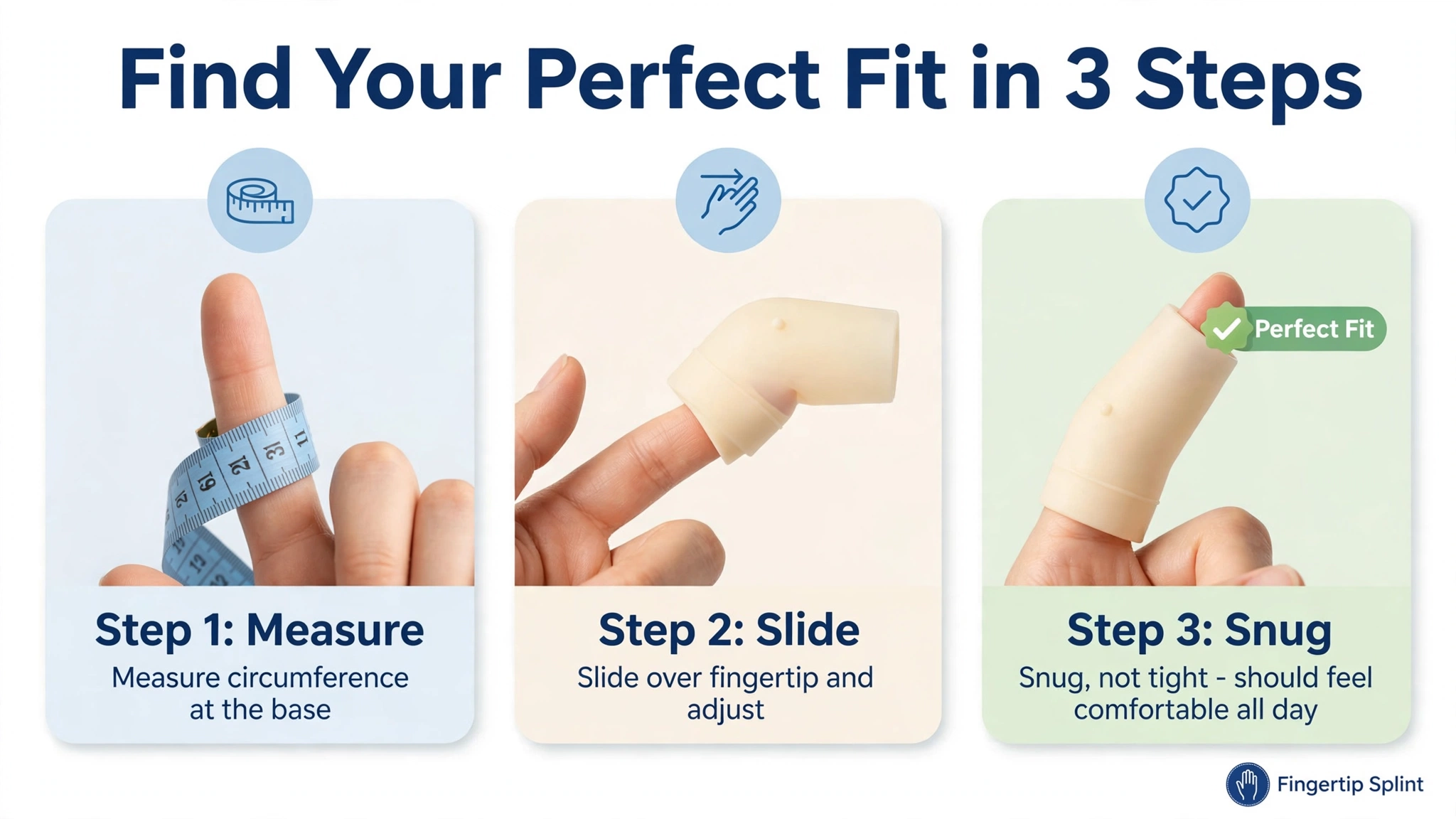
Finger circumference and length vary from person to person and between fingers. A protector that is slightly too large will slide or rotate. A protector that is slightly too small will create pressure points, restrict circulation, and become painful over time.
How to Measure Your Finger
- Identify the finger.
- Determine the area needing coverage.
- Measure circumference according to the manufacturer’s instructions.
- Compare with the product’s sizing information.
- Consider how much the finger bends during normal use.
What a Proper Fit Should Feel Like
Stays positioned
The protector does not slide or rotate during normal activity.
Allows appropriate movement
The finger can bend and straighten without restriction from the protector.
Avoids excessive pressure
No persistent pressure points or pinching during wear.
Does not cut into the skin
Edges rest comfortably without digging in or rolling.
No numbness or tingling
Normal sensation is maintained throughout the wear period.
Signs the Protector Is Too Tight
- Persistent pressure
- Numbness
- Tingling
- Unusual discoloration
- Increasing pain
- Significant indentation of the skin
Signs It Is Too Loose
- Sliding during activity
- Rotating around the finger
- Folding or bunching
- Exposing the area it is supposed to protect
Comfort: What Makes a Silicone Finger Protector Comfortable?
Softness vs Support
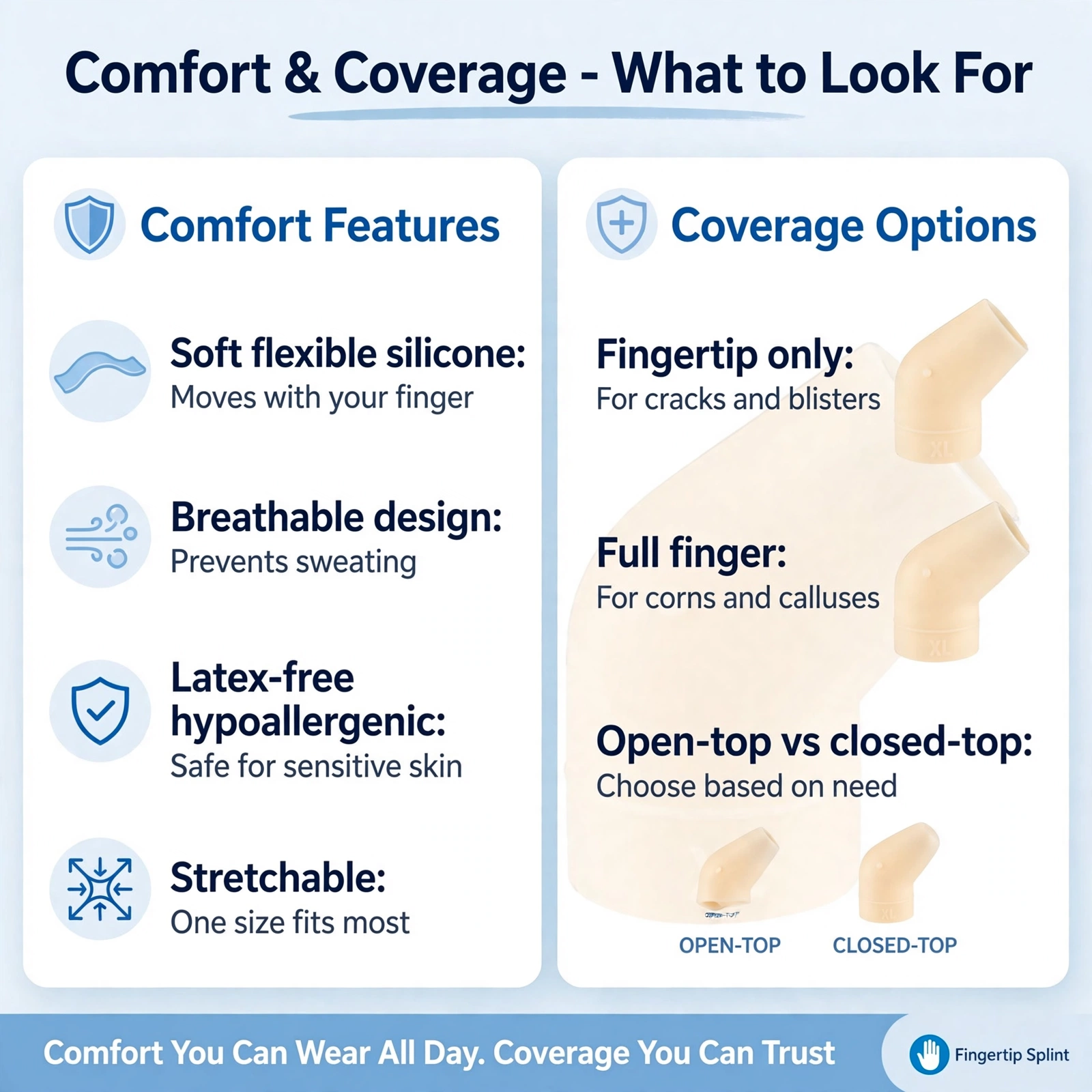
The softest material is not automatically the best choice. A very soft protector may not provide the cushioning needed for a specific activity, while a firmer protector may offer better protection at the cost of some flexibility. The right balance depends on your situation.
Flexibility
Finger protection needs to accommodate normal movement when movement is appropriate. A protector that restricts bending or straightening will not be worn consistently, which defeats the purpose. Flexibility is a practical requirement, not a luxury.
Edge Design
The edges of the protector can matter as much as the main body. Rough, thick, or rolled edges can create pressure points or rub against the skin. Look for smooth, thin edges that rest comfortably without digging in.
Moisture and Skin Comfort
Prolonged moisture against the skin can become uncomfortable. Follow the manufacturer’s cleaning and wearing instructions, and inspect the skin regularly. If you notice redness, itching, or irritation, remove the protector and reassess.
Coverage: How Much of the Finger Should the Protector Cover?
Fingertip Coverage
Useful for situations where the fingertip is the primary contact area — typing, tapping, or handling small objects. A fingertip protector covers just the end of the finger.
Finger Pad Coverage
The finger pad is the palmar surface used for grip and pressure. Coverage here is useful for tasks that involve pressing, gripping, or repetitive contact with a surface.
Side-of-Finger Coverage
Side coverage is useful when friction happens against another object or adjacent finger — for example, holding a pen, using a tool, or playing an instrument.
Joint-Area Coverage
Coverage around a joint requires flexibility so that movement is not restricted. The protector must allow the finger to bend and straighten while still providing protection.
Full-Finger Coverage
Full-finger coverage provides protection across the entire finger. It is not automatically better than targeted coverage. More coverage can mean more material, more heat retention, and less flexibility. Match the coverage to your specific need.
Silicone Finger Protector vs Silicone Finger Sleeve vs Finger Guard vs Finger Splint
| Product Type | Main Focus | Coverage | Flexibility | Typical Buyer Question |
|---|---|---|---|---|
| Silicone finger protector | Targeted protection | Varies | High | Which area do I need protected? |
| Silicone finger sleeve | Coverage and cushioning | Usually broader | High | Will this cover my finger comfortably? |
| Finger guard | Protection from contact or friction | Varies | Varies | Will it protect during an activity? |
| Finger splint | Support and positioning | Structured | Lower | Do I need movement restriction? |
When a Protector Is More Appropriate
A protector is more appropriate when you need targeted coverage, cushioning, or friction protection without restricting finger movement. It is a low-profile option for daily activities.
When a Structured Finger Splint May Be More Relevant
A structured finger splint may be more relevant when you need positioning, movement restriction, or stabilization after an injury. The Cleveland Clinic finger splint resource explains that different splints serve different purposes and that a healthcare professional can determine the appropriate type.
10 Features to Check Before Buying a Silicone Finger Protector
1. Correct Finger Compatibility
Why it matters: A protector designed for one finger may not fit another comfortably. What to look for: confirm the intended finger. Common mistake: assuming one size fits every finger.
2. Size Range
Why it matters: Size determines comfort and whether the protector stays in place. What to look for: a size range that accommodates your measurement. Common mistake: choosing based on appearance rather than measurement.
3. Coverage Area
Why it matters: Coverage should match the area that needs protection. What to look for: fingertip, pad, side, joint, or full-finger coverage depending on your need. Common mistake: choosing maximum coverage automatically.
4. Silicone Material
Why it matters: Material affects comfort, flexibility, and durability. What to look for: soft, flexible silicone appropriate for your activity. Common mistake: assuming thicker is always better.
5. Flexibility
Why it matters: Flexibility determines whether the protector can be worn during normal movement. What to look for: material that bends with the finger. Common mistake: choosing a rigid protector for an activity that requires mobility.
6. Cushioning
Why it matters: Cushioning reduces direct pressure and friction. What to look for: sufficient thickness without bulk that interferes with movement. Common mistake: choosing a protector that is too thin to provide meaningful cushioning.
7. Edge Comfort
Why it matters: Edges can create pressure points or irritation. What to look for: smooth, thin edges that do not dig in. Common mistake: ignoring edge comfort until irritation develops.
8. Secure Positioning
Why it matters: A protector that slides does not protect the intended area. What to look for: a fit that stays in place during normal movement. Common mistake: assuming a loose protector will stay in position.
9. Cleaning Requirements
Why it matters: Hygiene affects skin health and product longevity. What to look for: clear manufacturer cleaning instructions. Common mistake: reusing without cleaning between uses.
10. Intended Use
Why it matters: The protector should match your activity. What to look for: a design suited to your daily tasks. Common mistake: buying without considering what you will be doing while wearing it.
Interactive Silicone Finger Protector Fit Checker
Answer three questions to see what product characteristics to compare. This is a shopping decision tool, not a medical diagnosis.
Complete the three selections above to see what product characteristics to prioritize.
How to Choose the Right Silicone Finger Protector Step by Step
3D Interactive Silicone Finger Protector Infographic
The interactive 3D component explorer below breaks down the parts of a silicone finger protector. Click each component to see what it does and why it matters.
Silicone Finger Protector Component Explorer
Click a component to learn what it does and why it matters when you are buying.
Silicone Finger Protector for Different Activities
Typing and computer work
Common contact point: fingertips against keys. Desired characteristics: low-profile, flexible, secure fit.
Writing
Common contact point: side of the finger against the pen. Desired characteristics: side coverage, comfortable edges, flexibility.
Phone use
Common contact point: fingertips against the screen. Desired characteristics: low-profile, secure fit, touchscreen compatibility.
Household tasks
Common contact point: finger pads and sides during gripping. Desired characteristics: durable material, secure fit, easy cleaning.
Crafts and hobbies
Common contact point: varies with the tool or activity. Desired characteristics: flexibility, targeted coverage, comfortable edges.
Repetitive hand work
Common contact point: finger pads and sides during repeated motion. Desired characteristics: cushioning, secure positioning, durability.
Light exercise and gym activities
Common contact point: finger pads during gripping. Desired characteristics: cushioning, sweat handling, secure fit.
General daily use
Common contact point: varies. Desired characteristics: low-profile, flexible, comfortable for extended wear.
Silicone Finger Protector for Different Protection Needs
Friction Protection
When repeated contact causes friction, a silicone protector creates a barrier that reduces direct skin-to-surface contact. Useful for tasks involving tools, instruments, or repeated hand movement.
Pressure Protection
When a specific pressure point becomes uncomfortable, cushioning can distribute force over a wider area. Useful for tasks involving gripping, pressing, or resting the finger against a hard surface.
Sensitive Skin Areas
When an area of skin is sensitive or easily irritated, a soft silicone protector can provide a protective barrier. The material and fit matter for comfort.
Minor Repetitive Contact
When the same finger contacts the same surface repeatedly, a protector reduces cumulative irritation. Useful for typing, sorting, or repetitive assembly work.
General Finger Coverage
When a finger needs protection but the specific problem is not severe, a general-purpose protector can provide coverage without overcomplicating the choice.
When the Problem Requires More Than a Protector
- Significant injury
- Severe or increasing pain
- Major swelling
- Deformity
- Numbness or tingling
- Open or concerning skin problems
- Persistent symptoms
How to Test a Silicone Finger Protector After Buying
The 5-Minute Fit Test
- Put it on correctly.
- Bend the finger.
- Straighten the finger.
- Perform a normal light task.
- Check the skin and sensation.
What You Should Not Feel
- Numbness
- Tingling
- Significant pressure
- Increasing pain
- Persistent discomfort
What You Should Check After Removal
Look for unusual marks, irritation, or pressure areas. If you notice any concerning signs, reassess the fit or the product choice.
10 Common Silicone Finger Protector Buying Mistakes
A product that looks appropriate may not fit or cover the right area.
What to do instead: verify fit, coverage, and material before buying.
A protector that is too loose or too tight will not provide consistent protection.
What to do instead: measure and compare with the specific product’s chart.
Excessive pressure can cause numbness, tingling, or discoloration.
What to do instead: secure and comfortable, not tight.
More coverage is not automatically better. It can reduce flexibility and comfort.
What to do instead: match coverage to the area that needs protection.
A protector that restricts movement will not be worn consistently.
What to do instead: confirm the protector flexes with the finger.
Thicker material may reduce flexibility and comfort.
What to do instead: match thickness to your activity and protection needs.
The material affects comfort and skin contact.
What to do instead: consider softness, flexibility, and edge comfort.
A protector for typing may not be right for repetitive gripping.
What to do instead: match the protector to your daily activities.
Skin irritation can develop without immediate awareness.
What to do instead: inspect skin after each wear.
A protector is not a diagnosis or treatment.
What to do instead: seek professional advice when symptoms persist.
How to Compare Silicone Finger Protectors Before Buying
Select the criteria that matter most to you and we will show you what to compare. This is a decision tool, not a winner-picking tool.
- Correct size for the intended finger
- Secure positioning that does not slide
- Comfortable contact without pressure points
- Manufacturer sizing guidance followed exactly
- No numbness, tingling, or discoloration during wear
FingerTipSplint Silicone Finger Protector Product Guide
Use this section as a worked example of how to evaluate a silicone finger protector against the criteria in this guide. The product being evaluated is the FingerTipSplint Silicone Finger Sleeve Protectors.
Fingertip Splint Silicone Finger Sleeve Protectors
- Material: Soft, flexible silicone designed for comfortable skin contact
- Coverage: Check the product page for specific coverage details
- Fit: Check the product page for sizing information
- Cushioning: Material intended to provide a protective barrier and reduce friction
- Flexibility: Designed to flex with the finger during movement
- Low-profile design: Suitable for typing, writing, and daily activities
- Intended use: Finger protection for friction, pressure, and repetitive contact
- Care: Follow the manufacturer’s cleaning instructions for ongoing use
What to Look at on the Product Page
Verify the intended finger, design, material, coverage, fit, product dimensions and options, intended use, and care instructions. For buyers comparing different finger protection options, explore the FingerTipSplint shop. For a problem-specific look at cracks, corns, and calluses, see our guide on the best silicone finger sleeves for cracks, corns, and calluses. For blister and callus-related friction, see our article on finger guard sleeves for blisters and calluses.
Who May Be Interested in This Type of Protector?
Buyers seeking flexible finger coverage
People who want protection without the bulk or restriction of a structured splint.
Buyers wanting cushioning
Those with pressure-sensitive areas that become uncomfortable during activity.
Buyers dealing with repetitive contact
People whose work or hobbies involve repeated finger contact with tools or surfaces.
Buyers who prefer a lower-profile option
Those who need protection during typing, writing, or light daily tasks.
When a Silicone Finger Protector May Not Be Enough
A protective sleeve can be useful for protection, but it does not replace assessment when there are concerning symptoms.
- Significant injury
- Severe or increasing pain
- Major swelling
- Deformity
- Numbness or tingling
- Open or concerning skin problems
- Persistent symptoms
The Cleveland Clinic finger splint resource notes that finger splints can cause complications when improperly used. A protector should be used as a protective barrier, not as a substitute for appropriate medical care when symptoms are significant.
Doctor Advice: Think Beyond “Does It Fit?”
This section is written in the tone of a practical professional checklist. It is not a diagnosis and does not replace an in-person assessment.
Fit is more than size
Fit includes positioning, edge comfort, and whether the protector stays in place during activity.
Comfort is a safety consideration
A protector that causes numbness, tingling, or discoloration is not safe to wear.
Protection should match the activity
A protector for typing may not be right for repetitive gripping.
More compression isn’t automatically better
Excessive tightness does not improve protection and can create new problems.
Persistent symptoms deserve attention
Symptoms that persist or worsen should not simply be covered indefinitely.
A protector is not a splint
These are different product categories designed for different purposes.
Additional trusted resources include the Mayo Clinic corns and calluses overview, the MedlinePlus corns and calluses page, the American Academy of Dermatology guidance on corns and calluses, the NHS corns and calluses page, the WebMD corns and calluses overview, and the Healthline corns and calluses resource.
Silicone Finger Protector Care and Maintenance
Cleaning
Follow the manufacturer’s cleaning instructions. In general, silicone can be washed with mild soap and warm water. Rinse thoroughly and allow to air dry.
Drying
Ensure the protector is completely dry before reapplying to prevent moisture buildup against the skin.
Storage
Store in a clean, dry place away from direct sunlight. Avoid storing with sharp objects that could damage the silicone.
Skin Inspection
Check the skin after each wear. Look for redness, pressure marks, or irritation. If concerning signs develop, remove the protector and reassess.
When to Replace the Protector
Replace the protector if it becomes torn, stretched, discolored, or loses its shape. A worn protector may not provide the same protection or fit.
Recovery and Reassessment: How to Know Whether Your Protection Strategy Is Working
This is a reassessment framework, not a promised healing schedule. Use these stages to monitor progress.
First Use
Does it fit and feel comfortable? Check positioning, edge comfort, and skin response.
Early Reassessment
Is friction or contact becoming easier to manage? Is the skin tolerating the protector?
Activity Reassessment
Does the protector remain comfortable during your normal activity? Does it stay in place?
Longer-Term Reassessment
Is the underlying problem persisting? If it is not improving, reassess your approach.
When to Stop Self-Managing
Persistent or worsening symptoms should trigger professional evaluation rather than simply switching to a tighter protector.
7 Quick Buying Tips
Frequently Asked Questions
There is no universally best protector for every person. The right choice depends on fit, comfort, coverage, and intended activity. For a problem-specific guide, see our article on the best silicone finger sleeves for cracks, corns, and calluses.
For everyday use, look for a protector that stays securely positioned without excessive pressure, provides the coverage you need, and allows the finger movement your activities require. Match the protector to your finger and your routine rather than choosing based on appearance or price alone.
Measure the finger circumference according to the manufacturer’s specific instructions. Compare your measurement with the product’s size chart. Confirm the intended finger compatibility and consider how much the finger bends during normal use.
Sizing varies by brand and finger. Do not guess based on another person’s size or on general hand size. If you are between sizes, follow the manufacturer’s guidance.
It should be secure and comfortable, not excessively tight. You should be able to wear it without numbness, tingling, significant discoloration, or increasing pain. Excessive tightness is not better protection — it creates new problems.
If concerning symptoms occur, remove the protector and reassess the fit rather than tightening it further.
Coverage should correspond to the area requiring protection and your movement needs. A fingertip protector covers the tip, while a full-finger sleeve covers more of the finger. More coverage is not automatically better — it can reduce flexibility and comfort.
Match the coverage to the specific area that experiences friction or pressure, and consider how much movement you need during your daily activities.
This depends on the product, your skin condition, your activity, and your individual tolerance. A low-profile silicone protector may be comfortable for extended wear, but regular skin checks are important. Remove the protector periodically, inspect the skin for redness or pressure marks, and follow the manufacturer’s guidance on wear duration.
If you notice skin irritation, numbness, or discomfort, remove the protector and reassess.
A silicone protector creates a barrier between your skin and the surface it contacts, which reduces direct friction. This can make repeated contact more comfortable and protect the skin from additional irritation.
However, a protector does not address the underlying cause of the friction. If the same friction keeps returning, the source should also be considered.
Stop using the protector if you experience numbness, tingling, unusual discoloration, significant pressure, worsening pain, or skin irritation. These are warning signs that the protector may not be appropriate for your situation or that the fit needs adjustment.
If symptoms persist after removing the protector, seek professional assessment. A protective sleeve is not designed to manage significant injuries or persistent skin problems.
Find the Right Finger Protection Without Guesswork
Start with fit, comfort, and coverage. Identify your finger. Identify the area. Check the size. Choose coverage. Evaluate comfort. Review the product. Evaluate the FingerTipSplint Silicone Finger Sleeve Protectors against these criteria before deciding.
Explore the FingerTipSplint shop for other support options, check the FingerTipSplint FAQ, or use the request-a-quote page for bulk or business purchasing. For medical finger splint supply, see the medical finger splint supplier page.
View the Product Explore Finger ProtectionFinal Takeaway: Fit, Comfort, and Coverage Come First
The right silicone finger protector is the one that fits your finger, provides the coverage you need, stays comfortable during your daily activities, and allows the movement you require. Before you buy, identify the finger and the area needing protection, measure according to the manufacturer’s instructions, compare with the product’s size chart, and verify that the material and design match your activity.
If symptoms persist, worsen, or involve significant injury, severe pain, numbness, or loss of function, do not simply cover the area indefinitely. Seek appropriate medical evaluation. For medical finger splint supply and distribution, see the medical finger splint supplier page and the finger splint distributor page. For the full FingerTipSplint range, visit the FingerTipSplint homepage.