
You jammed a finger catching a pass. Your grip slips during a rally. You blocked a spike and felt a sharp sting. Now you are searching for a finger wrap that will let you keep playing without making things worse. The problem is that different sports place different demands on your hands, and the wrong wrap can interfere with your game or fail to provide the support you need. This guide helps you compare finger wraps by sport, fit, flexibility, and intended use so you can make an informed decision quickly. Start with our finger support and protection options to explore the full range.
Table of Contents
- Quick Answer
- Why Finger Protection Matters
- Best Wraps for Basketball
- Best Wraps for Tennis
- Best Wraps for Volleyball
- Sport Comparison Table
- Single vs Double Finger Wraps
- What to Look For
- Product Spotlight
- How to Fit a Wrap
- Recovery Timeline
- 8 Mistakes to Avoid
- Who May Benefit
- Interactive Selector
- 3D Infographic
- Potential Benefits
- What Wraps Cannot Guarantee
- Doctor Advice
- Quick Tips
- FAQ
- CTA
What Are the Best Finger Wraps for Basketball, Tennis & Volleyball?
A suitable sports finger wrap should match the intended finger, fit securely without excessive compression, and allow the movement required for the activity. Basketball players may prioritize catching comfort, tennis players racket grip, and volleyball players ball contact. Significant injuries should be assessed before returning to play.
Why Finger Protection Matters in Sports
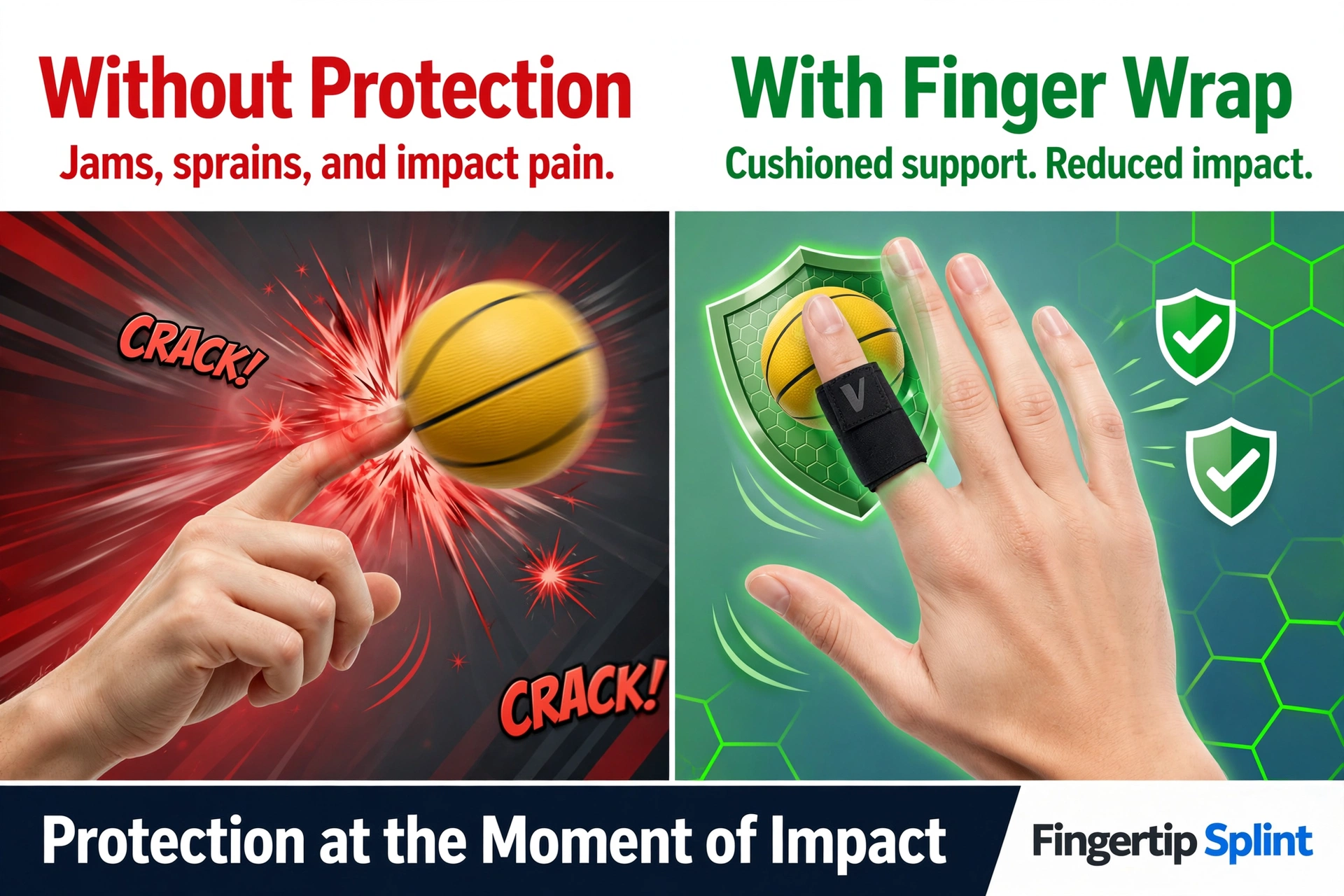
Finger injuries are among the most common hand injuries in sports. They happen in an instant: an awkward catch, a hard serve, a block that catches the tip of a finger instead of the palm. The result can be a jam, a sprain, a strain, or something more serious. Even a minor finger injury can affect your grip, your ball control, and your confidence.
Many athletes look for a finger wrap to provide protection during play. The wrap can cover the finger, provide light compression, and help limit unwanted movement depending on its design. But it is important to understand what a wrap can and cannot do. A soft wrap is not a substitute for evaluating a suspected fracture, dislocation, or significant ligament injury. If you have significant pain, swelling, deformity, or loss of movement, seek medical assessment before returning to play.
Common Situations Where Athletes Seek Finger Protection
- Repeated contact with a ball: Basketball, volleyball, and other ball sports involve frequent finger contact. Over time, this can cause irritation and discomfort.
- Awkward finger bending during catching or blocking: A finger that bends the wrong way can cause a sprain or jam.
- Friction or irritation during repetitive gripping: Tennis players and others who grip equipment tightly may experience skin irritation.
- Discomfort associated with a previous minor injury: A finger that has been injured before may be more sensitive to impact or pressure.
- Protective covering during activity: Some athletes simply want a layer of protection to reduce the risk of minor knocks and scrapes.
Consider these examples. A basketball player catches a fast pass and feels a sharp sting in the index finger. A tennis player grips the racket tightly during a long rally and notices discomfort at the base of the finger. A volleyball player repeatedly contacts the ball while setting and feels increasing soreness. In each case, a finger wrap might provide some protection, but the right choice depends on the sport, the finger, and the nature of the problem. For authoritative information on finger injuries, see the Mayo Clinic’s overview of a broken finger, their sprains guide, and the NHS information on sprains and strains.
Best Finger Wraps for Basketball
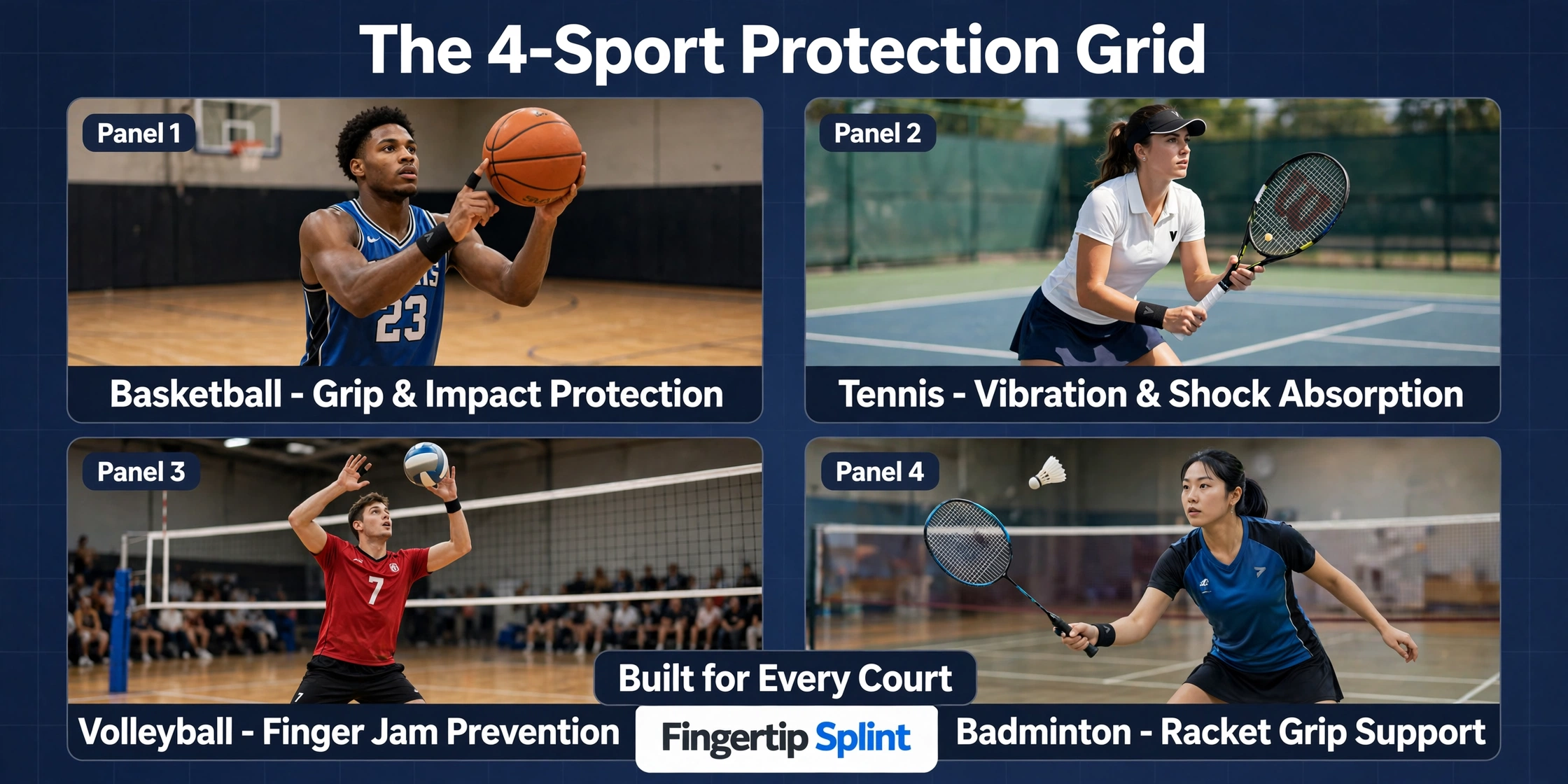
Basketball places unique demands on the fingers. Players catch, pass, dribble, shoot, and rebound. The ball is large and heavy, and finger contact is constant. A finger wrap for basketball needs to provide protection without interfering with ball handling.
What Basketball Players Should Look For
- Secure fit that does not shift during movement: The wrap should stay in place when you catch, pass, and shoot.
- Profile that does not create excessive bulk: A bulky wrap can interfere with ball control and feel.
- Comfortable coverage around the intended finger: The wrap should cover the area that needs protection without causing pressure.
- Sufficient movement for normal ball handling: The wrap should not restrict the finger movement required for shooting and passing.
- Fastening design that stays secure without excessive tightness: A strap or fastening system that holds the wrap in place without causing numbness or tingling.
Single-Finger vs Double-Finger Wraps for Basketball
A single-finger wrap covers one finger. A double-finger wrap connects or covers two fingers. The double-finger design may restrict movement more than a single-finger option, which can be helpful if you need to limit movement in a specific finger. However, it can also interfere with ball handling if the two fingers cannot move independently. The choice should depend on the intended use and the product instructions.
Do not assume that taping an injured finger to a neighboring finger is always appropriate. Buddy taping may be inappropriate for certain injuries and should be guided by a qualified professional when injury management is involved.
Best Finger Wraps for Tennis
Tennis requires a firm grip on the racket and repetitive hand movement. The fingers are constantly engaged, and any wrap that interferes with grip or causes discomfort can affect your game.
Grip Comfort and Finger Mobility
Excessive bulk or tightness may interfere with gripping a racket. A wrap should not cause numbness, tingling, restricted circulation, or painful pressure. The material should be thin enough to allow a natural grip while providing the intended protection.
Repetitive Use and Skin Irritation
Tennis involves repetitive motion. Material texture, edge finish, and secure positioning matter during long rallies and practice sessions. A wrap designed for light protection is different from a medical support device intended for a diagnosed injury. Check the product’s intended use before relying on it for extended play.
Before Returning to Play
A wrap should not be used to mask significant pain or swelling. A player with a suspected fracture, dislocation, tendon injury, or persistent loss of movement should seek medical assessment before returning to tennis. Playing through a significant injury can make it worse.
Best Finger Wraps for Volleyball
Volleyball places repeated demands on the fingers during setting, blocking, and ball contact. The ball is hard and fast, and the fingers absorb significant impact.
Setting and Ball Contact
When setting, the fingers contact the ball with precision. A wrap that is too bulky or that restricts movement can interfere with the set. Fit, movement, and the amount of material over the finger can affect comfort during setting.
Blocking and Unexpected Impact
Blocking involves sudden impact. A ball striking or bending a finger can cause injury. It is important to distinguish ordinary protective use from an injury caused by impact. A wrap may provide some protection, but it cannot prevent every injury.
Fit Without Excessive Compression
The wrap should remain in position without squeezing the finger. More compression is not necessarily better. A wrap should be removed if it produces altered sensation or worsening discomfort.
Basketball vs Tennis vs Volleyball — Which Features Matter Most?
Each sport places different demands on the fingers. This table helps you identify the features that matter most for your sport.
| Feature | Basketball | Tennis | Volleyball |
|---|---|---|---|
| Main activity | Catching, passing, ball handling | Racket gripping and repeated strokes | Setting, blocking, ball contact |
| Important fit factor | Secure, low-bulk fit | Comfortable grip | Stable fit that allows appropriate movement |
| Key concern | Material interfering with ball handling | Bulk affecting racket control | Excessive restriction during ball contact |
| Single or double wrap | Depends on the finger and intended use | Depends on support needs and racket grip | Depends on intended use and product design |
| Injury warning | Do not play through a suspected serious injury | Do not mask pain to maintain grip | Do not assume a wrap makes an injured finger safe |
Use this comparison to choose features, not to declare one universal winner. The best wrap for you depends on your sport, your finger, and the specific problem you are addressing.
Single Finger Wraps vs Double Finger Wraps
The choice between a single-finger wrap and a double-finger wrap depends on several factors. Understanding the differences helps you make the right choice.
Single-Finger Wraps
A single-finger wrap covers one finger. It is suitable when coverage is needed around one finger and the design suits the intended activity. Single-finger wraps allow independent movement of the other fingers, which can be important for ball handling and racket grip.
Double-Finger Wraps
A double-finger wrap connects or covers two fingers. It may offer a different distribution of support, but it can also limit independent movement. This may be helpful if you need to restrict movement in a specific finger, but it can interfere with activities that require fine finger control. For more detailed information on double-finger designs, see our double finger splint wraps for soft compression support.
How to Choose
- Which finger needs coverage?
- Does the design affect neighboring fingers?
- What activity will you be performing?
- What is the manufacturer’s intended use?
- Is the issue ordinary friction or an injury requiring professional advice?
What to Look for When Buying Sports Finger Wraps
These are the key factors to evaluate before choosing a sports finger wrap.
Fit and Size
The wrap should fit securely without pinching, sliding excessively, or creating painful pressure. Check the sizing guide and measure your finger if needed.
Material and Comfort
Evaluate texture, flexibility, edge finish, and the material’s suitability for skin contact. Avoid unsupported claims about hypoallergenic or medical-grade properties.
Adjustability
Check whether the wrap uses adjustable straps, fixed sizing, or another fastening mechanism. Adjustability can be useful for customizing the fit.
Flexibility and Movement
Consider the movements required by your sport and whether the wrap interferes with them. A wrap that restricts movement may be appropriate for some situations but not others.
Ease of Application
A straightforward fastening system can help you apply the wrap consistently, but the correct technique depends on the product instructions.
Cleaning and Durability
Check the care instructions and consider how well the product will hold up to repeated use. For a comprehensive buying guide, see our sports finger protector buying guide for fit and flexibility.
Sports Finger Wrap Buying Checklist
A Finger Wrap Option to Consider for Sports
2Pcs Finger Protector Splints — Single/Double Finger Wraps
This product is designed with adjustable wraps and is an option to evaluate against your specific sport and support needs. It is not a substitute for medical assessment of a significant injury.
- Single or double finger configuration
- Adjustable wrap design
- Soft compression support
- Low-profile for sports use
- Suitable for repeated use with proper care
What to Check Before Buying
- Whether the single- or double-finger configuration suits your intended use
- Available sizing and adjustment options
- Material and fastening details
- The product’s intended support level
- Whether the design allows the finger movement you need
- Manufacturer instructions, limitations, and care guidance
Is This Wrap Suitable for Your Sport?
Basketball: Consider whether the design remains secure without interfering with ball handling. The wrap should stay in place during catching and passing.
Tennis: Assess whether the wrap affects racket grip and finger movement. The material should not create bulk that interferes with your grip.
Volleyball: Consider fit, coverage, and whether the wrap interferes with the movements required for setting and blocking.
Do not assume that any wrap prevents fractures, stabilizes every ligament injury, or guarantees a safe return to sport. Verify the live product specifications before describing materials, compression level, or dimensions.
How to Fit a Sports Finger Wrap Correctly
Proper fitting is essential for comfort and effectiveness. Follow these steps.
Step 1 — Read the Product Instructions
Confirm that the wrap is appropriate for your intended use.
Step 2 — Inspect the Finger
Check for swelling, skin damage, or signs of a more serious injury. If you suspect a fracture or dislocation, seek medical attention.
Step 3 — Position the Wrap
Position the wrap according to the manufacturer’s instructions.
Step 4 — Secure It Firmly
Secure the wrap firmly enough to stay in place, but not so tightly that it creates pressure.
Step 5 — Check Color and Sensation
Check that the finger’s color and sensation remain normal. Numbness or tingling means the wrap is too tight.
Step 6 — Move the Finger Gently
Move the finger within a comfortable range without forcing movement.
Step 7 — Consider Sport-Specific Movement
If using the wrap for a sport, consider whether it interferes with grip or ball contact.
Step 8 — Remove if Problems Occur
Remove the wrap if you experience numbness, tingling, significant color change, increasing pain, or swelling.
How Long Does a Finger Injury Take to Recover?
Finger injuries vary substantially. The correct timeline depends on the type and severity of the injury. Rather than promising a week-by-week schedule, use this decision-based timeline.
Immediately After an Injury
Stop play and assess the symptoms. Seek urgent care for deformity, severe pain, major swelling, or suspected fracture or dislocation. See the Mayo Clinic’s broken finger guide and the NHS information on broken fingers for warning signs.
During Initial Care
Follow medical advice and avoid activities that aggravate the injury. Rest, ice, and elevation may be recommended depending on the injury. See the Mayo Clinic’s sprain treatment guide.
During Recovery
Return to movement and exercise according to your clinician’s guidance. Do not rush the process. For additional information, see the Cleveland Clinic’s finger injury resource.
Before Returning to Sport
Make sure the injury has been appropriately assessed and that you meet relevant return-to-play guidance. Pain reduction alone does not guarantee that it is safe to resume sport. For sports injury guidance, see the AAOS OrthoInfo and the WebMD sprains and strains overview. Healthline’s sprained finger article and MedlinePlus hand injuries and disorders also provide useful information.
Remember that a finger wrap is not evidence that the injury has healed. Pain reduction alone does not guarantee that it is safe to resume sport.
8 Finger-Wrap Mistakes Athletes Should Avoid
Avoid these common errors to protect your fingers and your game.
1. Choosing a Wrap Solely Because It Looks Supportive
Appearance does not determine function. Evaluate the features that matter for your sport.
2. Wrapping Too Tightly in an Attempt to Get More Support
Tighter is not better. Excessive pressure can cause numbness, tingling, and skin damage.
3. Using a Double-Finger Design When Independent Movement Is Important
A double-finger wrap can limit independent movement, which may interfere with ball handling or racket grip.
4. Ignoring Discomfort Caused by Excessive Bulk
A bulky wrap can interfere with your game. If it feels uncomfortable or restricts movement, consider a lower-profile design.
5. Assuming a Soft Wrap Can Treat a Fracture or Dislocation
A soft wrap is not a treatment for a serious injury. If you suspect a fracture or dislocation, seek medical attention.
6. Returning to Play Simply Because the Wrap Reduces Discomfort
Pain reduction does not mean the injury has healed. Follow medical advice before returning to play.
7. Ignoring Persistent Swelling, Bruising, or Reduced Movement
These are signs that the injury may be more serious than a minor jam. Seek professional assessment.
8. Continuing to Use a Damaged or Poorly Fitting Wrap
A damaged wrap may not provide adequate protection and could cause irritation. Replace it if it is worn out.
Who May Benefit From Comparing Finger Wraps?
Sports finger wraps may be worth considering for recreational athletes, players comparing different wrap designs, and people looking for a suitable protective covering for an activity.
The product must match the intended use. A general sports wrap is not automatically appropriate for tendon injuries, fractures, dislocations, or other conditions requiring immobilization.
- Persistent pain or significant swelling
- Loss of movement
- Numbness or tingling
- Finger deformity
- Suspected fracture or dislocation
Interactive Sports Finger-Wrap Selector
Find the Right Features for Your Sport
Select your sport and main concern to see a checklist of features to compare.
Select your sport:
Select your sport above to see a checklist of features to compare.
Interactive Guide to Sports Finger Wrap Fit
Interactive 3D Hand and Finger View
Click each part to learn how it affects fit, movement, and protection.
Potential Benefits of Choosing the Right Finger Wrap
When chosen and fitted correctly, a sports finger wrap can provide several practical benefits.
Secure Covering
A properly fitted wrap covers the intended finger and stays in place during activity.
Targeted Support
Depending on the design, a wrap may provide light compression or help limit unwanted movement.
Convenient Application
A straightforward fastening system can make the wrap easy to apply and adjust.
Informed Choice
Understanding sport-specific needs helps you choose a product that matches your requirements.
What Sports Finger Wraps Cannot Guarantee
- They cannot guarantee injury prevention.
- They cannot accelerate every recovery.
- They cannot treat every finger injury.
- They cannot make playing through significant pain safe.
This distinction supports trust and helps you understand when a wrap is a practical accessory versus when professional treatment may be needed.
When Should You Seek Medical Advice?
Seek medical attention if you experience any of the following after a finger injury.
- Severe pain that does not improve
- Significant swelling or bruising
- Visible deformity or abnormal finger position
- Inability to move the finger
- Numbness or tingling
- Open wound or bleeding
- Signs of infection (redness, warmth, pus)
For more detailed information on finger injuries, see the Mayo Clinic’s broken finger guide, the NHS sprains and strains information, and the Cleveland Clinic’s finger injury resource. The AAOS OrthoInfo and WebMD also provide useful guidance.
7 Quick Tips for Sports Finger Wrap Use
Frequently Asked Questions About Sports Finger Wraps
Finger wraps are used to provide coverage, light compression, and limited support during sports activities. They can protect the finger from friction, impact, and minor knocks. They are not a substitute for medical treatment of a significant injury.
It depends on your sport and your needs. Single-finger wraps allow independent movement, which can be important for ball handling and grip. Double-finger wraps connect or cover two fingers and may restrict movement more. Choose based on the activity and the intended use.
Yes, if the wrap fits securely and does not interfere with ball handling. Check that it stays in place during catching, passing, and shooting. If it shifts or creates discomfort, reassess the fit.
It can, depending on the wrap’s bulk and fit. A low-profile wrap is less likely to interfere with grip. Test the wrap during practice before relying on it for match play.
Yes, if the wrap allows the finger movement required for setting and blocking. A wrap that is too bulky or restrictive can interfere with ball contact. Check the fit and comfort before play.
It should be snug enough to stay in place but not so tight that it causes numbness, tingling, discoloration, or increasing discomfort. A secure fit is not the same as a tight fit.
A soft wrap is not a treatment for a suspected fracture or dislocation. If you have significant pain, swelling, deformity, or loss of movement, seek medical assessment. A wrap may be used for minor protection, but it should not replace professional care.
Stop playing and seek medical attention if you have severe pain, significant swelling or bruising, visible deformity, inability to move the finger, numbness or tingling, an open wound, or signs of infection. Do not try to play through a serious injury.
Choose a Finger Wrap That Matches Your Sport
Match the Wrap to Your Movement
The right finger wrap should match the movement your sport requires, the area you want to cover, and the level of support the product is designed to provide. Compare fit, flexibility, fastening, and intended use before making a decision.
The 2Pcs Finger Protector Splints — Single/Double Finger Wraps are designed with adjustable wraps. Explore the full shop finger support products collection to compare options, or read our sports finger protector buying guide for fit and flexibility for more detailed criteria.
Explore 2-Piece Finger Protector Splints Read the Buying GuideProtect Your Fingers Without Compromising Your Game
Choosing the right finger wrap for your sport is about matching the product to your movement demands, your finger, and the level of support you need. Basketball, tennis, and volleyball each place different demands on the hands. What works for one sport may not work for another.
If you have a significant injury, a wrap is not a substitute for professional assessment. Follow medical advice and return-to-play guidance before resuming sport.
For more detailed guidance, see our double finger splint wraps for soft compression support and our sports finger protector buying guide for fit and flexibility. For professional purchasing information, visit the medical finger splint supplier page, or check the finger support product FAQs for additional support.