
You are looking for a finger support product that feels comfortable, stays in position, and provides the intended level of coverage without unnecessary bulk. You have seen double-finger wraps and wonder whether they are right for you. The problem is that not all double-finger wraps are the same, and a soft compression wrap is not the same as a rigid medical splint. This guide explains how double finger splint wraps work, how they differ from single-finger designs, and how to choose a comfortable fit. Start with our finger support and protection products to explore the full range.
Table of Contents
- Quick Answer
- Understanding Double Finger Wraps
- How They Provide Support
- Potential Benefits
- Double vs Single Finger Wraps
- What to Look For
- Who May Consider
- Product Spotlight
- How to Wear Correctly
- 7 Mistakes to Avoid
- When a Soft Wrap Is Not Enough
- How Long to Wear
- Interactive Selector
- 3D Infographic
- Doctor Advice
- FAQ
- CTA
What Are Double Finger Splint Wraps?
Double finger splint wraps are support products designed to cover or connect two fingers, depending on their construction. Soft versions may provide light compression, cushioning, or limited support. The right choice depends on fit, intended use, and movement requirements. A soft wrap should not replace medical assessment or prescribed immobilization for a significant finger injury.
Understanding Double Finger Splint Wraps
A double finger splint wrap is designed to cover or connect two fingers. Unlike a single-finger wrap that covers one finger, a double-finger design provides coverage across a pair of fingers. This can be useful when you want protection for two adjacent fingers or when you want to limit movement between them.
What Does “Double Finger” Mean?
The term “double finger” describes a product designed to cover or connect two fingers. Some products may use a shared strap, a connecting section, or paired sleeves. The exact construction varies by product. Only describe the specific product’s construction after verifying its listing.
What Does “Soft Compression” Mean?
Compression refers to gentle pressure from the wrap around the covered area. Soft compression means the pressure is light and flexible, not rigid or restrictive. It is important not to equate compression with rigid immobilization or guaranteed stabilization. A soft compression wrap may provide a comfortable, supportive feeling, but it does not immobilize the finger the way a rigid splint does.
How Is a Wrap Different From a Rigid Splint?
A wrap is typically made from flexible material that conforms to the finger. A rigid splint is made from a more structured material designed to limit movement. The appropriate option depends on the injury or use case. Some conditions require clinician-directed immobilization with a rigid splint. A soft wrap is not a substitute for that level of support.
How Do Double Finger Wraps Provide Support?
Double finger wraps provide support through their design and construction. Understanding how they work helps you evaluate whether they suit your needs.
Coverage Around the Intended Fingers
The wrap covers the fingers it is designed for. The coverage may extend around the base, middle, or tip of the fingers, depending on the product design. The goal is to provide a protective layer where it is needed.
How the Wrap Stays in Position
The wrap stays in position through its fastening system. This may be a strap, a hook-and-loop closure, an elastic band, or another mechanism. The fastening should be secure enough to keep the wrap in place without requiring excessive tightness.
The Role of the Fastening or Connecting Section
The fastening or connecting section holds the wrap together and maintains coverage. In a double-finger design, this section may also connect the two fingers, limiting independent movement to some degree.
How the Design May Affect Independent Finger Movement
A double-finger wrap may affect the movement of both fingers. The connecting section can limit independent movement, which may be helpful if you want to restrict movement in a specific finger, but it can also interfere with activities that require fine finger control.
Why the Level of Support Varies by Construction
The level of support depends on the material, thickness, and design of the wrap. A soft, thin wrap provides minimal support. A thicker, more structured wrap may provide more support. However, even a thicker wrap is not the same as a rigid splint.
Potential Benefits of Soft Compression Finger Support
Soft compression finger support may offer several practical benefits. These are potential benefits, not guaranteed outcomes.
A Flexible Alternative to Bulky Support
A soft design may appeal to people who want less rigid coverage. However, flexible products may not provide enough restriction for some injuries. Consider whether a flexible wrap is appropriate for your situation.
Coverage Around Two Fingers
A double-finger design provides coverage around two fingers. This can be useful if you want protection for two adjacent fingers without purchasing separate single-finger wraps.
Comfort During Appropriate Everyday Activities
Comfort depends on material, edges, pressure, and fit. A soft wrap may feel comfortable during appropriate everyday activities. However, do not assume it will provide pain relief or faster healing.
A Simple Design to Compare Before Buying
Not every double-finger wrap offers the same support. Compare fastening, dimensions, construction, and intended use before making a decision.
Double Finger Splint Wraps vs Single Finger Wraps
The choice between a double-finger wrap and a single-finger wrap depends on your needs. Neither design is universally better.
| Feature | Double-Finger Wrap | Single-Finger Wrap |
|---|---|---|
| Coverage | Designed for two fingers | Designed for one finger |
| Movement | May affect movement of both fingers | May allow more independent movement |
| Main consideration | Fit across both fingers | Fit around the individual finger |
| Comfort factor | Pressure and positioning across the pair | Pressure and positioning on one finger |
| Best choice | Depends on the intended use and product design | Depends on the intended use and product design |
The choice should match your intended use and any professional advice about an injury. For sport-specific comparisons, see our best finger wraps for basketball, tennis and volleyball.
What to Look for When Buying Double Finger Splint Wraps
These are the factors to evaluate before choosing a double finger splint wrap.
Proper Fit Across Both Fingers
Both fingers should fit comfortably within the intended coverage area. The wrap should not pinch the web space between fingers or create excessive pressure.
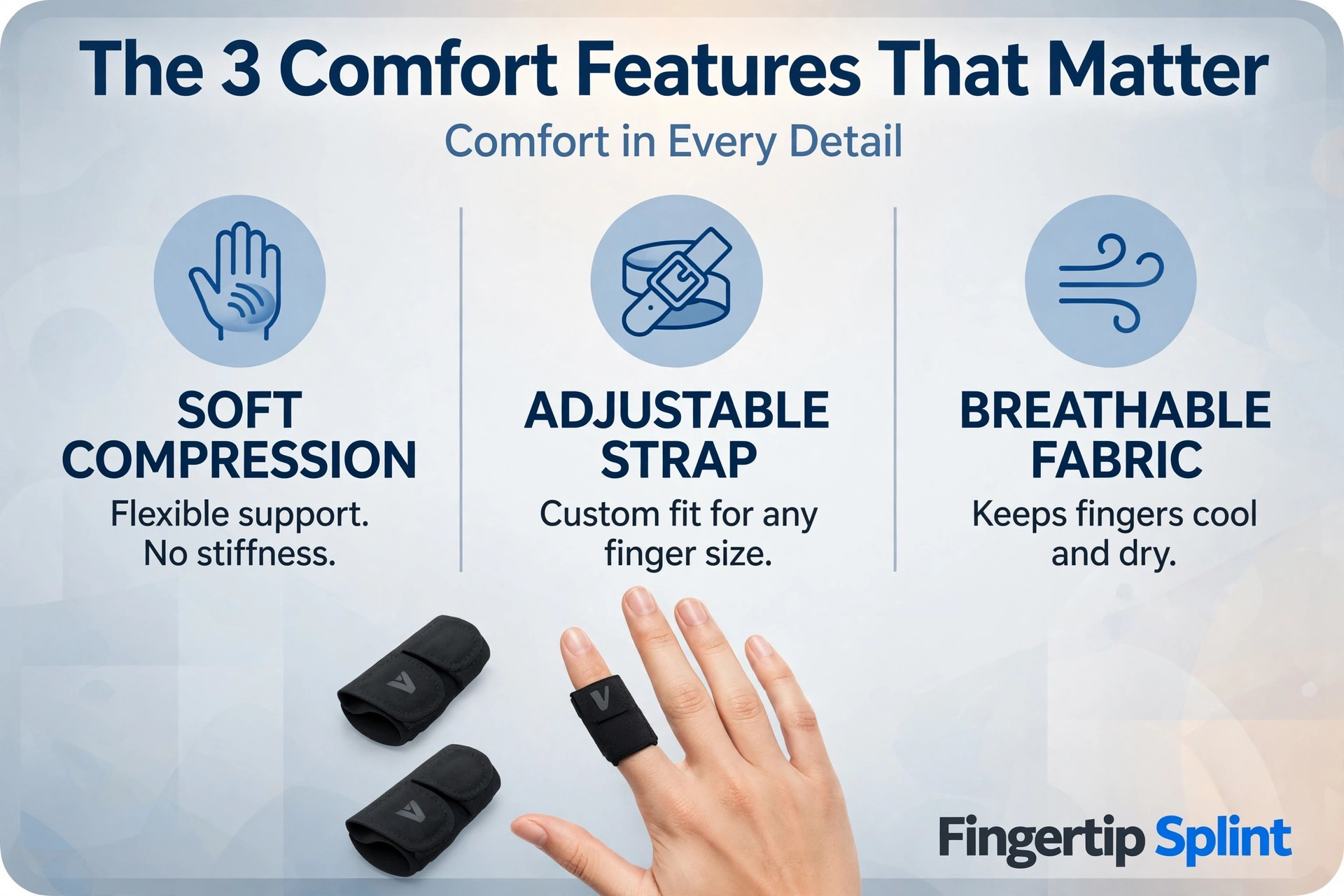
Soft, Skin-Friendly Material
Consider material texture, seams, edge finishing, and suitability for prolonged skin contact. Only make hypoallergenic, breathable, or medical-grade claims if the manufacturer substantiates them.
Secure Fastening
The wrap should stay in place without requiring excessively tight fastening. A secure fit is not the same as a tight fit.
Flexibility and Range of Movement
Consider whether the design permits the movements needed for your intended activity. More restriction is not automatically better.
Size and Adjustability
Check the available sizes, measurements, fastening system, and product instructions before ordering.
Cleaning and Reuse
Follow the manufacturer’s care instructions. Avoid claiming that the product is washable or reusable unless the manufacturer confirms it.
Double Finger Wrap Buying Checklist
Who May Consider a Double Finger Wrap?
Double finger wraps may be worth considering for people comparing two-finger coverage options, athletes looking for a suitable sports protection product, buyers who prefer a flexible design over a rigid product where appropriate, and people seeking to understand support options for everyday use.
A Double Finger Protector to Consider
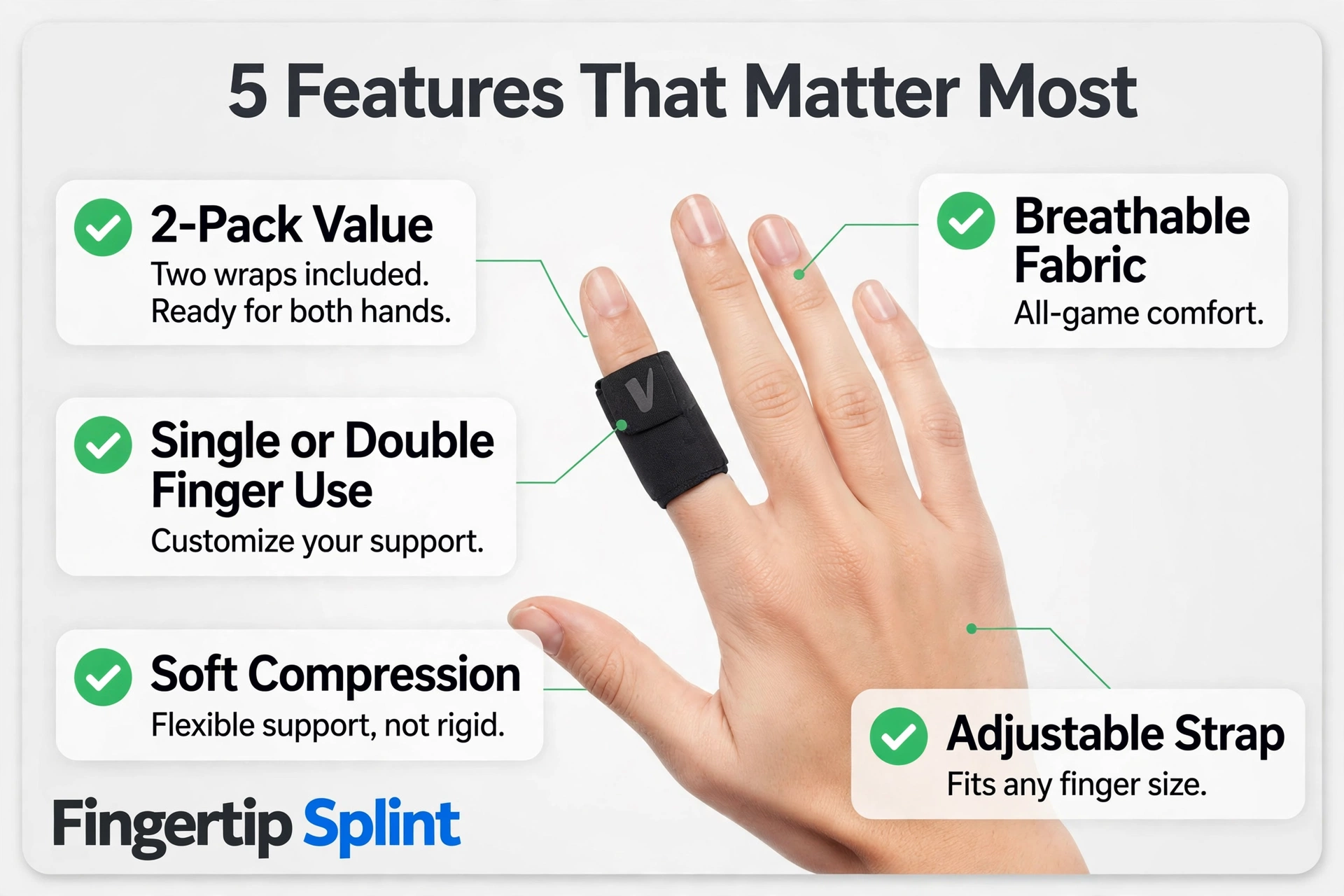
2Pcs Finger Protector Splints — Single/Double Finger Wraps
This product is designed with adjustable wraps and is an option to compare against your needs. It is not a universal medical recommendation.
- Single or double finger configuration
- Adjustable wrap design
- Soft compression support
- Low-profile for everyday use
- Suitable for repeated use with proper care
Features to Verify Before Buying
- Whether the product supports a single finger, two fingers, or both configurations
- The exact material and construction
- Available sizes and adjustment options
- How the wrap fastens and stays in position
- The manufacturer’s intended use and limitations
- Care and reuse instructions
Is This Design Right for You?
- Do you specifically need a two-finger configuration?
- Will the design accommodate both fingers comfortably?
- Does the product provide the type of coverage you want?
- Will it interfere with necessary finger movement?
- Is your need general protection, or do you have an injury that requires professional evaluation?
Use the actual product specifications to support claims. Do not assume that the product provides therapeutic compression, immobilizes joints, treats injuries, or is approved for a particular medical condition unless the available evidence confirms it.
How to Wear a Double Finger Splint Wrap Correctly
Proper fitting is essential for comfort and effectiveness. Follow these steps.
Step 1 — Read the Product Instructions
Confirm that the design is appropriate for the intended use.
Step 2 — Check Both Fingers
Check for swelling, skin damage, or signs of a significant injury.
Step 3 — Position the Wrap
Position the wrap according to the manufacturer’s directions.
Step 4 — Adjust the Fastening
Adjust the fastening so the product is secure without excessive pressure.
Step 5 — Check for Warning Signs
Check that neither finger develops numbness, tingling, unusual color changes, or increasing discomfort.
Step 6 — Move Fingers Gently
Move the fingers gently within a comfortable range, without forcing them.
Step 7 — Check the Fit
Check whether the wrap shifts, pinches, or restricts movement more than intended.
Step 8 — Remove if Problems Occur
Remove it if it causes altered sensation, worsening pain, or other concerning symptoms.
7 Mistakes to Avoid When Using Double Finger Wraps
Avoid these common errors to get the most benefit from your double finger wrap.
1. Choosing a Double-Finger Design Without Checking the Size
Size affects fit and comfort. Check the sizing guide before ordering.
2. Assuming Soft Compression Provides Rigid Immobilization
A soft wrap is not a rigid splint. If you need immobilization, seek professional advice.
3. Tightening the Wrap Too Much for a More Secure Feeling
Over-tightening can cause numbness, tingling, and skin damage. A secure fit is not the same as a tight fit.
4. Ignoring Discomfort Between the Fingers
Discomfort in the web space between fingers is a sign the wrap is too tight or incorrectly positioned.
5. Assuming Every Two-Finger Support Is Suitable for Every Injury
Different injuries require different levels of support. A soft wrap is not appropriate for all injuries.
6. Using the Wrap to Continue an Activity Despite Significant Pain
Pain is a signal. Do not use a wrap to mask significant pain and continue playing.
7. Ignoring Numbness, Swelling, Deformity, or Loss of Movement
These are warning signs that require professional assessment.
When Is a Soft Finger Wrap Not Enough?
A soft finger wrap should not delay assessment for a suspected fracture or dislocation, obvious deformity, severe pain, substantial swelling, open injury, numbness, color change, or an inability to bend or straighten a finger.
- Suspected fracture or dislocation
- Obvious deformity
- Severe pain
- Substantial swelling
- Open injury
- Numbness or color change
- Inability to bend or straighten a finger
Do not self-tape an injured finger as a substitute for assessment. Seek professional advice when symptoms are significant or the injury is uncertain. For authoritative information, see the Mayo Clinic’s broken finger guide, the Mayo Clinic sprains overview, and the NHS information on sprains and strains. The Cleveland Clinic’s finger injury resource and MedlinePlus hand injuries and disorders also provide useful information. For sports injury guidance, see the AAOS OrthoInfo. WebMD and Healthline offer additional consumer education.
How Long Should You Wear a Double Finger Wrap?
There is no universal answer. The appropriate duration depends on the product, the intended use, skin tolerance, and whether an injury is present.
Follow the manufacturer’s instructions and any clinician’s advice. A wrap that feels comfortable does not establish that an injury has healed. If you have an injury, follow your clinician’s guidance on wear time and return to activity.
Find the Right Finger Wrap Configuration
Interactive Fit and Feature Selector
Answer a few questions to identify which features matter most for your situation.
What do you need?
Select your need above to see a checklist of features to compare.
Explore How a Double Finger Wrap Fits
Interactive 3D Hand and Finger View
Click each part to learn how it affects fit, movement, and comfort.
Illustration for understanding product fit; actual coverage and support depend on the specific wrap.
When Should You Seek Medical Advice?
Seek medical attention if you experience any of the following after a finger injury.
- Severe pain that does not improve
- Significant swelling or bruising
- Visible deformity or abnormal finger position
- Inability to move the finger
- Numbness or tingling
- Open wound or bleeding
- Signs of infection (redness, warmth, pus)
For more detailed information on finger injuries, see the Mayo Clinic’s broken finger guide, the NHS sprains and strains information, and the Cleveland Clinic’s finger injury resource. The AAOS OrthoInfo and WebMD also provide useful guidance.
Frequently Asked Questions About Double Finger Splint Wraps
Double finger splint wraps are used to provide coverage and light compression around two fingers. They can be used for general protection during activities, for comfort, or for light support. They are not a substitute for medical treatment of a significant injury.
A double finger wrap covers or connects two fingers, while a single finger wrap covers one finger. The double-finger design may limit independent movement more than a single-finger design. The choice depends on your needs and intended use.
Soft compression refers to gentle pressure from the wrap around the covered area. It is not the same as rigid immobilization. A soft compression wrap may provide a comfortable, supportive feeling, but it does not immobilize the finger the way a rigid splint does.
Yes, depending on the design. The connecting section of a double-finger wrap may limit independent movement of the two fingers. This can be helpful if you want to restrict movement, but it can also interfere with activities that require fine finger control.
It should be snug enough to stay in place but not so tight that it causes numbness, tingling, discoloration, or increasing discomfort. A secure fit is not the same as a tight fit.
It depends on the sport and the product design. A double finger wrap may interfere with activities that require independent finger movement. Check that the wrap allows the movements you need and does not cause discomfort. For sport-specific guidance, see our best finger wraps for basketball, tennis and volleyball.
No. A soft finger wrap is not a treatment for a fracture or dislocation. If you suspect a fracture or dislocation, seek immediate medical attention. A soft wrap should not delay proper assessment and treatment.
Stop using the wrap and seek medical care if you experience severe pain, significant swelling or bruising, visible deformity, inability to move the finger, numbness or tingling, an open wound, or signs of infection. Do not try to treat a serious injury with a soft wrap alone.
Compare Double Finger Wraps for Fit and Comfort
Choose the Right Configuration for Your Needs
Choosing a double finger wrap starts with understanding the coverage you need, how the two-finger design fits, and the level of support the product is intended to provide. Review the product details and instructions before deciding whether it matches your needs.
The 2Pcs Finger Protector Splints — Single/Double Finger Wraps are designed with adjustable wraps. Explore the full shop finger support products collection to compare options, or read our sports finger protector buying guide for fit and flexibility for more detailed criteria.
Explore 2-Piece Finger Protector Splints Read the Buying GuideMake an Informed Decision About Double Finger Wraps
Double finger splint wraps provide coverage and soft compression around two fingers. They are not the same as rigid medical splints, and they are not a substitute for professional assessment of a significant injury. Understanding the design, fit, and intended use helps you choose a product that matches your needs.
If you have a significant injury, seek professional advice. A wrap can provide light support and protection, but it cannot treat every finger injury.
For more detailed guidance, see our best finger wraps for basketball, tennis and volleyball and our sports finger protector buying guide for fit and flexibility. For professional purchasing information, visit the medical finger splint supplier page, or check the finger support product FAQs for additional support.