
You have seen a finger protector online. It looks suitable. But you are not sure whether it will fit comfortably, allow enough movement, or feel too bulky during activity. You do not want to waste money on a product that does not work for you. This guide helps you evaluate sports finger protectors by fit, flexibility, sizing, comfort, and intended use so you can make a more informed purchase. Start with our finger support and protection products to explore the full range.
Table of Contents
- Quick Answer
- What Is a Sports Finger Protector?
- Why Fit Matters
- Flexibility: How Much Movement?
- How to Choose the Right Size
- Materials, Comfort & Usability
- Single vs Double Finger Protectors
- Choosing for Different Activities
- What to Check Before Buying Online
- Product Spotlight
- Step-by-Step Fit Check
- 8 Buying Mistakes to Avoid
- When a Protector May Not Be Enough
- Interactive Buying Checklist
- 3D Infographic
- Doctor Advice
- FAQ
- CTA
How Do You Choose a Sports Finger Protector?
Choose a sports finger protector by checking its size, coverage, material, fastening, flexibility, and intended use. It should fit securely without pinching, slipping excessively, or causing numbness or color changes. Consider the movements your sport requires, and remember that a general sports protector may not provide the immobilization needed for a significant finger injury.
What Is a Sports Finger Protector?
A sports finger protector is a product designed to cover, cushion, or support a finger during activity. The exact function depends on its construction. Some protectors provide surface coverage to reduce friction. Others offer light support or help limit movement. Understanding the different types helps you choose the right product for your needs.
Common Types of Finger Protectors
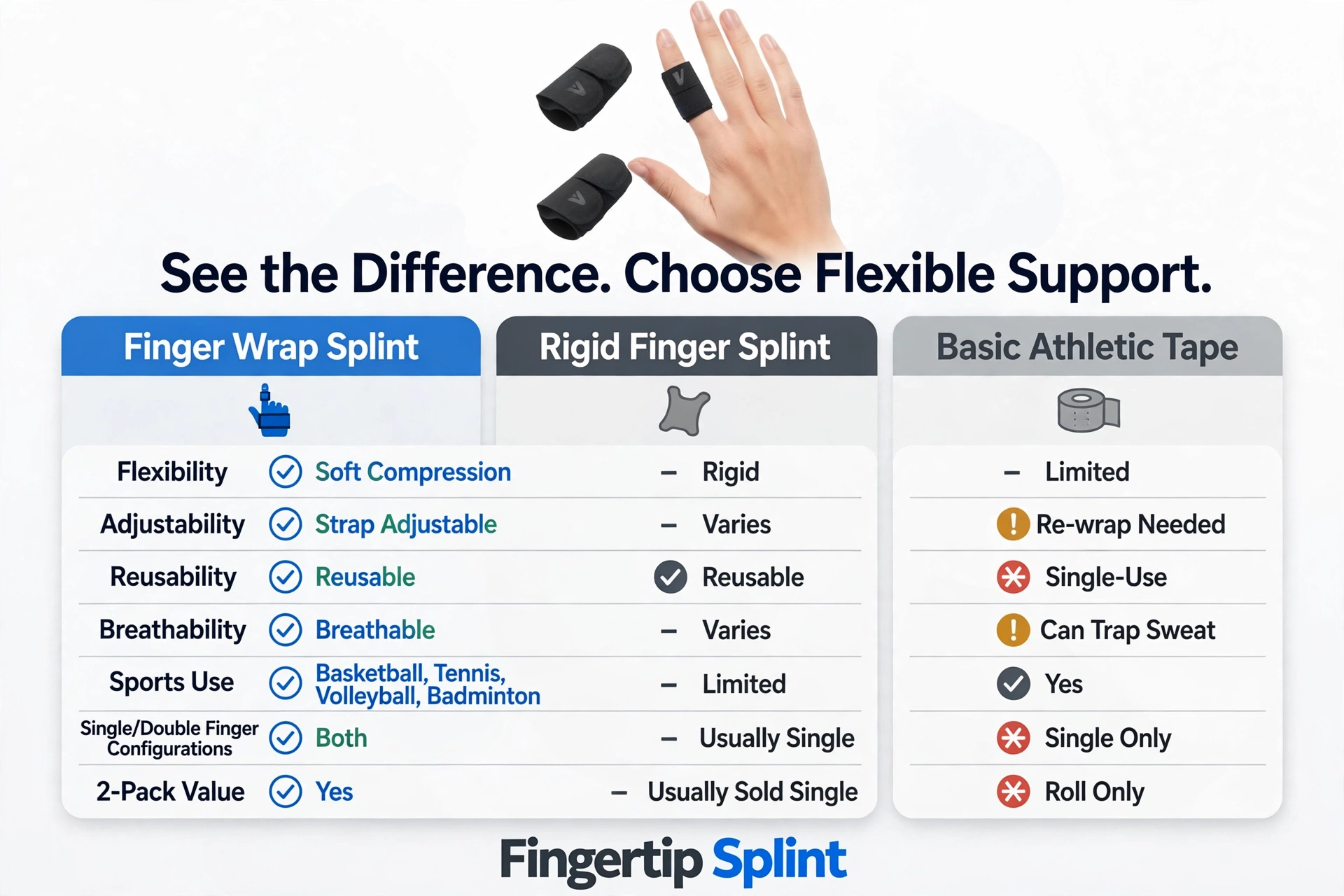
- Soft finger wraps: Flexible material secured around a finger or fingers. These may provide light compression and coverage.
- Finger sleeves: Tubular coverings that provide surface coverage. They are often used for friction protection.
- Adjustable finger supports: Designs that use straps or fastening systems to help achieve a suitable fit. Adjustability can improve comfort and positioning.
- Rigid or semi-rigid finger splints: Products designed to restrict movement to varying degrees. These are often used for specific injuries or post-injury support.
These products are not interchangeable. The right choice depends on the intended purpose and whether medical guidance is needed.
Protection, Support, and Immobilization Are Different
Protection refers to surface coverage. Support refers to light compression or positioning assistance. Immobilization refers to restricting movement. A soft wrap may provide protection and light support, but it does not immobilize the finger. A rigid splint is designed to restrict movement. Avoid assuming that every sports finger protector can treat or prevent injuries.
Why Fit Matters When Choosing a Finger Protector
Fit is the most important factor determining whether a finger protector will be comfortable and usable. A poor fit can undermine comfort, reduce effectiveness, and even cause new problems.
Signs a Finger Protector Fits Properly
- It sits in the intended position
- It does not pinch the skin or create painful pressure
- It does not slide excessively during normal movement
- It does not cause numbness, tingling, or unusual color changes
- It suits the intended activity and the manufacturer’s directions
Signs the Fit Is Wrong
- Excessive tightness or deep marks
- Loose fastening or slipping
- Skin irritation or redness
- Pressure points
- Unwanted movement restriction
- Numbness, tingling, or color changes
Why One Size Does Not Always Fit Everyone
Finger length, width, joint size, and swelling vary from person to person. A product that fits one person may not fit another. Check actual measurements rather than assuming a product’s stated size will suit every hand.
Finger Protector Flexibility: How Much Movement Do You Need?
Flexibility is a key consideration when choosing a finger protector. The right level of flexibility depends on your activity and your needs.
Flexible Designs for Movement
Flexibility can matter during gripping, catching, handling equipment, or other activities requiring finger movement. A flexible design may allow you to perform these movements more naturally.
More Flexibility Is Not Always Better
Some injuries require movement restriction or immobilization. A soft, flexible product may not provide sufficient support for those conditions. If you have a significant injury, seek professional advice about the appropriate level of support.
Balancing Comfort and Support
Evaluate the intended function first, then compare flexibility. Do not assume that maximum movement is best for every situation, and do not assume that a more rigid product is always safer. Match the product to your needs.
How to Choose the Right Finger Protector Size
Getting the size right is essential for comfort and effectiveness. Follow this practical sizing process.
Step 1 — Find the Manufacturer’s Sizing Chart
Check the product listing for a sizing chart. Different products use different sizing systems.
Step 2 — Check Which Part of the Finger to Measure
The manufacturer’s instructions will tell you which part of the finger to measure. This may be the circumference at the base, middle, or another point.
Step 3 — Follow the Specified Measuring Method
Use the method described by the manufacturer. Do not guess or estimate.
Step 4 — Compare Measurements with Available Sizes
Match your measurements to the available sizes. If you are between sizes, consider whether the product allows adjustment.
Step 5 — Check Whether the Design Is Adjustable or Fixed-Size
Adjustable designs may accommodate a wider range of sizes. Fixed-size designs require a more precise match.
Step 6 — Consider Swelling or Existing Injury
If you have swelling or an existing injury, self-sizing may not be appropriate. Seek professional advice if you are unsure.
Step 7 — Review the Return and Exchange Policy
Before ordering, check the return and exchange policy. This is especially important if you are unsure about the size.
Materials, Comfort, and Everyday Usability
The material of the finger protector affects comfort, durability, and how well it performs.
Softness and Skin Contact
Consider texture, seams, edges, and potential friction. Soft, smooth materials are generally more comfortable against the skin. Use terms such as breathable, hypoallergenic, or medical-grade only when supported by verified product information.
Fastening and Adjustability
Straps, closures, or fixed designs affect positioning and fit. Adjustable fastening can help you achieve a secure fit without excessive tightness. Check the product details to confirm the fastening mechanism.
Bulk and Range of Motion
Thick or rigid designs may affect gripping and dexterity. Evaluate the protector for its intended activity. A low-profile design may be more suitable for activities requiring fine finger movement.
Cleaning and Durability
Check the manufacturer’s instructions for washing, drying, reuse, and replacement. Do not assume long-term durability without evidence.
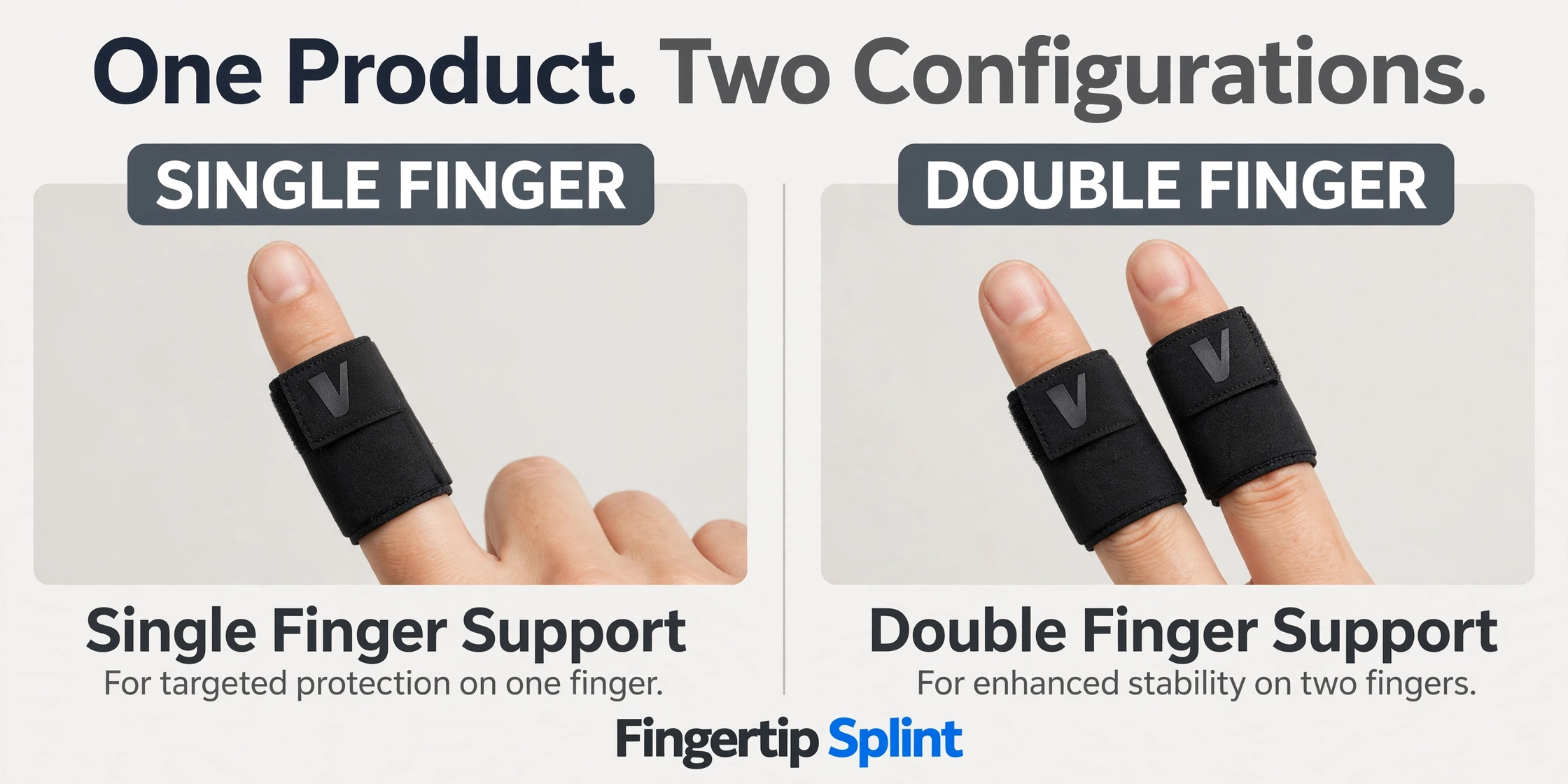
Single-Finger vs Double-Finger Protectors
The choice between a single-finger protector and a double-finger protector depends on your needs.
| Feature | Single-Finger Design | Double-Finger Design |
|---|---|---|
| Coverage | One finger | Two fingers, depending on construction |
| Independent movement | May allow more independent movement | May restrict the relative movement of the pair |
| Main fit consideration | Fit around the individual finger | Fit across both fingers and the connecting area |
| Best selection criterion | Intended coverage and movement needs | Intended coverage and suitability of the two-finger configuration |
Neither type is universally better. A two-finger design is not automatically more supportive. For a detailed explanation of double-finger design, see our double finger splint wraps for soft compression support.
Choosing a Finger Protector for Different Activities
Different activities place different demands on the fingers. Consider the movements your activity requires when choosing a protector.
Ball Sports
Catching, setting, blocking, and ball handling are examples of movements to consider. A protector that restricts these movements may interfere with your game.
Racket Sports
Check grip comfort and whether the design interferes with handling a racket. A bulky protector may affect your grip.
Training and Everyday Tasks
Dexterity, comfort, and intended coverage matter during repetitive movements. Choose a protector that allows the movement you need.
For sport-specific comparisons, see our best finger wraps for basketball, tennis and volleyball.
What to Check Before Buying Online
Before placing an order, check these details.
Online Buying Checklist
Product photographs alone may not reveal actual dimensions, rigidity, or the level of support provided. Check the specifications carefully.
A Sports Finger Protector to Compare
2Pcs Finger Protector Splints — Single/Double Finger Wraps
This product is designed with adjustable wraps and is an option to evaluate using the fit-and-flexibility checklist in this guide. It is not a universal medical recommendation.
- Single or double finger configuration
- Adjustable wrap design
- Soft compression support
- Low-profile for sports use
- Suitable for repeated use with proper care
Evaluate Its Fit and Design
- Which finger configurations are available
- The material and construction
- Sizing and adjustability
- How the wrap is secured
- How much movement the design is intended to allow
- The manufacturer’s stated uses and limitations
Who Should Compare This Product?
Readers looking for a soft finger wrap or a single-/double-finger configuration may find the product relevant to their shopping research, provided its verified specifications match their needs. Do not assume injury prevention, pain relief, faster healing, or suitability for a particular medical condition without supporting evidence.
How to Check a Finger Protector Before Use
Before using a finger protector, follow these steps to check the fit.
Step 1 — Confirm Intended Use
Confirm that the product is intended for your use case.
Step 2 — Read the Sizing and Fitting Instructions
Read the manufacturer’s instructions carefully.
Step 3 — Position as Directed
Position the protector as directed by the manufacturer.
Step 4 — Check for Problems
Check for pinching, slipping, pressure points, or skin irritation.
Step 5 — Check Sensation and Color
Check that sensation and finger color remain normal.
Step 6 — Assess Movement
Gently assess comfortable movement without forcing the finger.
Step 7 — Consider Activity Interference
Consider whether the product interferes with the activity for which it is intended.
Step 8 — Stop if Problems Occur
Stop using it if it causes numbness, tingling, significant color changes, or worsening discomfort.
8 Finger Protector Buying Mistakes to Avoid
Avoid these common errors when buying a sports finger protector.
1. Choosing Based on Appearance Alone
Appearance does not determine function. Evaluate the features that matter for your activity.
2. Ignoring the Manufacturer’s Size Chart
Size affects fit and comfort. Check the size chart before ordering.
3. Assuming Soft Material Provides Rigid Support
A soft wrap is not a rigid splint. If you need immobilization, seek professional advice.
4. Selecting a Double-Finger Design Without Considering Movement
A double-finger design may limit independent movement. Consider whether this is appropriate for your activity.
5. Choosing the Tightest Fit for a Feeling of Security
Over-tightening can cause numbness, tingling, and skin damage. A secure fit is not the same as a tight fit.
6. Ignoring Material Seams and Potential Pressure Points
Seams and edges can cause irritation. Inspect the product before use.
7. Assuming Every Finger Protector Is Appropriate for an Injury
Different injuries require different levels of support. A general protector is not appropriate for all injuries.
8. Buying Without Checking Intended Use and Care Instructions
Check the product’s intended use and care instructions before purchasing.
When a Sports Finger Protector May Not Be Enough
Significant swelling, severe pain, deformity, numbness, an open injury, suspected fracture or dislocation, or inability to bend or straighten a finger may require prompt medical assessment.
- Severe pain that does not improve
- Significant swelling or bruising
- Visible deformity
- Numbness or tingling
- Open wound or bleeding
- Inability to bend or straighten a finger
- Signs of infection
A product guide cannot establish whether an injury is safe to play through. Do not use a general protector as a substitute for prescribed treatment or immobilization.
Find a Finger Protector That Matches Your Needs
Interactive Buying Checklist
Answer a few questions to identify which features matter most for your situation.
What is your main priority?
How many fingers need coverage?
What will it be used for?
Select your priorities above to see a checklist of features to compare.
Explore Finger Protector Fit and Flexibility
Interactive 3D Hand and Finger View
Click each part to learn how it affects fit, flexibility, and comfort.
Illustration for understanding fit and design. Actual sizing, flexibility, and support vary by product.
When Should You Seek Medical Advice?
Seek medical attention if you experience any of the following after a finger injury.
- Severe pain that does not improve
- Significant swelling or bruising
- Visible deformity or abnormal finger position
- Inability to move the finger
- Numbness or tingling
- Open wound or bleeding
- Signs of infection (redness, warmth, pus)
For more detailed information on finger injuries, see the Mayo Clinic’s broken finger guide, the Mayo Clinic sprains overview, and the NHS information on sprains and strains. The Cleveland Clinic’s finger injury resource and MedlinePlus hand injuries and disorders also provide useful information. For sports injury guidance, see the AAOS OrthoInfo. WebMD and Healthline offer additional consumer education.
Frequently Asked Questions About Sports Finger Protectors
It should fit securely without pinching, slipping excessively, or causing numbness or color changes. It should sit in the intended position and suit the activity for which it is intended.
Check the manufacturer’s sizing chart and follow the specified measuring method. Compare your measurements with the available sizes. If you are between sizes, consider whether the product allows adjustment.
A flexible protector may allow more natural movement than a rigid design. However, the exact range of movement depends on the product’s construction. Check the product details and test the fit before relying on it for activity.
No. Soft finger wraps provide light compression and coverage. Rigid finger splints are designed to restrict movement. They serve different purposes and are not interchangeable.
It depends on your needs. A single-finger protector covers one finger and may allow more independent movement. A double-finger protector covers or connects two fingers and may restrict movement more. Choose based on the coverage and movement your activity requires.
Yes, if the protector allows the movements your sport requires and does not cause discomfort. Check that it stays in place and does not interfere with grip or ball contact. For sport-specific guidance, see our best finger wraps for basketball, tennis and volleyball.
It should be snug enough to stay in place but not so tight that it causes numbness, tingling, discoloration, or increasing discomfort. A secure fit is not the same as a tight fit.
See a doctor if you have severe pain, significant swelling or bruising, visible deformity, inability to move the finger, numbness or tingling, an open wound, or signs of infection. A general sports protector is not a substitute for professional assessment of a significant injury.
Choose a Finger Protector With the Right Fit
Match the Protector to Your Needs
A comfortable finger protector should match the coverage you need, the movement your activity requires, and the level of support the product is designed to provide. Check the sizing, construction, fastening, and manufacturer instructions before deciding.
The 2Pcs Finger Protector Splints — Single/Double Finger Wraps are designed with adjustable wraps. Explore the full shop finger support products collection to compare options, or read our double finger splint wraps for soft compression support for more detailed information.
Explore 2-Piece Finger Protector Splints Compare Double Finger WrapsMake an Informed Decision About Sports Finger Protectors
Choosing the right sports finger protector is about matching the product to your fit, flexibility, and intended use. Check the size, material, fastening, and manufacturer instructions before purchasing. If you have a significant injury, seek professional advice rather than relying on a general protector.
For more detailed guidance, see our best finger wraps for basketball, tennis and volleyball and our double finger splint wraps for soft compression support. For professional purchasing information, visit the medical finger splint supplier page, or check the finger support product FAQs for additional support.