
How an Adjustable Thumb Splint Provides Flexible Support
If a splint is supposed to support the thumb, how can it also be flexible? The answer lies in how adjustment, material, positioning, and structure work together. Flexible support is not about making a splint as loose or soft as possible — it is about finding the right relationship between stability and intended movement. This guide explains the actual mechanics.
What This Guide Covers
- Quick Answer
- What Does Flexible Support Mean?
- The Core Mechanism
- 3D Interactive: How Flexible Support Works
- Material Flexibility vs Support Structure
- Adjustment, Pressure, and Comfort
- Support vs Movement
- Coverage and Flexibility
- How Adjustability Creates an Adaptable Fit
- Step-by-Step: Adjust and Check
- 3D Movement Demonstrator
- Everyday Movement
- Common Mistakes
- Adjustable vs Fixed Support
- Product Spotlight
- Interactive: Flexible Support Explorer
- What a Healthcare Professional Would Want You to Know
- Quick Tips
- FAQ
- Conclusion
Quick Answer: How Does an Adjustable Thumb Splint Provide Flexible Support?
An adjustable thumb splint can combine a supportive structure with an adjustable fit, allowing its position and contact to be modified. Flexible materials or construction may permit some intended movement while the device remains positioned around the thumb. The actual degree of support and movement depends on the specific design and fit.
If you still need the foundational explanation of what an adjustable thumb support splint is, the reference Adjustable Thumb Support Splint: What Is It and How Does It Work? covers that ground. This article assumes you understand the basic product and now want to understand the actual mechanism behind flexible support.
What Does “Flexible Support” Actually Mean?
The term “flexible support” is used loosely in product descriptions, but it can refer to several different things. Understanding the distinction helps clarify what a specific product actually offers.
Material Flexibility
The material itself can bend or deform. A soft, stretchy material may conform to the hand more readily.
Structural Flexibility
The overall support can accommodate some movement. The construction may allow the thumb to move within a range while still providing positioning.
Fit Flexibility
The device can be adjusted to accommodate different dimensions or positioning. The wearer can modify the fit within the product’s range.
Functional Flexibility
The design may allow practical movement during intended activities. The thumb can continue to perform tasks while the splint remains positioned.
Important distinction: These four meanings are not the same thing. A product can be flexible in one sense and not in another. When evaluating a product, check which kind of flexibility the design actually provides.
The Core Mechanism: How an Adjustable Thumb Splint Creates Flexible Support
The mechanism follows a six-stage chain. Each stage depends on the previous one, and each contributes to how the splint performs in practice. Understanding this sequence clarifies how support and movement can coexist.
Stage 1 — Adjustment
The adjustable component changes the relationship between the device and the hand or thumb. Adjustment exists because hands vary in size and shape — a design that fits one person may not fit another without modification. The adjustment mechanism can affect positioning, which affects how the splint sits on the hand, which affects how it behaves during movement.
Adjustment range matters because it determines how much fit modification is possible. A product with a narrow adjustment range may fit only a narrow range of hand sizes. A product with a wider range accommodates more variation. But adjustment should follow the manufacturer’s instructions — the range is designed to work within specific limits.
Stage 2 — Contact
Once positioned, the device contacts the relevant areas of the thumb and hand. Contact influences stability, positioning, comfort, and movement. The quality of contact — how evenly the material sits against the skin — affects how the splint feels and how it performs.
Stage 3 — Positioning
Support depends partly on where the device sits, not simply on how tight it is. A poorly positioned support may remain tight but still not function as intended. This is an important insight for buyers: positioning matters as much as adjustment level.
If the splint sits too high or too low on the thumb, the coverage may not align with the area it was designed to support. If it rotates during movement, coverage changes. Positioning is not a one-time decision — it should be checked after movement.
Stage 4 — Support
The structure creates a physical boundary or supporting layer around the targeted area. This is what “support” means in a mechanical sense — the device provides resistance or positioning around the thumb. The degree of support depends on the structure’s material, thickness, and construction.
Important: Support does not mean “treatment” or “healing.” A splint provides physical support characteristics. It does not fix, heal, or treat a condition unless backed by specific medical evidence for that exact use. This distinction matters for realistic expectations.
Stage 5 — Movement
Now the flexible part. Depending on design, the thumb may retain some intended movement. Support does not necessarily mean complete immobilization. But flexibility does not mean unrestricted movement either. The actual balance depends on the product’s construction.
Support Does Not Necessarily Mean Immobilization
A splint can provide support while still allowing movement. The structure may guide or position the thumb without locking it in place.
Flexibility Does Not Mean Unrestricted Movement
A flexible splint still provides support. The material and structure may limit movement in specific ways while allowing it in others.
Stage 6 — Reassessment
The wearer checks position, comfort, stability, movement, and pressure. This makes the framework complete. Reassessment is not a one-time step — the fit should be checked after movement, after extended wear, and after switching between activities.
How Flexible Support Works Inside an Adjustable Thumb Splint: 3D Interactive
This interactive shows the six components that contribute to flexible support. Tap each component to see what it does.
Interactive 3D: Mechanism Anatomy
Tap each component to see what it contributes to flexible support
Adjustment Zone
Where the fit or positioning can be modified. The adjustment component changes the relationship between the device and the hand, which affects how the splint sits, how it contacts the skin, and how it behaves during movement. Adjustment range determines how much fit modification is possible.
All components work together. Flexible support comes from the interaction between them, not from any single component.
Interactive: Three Adjustment States
Tap each state to see how adjustment affects support
LOOSE
Device moves relative to thumb
APPROPRIATE
Positioning maintained, movement allowed
EXCESSIVELY TIGHT
Excessive pressure, restrictive feel
Appropriately Adjusted
The device maintains positioning while allowing intended movement according to its design. Contact is even. Comfort is appropriate. Movement remains practical for the intended activity. This is the target — not the tightest fit, but the fit that works.
Material Flexibility vs Support Structure
A common misconception is that a flexible material automatically means weak support. This is not necessarily true. Support characteristics depend on multiple design factors, not just on how flexible the material is.
| Design Characteristic | Potential Effect |
|---|---|
| More flexible material | May allow easier bending and conformity to the hand |
| More structured construction | May provide greater positional resistance |
| Greater coverage | May influence movement and dexterity |
| Adjustable fastening | May allow fit modification within a range |
| Thicker construction | May affect profile and movement |
| Low-profile construction | May be more practical for some activities |
Use careful language when evaluating products: “may,” “can,” “depending on design,” and “intended use.” No single characteristic determines how a splint performs. The interaction between material, construction, thickness, coverage, and fastening determines the support characteristics.
Adjustment, Pressure, and Comfort
Adjustment changes contact. Contact affects perceived pressure. Pressure influences comfort. This chain explains why adjusting a splint sometimes changes how it feels significantly — even a small change in adjustment can affect perceived pressure.
If excessive pressure causes discomfort, numbness, tingling, or concerning discoloration, remove the splint and reassess. Persistent symptoms warrant professional advice.
How Adjustable Thumb Splints Balance Support and Movement
Support and movement exist in tension. More support may mean less movement; more movement may mean less support. The right balance depends on what the splint is intended to do.
| Consideration | Less Restrictive Design | More Restrictive Design |
|---|---|---|
| Movement | More movement may remain | Movement may be reduced |
| Stability | May feel less structured | May feel more structured |
| Daily activity | May be easier for some tasks | May interfere with some tasks |
| Profile | Often potentially lower | May be bulkier |
| Intended use | Depends on design | Depends on design |
Coverage and Flexibility
Coverage influences movement. Different coverage designs create different relationships between support and flexibility. Understanding these differences helps match a splint to your needs.
Minimal Coverage
More movement area may remain. The splint covers a smaller portion of the thumb, which may allow more natural thumb movement.
Extended Coverage
More of the thumb and hand may be enclosed. Coverage may extend onto the palm for additional stability.
Structured Coverage
Movement may be more constrained depending on design. Structured designs may prioritize positioning over movement.
Coverage is a design characteristic, not a guarantee of medical effectiveness. A splint with extended coverage is not automatically more supportive than one with minimal coverage. The appropriate coverage depends on the product’s intended design and your specific needs.
For a broader exploration of how coverage and features interact, the reference Thumb Support Splints Explained: Features, Fit and Everyday Uses covers the topic in more depth.
How Adjustability Creates a More Adaptable Fit
Adjustability is what separates an adjustable splint from a fixed design. Understanding the difference clarifies what adjustability actually provides.
Fixed Fit
The user largely accepts the predetermined configuration. The fit is set by size and design. If the size matches well, a fixed design may work perfectly.
Adjustable Fit
The user can modify the configuration within the device’s intended adjustment range. This provides more flexibility for fit, positioning, and comfort.
Important limit: Adjustable does not mean infinitely adjustable. A device still has physical dimensions, adjustment limits, intended positioning, and material limitations. If you require the extreme end of the adjustment range to make the splint fit, you are probably one size off.
For a detailed look at how fit and adjustability work together, the reference Thumb Splint Fit Guide: Understanding Adjustability and Comfort covers the topic.
Step-by-Step: How to Adjust and Check the Support
This is general product-use guidance, not a medical treatment protocol. Follow the manufacturer’s instructions for the specific product you are using.
Stop and reassess if: significant discomfort occurs, numbness or tingling develops, concerning discoloration appears, or the device feels excessively restrictive. If these issues persist, appropriate professional advice should be considered.
How Much Movement Does Flexible Support Allow? 3D Demonstrator
Flexible support exists on a spectrum from more flexible to more restrictive. The visual below represents that spectrum as a conceptual design tool, not a standardized medical scale. Tap each position to see how the balance shifts.
Interactive: The Flexibility Spectrum
Tap each point on the spectrum to see how support and movement relate
Everyday Movement: Applying the Mechanism to Real Activities
Understanding the mechanism helps when evaluating how a splint might work during everyday activities. The central question for each activity is: does the support maintain its intended position without creating unnecessary interference with the movement required for this task?
Smartphone Use
Tapping, scrolling, and holding the phone involve repeated thumb movement. Coverage around the thumb tip and the splint’s profile affect how well the thumb can interact with the touchscreen. If the splint interferes with thumb-to-screen contact, check the coverage area.
Writing
Writing places the thumb in a specific grip position. The splint’s thickness at the contact point and how it behaves during sustained grip affect comfort. A design that changes how the pen is held noticeably may be less practical.
Typing
Typing involves repeated hand movements. The thumb may be used for the space bar. A low-profile design that allows thumb movement may work better than a bulkier design that restricts or interferes with key contact.
Studying
Studying combines writing, phone use, and book handling. The splint needs to work across multiple demands rather than excelling at one. Comfort over extended sessions matters more than peak performance in a single activity.
Office Work
Office work combines keyboard, mouse, paperwork, and phone use. The splint needs to stay stable through repetitive movements. Comfort over a full workday and ease of adjustment between tasks matter.
Light Daily Activities
General hand positioning and grip requirements during everyday routines. The splint should stay positioned through these activities and remain comfortable.
For a deeper look at how adjustable designs fit into everyday activities, the reference Why Choose an Adjustable Thumb Support Splint for Daily Activities? covers the practical considerations.
Common Mistakes
These mistakes come up repeatedly when people evaluate flexible support. Avoiding them makes the experience better and reduces the chance of fit-related problems.
A flexible material does not automatically mean weak support. Support characteristics depend on multiple design factors.
Check: the overall construction, not just the material.
More pressure is not automatically better support. Excessive pressure can reduce comfort and cause concerning symptoms.
Check: adjust for appropriate fit, not maximum pressure.
Adjustment range still has limits built around a base size.
Check: the size range and adjustment range.
Where the splint sits matters as much as how tight it is.
Check: that the splint sits where the manufacturer intends.
A support should be evaluated against its intended function.
Check: how the splint behaves during the activity you do most.
Different activities may create different movement demands.
Check: whether the fit remains appropriate across your activities.
It may not be appropriate for every injury or condition.
Check: seek professional advice for significant or persistent symptoms.
Movement may shift the splint and change fit.
Check: recheck the fit after periods of activity.
Adjustable vs Fixed Support
This comparison focuses on flexibility mechanics. The dedicated comparison article covers the trade-offs in more depth.
| Adjustable | Fixed |
|---|---|
| Fit can be modified within a range | Configuration is more predetermined |
| Can accommodate some fit variation | Less adjustment available |
| Position can be fine-tuned | Position is more dependent on original sizing |
| Requires appropriate adjustment | Simpler adjustment process |
| Adjustment range has limits | Fit still depends on correct sizing |
For a broader comparison of support types, the reference Adjustable Thumb Splint vs Finger Support: What’s the Difference? covers the trade-offs between different support approaches.
Product Spotlight: Applying the Mechanism
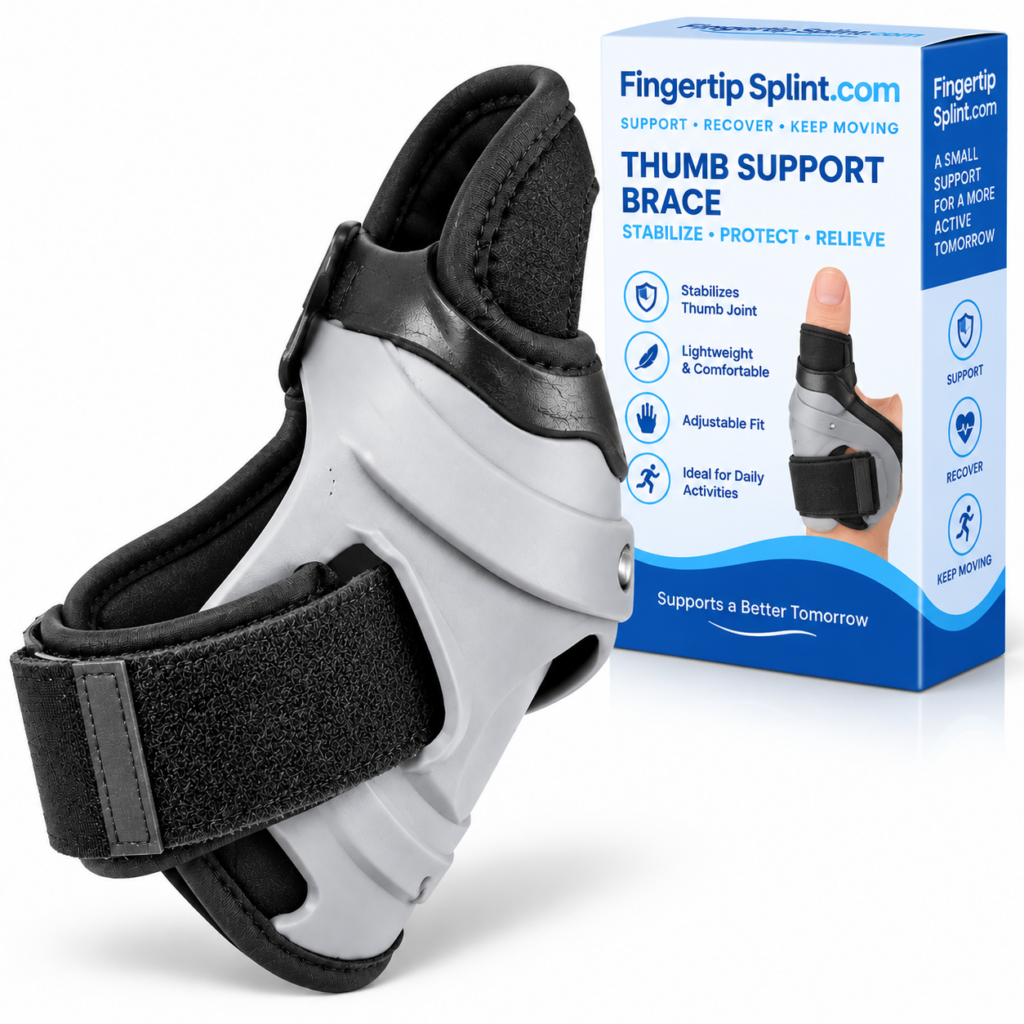
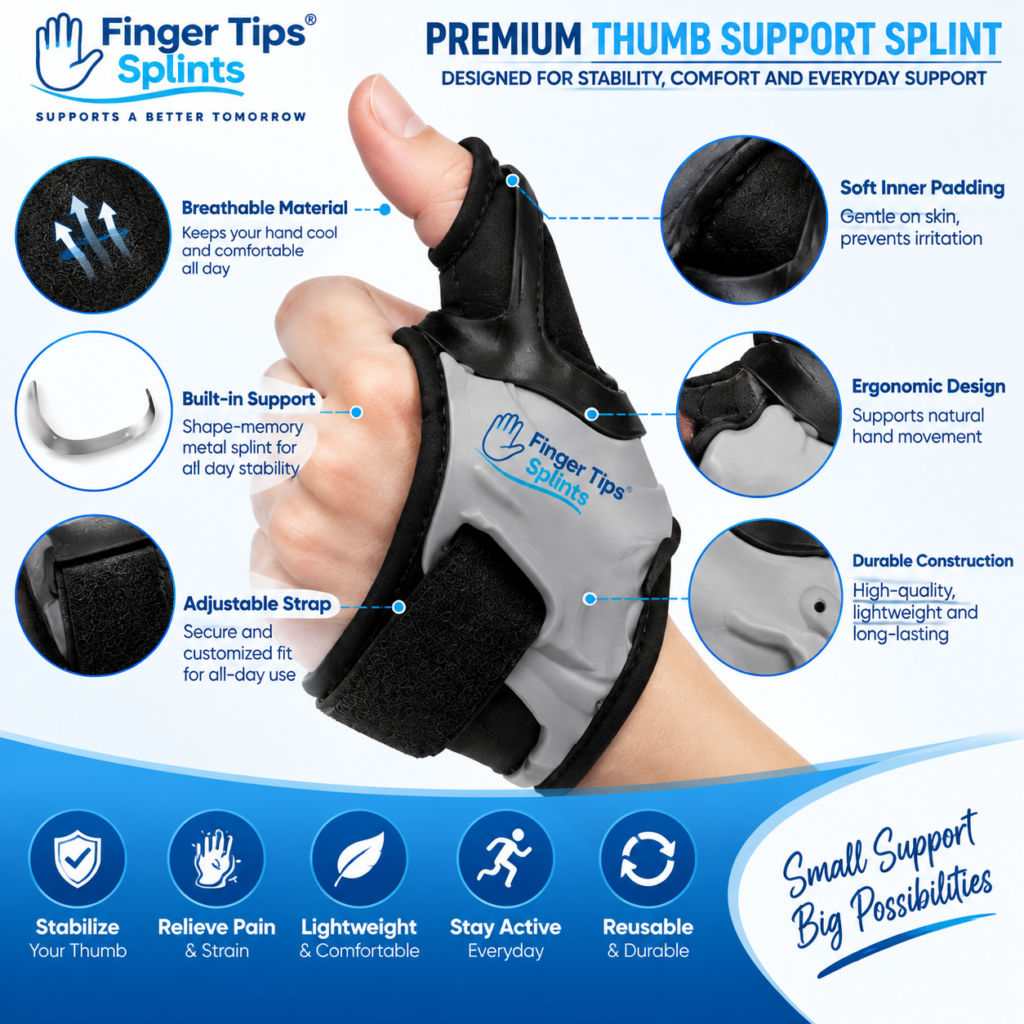
After understanding how flexible support works, here is a specific product to examine. The Adjustable Thumb Support Splint is one option if customizable fit and adjustable positioning are among your priorities.
Adjustable Thumb Support Splint
- Adjustable design for customizable fit
- Thumb-focused support construction
- Designed for thumb coverage and positioning
- Full product specifications available on the product page
Applying the Mechanism Framework
Adjustment
Review the adjustment mechanism on the product page. Check how the adjustment works and whether it stays secure during movement.
Support Structure
Review the visible construction. Check the support body, coverage area, and how the structure provides positioning.
Coverage
Review which thumb and hand areas the splint covers. Confirm the coverage matches your intended purpose.
Flexibility and Fit
Consider the movement characteristics of the design and how they match your activities. Review the sizing information.
Everyday Practicality
Consider how the splint’s characteristics match your routine. Review the care instructions and any other product information.
For readers who want to understand the buying considerations in more depth, the reference What to Look For When Buying an Adjustable Thumb Splint covers the buying process step by step.
Interactive: What Creates Flexible Support?
Flexible support comes from the interaction of several components. Tap each component to see what it contributes.
Flexible Support Explorer
Tap each component to see what it contributes
ADJUSTMENT
Fit modification
MATERIAL
Flexibility
COVERAGE
Movement area
STRUCTURE
Physical support
FIT
Contact and comfort
Adjustment
Adjustment allows the fit to be modified after application. It changes the relationship between the device and the hand, which affects how the splint sits, how it contacts the skin, and how it behaves during movement. Adjustment works within a specific range built around a base size.
What a Healthcare Professional Would Want You to Know About Flexible Support
This section presents evidence-based principles that apply to thumb support products generally. It does not claim that a doctor has personally endorsed a specific product.
Flexible Support Is Not Complete Immobilization
Flexible support and rigid immobilization are different approaches. They are not interchangeable. The appropriate approach depends on the specific situation.
Different Conditions May Require Different Support Approaches
There is no single support design that suits every situation. A product that works well for one purpose may not be appropriate for another.
Fit Matters
Correct fit is essential for the product to function as intended. A splint should fit securely but not tightly.
Excessive Tightness Can Cause Problems
Tightness is not a measure of support. Excessive pressure can cause discomfort, numbness, tingling, or discoloration.
Persistent Symptoms Deserve Assessment
Persistent or worsening symptoms should not automatically be treated as a sizing issue. Professional evaluation may be appropriate.
A Product Guide Cannot Diagnose
An online article cannot determine the cause of thumb pain or the appropriate device for a specific medical problem.
Seek appropriate professional evaluation for: significant injury, visible deformity, severe or worsening pain, substantial swelling, major movement loss, persistent numbness or tingling, significant discoloration, or symptoms that do not improve.
For authoritative information about thumb, hand, and wrist conditions and treatments, the following resources provide evidence-based content:
- Mayo Clinic for condition overviews and patient education.
- WebMD for general thumb and hand concern overviews.
- Healthline for practical wellness information.
- AAOS OrthoInfo for orthopedic guidance from specialists.
- NHS guide on hand pain for UK-based clinical guidance.
- MedlinePlus hand injuries and disorders for a broad reference library.
- Cleveland Clinic for clear patient-oriented explanations.
- Johns Hopkins Medicine for clinical and research-based perspectives.
- FDA for regulatory context on medical devices.
- NIH for research-based health information.
These resources provide general information and do not replace individualized advice from a qualified healthcare professional.
Quick Tips
Frequently Asked Questions
An adjustable thumb splint combines a supportive structure with an adjustable fit, allowing its position and contact to be modified. The mechanism follows a sequence: adjustment changes the relationship between the device and the hand, which changes contact, which affects positioning, which affects support, which affects movement. Flexible materials or construction may permit some intended movement while the device remains positioned. The actual degree of support and movement depends on the specific design and fit.
Flexible support can refer to several different things: material flexibility (the material can bend), structural flexibility (the overall support can accommodate some movement), fit flexibility (the device can be adjusted), and functional flexibility (the design allows practical movement during activities). These are not the same thing. A product can be flexible in one sense and not in another. When evaluating a product, check which kind of flexibility the design actually provides.
Movement depends on the specific product’s design. A flexible splint may allow significant movement; a more structured splint may allow less. The splint should allow the movement appropriate to its intended design. Support does not necessarily mean complete immobilization, and flexibility does not mean unrestricted movement. The actual balance depends on the product’s construction and intended use.
No. More pressure does not automatically mean more support. Tightness is not a measure of effectiveness. Adjustment changes contact, which affects perceived pressure and comfort. Excessive tightness can cause discomfort, numbness, tingling, or discoloration. The goal is an appropriate fit — secure but comfortable — not maximum pressure.
Not necessarily. “Adjustable” refers to the ability to modify fit or positioning. “Flexible” can refer to material, construction, or movement characteristics. A splint can be adjustable without being particularly flexible, and it can be flexible without being adjustable. The terms describe different design aspects. When evaluating a specific product, check both the adjustment mechanism and the flexibility characteristics.
Suitability depends on the splint’s characteristics and the specific activity. The central question for each activity is whether the support maintains its intended position without creating unnecessary interference with the movement required for the task. A splint with appropriate coverage, comfortable material, secure fit, and enough movement for the activity is more likely to be suitable.
Seek professional advice if you have significant injury, visible deformity, severe or worsening pain, substantial swelling, major loss of movement, persistent numbness or tingling, significant discoloration, or symptoms that are not improving. Also seek advice if a specific type of support has been recommended. A consumer thumb splint is not a substitute for professional medical assessment or for prescribed medical support.
Flexible Support Is a Balance, Not a Compromise
An adjustable thumb splint can provide support while allowing intended movement — not because it is loose or soft, but because adjustment, material, coverage, structure, and fit work together. Understanding the mechanism helps you evaluate specific products with confidence. Adjustment → Contact → Positioning → Support → Movement → Reassessment
The Bottom Line on Flexible Support
Flexible support is not about making a splint as loose or soft as possible. It is about how the device’s structure, adjustment, coverage, and fit interact with the movement it is designed to accommodate. The mechanism follows a specific chain: adjustment changes contact, contact affects positioning, positioning affects support, and support affects movement. Reassessment completes the loop.
Understanding this mechanism helps when evaluating specific products. A flexible material does not automatically mean weak support. More pressure does not automatically mean more support. Position matters as much as adjustment level. And the right balance between support and movement depends on the product’s design and the intended activity.
If you want to continue exploring within this cluster, the foundational reference Adjustable Thumb Support Splint: What Is It and How Does It Work? covers the product definition, and the features guide Thumb Support Splints Explained: Features, Fit and Everyday Uses covers feature evaluation. For a wider reference, explore the full FingerTipSplint blog library.
This article is for general information only and is not a substitute for professional medical advice. Always consult a qualified healthcare provider for diagnosis and treatment of any medical condition.