
Stack splint for mallet finger is one of the simplest yet most effective ways to protect your injured finger and ensure proper healing—but most people either use it incorrectly or delay treatment, making things worse.
If you’ve ever felt that sudden pain when your fingertip won’t straighten… you’re not alone.
👉 It’s frustrating.
👉 It affects daily tasks like typing, writing—even holding a cup.
👉 And if ignored? It can become permanent.
But here’s the good news…
With the right mallet finger treatment splint, you can recover faster, reduce pain, and avoid long-term damage.
You can also explore this detailed guide on medical splint for finger injury to better understand proper protection and healing.https://fingertipsplint.com/2018/10/23/medical-splint-for-finger-injury/
What Is a Stack Splint for Mallet Finger?
A stack splint for mallet finger is a small support that keeps the fingertip straight so the injured tendon can heal properly. It helps prevent further bending, reduces pain, and lowers the risk of permanent drooping.
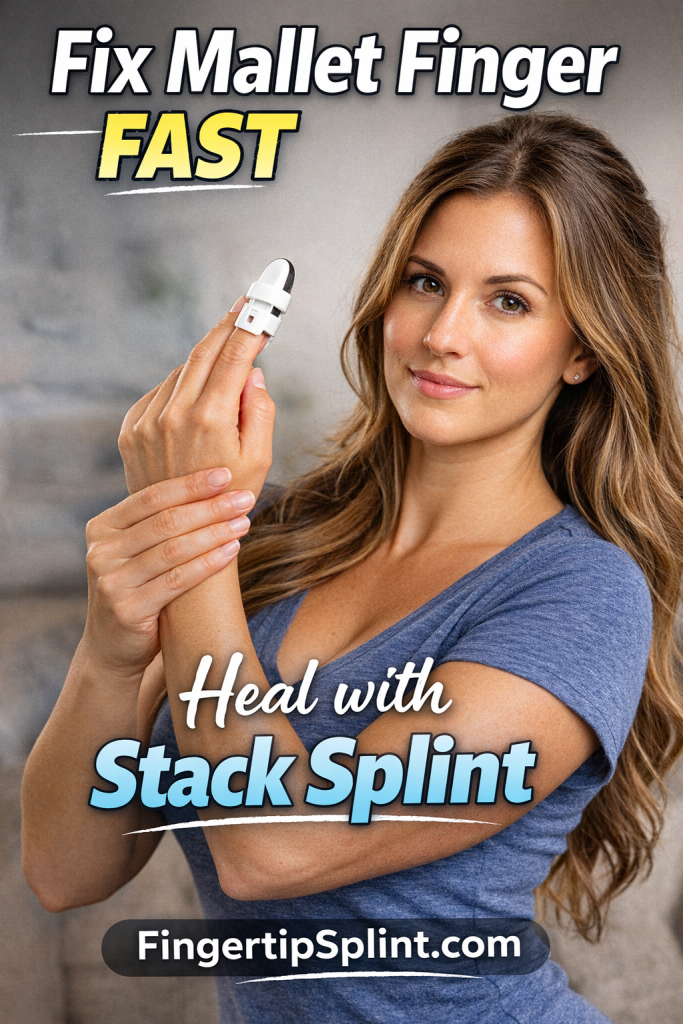
Table of Contents
- What Is Stack Splint
- Why You Should Not Ignore Mallet Finger
- With vs Without Splint
- How to Use
- Common Mistakes
- Recovery Timeline
- When to See Doctor
- Choosing Right Splint
- FAQs
Who Is This Guide For?
This guide is for:
- Athletes with jammed fingers
- Workers using hands daily
- People with sudden finger injuries
- Anyone noticing a drooping fingertip
👉 If that’s you—you’re in the right place.
What Is a Stack Splint for Mallet Finger?
A stack splint for mallet finger is a small plastic support that keeps your fingertip straight, allowing the tendon to heal properly without bending.
It works by:
- Immobilizing the DIP joint (tip of finger)
- Preventing further injury
- Supporting natural healing
For a deeper breakdown of finger injuries, you can also explore guides on medical splint for finger injury for broader understanding.
Why You Should NOT Ignore Mallet Finger
Here’s the truth most people don’t realize…
A small finger injury today can become a permanent deformity tomorrow.
Without proper support:
- Finger may stay bent forever
- Pain may increase over time
- Grip strength reduces
- Daily life becomes difficult
According to Mayo Clinic, untreated tendon injuries can lead to long-term complications.
With Splint vs Without Splint
A stack splint may look simple, but the difference it makes in healing, pain relief, and long-term finger function can be huge.
✅ WITH Stack Splint
- Proper alignment
- Faster healing
- Reduced pain
- Prevents deformity
- Better recovery outcome
❌ WITHOUT Splint
- Risk of permanent droop
- Increased swelling
- Slow healing
- Chronic stiffness
- Long-term damage
Stack Splint Benefits
- ✔ Faster Healing
- ✔ Pain Reduction
- ✔ Prevents Deformity
- ✔ Supports Recovery
How to Use a Stack Splint for Mallet Finger
Follow these simple steps carefully to support proper healing and avoid restarting your recovery.
Clean the Finger
Wash and dry your finger gently before applying the splint.
Keep It Straight
Make sure the fingertip stays fully extended before placing the splint.
Slide On Splint
Carefully place the stack splint over the finger without bending the tip.
Check the Fit
It should feel secure and supportive, but not too tight or painful.
Wear Consistently
Keep it on continuously as advised, even during sleep, unless told otherwise by a doctor.
The NHS explains that a splint keeps the finger joint straight, allowing the tendon to heal properly over time.
Common Mistakes to Avoid
Even a small mistake can slow down healing. Avoid these common problems to give your finger the best chance to recover properly.
- Removing the splint too early because the finger “feels better.”
- Letting the fingertip bend even for a short moment.
- Using the wrong splint size, causing discomfort or poor support.
- Wearing it too loosely so the finger is not properly stabilized.
- Ignoring skin care and not cleaning the area regularly.
- Waiting too long to get medical advice if swelling or pain gets worse.
How Long Does Recovery Take?
Quick Answer:
Most cases heal in 6 to 8 weeks with proper splint use.
Recovery Timeline: What to Expect
Healing can vary from person to person, but this simple timeline gives beginners a realistic idea of what recovery may look like.
Week 1
Pain and tenderness may still be present, but proper splint use protects the tendon and starts the healing process.
Week 2–3
Swelling often begins to settle. Consistent splint wear becomes even more important during this stage.
Week 4–6
The finger may feel more stable, but the tendon is still healing. Do not remove the splint too soon.
Week 6–8+
Many people see noticeable improvement by this stage, though full recovery guidance should follow medical advice.
Some cases may need longer support.
For medical insights, WebMD explains tendon healing can vary based on injury severity.
For deeper insight into how tendons heal and why proper support matters, this guide on orthopedic finger splints for tendon repair explains the recovery process in detail. https://fingertipsplint.com/2018/10/23/orthopedic-finger-splints-for-tendon-repair/
The American Academy of Orthopaedic Surgeons explains that mallet finger happens when the tendon that straightens the fingertip is injured, making splinting essential for recovery.
When You Should See a Doctor
- Your finger looks severely bent or deformed.
- Pain or swelling keeps getting worse instead of better.
- You suspect a fracture or heard a snap during injury.
- Your skin feels irritated, numb, or discolored inside the splint.
- You are unsure whether your splint is fitted correctly.
According to Cleveland Clinic, most mallet finger injuries heal successfully when the finger is kept straight using a splint for several weeks.
Don’t Wait Until It Gets Worse
Protect your finger now with a reliable stack splint designed for support, comfort, and recovery. A small step today can help prevent long-term stiffness, pain, and deformity.
Shop Stack SplintChoosing the Right Stack Splint
Not all splints are equal.
Look for:
- Comfortable fit
- Proper size
- Breathable design
- Durable material
You can explore options from the Fingertipsplint shop to find suitable solutions.
Real-Life Scenario
Imagine this…
You ignore a minor finger injury thinking it’ll heal.
Days pass.
Weeks pass.
Now your finger won’t straighten.
This happens more often than you think.
A simple stack splint for mallet finger could have prevented it.
Featured Snippet Section
What is the fastest way to heal mallet finger?
The fastest way to heal mallet finger is by wearing a stack splint continuously for 6–8 weeks, keeping the fingertip straight at all times to allow proper tendon repair.
Can mallet finger heal without a splint?
Mallet finger rarely heals correctly without a splint. Without proper support, the tendon cannot reattach, leading to permanent bending.
How long should you wear a stack splint?
A stack splint should be worn continuously for 6–8 weeks, followed by gradual reduction based on recovery progress.
Final Thoughts
Don’t ignore it.
That small finger injury?
It can turn into a permanent issue faster than you think.
👉 Every delay slows healing.
👉 Every mistake increases risk.
Take action now.
Explore high-quality solutions at
👉 https://fingertipsplint.com/stack-splint/
Protect your finger. Heal faster. Get your life back.

Frequently Asked Questions
Everything beginners need to know about using a stack splint for mallet finger.
1. Can I remove my stack splint at night?
No, it must be worn continuously. Removing it at night can let the fingertip bend and may restart the healing process.
2. Is stack splint painful?
It may feel uncomfortable at first, especially during the first few days, but it should not cause severe pain. If it does, the fit may be wrong.
3. Can I shower with it?
Yes, but keep it dry or protect it properly. Moisture can irritate the skin and affect comfort during recovery.
4. What happens if I bend my finger?
Healing may restart from day one. Even one accidental bend can interrupt tendon recovery, so keep the fingertip straight at all times.
5. Do I need a doctor for mallet finger?
Mild cases can sometimes be treated at home, but severe pain, swelling, or suspected fracture should be checked by a doctor.