
Flexible Thumb Support Splint: What Should Buyers Know?
Flexible doesn’t mean no support. A flexible thumb splint is designed around a balance between support and permitted movement. But “flexible” does not automatically mean better, more comfortable, or suitable for every situation. This guide explains what flexibility actually means, how it affects movement and support, and what buyers should check before choosing one.
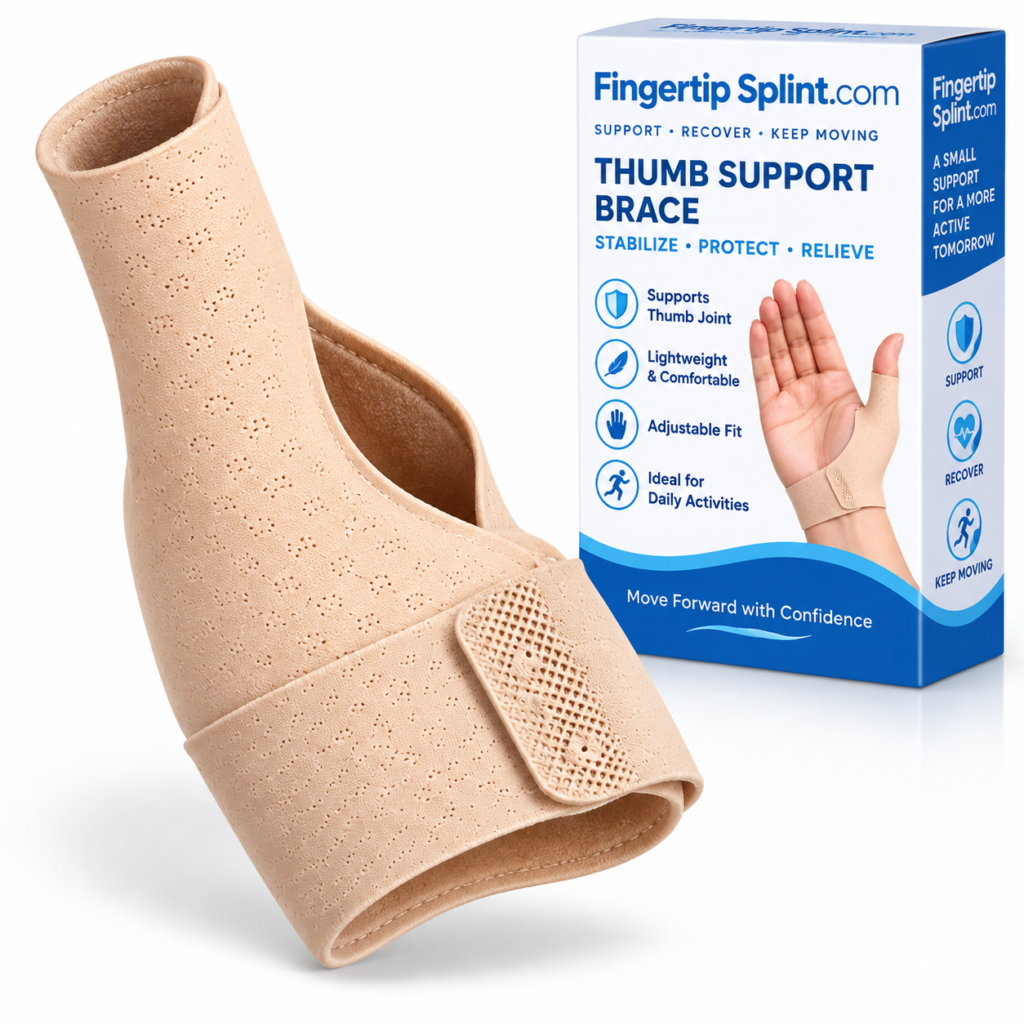
What This Buyer Guide Covers
- Quick Answer
- What Does “Flexible Thumb Support” Actually Mean?
- Flexible vs Rigid: Understanding the Difference
- 3D Interactive: Inside a Flexible Splint
- How Flexibility Affects Thumb Movement
- Interactive: Flexibility & Movement Explorer
- Material Matters More Than the Word “Flexible”
- Flexibility vs Support: Finding the Balance
- Does Flexible Mean Comfortable?
- Flexible Splint for Everyday Activities
- Interactive: Activity vs Flexibility Tool
- Flexible Splint Buyer Checklist
- “Flexible” Marketing Claims Buyers Should Question
- Flexible vs Structured: Which Characteristics Matter?
- How Flexible Should a Thumb Splint Be?
- Product Spotlight
- Common Buyer Mistakes
- When Flexibility May Not Be the Main Priority
- Quick Buyer Decision Framework
- FAQ
- Conclusion
Quick Answer: What Should Buyers Know About a Flexible Thumb Support Splint?
Flexibility refers to how the support accommodates movement while providing structure or coverage. Buyers should evaluate the specific design, material, fit, level of support, and intended activity rather than assuming every flexible splint provides the same level of restriction or support.
If you need the foundational definition of what a thumb support sleeve splint is, the reference Thumb Support Sleeve Splint: What Is It and How Does It Work? covers that ground. This article focuses specifically on what flexibility means and what buyers should check.
What Does “Flexible Thumb Support” Actually Mean?
The term “flexible thumb support” can mean different things depending on the product. Understanding the distinction between flexibility, support, restriction, and comfort helps buyers evaluate products more accurately.
Flexibility
What the material and design allow to move or bend. Flexibility is a property of the material and construction.
Support
How the product provides structure, positioning, compression, or coverage. Support comes from the design, not from tightness alone.
Restriction
How much movement the design may limit. Restriction depends on construction, coverage, and structure.
Comfort
How material, seams, pressure, and fit affect wearability. Comfort is not the same as flexibility.
Important distinction: Flexible ≠ weak. Rigid ≠ automatically better. The exact balance between flexibility and support depends on the product design and your specific needs.
Flexible vs Rigid: Understanding the Difference
This comparison shows how flexible and more rigid support designs typically differ. These are general design characteristics, not universal rules for every product.
| Feature | Flexible Support | More Rigid Support |
|---|---|---|
| Material behavior | Bends and moves more readily | Holds a more fixed structure |
| Movement | Generally permits more movement | May restrict more movement |
| Profile | Often lower-profile | May be bulkier |
| Everyday activities | Can be practical for some routines | May interfere more with certain activities |
| Adjustability | Depends on design | Depends on design |
| Support characteristics | Depends on construction | Depends on construction |
| Appropriate use | Depends on intended purpose | Depends on intended purpose |
Important: Neither category is universally better. The right choice depends on your intended purpose and the level of support required. If movement restriction has been professionally recommended, follow that guidance.
Inside a Flexible Thumb Support Splint: 3D Interactive
This interactive shows the key components of a flexible thumb support splint. Tap each component to see what it contributes.
Interactive 3D: Inside a Flexible Splint
Tap each component to see what it contributes
1. Thumb Coverage Zone
The part of the thumb enclosed by the flexible splint. Coverage determines which part of the thumb interacts with the product. Coverage is a physical property set by design and cannot be extended by adjustment.
Material → Flexibility → Movement → Contact → Support
How Flexibility Affects Thumb Movement
Flexibility affects how the thumb can move while wearing the splint. The actual amount of movement depends on the product’s construction, material, thickness, coverage, and fit.
Bending and straightening
Gripping and holding
Typing and writing
Phone use
Light everyday activities
Holding objects
Interactive: Flexibility & Movement Explorer
Select a flexibility level to see expected movement characteristics and what to check before purchase. This is educational guidance, not a diagnostic tool.
Flexibility & Movement Explorer
MORE FLEXIBLE
Greater movement potential
BALANCED
Support with practical movement
MORE STRUCTURED
Movement may be reduced
Balanced
A balanced flexible design aims to provide support while allowing practical movement. Expected movement characteristics include moderate thumb mobility during everyday activities. What to check before purchase: material, thickness, coverage, and fit. Consider whether the design’s movement characteristics match your intended activity.
Material Matters More Than the Word “Flexible”
Buyers shouldn’t stop at the word “flexible.” The actual characteristics of a product come from its material and construction. Two products can both be described as “flexible” while feeling completely different when worn.
Elasticity
Fabric construction
Stretch
Thickness
Breathability
Edge construction
Skin-contact surface
Compression characteristics
Durability
Buyer lesson: Two products can both be described as “flexible” while feeling completely different when worn. Look for specific material information in the product listing rather than relying on general terms.
Flexibility vs Support: Finding the Balance
Flexibility and support exist in tension. More movement often means less restriction, while more structure often means less freedom of movement. The ideal balance depends on the intended use.
Flexibility vs Support Balance
Conceptual scale — the ideal point depends on your needs
Movement Freedom
Low ←──────────→ High. A more flexible design may allow more natural thumb movement.
Structural Support
Low ←──────────→ High. A more structured design may provide more positional resistance.
Does Flexible Mean Comfortable?
Flexibility can contribute to comfort, but it does not guarantee it. Poor sizing can make even a flexible support uncomfortable. Comfort depends on multiple design and fit factors working together.
What Affects Comfort
- Pressure distribution
- Tightness
- Material feel
- Seams and edges
- Heat and moisture behavior
- Thumb positioning
- Sizing
Key Principle
Flexibility can contribute to comfort, but poor sizing can make even a flexible support uncomfortable. Comfort depends on how the product fits, not just on how flexible it is.
The detailed fitting reference Thumb Sleeve Splint Fit Guide: Understanding Coverage and Comfort covers comfort and fit in more depth.
Flexible Splint for Everyday Activities
Flexible thumb splints may be practical for everyday activities depending on their design. The key question is: how much thumb movement does the activity require?
Studying
Writing, holding books, using a laptop. Consider whether the splint allows the thumb movements required for these tasks.
Typing
Keyboard and mouse interaction. Consider profile and comfort over extended sessions.
Smartphone Use
Holding and tapping. Consider thumb movement and one-handed vs two-handed use.
Light Household Activities
Only where the product’s intended use permits. Consider grip and handling requirements.
Travel
Convenience and portability. Consider varied activity demands and ease of adjustment.
Work
Depends heavily on the physical demands of the job. Consider whether the design matches your specific tasks.
For a detailed look at how flexible designs fit into daily routines, the reference How a Sleeve-Style Thumb Splint Fits Into Everyday Activities covers the topic in more depth.
Interactive: Activity vs Flexibility Tool
This table helps buyers evaluate activity requirements against flexibility considerations. Values are conceptual and depend on the specific product and individual circumstances.
| Activity | Movement Demand | What Buyers Should Check |
|---|---|---|
| Writing | Medium | Thumb mobility |
| Typing | Medium | Profile and comfort |
| Smartphone | Medium | Thumb movement |
| Reading | Low–Medium | Grip comfort |
| Light desk work | Medium | Fit and pressure |
| Physical activity | High / Variable | Intended-use suitability |
Flexible Splint Buyer Checklist
Work through this checklist before purchasing a flexible thumb support splint. Each item corresponds to a specific evaluation point.
Flexible Splint Buyer Checklist
Tap each item as you confirm it.
Check items to see your readiness summary.
“Flexible” Marketing Claims Buyers Should Question
Marketing phrases are not lies — they are generalized statements that feel meaningful without committing to a specific measurement. Translating them into specific questions helps buyers evaluate products more accurately.
| Marketing Phrase | What to Check Instead |
|---|---|
| “Maximum flexibility” | What material and construction provide this? |
| “Perfect support” | What physically provides the support? |
| “All-day comfort” | What material, fit, and edges are described? |
| “Universal fit” | What measurements does it actually cover? |
| “Works for everyone” | Is the product appropriate for every situation? No product is. |
| “Best flexible splint” | Compared to what, for what purpose, and based on what evidence? |
Buyer habit: Look for specific product information. “Elastic fabric with adjustable closure” is more useful than “advanced flexible technology.” Specific measurements and construction details are more informative than general claims.
Flexible vs Structured: Which Characteristics Matter?
Rather than asking “Which is better?”, buyers should ask “Which characteristics match my needs?” This section helps match characteristics to priorities.
If Movement Is Important
Examine flexibility and profile. A more flexible, lower-profile design may be appropriate.
If Greater Restriction Is Required
Investigate whether a flexible design provides enough structure. A more structured design may be needed.
If Comfort Is Important
Examine material, seams, sizing, and pressure. Comfort depends on fit as much as on flexibility.
If Daily Activities Matter
Evaluate movement requirements against the activity you do most. Match the product to the activity.
How Flexible Should a Thumb Splint Be?
There is no single flexibility level that is appropriate for every person or situation. The right level depends on your specific circumstances.
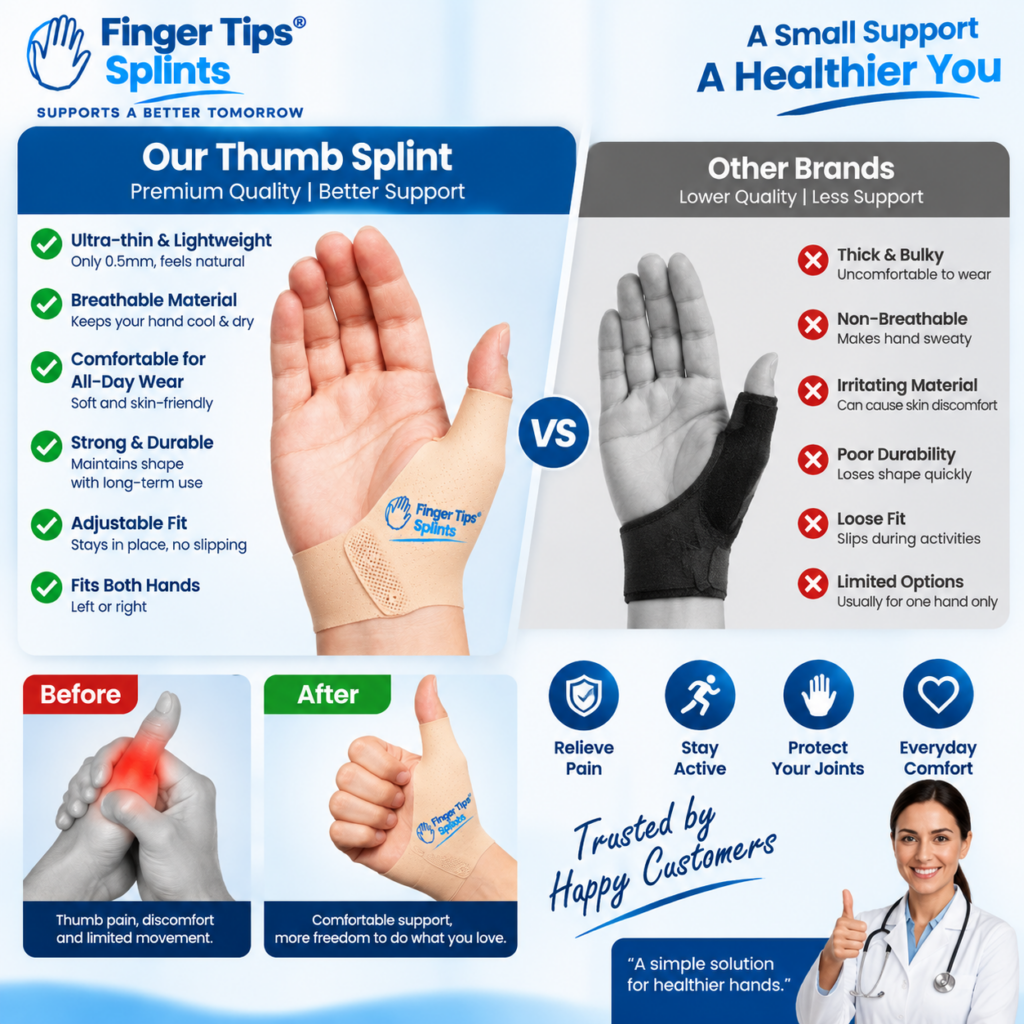
Product Spotlight: FingerTipSplint Thumb Support Sleeve Splint
After understanding what flexibility means and what to evaluate, here is a specific product to examine. The Thumb Support Sleeve Splint is one example of a flexible sleeve-style thumb support product. Evaluate it using the framework taught in this guide.
Thumb Support Sleeve Splint
- Sleeve-style construction designed around the thumb
- Flexible material design
- Thumb-focused coverage and positioning
- Full product specifications available on the product page
Evaluating the Product Using the Flexibility Framework
Sleeve Construction
Review the sleeve construction shown on the product page. Check how the design is structured around the thumb and what coverage it provides.
Flexible Design
Review the material and flexibility characteristics described. Check the product specifications for details about the material and its characteristics.
Fit
Review the sizing and fit information provided. Compare your measurements against any stated range.
Everyday Practicality
Consider how the design may fit routine activities based on its documented characteristics.
Support Characteristics
Review the product’s support characteristics as described. Consider whether they match your intended use and support requirements.
For broader buying context, the reference What to Look for When Choosing a Thumb Support Sleeve Splint covers the selection process. For a comparison of sleeve-style and traditional designs, see Thumb Support Sleeve vs Traditional Splint: What’s the Difference?.
Common Buyer Mistakes
These mistakes come up frequently when buying flexible thumb support splints. Avoiding them improves the buying decision.
Flexibility and support are different characteristics. A flexible design can still provide support.
Check: the product’s design and documented support characteristics.
Comfort depends on fit, material, and pressure — not just on flexibility.
Check: sizing, positioning, and material details.
Product photos don’t show flexibility, support, or comfort characteristics.
Check: specifications and construction details.
Correct size is the foundation of good fit.
Check: measure and compare to the manufacturer’s sizing chart.
Activity compatibility depends on the design and the movements the activity requires.
Check: how the product behaves during your typical activities.
Different products have different constructions and support characteristics.
Check: the specific product’s design and documentation.
Tightness is not a measure of support. Excessive pressure can cause discomfort and concerning symptoms.
Check: adjust for appropriate fit, not maximum pressure.
Numbness, tingling, discoloration, or persistent pain should prompt reassessment.
Check: remove the splint and seek advice if symptoms persist.
A consumer product is not a substitute for professional medical evaluation when it is needed.
Check: seek appropriate professional advice for significant or persistent symptoms.
When Flexibility May Not Be the Main Priority
Some situations may require a different type of support or professional assessment. This section presents general principles, not a diagnosis.
Seek appropriate professional evaluation for: significant injury, visible deformity, severe or worsening pain, major swelling, persistent numbness or tingling, substantial loss of movement, or symptoms that aren’t improving.
In these situations, the appropriate type of support may not be a flexible consumer product. A healthcare professional can determine whether support, immobilization, movement, or another approach is appropriate for the underlying problem.
Quick Buyer Decision Framework
This six-step framework helps organize the buying decision. Each step builds on the previous one.
Frequently Asked Questions
A flexible thumb support splint is a support product designed around the thumb with construction that allows more movement than a rigid splint. Flexibility refers to how the support accommodates movement while providing structure or coverage. The actual characteristics depend on the specific product’s material, design, and construction.
Flexible and rigid designs differ primarily in their construction and how they interact with movement. A flexible design may allow more natural thumb movement, while a more rigid design may provide more deliberate movement control or positional resistance. Neither is universally better — the right choice depends on the intended purpose and required level of support.
The amount of movement depends on the specific design, material, thickness, coverage, and fit. Flexible designs may permit more movement than structured designs, but the actual range of movement varies. Test the specific product during your typical activities to evaluate whether the movement allowed matches what you need.
Comfort depends on material, fit, pressure, seams, edges, and how the product interacts with your activities. A flexible design can contribute to comfort, but poor sizing can make even a flexible support uncomfortable. Check the specific product’s design characteristics, sizing information, and activity compatibility before purchasing.
It should follow the manufacturer’s fit guidance and should not cause problematic pressure, numbness, tingling, or discoloration. A secure but comfortable fit is the goal — not maximum tightness. If you experience concerning symptoms, remove the splint and reassess. Persistent symptoms warrant appropriate professional advice.
Check the intended purpose, flexibility characteristics, coverage, material, fit, adjustability, movement range, comfort features, care requirements, and whether the support level matches your needs. Use the manufacturer’s sizing chart and look for specific product specifications rather than relying on general marketing language.
Seek professional advice for significant injury, severe symptoms, neurological or circulation concerns, persistent symptoms, or situations where a specific type of immobilization may be needed. Also seek advice if a specific type of support has been recommended. A consumer thumb support product is not a substitute for professional medical assessment or prescribed medical support.
Flexibility Is a Design Characteristic, Not a Guarantee
Don’t buy a thumb support simply because it says “flexible.” Understand what the flexibility actually means, how the design balances movement with support, whether the fit is appropriate, and whether the product matches your intended activity. Flexibility → Movement → Support → Material → Design → Fit → Activity → Buying Decision
The Bottom Line on Flexible Thumb Support Splints
Flexibility is a design characteristic, not a guarantee. A flexible thumb support splint may offer more movement than a structured design, but the actual characteristics depend on the specific product’s material, construction, coverage, and fit. Buyers should evaluate what flexibility means for a specific product rather than assuming every flexible splint is the same.
The framework in this guide — Flexibility → Movement → Support → Material → Design → Fit → Activity → Buying Decision — helps buyers evaluate flexible thumb support splints more accurately. Starting with intended purpose and systematically evaluating each characteristic produces better outcomes than choosing by appearance or marketing language alone.
If you want to continue exploring within this cluster, the fit guide Thumb Sleeve Splint Fit Guide: Understanding Coverage and Comfort covers sizing and comfort, and the buyer’s guide What to Look for When Choosing a Thumb Support Sleeve Splint covers the selection process. For a wider reference, explore the full FingerTipSplint blog library.
This article is for general information only and is not a substitute for professional medical advice. Always consult a qualified healthcare provider for diagnosis and treatment of any medical condition.