
Why Choose a Sleeve-Style Thumb Support for Daily Wear?
Support that fits into your routine — not the other way around. If you need thumb support while studying, typing, writing, using a phone, reading, or traveling, a bulky or highly structured support may feel different from a sleeve-style design. This guide explains why a sleeve-style thumb support may make sense for daily wear, and when it may not be the right choice.
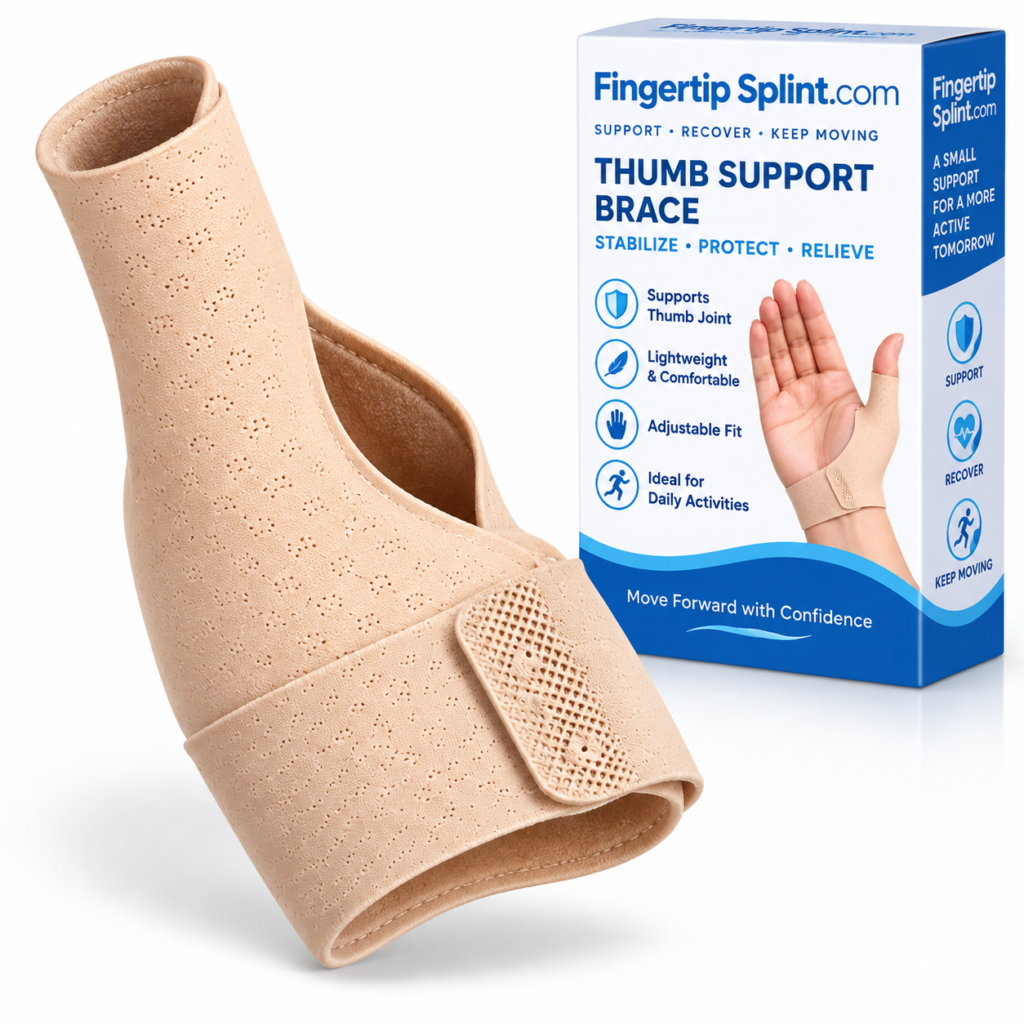
What This Guide Covers
- Quick Answer
- What Makes Sleeve-Style Support Different?
- The 7 Reasons People Consider Sleeve-Style Support
- Reason 1 — Low-Profile Everyday Design
- Reason 2 — Flexibility and Natural Movement
- Reason 3 — Comfort During Routine Use
- Reason 4 — Everyday Activity Compatibility
- Interactive: Daily Routine Explorer
- Reason 5 — Support Without Excessive Bulk
- Reason 6 — Practicality for Study and Work
- Reason 7 — Routine Convenience
- Fit Is What Turns Design Into Comfort
- 3D Interactive: Why It Works for Daily Routines
- Everyday Activities — Where Sleeve Design May Be Practical
- Daily Wear ≠ Continuous Wear
- When Sleeve-Style Support May Not Be the Right Choice
- Sleeve-Style Support vs “More Support”
- Product Spotlight
- Daily-Wear Checklist
- Who Might Consider a Sleeve-Style Design?
- FAQ
- Conclusion
Quick Answer: Why Choose a Sleeve-Style Thumb Support for Daily Wear?
A sleeve-style thumb support may appeal to people looking for a close-fitting, flexible support option that can integrate into routine activities. Depending on its construction, it may offer a lower-profile design and allow more natural movement than some structured supports. Fit, comfort, intended use, and required support should still guide the choice.
If you need the foundational definition of what a sleeve-style thumb splint is, the reference Thumb Support Sleeve Splint: What Is It and How Does It Work? covers that ground. This article focuses specifically on why this design may make sense for daily wear.
What Makes Sleeve-Style Support Different?
Sleeve-style support generally emphasizes a combination of contact, flexibility, and everyday practicality rather than relying entirely on rigid movement restriction. Understanding the general design characteristics helps clarify why this type of product may appeal for daily wear.
Sleeve-Style Construction
The product wraps around the thumb and hand area with a fabric or material sleeve. Contact is distributed across a broader area.
Close Contact
The sleeve sits closely against the thumb. Contact affects stability and how the product stays positioned.
Flexible Material
The material conforms to the thumb and moves with the hand. Flexibility affects comfort and movement.
Thumb Coverage
Coverage determines which part of the thumb interacts with the product. Match coverage to purpose.
Support Zones
Areas designed to provide contact or structural support. Different designs distribute support differently.
Potentially Low Profile
Depending on construction, a sleeve-style design may be relatively low profile. Not every sleeve is low profile.
For a deeper look at how sleeve-style designs are constructed, the reference Thumb Sleeve Splints Explained: Design, Fit and Everyday Uses covers the topic in detail.
The 7 Reasons People Consider Sleeve-Style Support
These are potential design advantages, not universal guarantees. Each reason is expanded in the sections that follow.
Low-Profile Design
Potentially less noticeable
Flexible Movement
Allows natural motion
Everyday Comfort
Designed for routine wear
Routine Compatibility
Fits into daily activities
Simple Fit
Straightforward positioning
Less Bulky Feel
Potentially less intrusive
Easy Integration
Designed for routine use
Reason 1 — Low-Profile Design: A lower-profile design may be easier to integrate with clothing, desks, keyboards, phones, books, and everyday objects. Depending on its construction, a sleeve-style product may offer a relatively low profile — but not every sleeve is low profile. Check thickness, seams, closures, support components, and hand coverage.
Reason 1 — Low-Profile Everyday Design
Profile matters during daily use. A product that feels bulky or noticeable may be more difficult to integrate into routine activities. A lower-profile design may be easier to wear during ordinary tasks.
Clothing interaction
Desk and keyboard use
Phone handling
Book and page handling
Everyday object handling
Overall wearability
Important: Not every sleeve is low profile. The actual profile depends on the specific product’s construction, thickness, and coverage. Check the product specifications rather than assuming.
When evaluating a specific sleeve-style product, check the thickness, seams, closures, support components, and hand coverage. These details determine whether the product will feel low-profile in practice.
Reason 2 — Flexibility and Natural Movement
Flexibility is one of the most important reasons people consider a sleeve-style design for daily wear. Understanding how flexibility differs from structured support helps clarify why this design may be practical for routine activities.
Flexible Support
A flexible design can potentially allow some thumb movement. This may support natural hand motion during typing, writing, phone use, holding objects, and turning pages.
Structured Support
A structured design may intentionally limit movement. This can be appropriate for situations where restriction is required, but it may affect routine activities.
For a detailed comparison of how sleeve-style and structured designs differ, the reference Thumb Support Sleeve vs Traditional Splint: What’s the Difference? covers the topic.
Reason 3 — Comfort During Routine Use
Comfort is not simply about soft material. It is the result of multiple design and fit factors working together. Understanding these factors helps evaluate comfort during routine wear.
Material
How does the material feel against the skin? Check contact feel, breathability, and moisture behavior.
Pressure
Is the sleeve secure without excessive pressure? Excessive pressure can cause discomfort and concerning symptoms.
Seams
Are edges or seams rubbing? Smooth edges and well-placed seams reduce the chance of irritation.
Heat
Does the construction feel overly warm? Some materials retain more heat than others.
Movement
Does it interfere with normal activity? The sleeve should allow the movement its design intends.
Duration
Comfort can change over time. Recheck after extended wear and after activity.
Daily Comfort Check
Tap each item as you confirm it.
Reason 4 — Everyday Activity Compatibility
Sleeve-style support is designed around everyday movement. This section shows how the design may interact with activities throughout a typical day.
A Day With a Sleeve-Style Thumb Support
Tap each point in the day to see what to consider
MORNING
Getting ready
STUDY/WORK
Writing and typing
BREAK
Smartphone
AFTERNOON
Travel/desk
EVENING
Light tasks
Morning — Getting Ready
Activity: Fastening buttons, adjusting clothing, handling everyday objects.
Thumb movement: Low to moderate.
Sleeve interaction: The sleeve should stay positioned during light activity.
Fit check: Confirm the sleeve is positioned correctly before starting the day.
Interactive: Daily Routine Explorer
Select the activity you do most to see what to consider. This is educational guidance for product evaluation, not a medical recommendation.
Daily Routine Explorer
Tap each activity to see what to consider
STUDY
Writing and reading
TYPING
Keyboard use
WRITING
Pen and paper
SMARTPHONE
Thumb-heavy use
READING
Holding and turning
TRAVEL
Variable activities
LIGHT TASKS
Grip and handling
DESK WORK
Mixed activity
Study
Movement: Moderate
Repetition: Moderate
Grip: Moderate
Fit priority: High
What to consider: Review whether the sleeve’s coverage, flexibility, and fit are compatible with writing and reading activities.
Reason 5 — Support Without Excessive Bulk
Support and bulk are different things. A sleeve-style design may provide support through close contact, material tension, flexible structure, coverage, and adjustment — while potentially remaining less bulky than some structured devices.
Support Comes From
- Close contact with the thumb
- Material tension
- Flexible structure
- Coverage characteristics
- Adjustment (where applicable)
Bulk Considerations
- Thickness of material
- Number of components
- Coverage extent
- Overall profile
- Interaction with clothing and objects
Important: A lower-profile construction may feel less intrusive for some users, depending on the product and fit. However, do not assume all sleeve-style products are less bulky than all structured devices. The specific design matters.
Reason 6 — Practicality for Study and Work
Sleeve-style support may be particularly relevant for people whose daily routines involve fine-motor activities. The practical value depends on whether the sleeve interferes with the movements the activity requires.
For Students
- Writing by hand
- Laptop use
- Note-taking
- Reading
- Smartphone use
- Switching between activities
For Office Users
- Typing on a keyboard
- Mouse use
- Phone use
- Writing notes
- Desk work
- Meetings
For a detailed look at how sleeve-style designs fit into everyday activities, the reference How a Sleeve-Style Thumb Splint Fits Into Everyday Activities covers the topic in more depth.
Reason 7 — Routine Convenience
Daily wear involves practical considerations beyond the product’s design. How easy the sleeve is to put on, take off, adjust, carry, store, clean, and incorporate into a routine all matter.
Putting it on
Taking it off
Adjusting it
Carrying it
Storing it
Cleaning it
Important: Don’t assume every sleeve is easier to use. Buyers should evaluate the actual fastening and care instructions for the specific product. A product that is difficult to adjust or care for may be less practical for daily wear.
Fit Is What Turns Design Into Comfort
A sleeve can have excellent design characteristics but still feel uncomfortable if the fit is wrong. Fit is what turns design into practical comfort.
For a detailed fitting guide, the reference Thumb Sleeve Splint Fit Guide: Understanding Coverage and Comfort covers the topic in more detail.
Why Sleeve-Style Support Works for Daily Routines: 3D Interactive
This interactive shows the design characteristics that contribute to daily-wear practicality. Tap each characteristic to see what it contributes.
Interactive 3D: Design Characteristics
Tap each characteristic to see what it contributes
Close-Fitting
Contact with the thumb
Flexible Construction
Movement zones
Support Area
Where support is provided
Low-Profile Design
Thickness and profile
Activity Compatibility
Interaction with tasks
Close-Fitting
The sleeve sits closely against the thumb. Contact affects stability and how the product stays positioned during daily activity. Close contact does not mean excessive pressure — the fit should be secure but comfortable.
Designed around everyday movement.
Everyday Activities — Where Sleeve Design May Be Practical
This table provides a qualified overview of where sleeve-style design may offer practical value. Actual suitability depends on the specific product’s design and fit.
| Activity | What Sleeve Design May Offer | What to Check |
|---|---|---|
| Typing | Flexible movement | Keyboard access |
| Writing | Close-fitting support | Grip compatibility |
| Smartphone | Potential mobility | Thumb reach |
| Reading | Low activity demand | Holding comfort |
| Studying | Routine compatibility | Long-duration comfort |
| Travel | Compact profile | Fit and security |
| Light tasks | Movement compatibility | Grip and stability |
Daily Wear ≠ Continuous Wear
An important clarification: “daily wear” does not mean the product should be worn continuously. The appropriate duration depends on the product instructions, intended use, individual circumstances, and professional guidance where relevant.
Important: There is no universal recommended wear time. Follow the manufacturer’s instructions and reassess comfort periodically. If you experience persistent pain, numbness, tingling, significant discoloration, or worsening symptoms, stop wearing the sleeve and seek appropriate professional advice.
When Sleeve-Style Support May Not Be the Right Choice
This section is essential for credibility. A sleeve-style support is not appropriate for every situation.
A flexible sleeve may not provide the movement restriction required.
Check: whether movement restriction has been recommended.
Professional assessment may be more appropriate than product selection.
Check: seek appropriate professional evaluation.
A routine support sleeve shouldn’t automatically be treated as protective sports equipment.
Check: whether the specific product has verified protection ratings.
Don’t rely on a product purchase as a substitute for evaluation.
Check: seek appropriate professional assessment.
These are warning signs that require reassessment.
Check: remove the sleeve and seek appropriate advice if symptoms persist.
Worsening symptoms should prompt professional evaluation.
Check: stop using the product and seek advice.
Sleeve-Style Support vs “More Support”
These myths come up frequently. Addressing them directly helps clarify what sleeve-style support is and is not.
“More rigid = better.”
The appropriate level of structure depends on the purpose.
“Tighter = more effective.”
Excessive pressure can create problems. Tightness is not a measure of support.
“More coverage = better.”
Coverage should match the design and intended use.
“Flexible = weak.”
Flexibility and support are different design characteristics.
“Daily wear means suitable for every activity.”
Activity compatibility depends on the specific product.
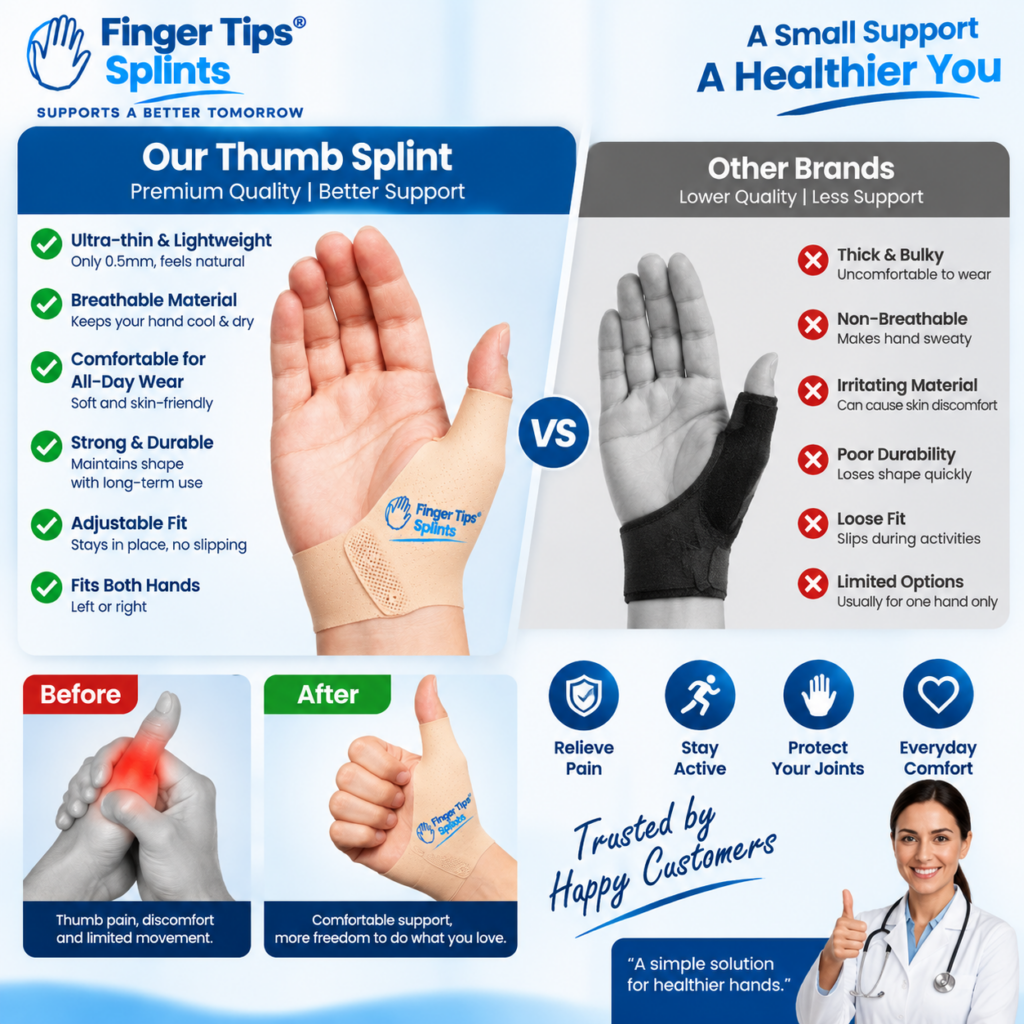
Product Spotlight: FingerTipSplint Thumb Support Sleeve Splint
After understanding the daily-wear rationale, here is a specific product to examine. The Thumb Support Sleeve Splint is one example of a sleeve-style thumb support product. Evaluate it using the framework taught in this guide.
Thumb Support Sleeve Splint
- Sleeve-style construction designed around the thumb
- Thumb-focused coverage and positioning
- Flexible material design
- Full product specifications available on the product page
Evaluating the Product Using the Daily-Wear Framework
Sleeve Construction
Review the sleeve construction shown on the product page. Check how the design is structured around the thumb and what coverage it provides.
Daily-Wear Design
Consider how the design characteristics relate to routine use. Review the material, thickness, and profile descriptions.
Fit
Review the sizing and positioning information provided. Compare your measurements against any stated range.
Everyday Activities
Consider which routine scenarios the design may suit. This is based on the product’s documented characteristics.
Care
Review the manufacturer’s care recommendations. A product that is difficult to maintain may be less practical for daily wear.
For the focused pre-purchase checklist, the reference What to Look for When Choosing a Thumb Support Sleeve Splint covers the selection process. For the complete purchasing journey, see Thumb Support Sleeve Splint: A Complete Buyer’s Guide.
Daily-Wear Checklist
Before, during, and after wearing a sleeve-style thumb support, work through this checklist.
Daily-Wear Checklist
Tap each item as you confirm it.
Before Wearing
During Wear
After Use
Who Might Consider a Sleeve-Style Design?
This is framed around product preferences and activities, not diagnoses. People researching a sleeve-style design may want to compare it against their specific needs.
Routine desk activities
Studying
Typing
Writing
Smartphone use
Reading
Travel
Light daily activities
Extended daily wear
People researching a sleeve-style design for these activities may want to compare the design characteristics against their specific needs. Whether a sleeve-style product is appropriate for a specific injury or medical condition is a separate question.
Frequently Asked Questions
A sleeve-style thumb support may appeal because of potential design advantages including flexibility, close fit, lower profile, and everyday practicality. Depending on its construction, it may integrate more easily into routine activities than some structured supports. The right choice depends on the specific product, your intended use, and the level of support required.
Comfort depends on material, fit, pressure, coverage, and individual preferences. A sleeve can have excellent design characteristics but still feel uncomfortable if the fit is wrong. Check sizing, positioning, and pressure distribution. Comfort that holds up during activity is a better signal than comfort at first touch.
This depends on the sleeve’s design and on how much thumb movement typing requires. A sleeve-style design may work well for typing if it stays positioned, allows the required thumb movements, and remains comfortable. Test with a short typing session before relying on it for extended use. If the sleeve shifts during typing or creates discomfort, reassess the fit.
Smartphone use involves repeated thumb movement, so this depends on the sleeve’s design and how much thumb movement your phone use requires. One-handed use may require greater thumb reach than two-handed use. Check whether the sleeve allows the movements required and whether it interferes with touchscreen contact. Test with your normal phone activities before relying on the sleeve for extended use.
Neither is universally better. They may serve different design purposes. Sleeve-style designs generally emphasize flexibility and everyday practicality. Traditional splints may provide more structured support or movement control. The right choice depends on your intended use and the level of support required. If movement restriction has been professionally recommended, follow that guidance rather than selecting a product solely for comfort.
Daily wear does not necessarily mean continuous wear. The appropriate duration depends on the product instructions, intended use, individual circumstances, and professional guidance where relevant. There is no universal recommended wear time. Follow the manufacturer’s instructions and reassess comfort periodically. If you experience persistent pain, numbness, tingling, significant discoloration, or worsening symptoms, stop wearing the sleeve and seek appropriate advice.
Stop wearing the sleeve and seek appropriate professional advice if you experience persistent pain, numbness, tingling, significant discoloration, worsening symptoms, or significant injury. Also seek advice if a specific type of support or immobilization has been recommended. A consumer thumb support product is not a substitute for professional medical assessment or prescribed medical support.
Daily Wear Is About Compatibility
The appeal of a sleeve-style thumb support for daily wear comes from how its design interacts with ordinary movement. Flexibility, low-profile construction, close fit, routine practicality, comfort, and activity compatibility all contribute to why people may prefer this design for routine use. Daily Routine → Design → Flexibility → Comfort → Practicality → Activity Compatibility → Reassessment
The Bottom Line on Sleeve-Style Support for Daily Wear
A sleeve-style thumb support may be worth considering for daily wear because of how its design interacts with ordinary movement. Flexibility, low-profile construction, close fit, routine practicality, comfort, and activity compatibility are potential design advantages that may suit people who want support while continuing their normal activities.
These characteristics don’t make every sleeve appropriate for every person or situation. The specific product, fit, intended use, and required level of support still matter. A sleeve isn’t automatically a substitute for a prescribed splint, and it isn’t automatically appropriate for every thumb problem.
If you want to continue exploring within this cluster, the design reference Thumb Sleeve Splints Explained: Design, Fit and Everyday Uses covers design fundamentals, and the fit guide Thumb Sleeve Splint Fit Guide: Understanding Coverage and Comfort covers fit in more depth. For a wider reference, explore the full FingerTipSplint blog library.
This article is for general information only and is not a substitute for professional medical advice. Always consult a qualified healthcare provider for diagnosis and treatment of any medical condition.