
Adjustable Thumb Support Splint: What Is It and How Does It Work?
If you keep seeing adjustable thumb support splints but aren’t sure what makes them different from a regular thumb brace, why they are adjustable, which part actually provides support, or whether adjustment means tighter support — this guide answers those questions from the ground up. Understand the product before buying or using one.
What This Guide Covers
- Quick Answer
- What Is an Adjustable Thumb Support Splint?
- Why Does the Thumb Need Different Support?
- How Does an Adjustable Thumb Splint Work?
- 3D Interactive: Exploded-View Anatomy
- Understanding the Main Parts
- How Adjustability Changes the Fit
- Support vs Movement
- Product Design Preview
- Adjustable vs Fixed Thumb Support
- How to Check the Fit
- Step-by-Step: First-Time Use
- Getting Used to a Thumb Support
- Common Mistakes
- Who Might Consider an Adjustable Thumb Support?
- What a Healthcare Professional Would Want You to Know
- Product Spotlight
- Complementary Resources
- Interactive: What Do You Need to Understand First?
- Quick Tips
- FAQ
- Conclusion
Quick Answer: What Is an Adjustable Thumb Support Splint and How Does It Work?
An adjustable thumb support splint is a wearable support device designed around the thumb, with an adjustment mechanism that allows the fit or positioning to be modified. Its effectiveness as a support depends on construction, coverage, fit, and intended use — not simply on how tightly it is worn.
If you are looking for a broader explanation of thumb-splint features and daily uses, the overview Thumb Support Splints Explained: Features, Fit, and Everyday Uses covers that angle. This article focuses on the foundational question: what the product is and how it actually works.
What Is an Adjustable Thumb Support Splint?
The term combines three concepts, and understanding each one clarifies what the product is. First, “adjustable” means some aspect of the device can be modified to change the fit or positioning. Second, “thumb support” indicates that the device is designed around the thumb rather than simply covering a finger. Third, “splint” generally refers to a support device intended to help hold or support a body part in a particular position.
Terminology can overlap. “Splint,” “brace,” and “support” are used differently by different manufacturers. The actual construction and intended use matter more than the label alone. A product called a “brace” may be functionally similar to one called a “splint” — and vice versa.
Adjustable
Some aspect of the device can be modified to change the fit or positioning.
Thumb Support
Designed around the thumb rather than simply covering a finger.
Splint
A support device generally intended to help hold or support a body part in a particular position.
What makes an adjustable version different from a predetermined-fit design is the ability to modify fit after application. A fixed splint is set at its size when it is made. An adjustable splint can be changed after it is on the thumb, within the limits set by its design. That difference matters because hands vary significantly in size and shape — a splint that fits one person well may not fit another without some adjustment.
Why Does the Thumb Need a Different Type of Support?
The thumb is not simply another finger. It has a different position, different movement patterns, and a different relationship to the palm. This affects how support products are designed around it.
Different position from other fingers
Participates in gripping and pinching
Moves through several directions
Interacts with the palm
Support needs to account for positioning
Movement patterns differ from fingers
Because the thumb participates in many everyday activities — opening jars, gripping handles, holding a phone, writing, typing — its support needs to be considered alongside the activities it performs. A thumb splint that restricts all movement would make these tasks harder; one that provides no support would offer little benefit. The design has to balance these considerations.
For general background on thumb and hand conditions, the resources at AAOS OrthoInfo and MedlinePlus provide authoritative reference material.
How Does an Adjustable Thumb Splint Work?
The mechanism of an adjustable thumb splint follows a specific sequence. Understanding each step helps clarify what the product does and where its limits are.
Each step depends on the previous one. If the splint is positioned incorrectly, adjustment may not help. If the adjustment creates excessive pressure, movement becomes uncomfortable. If movement shifts the splint, coverage may change. The sequence is not arbitrary — it reflects how the product actually works in practice.
The reference How an Adjustable Thumb Splint Provides Flexible Support explores the mechanism in more depth for readers who want to go deeper.
How an Adjustable Thumb Support Splint Works: 3D Interactive
This interactive exploded-view shows the main components of an adjustable thumb support splint. Tap each component to see what it contributes to how the product works.
Interactive 3D: Exploded-View Anatomy
Tap each component to see what it does
Thumb
The primary structure being supported. Because the thumb has a different position and movement pattern than the other fingers, support products are designed around it specifically. The thumb’s relationship to the palm and its role in gripping and pinching inform how a splint is constructed.
All components work together. A splint that performs well on most components but poorly on one may still be the wrong choice for your situation.
Understanding the Main Parts
A thumb support splint has several components that each serve a specific purpose. Understanding what each part does helps clarify how the product works as a whole.
| Component | What It Does | Why It Matters |
|---|---|---|
| Support body | Forms the main structure | Determines coverage and support characteristics |
| Adjustment area | Allows fit modification | Helps accommodate different hand and thumb dimensions |
| Inner surface | Contacts skin or clothing | Affects comfort during wear |
| Edges | Define the boundaries | Can influence rubbing and comfort |
| Thumb opening/coverage | Determines how the thumb is positioned | Influences movement and coverage |
| Fastening system | Keeps the device positioned | Affects stability and adjustability |
Each component interacts with the others. The support body determines what area is covered, but the adjustment area determines how well the splint conforms to your specific hand. The inner surface and edges determine comfort, but the fastening system determines whether the splint stays in place during movement.
How Adjustability Changes the Fit
Adjustability is the feature that separates an adjustable thumb splint from a fixed design. It allows the wearer to modify fit or positioning after the product is on the hand. Understanding how adjustment affects fit helps clarify what the feature can and cannot do.
Adjustment changes how the material contacts the hand, which changes the fit, which changes how the splint is positioned, which affects how movement feels. Each change ripples through the system.
Interactive: The Three Fit Zones
Tap each zone to see what to watch for
TOO LOOSE
Slipping and shifting
APPROPRIATE
Stable and comfortable
TOO TIGHT
Excessive pressure
Appropriate Fit
The splint stays positioned during intended movement. Comfortable contact with the hand. Intended coverage is maintained. Movement remains practical for the intended activity. This is the target — not the tightest fit, but the fit that works.
Support vs Movement
Many buyers share a misconception: “more restriction equals more support.” This isn’t necessarily true. Support and movement are related design considerations, and the balance between them determines how the product behaves in practice.
| Consideration | Too Little Support | Balanced Design | Excessive Restriction |
|---|---|---|---|
| Movement | Easy | Intended movement may remain practical | May feel restricted |
| Stability | May shift | Better positioning | May feel overly restrictive |
| Comfort | May be comfortable initially | Usually depends on appropriate fit | Can become uncomfortable |
| Usability | Device may move | Practical for intended activity | May interfere with tasks |
The balance that works depends on the specific situation and the product’s intended design. A splint designed for gentle everyday support may prioritize movement, while one designed for more structured support may allow less. Neither approach is universally better — the right balance depends on what you need the splint to do.
If you want a deeper comparison of how adjustable and fixed designs differ in this balance, the reference Adjustable Thumb Splint vs Finger Support: What’s the Difference? covers the trade-offs.
Product Design Preview
The image below shows an example of how an adjustable thumb support splint is constructed. The adjustable component, coverage area, and support structure are visible in the design.
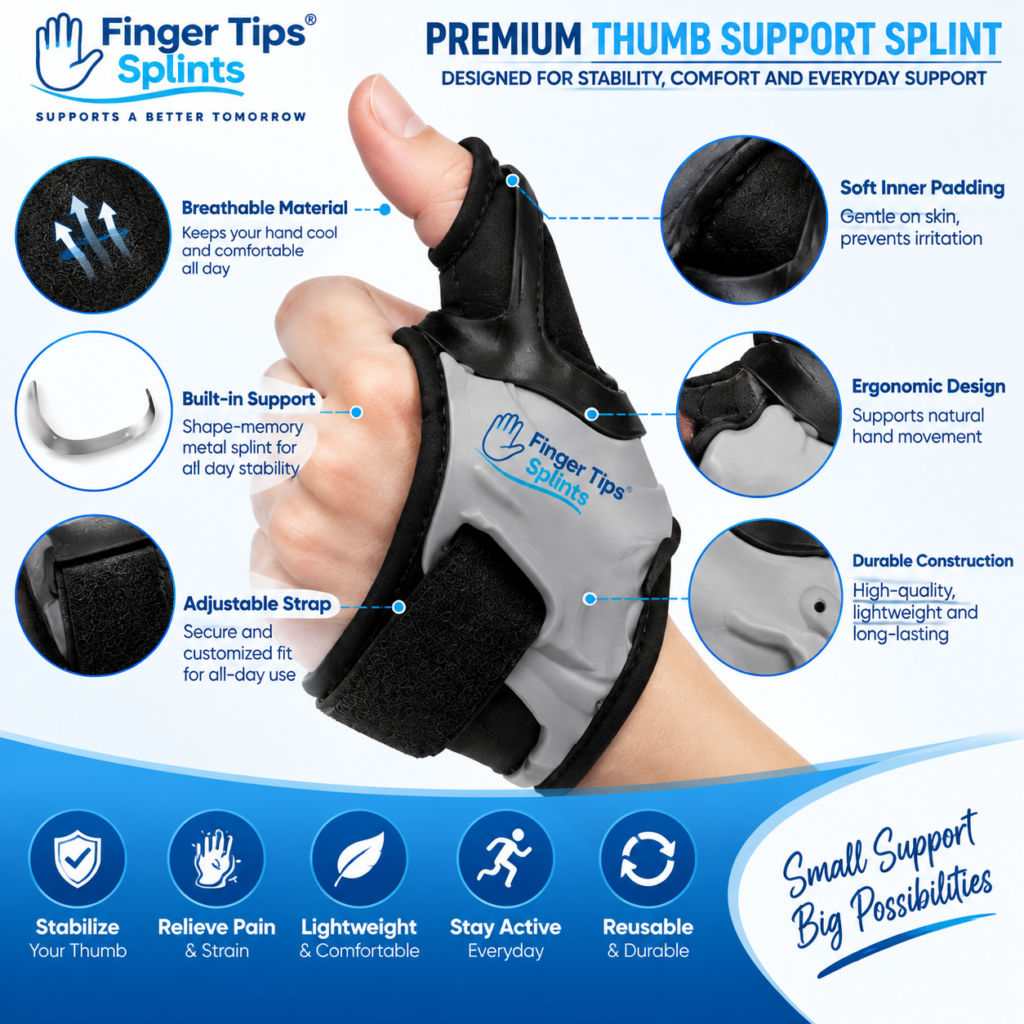
The design shows how the splint wraps around the thumb and lower palm area. The adjustable component allows the fit to be modified after the splint is on the hand, which is the feature that distinguishes it from a fixed-size design.
Adjustable vs Fixed Thumb Support
This comparison focuses specifically on what “adjustable” means in practice. The dedicated comparison article covers the wider trade-offs in more depth.
| Feature | Adjustable Support | Fixed / Preset Support |
|---|---|---|
| Fit | Can be modified | More predetermined |
| Positioning | Can be fine-tuned | Usually less flexible |
| Sizing flexibility | Depends on design | Depends on design |
| User adjustment | Available | Limited or absent |
| Convenience | Can help accommodate fit changes | Simpler in some designs |
| One-size-fits-all | Not guaranteed | Not guaranteed |
Neither category is universally better. An adjustable design provides flexibility, but that flexibility is only useful if the adjustment actually addresses your fit and usability requirements. A fixed design may be simpler if the size matches your hand well.
How to Check the Fit of an Adjustable Thumb Support Splint
Checking the fit takes less than a minute and prevents most fit problems. This 60-second checklist covers the essentials.
60-Second Fit Checklist
Tap each item as you confirm it.
If the device causes concerning symptoms — discomfort, numbness, tingling, or significant discoloration — remove it and seek appropriate professional advice rather than continuing to adjust it.
The detailed fit reference Thumb Splint Fit Guide: Understanding Adjustability and Comfort covers fit in more depth for readers who want to go deeper.
Step-by-Step: Understanding First-Time Use
This is a product-use orientation, not medical treatment instructions. Follow the manufacturer’s guidance for the specific product you are using.
Important: Do not assume that tighter adjustment provides better support. Follow the product’s sizing and fitting instructions. If you experience concerning symptoms, remove the splint and seek appropriate advice.
Getting Used to a Thumb Support: What to Expect
This section describes a product-adjustment timeline, not a medical recovery timeline. A splint is a support device; it does not produce a specific healing outcome. What follows is what users commonly experience when adapting to wearing a thumb support.
First Use
Focus on understanding positioning and fit. The splint may feel unfamiliar. Check the manufacturer’s instructions, position the splint carefully, and adjust gradually. Comfort at this stage is about fit, not about pressure.
Early Routine Use
Pay attention to comfort, movement, and whether the device stays in position. Different activities may reveal different fit issues. Adjust the splint as needed, but avoid tightening beyond what feels secure and comfortable.
Continued Use
Follow the product’s instructions and reassess whether the splint remains appropriate for the intended activity. Fit may need occasional adjustment as the material adapts to wear. Note any persistent issues.
If Symptoms Persist or Worsen
Professional evaluation may be appropriate. A consumer splint is not a substitute for assessment when symptoms are significant, worsening, or not improving.
Common Mistakes When Using an Adjustable Thumb Support Splint
These mistakes come up repeatedly. Avoiding them makes the experience better and reduces the chance of fit-related problems.
Pressure is not the same as support. Excessive tightness can cause discomfort and other issues.
Check: adjust for appropriate fit, not maximum pressure.
Adjustability does not mean every size fits every hand.
Check: measure and compare to the manufacturer’s sizing chart.
Product designs differ in positioning and adjustment.
Check: follow the manufacturer’s guidance for the specific product.
Persistent pain, numbness, tingling, or significant discoloration should not be ignored.
Check: remove the splint and seek appropriate advice if symptoms persist.
Different situations can require different approaches.
Check: whether the product’s intended design matches your situation.
A general splint is not protective equipment against heat, chemicals, sharp objects, or impact.
Check: the manufacturer’s stated intended use.
A product name cannot determine what condition someone has.
Check: seek professional assessment for concerning symptoms.
Movement may shift the splint and change fit.
Check: recheck the fit after periods of activity.
Who Might Consider an Adjustable Thumb Support?
An adjustable thumb support may appeal to people who prioritize certain characteristics. This is a preference-based list, not a medical recommendation.
Researching thumb-support products
Looking for an adjustable design
Comparing fixed and adjustable support
Interested in everyday thumb support
Wanting a more customizable fit
Buying a thumb support for the first time
People with significant injury, visible deformity, substantial swelling, major loss of movement, persistent numbness or tingling, severe or worsening pain, or symptoms that aren’t improving should consider appropriate professional medical evaluation rather than relying on an online product guide alone.
What a Healthcare Professional Would Want You to Know
This section does not claim that a doctor has personally endorsed a specific product. Instead, it presents evidence-based principles that apply to thumb support products generally.
Fit Matters
Correct fit is essential. A splint that slips or creates excessive pressure will not function as intended. The fit should be secure but not tight.
Support Level Depends on Situation
The appropriate level of support depends on the specific situation. Flexible support and rigid immobilization are not interchangeable.
Persistent Symptoms Need Assessment
Persistent or worsening symptoms deserve professional assessment. A consumer product is not a substitute for diagnosis.
Product Instructions Matter
Follow the manufacturer’s instructions for positioning, adjustment, wear time, and care. These instructions reflect the product’s intended design and use.
Discomfort Isn’t Something to Push Through
Discomfort from a support product is a signal, not something to ignore. If a splint causes persistent discomfort, numbness, tingling, or significant discoloration, that needs attention.
Product Design Varies
Different thumb support products are designed for different purposes. There is no single design that suits every situation.
For authoritative information on hand, thumb, and wrist conditions and treatments, the following resources provide evidence-based content:
- Mayo Clinic for condition overviews and patient education.
- WebMD for general thumb and hand concern overviews.
- Healthline for practical wellness information.
- AAOS OrthoInfo for orthopedic guidance from specialists.
- NHS guide on hand pain for UK-based clinical guidance.
- MedlinePlus hand injuries and disorders for a broad reference library.
- Cleveland Clinic for clear patient-oriented explanations.
- Johns Hopkins Medicine for clinical and research-based perspectives.
- FDA for regulatory context on medical devices.
- NIH for research-based health information.
These resources provide general information and do not replace individualized advice from a qualified healthcare professional.
Product Spotlight: Adjustable Thumb Support Splint
After understanding how an adjustable thumb support splint works, here is a specific product to examine. The Adjustable Thumb Support Splint is one option if customizable fit and adjustable positioning are among your priorities.
Adjustable Thumb Support Splint
- Adjustable design for customizable fit
- Thumb-focused support construction
- Designed for thumb coverage and positioning
- Full product specifications available on the product page
What to Examine on the Product Page
Design
Review the visible construction of the splint, including the support body, coverage area, and adjustment mechanism.
Adjustability
Check how the adjustment works, what changes when adjusted, and whether the adjustment stays secure during movement.
Coverage
Review the coverage area. Confirm the splint covers the specific thumb and palm area intended by its design.
Everyday Practicality
Consider how the splint’s characteristics match your intended activities. Review the care instructions and any other product information.
Complementary Resources
Understanding an adjustable thumb support splint is the first step. These complementary resources help you go further:
Product Understanding
The definition and mechanism reference Adjustable Thumb Support Splint: What Is It and How Does It Work? provides foundational context.
Fit and Comfort
The Thumb Splint Fit Guide: Understanding Adjustability and Comfort covers fit in detail.
Buying Considerations
The reference What to Look For When Buying an Adjustable Thumb Splint covers purchasing decisions.
Design Comfort
The article Thumb Support Brace Design: What Makes a Splint Comfortable? explains how construction affects comfort.
Complete Buyer Guide
For comprehensive purchasing guidance, see Adjustable Thumb Support Splint: A Complete Buyer’s Guide.
FAQ Page
For common questions about thumb and finger splints, the FingerTipSplint FAQ page provides additional information.
Interactive: What Do You Need to Understand First?
Different readers arrive with different questions. Tap the option that matches your situation to see what to focus on.
Interactive Decision Tool
Tap an option to see where to focus
WHAT IS IT?
Definition first
HOW IT WORKS
Mechanism first
FIT CONCERNS
Fit first
COMPARING
Comparison first
READY TO BUY
Product first
What Is It?
Start with the “What Is an Adjustable Thumb Support Splint?” section above. That section explains the terminology and how the adjustable version differs from a fixed design. Once you understand the category, the rest of the article becomes easier to follow.
Quick Tips
Frequently Asked Questions
An adjustable thumb support splint is a wearable support device designed around the thumb, with an adjustment mechanism that allows the fit or positioning to be modified after application. It is a support product, not a treatment. The term “adjustable” refers to the ability to modify fit or positioning; “thumb support” indicates the device is designed around the thumb; and “splint” generally refers to a support device intended to help hold or support a body part in a particular position.
The mechanism follows a sequence: position (place the splint around the thumb and palm area), adjust (modify the adjustable component), contact (the material sits against the hand), support (the construction provides a physical layer of support), movement (the wearer checks whether intended movement remains practical), and recheck (reassess after movement). Each step depends on the previous one, and skipping any step can lead to a fit that doesn’t work as intended.
No. Adjustable splints work within a specific range built around a base size. While adjustable designs accommodate small variations in hand size more flexibly than fixed-size products, they still have limits. A hand significantly outside the product’s size and adjustment range will not fit properly. Always check the manufacturer’s sizing information and use adjustment to fine-tune within the product’s intended range.
No. It should feel snug and secure but not tight. The splint should stay positioned during intended movement, allow the intended movement, and remain comfortable through wear. It should not create unnecessary pressure, numbness, tingling, or concerning discoloration. Tightness is not a measure of support. Adjust for an appropriate fit, not maximum pressure.
Movement depends on the specific product’s design. An adjustable splint typically allows the movement appropriate to its intended design — which may be significant or limited depending on how structured the splint is. The splint should allow the movement that its design intends, without slipping or creating pressure. If movement feels uncomfortable or the splint shifts during normal activity, check the fit or consider whether the product’s design matches your situation.
An adjustable splint allows the fit or positioning to be modified after application, within the product’s intended range. A fixed support has a more predetermined configuration. Adjustable designs offer more flexibility for fine-tuning, but they still have size and adjustment limits. A fixed support may be simpler if the size matches well. Neither category is universally better — the right choice depends on your specific requirements.
Seek professional advice if you have significant injury, visible deformity, substantial swelling, major loss of movement, persistent numbness or tingling, severe or worsening pain, significant discoloration, or symptoms that are not improving. Also seek advice if a specific type of support has been recommended. A consumer thumb splint is not a substitute for professional medical assessment or for prescribed medical support.
Understand the Product Before You Use It
An adjustable thumb support splint is a support device with a specific design and mechanism. Understanding what it is, how it works, and what its limits are helps you use it appropriately and evaluate whether it matches your needs. Understand → Visualize → Adjust → Check Fit → Use → Know the Limits → Research the Product
The Bottom Line on Adjustable Thumb Support Splints
An adjustable thumb support splint is a wearable support device designed around the thumb, with an adjustment mechanism that allows the fit or positioning to be modified after application. Its mechanism follows a specific sequence — position, adjust, contact, support, movement, recheck — and each step contributes to the outcome. Its effectiveness as a support depends on construction, coverage, fit, and intended use, not simply on how tightly it is worn.
Understanding the product helps you use it appropriately and evaluate whether it matches your needs. The key points are that fit is not tightness, adjustment has limits, coverage is a physical property, and concerning symptoms deserve professional assessment. A consumer splint is a support product — it is not a diagnosis, a treatment, or a substitute for medical evaluation when it is needed.
If you want to continue exploring within this cluster, the reference How an Adjustable Thumb Splint Provides Flexible Support covers the mechanism in more detail, and the buyer’s guide Adjustable Thumb Support Splint: A Complete Buyer’s Guide covers the selection process. For a wider reference, explore the full FingerTipSplint blog library.
This article is for general information only and is not a substitute for professional medical advice. Always consult a qualified healthcare provider for diagnosis and treatment of any medical condition.