
Adjustable Thumb Support Splint: A Complete Buyer’s Guide
There are many thumb support products with similar names, but they can differ in coverage, construction, adjustability, sizing, support structure, materials, flexibility, fastening, profile, and intended use. The right question isn’t “Which thumb splint should I buy?” It’s “What characteristics does the product need for my intended use?” This guide walks you through the complete buying journey.
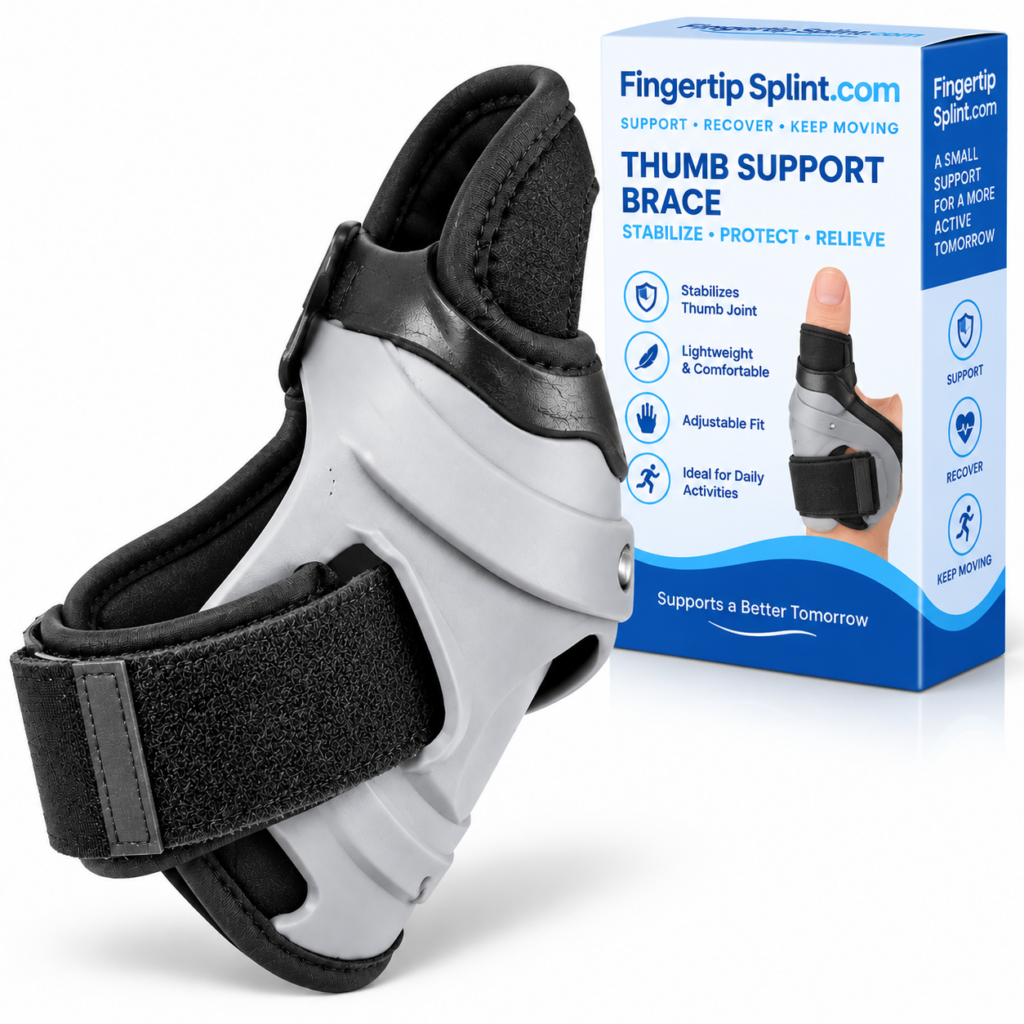
What This Buyer’s Guide Covers
- Quick Answer
- What Is an Adjustable Thumb Support Splint?
- Who Is This Guide For?
- Step 1 — Define Your Requirements
- Step 2 — Design Characteristics
- Step 3 — Size and Fit
- Step 4 — Evaluate Adjustability
- Step 5 — Look at Coverage
- Step 6 — Support vs Mobility
- Step 7 — Material and Construction
- Step 8 — Evaluate Comfort
- Step 9 — Fastening System
- Step 10 — Everyday Activities
- Step 11 — Low Profile vs Substantial
- Step 12 — Product Specifications
- Step 13 — Compare Two Splints
- 3D Interactive: Buyer’s Roadmap
- Buyer Scorecard
- Red Flags
- Green Flags
- Product Spotlight
- Before You Buy Checklist
- Common Buyer Mistakes
- How Much Should You Spend?
- When to Seek Professional Guidance
- Building a Practical Hand-Support Setup
- 7 Quick Buyer Tips
- FAQ
- Conclusion
Quick Answer: How Do You Choose an Adjustable Thumb Support Splint?
An adjustable thumb support splint should be evaluated based on its intended use, size range, coverage, adjustment system, support structure, material, fastening, movement, comfort, care requirements, and product specifications. A suitable choice depends on how those characteristics match the user’s needs and activities rather than on the word “adjustable” alone.
If you need the foundational explanation of what an adjustable thumb support splint is and how it works, the reference Adjustable Thumb Support Splint: What Is It and How Does It Work? covers that ground. This buyer’s guide assumes you understand the basic product and now want to navigate the full purchasing process.
What Is an Adjustable Thumb Support Splint?
An adjustable thumb support splint is a wearable support device designed specifically around the thumb, with an adjustable mechanism that allows the fit or positioning to be modified after application. It combines thumb-specific support with the ability to fine-tune how the splint sits on the hand.
Thumb-Specific Support
Designed around the thumb’s position and its relationship to the hand. Not simply a finger support repurposed.
Adjustable Construction
Includes straps, closures, or adjustment points that allow fit modification within the product’s intended range.
Support Structure
Provides physical support through material, shape, reinforcement, and coverage characteristics.
Contact Areas
Determines how the splint sits against the thumb and hand. Affects comfort and stability.
Flexibility
How the design interacts with thumb movement. Depends on material, thickness, coverage, and structure.
Positioning
Where the splint sits on the thumb and hand. Positioning affects how the splint functions.
Who Is This Buyer’s Guide For?
This guide is designed for several types of buyers. Understanding which category you fall into helps you focus on the sections that matter most.
First-Time Buyers
People unfamiliar with thumb support products who need to understand what to look for and how to evaluate options.
Comparison Shoppers
People comparing two or more splints who need a systematic way to evaluate differences.
Everyday Users
People interested in practical activities such as writing, studying, typing, smartphone use, or travel who need a splint that works with their routine.
Replacement Buyers
People who already understand thumb support products but need to compare another design or replace an existing one.
Online Shoppers
People who cannot physically inspect the product before purchasing and need to rely on product information, specifications, and images to evaluate the product.
Step 1 — Define What You Need the Splint to Do
Before choosing a product, identify your primary requirement. This step shapes every subsequent decision — coverage, movement, fit, and design characteristics all depend on it.
| Question | Why It Matters |
|---|---|
| What activities will you perform? | Determines movement and profile requirements |
| How frequently will you wear it? | Affects comfort and durability priorities |
| Do you need frequent adjustments? | Affects fastening system considerations |
| How important is thumb movement? | Affects flexibility and coverage requirements |
| Is a low-profile design important? | Affects material and construction preferences |
| How much coverage do you need? | Affects which products are appropriate |
Framework: Purpose → Activity → Coverage → Movement → Fit. Your intended use determines which product characteristics matter most.
Step 2 — Understand the Different Design Characteristics
These are the major variables that distinguish one adjustable thumb splint from another. Understanding each one helps you evaluate products systematically.
Adjustability
How the product changes fit or positioning. Check what adjusts and how.
Coverage
Which part of the thumb and hand is covered. Affects contact and movement.
Support Structure
What provides stability or structure. Determines support characteristics.
Flexibility
How the product interacts with movement. Depends on material and construction.
Material
What the product is made from. Affects comfort, durability, and breathability.
Fastening
How the product stays in place. Affects ease of use and security.
Profile
How bulky or low-profile the design is. Affects everyday practicality.
Intended Use
What the product is designed to do. Determines whether it matches your needs.
The features reference Thumb Support Splints Explained: Features, Fit and Everyday Uses covers these characteristics in more detail.
Step 3 — Size and Fit
Sizing is one of the most important factors in a successful purchase. A product that is technically adjustable can still be unsuitable if its intended size range doesn’t match your measurements.
What to Check
- Sizing chart
- Measurement instructions
- Thumb circumference or length if provided
- Hand dimensions if specified
- Adjustment range
- Potential for slipping
- Excessive pressure points
Key Principle
Correct size is the foundation of good fit. Adjustment fine-tunes fit; it does not replace correct sizing. If a product requires the extreme end of its adjustment range to fit, you are probably one size off.
The fit reference Thumb Splint Fit Guide: Understanding Adjustability and Comfort covers fit and comfort in more depth.
Step 4 — Evaluate Adjustability
Adjustability is used broadly in product listings, but it can mean different things. Understanding what adjusts — and what does not — helps you evaluate whether a specific product meets your needs.
Adjustable Fastening
The strap can be tightened or loosened. This is the most common meaning of “adjustable.”
Adjustable Positioning
The design may allow some positioning changes. The splint can be repositioned to some degree.
Adjustable Fit
The product can accommodate variation within its intended size range. This is what most buyers expect.
Four Adjustability Buyer Questions
The mechanism article How an Adjustable Thumb Splint Provides Flexible Support covers how adjustment works in more detail.
Step 5 — Look at Coverage
Coverage determines which parts of the thumb and hand are enclosed by the splint. Different designs cover different areas, and the appropriate coverage depends on the product’s intended function and your activity.
Interactive: Coverage Map
Tap each area to see what to consider
Thumb-Only Coverage
Covers the thumb itself. May allow more hand movement but provide less overall stability. Suited to situations where focused thumb coverage is the priority.
Step 6 — Understand Support vs Mobility
Support and mobility exist in tension. The design characteristics of a splint determine how these factors balance. Understanding the relationship helps you evaluate whether a specific product matches your needs.
| Design Characteristic | Potential Influence |
|---|---|
| More structure | May influence stability and movement |
| More flexibility | May permit greater movement but provide a different support experience |
| More coverage | May influence contact and profile |
| Less coverage | May allow a different range of movement |
Step 7 — Evaluate Material and Construction
Material affects comfort, durability, and how the splint feels during wear. But material alone isn’t enough — construction also matters. Two products made from similar materials can feel very different because of their shape and construction.
Material composition
Thickness
Weight
Flexibility
Surface texture
Stitching and seams
Reinforcement
Skin-contact surfaces
Cleaning requirements
Step 8 — Evaluate Comfort
Comfort is the result of multiple design elements working together: material, shape, contact, pressure, adjustment, and movement. A poorly sized soft product can still be uncomfortable.
Edges
Seams
Pressure points
Straps
Inner surface
Bulk
Moisture
Prolonged wear
Contact distribution
The design reference Thumb Support Brace Design: What Makes a Splint Comfortable? covers comfort-related design characteristics in more depth.
Step 9 — Examine the Fastening System
The fastening system keeps the splint in position. Different designs offer different convenience and security characteristics.
What to Examine
- Hook-and-loop systems
- Straps
- Closures
- Adjustment points
- Ease of application
- Stability
- Ease of removal
Key Buyer Question
Can the product be secured and adjusted consistently without becoming unnecessarily tight? A fastening system that is difficult to operate or that encourages over-tightening may reduce the product’s practicality.
Step 10 — Consider Everyday Activities
Different activities place different demands on a thumb splint. This section provides a practical framework for evaluating whether a product’s design matches your routine.
| Activity | What to Consider |
|---|---|
| Studying | Comfort and writing movement |
| Typing | Profile and thumb movement |
| Smartphone use | Movement and positioning |
| Reading | Grip and repositioning |
| Travel | Adjustability and portability |
| Light household tasks | Stability and movement |
The activity reference Why Choose an Adjustable Thumb Support Splint for Daily Activities? covers daily usability in more depth.
Step 11 — Low Profile vs More Substantial Design
Profile refers to how bulky the splint is. Different profiles suit different activities, and neither is universally superior.
Low-Profile Design
Potentially easier to integrate into everyday activities. May be less noticeable during fine-motor tasks. May suit writing, typing, and smartphone use.
More Substantial Design
May provide a different structural or coverage experience. May be appropriate when more structure is needed. May feel more noticeable during fine-motor tasks.
Buyer question: What matters more for your intended use — minimal bulk, coverage, movement, adjustment, or another characteristic? The right choice depends on your priorities.
Step 12 — Product Specifications Buyers Should Check
The product listing is your primary evidence when buying online. A strong listing provides enough information to evaluate the product against your requirements.
Look For
- Product dimensions
- Size range
- Materials
- Weight
- Coverage
- Adjustment system
- Fastening
- Care instructions
- Intended use
- Manufacturer information
- Return / exchange policy
Missing Information
- No sizing chart
- Unclear material information
- No care instructions
- Vague adjustment claims
- Poor product photographs
- No clear return policy
Step 13 — How to Compare Two Thumb Splints
When comparing specific products, use a consistent framework. This helps you evaluate products objectively rather than being influenced by appearance or marketing language.
| Feature | Splint A | Splint B |
|---|---|---|
| Size range | ||
| Adjustability | ||
| Coverage | ||
| Material | ||
| Fastening | ||
| Support structure | ||
| Flexibility | ||
| Profile | ||
| Care | ||
| Intended activities | ||
| Price | ||
| Return policy |
The Adjustable Thumb Splint Buyer’s Roadmap: 3D Interactive
This interactive roadmap walks through the ten steps of the buying journey. Tap each step to see what it involves.
Interactive 3D: Buyer’s Roadmap
Tap each step to see what it involves
1. Purpose
What do I need it for? Define your intended activities, frequency of wear, movement requirements, and coverage needs before comparing products.
Each step narrows the field and makes the final decision easier.
Buyer Scorecard
Use this scorecard to organize product information. It is a shopping tool, not a medical suitability score. Tap each category to mark whether the product information is clear, unclear, or important to your decision.
Product Information Scorecard
For each category, select whether the product information is clear or unclear, and whether it is important to your decision.
Select options above to see a summary of the product information.
Red Flags When Shopping
These are signs that the product listing may not provide enough information to make a confident purchase decision.
Without sizing information, you cannot determine whether the product will fit.
Material affects comfort and durability. Vague material descriptions leave questions unanswered.
Knowing how to clean and maintain the product affects its long-term practicality.
“Adjustable” without explaining what adjusts and how leaves the buyer guessing.
If you cannot see how the product is constructed or secured, it’s harder to evaluate.
If the product doesn’t work out, a clear return policy provides options.
Phrases like “perfect for everyone” or “guaranteed relief” are not meaningful product information.
A universal fit claim without measurements leaves you without enough information to evaluate fit.
Green Flags to Look For
These are signs that a product listing provides enough information to evaluate the product effectively.
Specific measurements, sizing chart, and measurement instructions are provided.
Multiple angles, including close-ups of the fastening system and coverage areas.
Material composition and characteristics are described rather than vaguely referenced.
How the product adjusts is clearly explained, including what adjusts and how much.
The listing explains which thumb and hand areas the product covers.
Cleaning and maintenance requirements are provided.
The seller or manufacturer provides clear product details and is responsive to questions.
You know what options are available if the product does not work out.
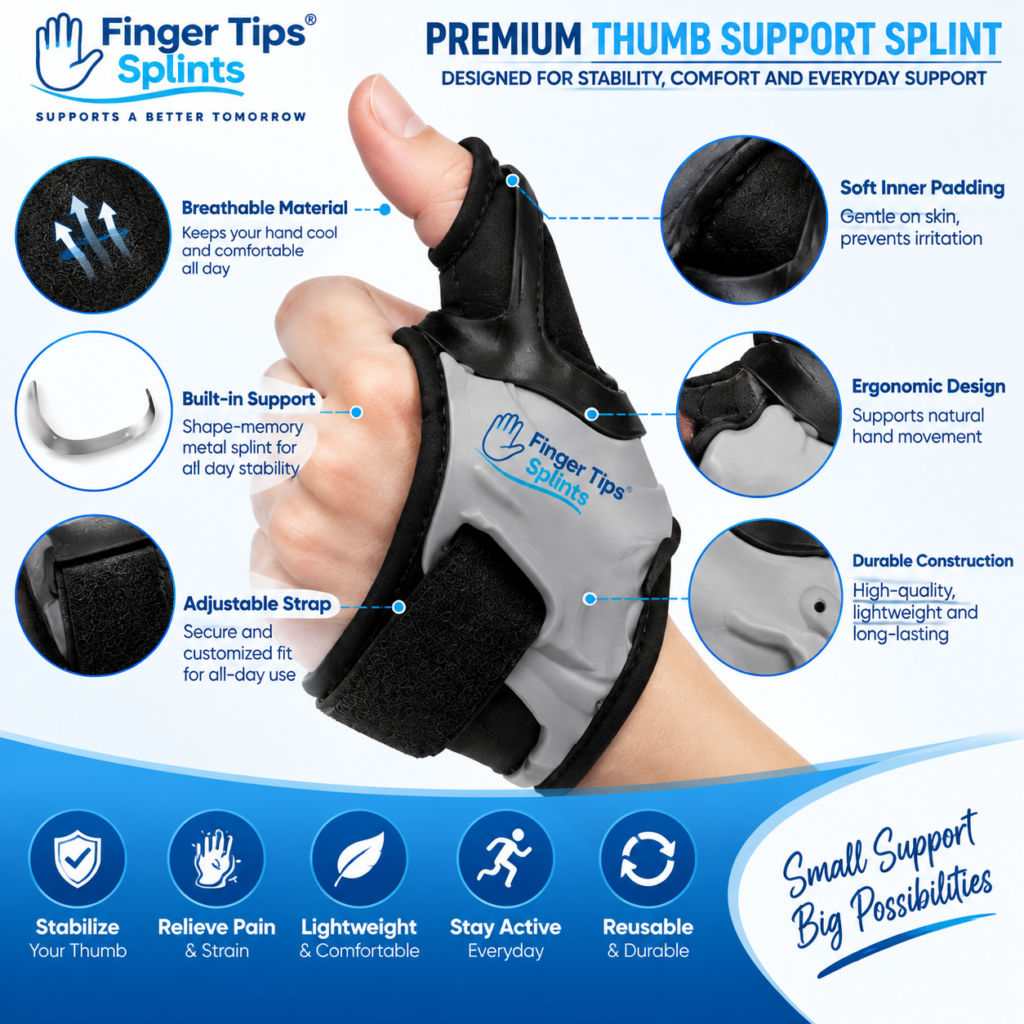
Product Spotlight: Adjustable Thumb Support Splint
After understanding the buying framework, here is a specific product to examine. The Adjustable Thumb Support Splint is one example of a thumb-focused adjustable support design. Evaluate it using the same framework taught in this guide.
Adjustable Thumb Support Splint
- Adjustable design for customizable fit
- Thumb-focused support construction
- Designed for thumb coverage and positioning
- Full product specifications available on the product page
Evaluating the Product Using the Buying Framework
Fit
What sizing information is provided? Review the sizing chart or measurement guidance on the product page.
Adjustability
What can be adjusted? Review the adjustment mechanism and how it works.
Coverage
What area does the product cover? Confirm which thumb and hand areas are enclosed.
Construction
What characteristics are documented? Review the materials and components described.
Fastening
How is it secured? Review the fastening mechanism and how it is designed.
Comfort and Everyday Practicality
What design features can be verified? Consider what activities the design may suit based on its documented characteristics.
For the focused pre-purchase checklist, the reference What to Look for When Buying an Adjustable Thumb Splint covers the inspection process step by step. For the general selection framework, see Choosing a Thumb Support Splint: What Should You Consider?.
Before You Buy: 10 Questions to Ask
This checklist compresses the buying framework into ten practical questions.
10 Questions to Ask
Tap each item as you answer it for the product you are considering.
Check items to see your readiness summary.
Common Buyer Mistakes
These mistakes come up frequently when buying adjustable thumb splints. Avoiding them improves the likelihood of a successful purchase.
Price does not tell you about fit, construction, or durability.
Check: compare features against your requirements.
Adjustment works within a range built around a base size.
Check: the size range and whether your measurements fall within it.
Correct size is the foundation of good fit.
Check: measure and compare to the manufacturer’s sizing chart.
Tightness is not a measure of support or comfort.
Check: adjust for appropriate fit, not maximum pressure.
A design that restricts movement you need may not be suitable.
Check: how the product behaves during your intended activity.
Specifications tell you what the product actually is.
Check: the listing for sizing, material, adjustment, and care details.
If the product doesn’t work out, a clear return policy provides options.
Check: return and exchange information before ordering.
Marketing language describes product characteristics, not medical outcomes.
Check: what the product is actually designed to do.
How Much Should You Spend?
Price is one factor among many. It doesn’t automatically determine quality, fit, or suitability for your needs.
Construction quality
Materials
Adjustability range
Sizing information quality
Durability indicators
Usability
Care requirements
Customer support
Return policy
When a Buyer Should Seek Professional Guidance
This buyer’s guide focuses on product-selection principles. It does not determine whether a particular type of support is medically appropriate for your situation.
Seek appropriate professional evaluation for: significant injury, visible deformity, severe or worsening pain, major swelling, persistent numbness or tingling, substantial loss of movement, or symptoms that don’t improve.
Also, if wearing a product causes significant discomfort, numbness, tingling, or concerning discoloration, remove it and seek appropriate advice.
What Should a Healthcare Professional Consider?
Factors a Professional May Consider
- The underlying situation
- Required support level
- Movement needs
- Fit
- Duration and use context
- Whether a particular product design is appropriate
Important Note
An online buyer’s guide cannot replace individualized assessment. If a healthcare professional has prescribed a specific type of support, follow that guidance.
For authoritative general information about thumb, hand, and wrist conditions, the following resources provide evidence-based content:
- Mayo Clinic for condition overviews and patient education.
- WebMD for general thumb and hand concern overviews.
- Healthline for practical wellness information.
- AAOS OrthoInfo for orthopedic guidance from specialists.
- NHS guide on hand pain for UK-based clinical guidance.
- MedlinePlus hand injuries and disorders for a broad reference library.
- Cleveland Clinic for clear patient-oriented explanations.
- Johns Hopkins Medicine for clinical and research-based perspectives.
- FDA for regulatory context on medical devices.
- NIH for research-based health information.
These resources provide general information and do not replace individualized advice from a qualified healthcare professional.
Building a Practical Hand-Support Setup
Depending on your needs, you may want to research additional support products alongside a thumb splint. This section is informational — not a sales bundle.
Thumb Support Products
The main product discussed in this guide. Explore the shop for options that match the framework you have learned.
Finger Support Products
If your needs extend to finger support, similar evaluation principles apply. Compare products using the same framework.
Reference Resources
The FingerTipSplint FAQ page and the blog library provide additional context for evaluating support products.
7 Quick Buyer Tips
Frequently Asked Questions
An adjustable thumb support splint is a wearable support device designed specifically around the thumb, with an adjustable mechanism that allows the fit or positioning to be modified after application. It combines thumb-specific support with the ability to fine-tune how the splint sits on the hand. The term “adjustable” may refer to adjustable fastening, adjustable positioning, or adjustable fit within the product’s intended range.
Start by defining your intended use. Then work through the buying framework: understand the design characteristics, check size and fit, evaluate adjustability, examine coverage, assess support and mobility, consider material and comfort, review the fastening system, think about everyday activities, and compare products against your requirements. Don’t rely on the word “adjustable” alone — check what actually adjusts and whether the design matches your needs.
Check the sizing chart, adjustment mechanism, coverage area, materials, fastening system, movement characteristics, care instructions, return policy, and product specifications. Look for specific details rather than relying on general marketing language. If the listing lacks key information, contact the seller or consider a product with more complete specifications.
No. Adjustable thumb splints work within a specific range built around a base size. While adjustable designs accommodate small variations in hand size more flexibly than fixed-size products, they still have limits. A hand significantly outside the product’s size and adjustment range will not fit properly. Always check the manufacturer’s sizing information and measure according to the supplied instructions.
Comfort comes from multiple design elements working together: material, shape, contact areas, pressure distribution, adjustment, and movement. Look at edges, seams, inner surfaces, padding, strap pressure, and overall bulk. A poorly sized soft product can still be uncomfortable. Comfort is not determined by softness alone — it depends on how the entire design works with your hand.
Neither is universally better. Flexible designs may allow more thumb movement, which can be useful for activities requiring fine motor control. More structured designs may provide more positional resistance, which may be appropriate for situations where more support is needed. The right choice depends on your intended activity and what you need the splint to do.
Seek professional advice if you have significant injury, visible deformity, severe or worsening pain, substantial swelling, major loss of movement, persistent numbness or tingling, significant discoloration, or symptoms that are not improving. Also seek advice if a specific type of support has been recommended. A consumer thumb splint is not a substitute for professional medical assessment or prescribed medical support.
Understand the Product Before You Buy It
A complete buyer’s decision comes down to matching the product’s actual design characteristics to your intended use. Understand the product, define your needs, check the size, evaluate adjustability, examine coverage, assess support and movement, consider comfort, compare products, and review the specifications. Understand → Define Needs → Check Size → Evaluate Adjustability → Examine Coverage → Assess Support → Check Material → Consider Movement → Evaluate Comfort → Compare → Verify Quality → Review Policies → Purchase
The Bottom Line on Buying an Adjustable Thumb Support Splint
Buying an adjustable thumb support splint is a structured process. Understand the product category, define your requirements, check the size, evaluate adjustability, examine coverage, assess support and mobility, check material and comfort, review the fastening system, consider everyday activities, compare products, verify specifications, and review return policies. Each step narrows the field and makes the final decision easier.
The most important principle is that “adjustable” alone is not enough information. What matters is whether the product’s actual design characteristics — sizing, coverage, adjustment mechanism, support structure, material, fastening, movement, and comfort — match your intended use.
If you want to continue exploring within this cluster, the focused checklist What to Look for When Buying an Adjustable Thumb Splint provides a quick inspection framework, and the foundational reference Adjustable Thumb Support Splint: What Is It and How Does It Work? covers product fundamentals. For a wider reference, explore the full FingerTipSplint blog library.
This article is for general information only and is not a substitute for professional medical advice. Always consult a qualified healthcare provider for diagnosis and treatment of any medical condition.