
Choosing Finger Sleeves? Check These Things Before Buying
Two finger sleeves can look almost identical in a product photo but differ in material, sizing, coverage, construction, flexibility, and intended use. This pre-purchase guide walks you through what to actually inspect on a product listing before you click Buy — so you spend money on the right sleeve, not a mismatched one.
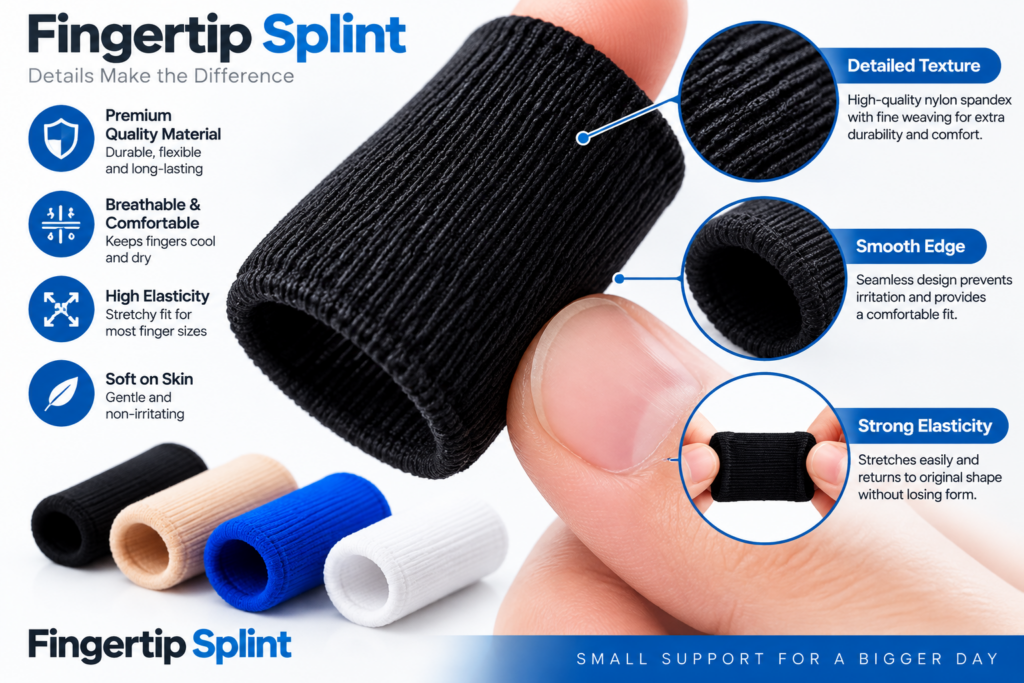
What This Guide Covers
- Quick Answer
- 1. Start With Purpose
- 2. Check Finger & Coverage
- 3. Don’t Buy Before Checking the Size Chart
- 4. Examine the Material
- 5. Flexibility & Movement
- 6. Coverage vs Movement
- 7. Edges, Seams & Construction
- 8. Don’t Ignore Comfort
- 9. Profile & Bulk
- 10. Check Adjustability
- 11. Read the Product Description
- 12. Look at Product Photos Critically
- 13. Be Careful With Marketing Claims
- 14. Price: Don’t Compare Only the Number
- 15. Quantity & Package Contents
- 16. Care & Maintenance
- 17. Return & Exchange Policies
- Pre-Purchase Checklist
- Before You Buy Selector
- Common Buying Mistakes
- When a Sleeve Isn’t the Right Category
- Product Spotlight
- FAQ
Quick Answer: What Should You Look for Before Buying Finger Sleeves?
Before buying finger sleeves, check the intended purpose, correct size using the manufacturer’s chart, coverage area, material, flexibility, comfort, construction, and the clarity of the product listing. Also verify quantity, care instructions, and return policies. Product information matters more than marketing language.
That’s the framework. But most buyers need help turning this into an actual pre-purchase inspection process. If you’re still building your broader understanding of how to choose a sleeve, see What to Consider When Choosing Finger Support Sleeves for the wider decision framework. This article focuses specifically on what to check before you click Buy.
1. Start With Your Purpose
Before looking at colors, appearance, or price, ask: why am I buying this sleeve? The answer determines which features actually matter.
🎯 Everyday Support
Focus on flexibility, comfort, and fit.
💼 Work / Study
Focus on low profile, durability, and daily usability.
⌨️ Typing / Writing
Focus on thin construction, dexterity, and grip compatibility.
📱 Smartphone Use
Focus on thin material and fingertip sensitivity.
🎒 Travel
Focus on portability and easy maintenance.
☁️ General Comfort
Focus on material softness and edge construction.
Interactive: What’s Your Main Use?
Select your main activity to see which factors to compare before buying.
Select your main use to see which factors to compare.
2. Check Which Finger and Area It Covers
This is one of the easiest things buyers overlook. A sleeve that fits one finger well may not fit another — and coverage area matters just as much as size.
Interactive: Coverage Map
Tap each coverage area to see what to check before buying
🎯 Fingertip Coverage
Covers only the end of the finger. Before buying, check that the product photo clearly shows whether the sleeve covers just the tip or extends further. This affects touchscreen use, typing accuracy, and fingertip sensitivity.
What to check: Does the product description clearly identify the intended finger? Does the photo accurately show how the sleeve sits? Does the coverage match what you actually need? For a deeper dive into coverage, see Finger Sleeves for Support: A Guide to Fit, Comfort and Coverage.
3. Don’t Buy Before Checking the Size Chart
This is the single most important pre-purchase step. A sleeve that doesn’t fit correctly won’t do its job — no matter how good the material is.
What to Check on the Size Chart
✓ Good Signs
- Finger circumference measurements
- Finger length specified where relevant
- Clear sizing units (mm, cm, inches)
- Measurement location explained
- Multiple sizes available
- Manufacturer-specific instructions provided
⚠️ Warning Signs
- No sizing information at all
- “One size fits all” without dimensions
- Vague labels (small/medium/large only)
- No measurement instructions
- Contradictory information across sections
Important: Don’t assume “small,” “medium,” or “large” means the same measurement across different products. Sizing systems vary between manufacturers. Always follow the specific product’s size chart.
Fit Comparison: What Correct Looks Like
❌ Too Loose
- Slipping during movement
- Bunching
- Movement during activity
- Requires constant adjustment
✅ Appropriate Fit
- Secure positioning
- Intended movement
- Comfortable contact
- Consistent coverage
❌ Too Tight
- Excessive pressure
- Discomfort
- Numbness or tingling
- Circulation concerns
Don’t choose a tighter size hoping for more support. Excessive tightness causes discomfort and can restrict circulation. Snug is the goal, not tight.
4. Examine the Material
Material affects how the sleeve feels, moves, and holds up over time. Before buying, look for clear material information in the product description.
Material Composition
What is the sleeve made from? Specifics are more useful than vague descriptors.
Stretch
How does the material stretch and return to shape?
Thickness
How much material surrounds the finger?
Texture
How does the surface feel against skin?
Skin Contact
Is the inner surface described as soft, breathable, or smooth?
Care Requirements
What maintenance does the material need?
For a deeper look at construction and design, see Finger Support Sleeves Explained: Features, Uses and Design.
5. Look at Flexibility and Movement
Flexibility is one of the biggest pre-purchase factors for everyday use. Before buying, ask: how much finger movement will you need?
Check For
- Flexibility description
- Stretch information
- Thickness details
- Profile (low vs. bulky)
- Movement around joints
Why It Matters
- Frequent finger movement (typing, writing)
- Comfort during activity
- Dexterity preservation
- Everyday usability
If you’re deciding specifically between flexible and structured approaches, see Finger Sleeves vs Traditional Finger Supports: Key Differences.
6. Evaluate the Coverage vs Movement Trade-Off
A sleeve covering more of the finger isn’t automatically better. Before buying, consider how coverage affects movement and comfort.
More Coverage
- Larger supported area
- More material around the finger
- May affect movement
- Can feel more noticeable
Less Coverage
- Less material around the finger
- Potentially greater freedom
- May not cover the area you need
- Support limited to a smaller region
The pre-purchase question: Does the coverage match the area I actually need supported, while still allowing the movement my activity requires?
7. Check the Edges, Seams and Construction
This is where pre-purchase inspection becomes more advanced. Small construction details often determine whether a sleeve feels comfortable over time.
Edges
Are they smooth or rough? Smooth edges reduce friction and irritation.
Seams
Where are they positioned? Seams over joint creases may become noticeable.
Stitching
Is stitching clean and consistent? Poor stitching affects durability.
Reinforcement
Are there reinforced areas where stress occurs?
Material Consistency
Is thickness consistent, or are there uneven spots that could create pressure points?
Attachment Points
If the design includes components, are they securely attached?
Look Beyond the Main Product Photo
Before buying, inspect multiple photos if available:
8. Don’t Ignore Comfort
Comfort is the result of several factors working together. Before buying, ask:
Pre-Purchase Comfort Questions
- Is the material suitable for prolonged contact?
- Does the product explain its construction?
- Is the size information clear?
- Are the edges likely to sit comfortably?
- Will the sleeve be worn during movement?
- Could bunching become an issue?
What to Look For
- Soft, breathable material description
- Clear sizing guidance
- Smooth edge construction
- Coverage that matches intended use
- Flexibility that matches activity
For a dedicated comfort-focused guide, see How to Choose a Comfortable Finger Sleeve for Support.
9. Consider the Sleeve’s Profile and Bulk
For people who type, write, study, or use smartphones, profile matters. But lower profile isn’t automatically better.
Low-Profile Design
Potentially easier to integrate into everyday activities. Preserves dexterity. Less noticeable during wear.
Bulkier Design
May provide additional structural components depending on the product. Can offer more cushioning but may reduce dexterity.
Compare profile against the movement and support characteristics you actually need — not against a hypothetical ideal.
10. Check Whether It Is Adjustable
Before buying, understand how the sleeve fits. Different approaches have different trade-offs.
Simple Sizing (Stretch-Based)
- Relies on correct size selection
- Low profile
- Simple application
- Fewer components
Adjustable Fitting
- Straps or fastening systems
- Customizable fit
- More setup
- Potentially more bulk
A product with more adjustment isn’t automatically superior. It simply provides a different fitting approach. Choose based on what your situation actually requires.
11. Read the Product Description Carefully
This is where careful pre-purchase inspection pays off. Before buying, look for:
Information to Look For
- Dimensions
- Material
- Size
- Intended use
- Compatibility
- Care instructions
- Manufacturer details
- Package contents
Warning Signs
- Broad claims but little concrete information
- No material details
- No size chart
- No dimensions listed
- Vague descriptions of intended use
If the description makes lots of broad claims but provides little concrete information about material, size, construction, or use — investigate further before purchasing.
12. Look at Product Photos Critically
Product photos can tell you a lot — if you know what to look for. Don’t just ask “does it look good?” Look at:
Interactive: Product Listing Inspector
Tap each factor to see what to check in product photos
📏 Size
Can you judge the actual scale from the photo? Does the sleeve look proportionate to the finger shown? Are there any reference objects to help you estimate size? Product photos without scale context can be misleading.
13. Be Careful With Marketing Claims
Marketing language isn’t inherently wrong, but it doesn’t tell you what you actually need to know. Here’s how to distinguish between claims and verifiable information:
| Claim Type | What to Check |
|---|---|
| “Maximum support” | What design feature provides the support? |
| “Perfect fit” | Is there a detailed size chart? |
| “Premium material” | Is the actual material identified? |
| “All-day comfort” | What construction or fit information supports this? |
| “Universal size” | Does the product explain its actual dimensions? |
| “Professional-grade” | Is the claim defined and supported with specifics? |
The pre-purchase question: For every claim, is there verifiable information behind it? If not, look for products that provide clearer specifications.
14. Price: Don’t Compare Only the Number
Price ≠ quality. Before comparing prices, compare what you’re actually paying for:
🧵 Material
🏗️ Construction
📏 Sizing
🎯 Coverage
📦 Quantity
⚙️ Adjustability
🛡️ Durability info
🧼 Care requirements
🏢 Seller/manufacturer info
15. Check Quantity and Package Contents
This is a very practical pre-purchase issue that many buyers overlook.
Ask Before Buying
- Is the listing for one sleeve?
- A pair?
- Multiple sleeves?
- Different sizes included?
- Replacement pieces?
- Accessories?
Why It Matters
Understanding package contents prevents surprises when the product arrives. It also helps you compare value between listings.
16. Check Care and Maintenance Requirements
Before buying, determine what caring for the sleeve involves:
🧼 Washing instructions
☀️ Drying method
🌀 Machine wash allowed?
🧴 Special care required?
📦 Storage requirements
⏳ Replacement considerations
Only follow specific washing instructions if confirmed by the product manufacturer. Don’t assume universal care methods apply to all sleeves.
17. Check Return, Exchange and Size Policies
This is especially useful for a pre-purchase checklist. Before buying, check:
What to Check
- Return window
- Exchange conditions
- Sizing exchanges
- Hygiene-related return restrictions
- Seller contact information
- Shipping details
Why It Matters
If the sleeve doesn’t fit or isn’t what you expected, a clear return policy makes the situation manageable. This is a practical consideration that many buyers overlook.
Finger Sleeve Pre-Purchase Checklist
Walk through each item before clicking Buy. Tap to mark complete.
Interactive: Before You Buy Selector
Answer three questions to see what to focus on before buying. Educational guidance, not a medical recommendation.
Answer the questions above to see what to focus on before buying.
Common Buying Mistakes
These ten mistakes are easy to make when buying finger sleeves. Avoiding them saves money and frustration:
A visually appealing product may not match your functional needs.
Sizing systems vary. Guessing leads to poor fit and wasted money.
Materials vary significantly. Read the specifications.
Price doesn’t tell you how a sleeve will perform. Examine other factors.
Excessive tightness causes discomfort. Snug is the goal, not tight.
Match the sleeve to what you’ll actually be doing while wearing it.
Coverage should match the area you need supported.
Specifications tell you more than marketing language.
Different product types serve different purposes.
Return policies matter if the product doesn’t fit or meet expectations.
When a Finger Sleeve May Not Be the Right Category
A flexible sleeve may not be appropriate if your requirements involve:
🦴 Substantial movement restriction
🎯 Specific positioning
🩹 Significant injury
⚕️ Prescribed support
🛡️ Specialized protection
For significant injury, visible deformity, severe or worsening pain, substantial swelling, persistent numbness or tingling, or major movement loss, appropriate professional assessment is more important than selecting a consumer sleeve. For the broader category landscape, see Finger Support Products Explained: Where Do Sleeves Fit In?
For trusted guidance, see the AAOS OrthoInfo hand and wrist conditions library, NHS guide on hand pain, and MedlinePlus hand injuries and disorders. Additional perspectives are available from Mayo Clinic, Cleveland Clinic, and Johns Hopkins Medicine. The NIH provides research-based information, and if a neurological component is involved, NINDS is the specialist resource. For regulatory context on medical devices, the FDA is authoritative, and for general public health information, the CDC is a trusted source.
What to Check on This Product
Instead of recommending a specific product, here’s how to apply the pre-purchase checklist to the FingertipSplint option:
Finger Sleeves for Finger Support
- Flexible sleeve-style design
- Intended for everyday finger support
- Product specifications available on the product page
- Designed for finger coverage and comfort
- Available to explore with current product details
Check the product page for: intended use, product construction, available sizing information, coverage details, material, and everyday usability information. For quality considerations, see What Makes a Good Finger Support Sleeve for Daily Use? For the selection process, see Select Finger Sleeves for Support.
Frequently Asked Questions
Look at the intended purpose, correct size using the manufacturer’s chart, coverage area, material, flexibility, comfort, construction, and product listing clarity. Also check quantity, care instructions, and return policies. The most important factors depend on your specific situation, but all of them contribute to whether the sleeve will work for you. Match the product to your actual requirements rather than to its marketing language.
Follow the specific manufacturer’s sizing instructions. Sizing systems vary between products, so there isn’t a universal method. Common measurements include finger circumference and sometimes length. Measure the specific finger you’ll use the sleeve on, compare with the manufacturer’s size chart, and follow their guidance. If you’re between sizes, prioritize comfort over a tighter fit. If no size chart is provided, that’s a warning sign.
Look for clear material information in the product description. Material affects stretch, flexibility, thickness, texture, skin-contact feel, durability, and moisture handling. There’s no universally “best” material — the right one depends on your activity, wear duration, and comfort preferences. What matters is that the product clearly states what it’s made from and that the material characteristics suit your needs.
Coverage should match the area you actually need supported or protected. Coverage options range from fingertip-only to extended designs. More coverage isn’t automatically better — it can add bulk, reduce dexterity, and feel more noticeable. Before buying, check whether the product description and photos clearly show the coverage area and whether it matches your intended use.
No — it should feel snug, not tight. A snug fit stays in place comfortably. A tight fit causes pressure, numbness, tingling, or leaves deep marks after removal. Tightness doesn’t equal better support. If you’re unsure about sizing, follow the manufacturer’s chart rather than choosing a tighter size hoping for “extra support.”
No. More compression doesn’t automatically mean better support. Excessive compression can cause discomfort, restrict circulation, and lead to numbness or tingling. Support comes from appropriate fit, coverage, material, and construction — not from squeezing harder. Before buying, look for products that explain their design clearly rather than ones that simply emphasize tightness.
Flexibility matters if you need to use your finger normally during wear — typing, writing, phone use, and daily tasks all benefit from flexible construction. However, the right level depends on your activity. If you need movement restriction or stabilization, a flexible sleeve isn’t the right product category. Before buying, check whether the product’s flexibility description matches your activity requirements.
Look at edges, seams, thickness consistency, and overall shape in product photos. Well-finished edges reduce friction. Seams positioned away from high-friction areas support comfort. Consistent thickness prevents pressure points. The shape should match the area it’s designed to cover. If the product listing provides construction details, examine them. If construction isn’t explained, that’s a signal that more information may be needed.
A complete product listing should include: material composition, sizing information with measurements, coverage description, dimensions, intended use, care instructions, manufacturer details, and package contents. It should also clearly show how the product looks on a finger. If any of this information is missing, consider whether you have enough to make a confident purchase decision.
Yes. Return policies matter especially for sizing issues or if the product doesn’t match your expectations. Check the return window, exchange conditions, sizing exchange options, and any hygiene-related return restrictions. This is a practical consideration that protects you if the product doesn’t work out. It’s also a sign of a retailer that stands behind its products.
No. Different finger sleeves are designed for different activities and priorities. Some prioritize flexibility for typing and writing, others emphasize coverage for broader support, and others focus on comfort for extended wear. Before buying, match the product’s stated intended use and design characteristics to what you’ll actually be doing while wearing it.
Finger sleeves generally emphasize flexibility, continuous coverage, and low-profile everyday usability. Traditional supports — including wraps, braces, and splints — may emphasize structure, adjustability, stabilization, or movement control. Neither is universally better. The appropriate design depends on what you need the support to accomplish. For a full comparison, see the dedicated article on this site.
Product photos can help you judge scale, coverage, thickness, and general construction — but they can’t tell you whether a sleeve will fit your specific finger. Use photos to evaluate visual characteristics, then rely on the size chart for fit. Look for photos showing the sleeve on a finger (not just isolated on a white background) and any images that include scale reference.
If no size matches your measurement, consider whether a different product might fit better. Don’t force a size that’s clearly wrong. Some manufacturers offer custom sizing or adjustable designs that may work better for non-standard measurements. If you’re between sizes, consider which direction to err based on the manufacturer’s guidance — usually slightly looser is more manageable than too tight.
Seek professional advice if you have a significant injury, visible deformity, severe or worsening pain, major swelling, persistent numbness or tingling, substantial loss of movement, or symptoms that aren’t improving. Also seek advice if a specific type of support has been recommended. A pre-purchase checklist helps you choose a consumer product wisely, but it can’t diagnose what’s causing your symptoms. Trusted resources include AAOS OrthoInfo, NHS, MedlinePlus, Mayo Clinic, and Cleveland Clinic.
Now You Know What to Check. Buy With Confidence.
Purpose → Size → Coverage → Material → Flexibility → Construction → Product Information → Policies. Use this pre-purchase framework to make a considered choice. Inspect → Compare → Verify → Decide
The Bottom Line on Choosing Finger Sleeves Before Buying
Choosing a finger sleeve wisely isn’t about finding the product with the most features or the lowest price. It’s about checking what actually matters before you spend money. Purpose, size, coverage, material, flexibility, construction, product information, and policies all contribute to whether a sleeve will work for you. When you inspect these factors carefully, you can buy with confidence rather than hoping for the best.
The pre-purchase checklist in this article can be applied to any finger sleeve product — not just the one you’re considering today. Use it every time you shop, and you’ll make better choices with less frustration.
For readers ready to apply this framework to a specific product, the Finger Sleeves for Finger Support product page is the natural next step. For the broader decision framework, see What to Consider When Choosing Finger Support Sleeves. And for the deeper fit and coverage guide, see Finger Sleeves for Support: A Guide to Fit, Comfort and Coverage. Explore the full FingertipSplint blog library for more guides.
This article is for general information only and is not a substitute for professional medical advice. Always consult a qualified healthcare provider for diagnosis and treatment of any medical condition.