
Finger Cots for Wounds: The Simple Solution to Protect Cuts and Heal Faster
Finger cots for wounds are one of the easiest and most effective ways to protect cuts, prevent infection, and heal faster—yet most people ignore them until the pain gets worse.
Here’s the thing…
A small cut on your finger doesn’t feel serious—until it starts hurting every time you touch something. Cooking, typing, working… suddenly everything becomes uncomfortable.
If you’ve been dealing with that annoying pain, this guide will show you exactly how to fix it—quickly and safely.
👉 If you’re looking for high-quality options, you can explore https://fingertipsplint.com/ for trusted solutions.
📑 Table of Contents
- What Are Finger Cots for Wounds?
- Who Should Use Finger Cots?
- Key Benefits of Finger Cots for Wounds
- How to Use Finger Cots Properly
- Common Mistakes to Avoid
- Finger Cots vs No Protection (Comparison)
- How to Choose the Best Finger Cots
- When You Should NOT Use Them
- FAQs
What Are Finger Cots for Wounds?
Finger cots are small, flexible protective covers worn over injured fingers. Think of them like a “mini glove” for a single finger.
They are usually made of:
- Silicone
- Latex
- Rubber
Their main job is simple:
👉 Protect the wound from dirt, water, and friction
Unlike bandages, finger cots:
- Stay in place longer
- Provide better waterproofing
- Reduce irritation
👉 You can check dedicated options here: https://fingertipsplint.com/finger-cots/
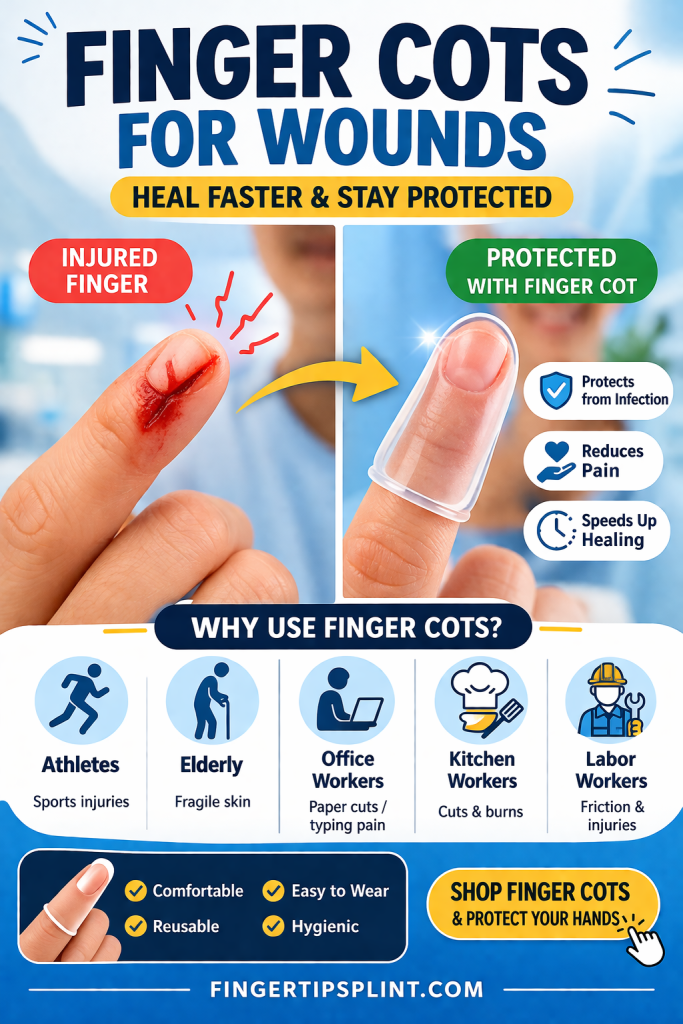
Who Should Use Finger Cots for Wounds?
Finger cots are not just for one type of person. They are useful for anyone who needs extra protection, comfort, and support while a finger injury heals.
Athletes
Athletes often deal with sports injuries, jammed fingers, friction, and repeated impact. Finger cots help protect the injured area so movement feels safer during recovery.
Elderly
Older adults may have fragile skin and slower healing. A finger cot adds a gentle protective barrier that reduces irritation and helps prevent further damage during daily tasks.
Office Workers
Small cuts, paper cuts, and typing pain can become surprisingly uncomfortable. Finger cots help reduce friction while working, typing, writing, or handling documents.
Kitchen Workers
Cuts from knives, food prep, and constant hand washing can slow healing. Finger cots help cover the wound and provide an extra layer of protection during busy kitchen work.
Labor Workers
Hands are exposed to friction, pressure, and repeated contact all day. Finger cots can help protect injured fingers from dirt, rubbing, and painful daily strain.
If Your Finger Is…
You need protection. A simple finger cot can help reduce pain, protect the wound, and make everyday activities much easier.

Key Benefits of Finger Cots for Wounds
1. Faster Healing
By keeping the wound clean and protected, healing speeds up naturally.
2. Pain Reduction
No more direct contact with surfaces = less irritation.
3. Infection Prevention
Blocks bacteria, dirt, and water exposure.
4. Waterproof Protection
Perfect for:
- Washing hands
- Cooking
- Cleaning
5. Comfortable Daily Use
Soft and flexible—doesn’t restrict movement.
6. Better Than Bandages
Bandages slip. Finger cots stay.
🔥 Featured Snippet Answer #1
Do finger cots help wounds heal faster?
Yes, finger cots help wounds heal faster by protecting cuts from dirt, bacteria, and friction. They create a clean barrier that reduces irritation and allows the skin to recover naturally without constant disturbance.
How to Use Finger Cots Properly
Using them correctly makes all the difference. Follow these simple steps to protect your wound, reduce irritation, and support faster healing.
Clean the Wound
Start by gently cleaning the injured finger with water and a mild antiseptic. This helps remove dirt, bacteria, and anything that could slow healing or increase the risk of infection.
Dry Completely
Make sure the area is fully dry before covering it. Moisture trapped inside a finger cot can create the perfect environment for bacteria, which may delay healing and cause discomfort.
Apply a Bandage (Optional)
If the cut is deeper or more sensitive, place a small clean bandage over the wound first. This adds an extra layer of cushioning and protection before wearing the finger cot.
Wear the Finger Cot
Slide the finger cot over the injured finger and make sure it fits snugly. It should stay in place comfortably without being too tight or causing pressure on the wound.
Replace Regularly
Change the finger cot daily or sooner if it becomes dirty, wet, or damaged. Regular replacement helps maintain hygiene and keeps the wound protected throughout the healing process.
👉 For better protection, consider pairing your recovery with silicone finger protection.
Common Mistakes to Avoid
- ❌ Using on dirty wounds
- ❌ Not cleaning regularly
- ❌ Wrong size selection
- ❌ Wearing too tight
Finger Cots vs No Protection
With Finger Cots:
- Faster healing
- Less pain
- Lower infection risk
- Safe daily activity
Without Protection:
- Constant irritation
- Higher infection risk
- Slower healing
- More pain
👉 The difference is honestly huge.
🔥 Featured Snippet Answer #2
Are finger cots better than bandages?
Finger cots are often better than bandages because they stay in place, provide waterproof protection, and reduce friction. While bandages can loosen or fall off, finger cots offer consistent coverage, especially for active daily use.
How to Choose the Best Finger Cots for Wounds
Not all finger cots are the same. Here’s what to look for before buying.
| Feature | What to Look For | Why It Matters |
|---|---|---|
| ✔ Material | Silicone → Best comfort Latex → Snug fit | Choosing the right material helps improve comfort, fit, and daily usability. |
| ✔ Size | Too tight = Pain Too loose = Falls off | The right size keeps the wound protected without discomfort or slipping. |
| ✔ Thickness | Thin → Flexibility Thick → Protection | Thickness affects how easily you can move your finger and how much protection you get. |
| ✔ Reusability | Reusable = Cost-effective | Reusable finger cots can save money over time when cleaned properly. |
👉 Explore premium options here: Finger Cots Collection
When You Should NOT Use Finger Cots
Important for safety 👇
Avoid using if:
- Deep open wounds
- Heavy bleeding
- Signs of infection (pus, swelling)
👉 In these cases, seek medical help.
For medical guidance, refer to trusted sources:
- https://www.mayoclinic.org/first-aid/first-aid-cuts/basics/art-20056711
- https://www.webmd.com/first-aid/cuts-treatment
🔥 Featured Snippet Answer #3
Can you wear finger cots all day?
Yes, you can wear finger cots all day, but they should be removed periodically to clean the wound and allow airflow. Regular replacement ensures hygiene and prevents moisture buildup that could slow healing.
💡 Real-Life Scenario
Imagine this:
You cut your finger while cooking.
You ignore it.
Every time you:
- Wash dishes
- Touch something
- Type
👉 Pain hits again.
Now compare that with wearing a finger cot:
- No irritation
- No fear
- Faster healing
Simple change. Big difference.
If you want to protect your finger and heal faster without discomfort…
👉 Browse trusted solutions here: https://fingertipsplint.com/shop-2/
Protect Your Finger Before It Gets Worse
Don’t ignore it… that small cut can get worse faster than you think.
Every touch, every task, every moment of delay can slow your healing and increase the risk of infection.
Why go through unnecessary pain?
👉 Protect your fingers now, heal faster, and get back to your daily life without discomfort.
Shop Finger Cots NowFrequently Asked Questions About Finger Cots for Wounds
Click the plus sign to see the answer.
You should wear them until the wound heals, replacing or cleaning them daily to maintain hygiene. For more support and healing options, explore our finger cots collection.
Yes, many silicone finger cots are reusable if cleaned properly. You can also check our silicone finger protection options for comfortable daily use.
Yes, they act as a barrier against dirt and bacteria, reducing infection risk. To see more protective products, visit our shop page.
They can protect the area, but they should not replace proper medical treatment for deep wounds. For related finger injury support, you can also read our finger splint for injury guide.
Yes, especially waterproof ones, but you should remove and dry them afterward for better hygiene. You can explore more protective solutions on our homepage.