
Choosing an Adjustable Finger Support: What Should You Consider?
When you are choosing an adjustable finger support, the deciding factor should not be how the product looks in a photo. It should be whether the purpose, coverage, size, adjustment range, fit, movement, comfort, material, activity match, and product information actually match what your finger needs. This guide gives you a structured 10-point method for comparing options without relying on marketing claims.
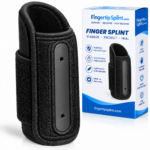
What This Buyer Guide Covers
- Quick Answer
- Step 1 — Start With Purpose
- Step 2 — Finger and Coverage Area
- Step 3 — Size Before Adjustment
- Step 4 — Adjustment Mechanism
- Step 5 — Adjustment Range
- Step 6 — Evaluate the Fit
- Step 7 — Finger Movement
- Step 8 — Evaluate Comfort
- Step 9 — Material and Construction
- Step 10 — Everyday Activity
- Adjustable vs Fixed Support
- What Listings Should Tell You
- Marketing Claims vs Product Facts
- Don’t Choose by Price Alone
- 10-Point Buyer Scorecard
- 3D Interactive: Build Your Support
- Common Buying Mistakes
- Product Spotlight
- When Adjustable May Not Be Right
- Doctor Advice
- Quick Buyer Checklist
- FAQ
- Conclusion
Quick Answer: What Should You Consider When Choosing an Adjustable Finger Support?
When choosing an adjustable finger support, consider the intended purpose, coverage area, sizing, adjustment range, fit, flexibility, comfort, material, activity requirements, and construction. The adjustment mechanism should allow a secure but comfortable fit without unnecessary pressure. Always compare the product’s specifications with your specific requirements before you buy.
If you are still at the stage of understanding what an adjustable sleeve actually is, start with Adjustable Finger Support Sleeve: What Is It and How Does It Work? before you begin comparing products. This article assumes you already understand the basic concept and now need a structured method for choosing between different designs.
The reality is that two adjustable finger supports can look almost identical in a listing image and behave completely differently on your finger. One may have a wider adjustment range but a bulky profile. Another may sit lower on the finger but offer better fingertip coverage. A third may be softer but less secure during repeated movement. The only way to choose well is to compare products against the same set of criteria — in the same order — rather than jumping straight to price or appearance.
Step 1 — Start With Your Purpose, Not the Product
The single biggest mistake people make when choosing an adjustable finger support is starting with a product, not a purpose. They see a sleeve online, read that it is adjustable, and begin imagining whether it could work for them. This is backwards. The stronger approach is to define the job you need the product to do, then look for a design whose specifications match that job.
Purpose is not a medical diagnosis. It is a product characteristic. You are not deciding what is wrong with your finger in this step. You are deciding what you want the support to do on a practical level. That distinction matters because it keeps the buying decision inside the consumer product space rather than drifting into medical territory the product cannot cover.
Common Product Purposes
- Flexible everyday support
- Finger coverage and protection
- Adjustable positioning through the day
- Low-profile wear under other activities
- Targeted coverage on a specific area
- General comfort during repetitive tasks
- More structured support around a joint
Why This Step Comes First
A product can be well-made and still be the wrong match if it does not serve your purpose. An adjustable sleeve designed for low-profile fingertip coverage will not serve someone who needs structured joint support — no matter how well it is constructed. Starting with purpose prevents you from over-valuing features that do not apply to your situation.
There is a second reason purpose comes first. It protects you from marketing. Listings often lead with the most impressive-sounding feature — “advanced protection,” “maximum support,” “all-day comfort.” If you already know your purpose, you can read past those phrases and ask whether the actual product specifications serve what you need. If you do not know your purpose, every impressive phrase feels relevant.
Practical exercise: Before opening any product page, write one sentence describing what you want the support to do. For example: “I want a low-profile sleeve that stays in place during typing and covers my fingertip.” That single sentence will filter out most unsuitable products before you waste time comparing them.
Readers who want to see how purpose translates into product type may find it useful to compare different categories directly. The guide Sleeve or Brace: Exploring Different Types of Finger Support walks through how sleeve-style, brace-style, and protector-style products serve different purposes. That context makes Step 1 easier to apply.
One more point. Purpose can change. A product you chose for desk work may not serve you on a weekend hike. If your needs vary, note that early — it may push you toward a product with a wider adjustment range or a design that repositions easily. Purpose is not a one-time decision; it is the frame you use to evaluate everything that follows.
Step 2 — Identify the Finger and the Coverage Area
Coverage is the second decision point, and it is where many buyers get tripped up. An adjustable mechanism cannot compensate for a fundamentally unsuitable coverage design. If a product is built to cover the middle section of a finger, no amount of adjustment will make it cover the fingertip. If it is built for a fingertip, it will not wrap a knuckle. Coverage is a physical property of the product, and adjustment works within it, not beyond it.
The first question is which finger. Index, middle, ring, and pinky fingers differ in circumference and length, and thumb support is a separate category. A product sized for an index finger may not fit a pinky — even if both use the same adjustment mechanism. The second question is which area of the finger needs coverage. The third question is how much coverage you actually need versus how much the product provides.
Interactive: Where Does the Support Sit?
Select a finger area to see what product specifications to check
Fingertip Coverage
Check the product’s fingertip length, inner diameter at the tip, and how the tip sits against the skin. Fingertip coverage matters for tasks that involve fine contact — typing, tapping, handling small objects. Verify that the product’s dimensions cover the tip without extending past it or leaving it exposed.
Fingertip coverage
Upper finger coverage
Middle-section coverage
Joint-area coverage
Base-of-finger coverage
Partial or extended coverage
Once you know the area, compare it against the product’s stated coverage dimensions. Listings that provide only a single length measurement are usually describing the total product length, not the covered area. Read carefully. If the listing says “fits fingers 60–75 mm” that is a size range, not a coverage description. The covered area may still be only the upper half of the product.
Important: Adjustment can shift the product slightly, but it cannot extend coverage beyond the product’s physical dimensions. A short sleeve cannot be adjusted to cover a longer finger area. Coverage is a fixed property set at the design stage.
This is also where many readers discover they have been looking at the wrong product category. If the area you need to cover is not available in a sleeve-style design, it is better to know that before purchase. The overview Finger Protector Brace Explained: Features, Fit, and Everyday Uses compares coverage profiles across common designs and is useful at this stage.
Finally, think about coverage stability, not just coverage size. A product may cover the right area when first applied but shift during movement. This is more common with loosely fitted sleeves and less common with designs that have a stable fastening. Coverage stability is covered more deeply in the fit section later, but it is worth noting here because it interacts directly with your coverage choice.
Step 3 — Check the Size Before the Adjustment Range
This is the most important correction in the entire buying process. Adjustment is not a substitute for correct sizing. It is a fine-tuning tool that works within a size. If you choose the wrong size, no amount of adjustment will produce a secure, comfortable fit — and trying to compensate by over-tightening creates its own problems.
The reason buyers make this mistake is understandable. Products labeled “adjustable” feel like they should fit everyone. But an adjustable sleeve with a 20 percent adjustment range still has a base size, and it will only fit fingers whose dimensions fall within that base plus the adjustment range. A finger outside that range will either be too loose even at the tightest setting or too tight even at the loosest.
Measure Before You Compare
- Finger circumference at the target area
- Finger length from base to tip (if relevant)
- Width across the joint (for joint coverage)
- Comfortable looseness — not maximum stretch
- Measurement at a normal temperature, not after activity
Match Against the Chart
- Manufacturer sizing chart
- Product dimensions (not just size label)
- Adjustment range in the listing
- Any listed circumference windows
- Product photos that show scale
Where the sizing chart is missing or vague, that itself is useful information. A product listing that does not provide a sizing chart is harder to evaluate than one that does, and you should treat that as a minor red flag rather than a neutral detail. Later in this guide we cover product listings in more detail.
Doctor-level insight: Finger circumference varies with temperature, time of day, hydration, and activity. If your measurement is borderline between two sizes, an adjustable product offers useful flexibility — but only if the underlying size is already close. If a product requires the maximum setting of its adjustment range to fit, you are probably one size off.
For a deeper explanation of how fit and coverage interact with sizing, the reference Finger Brace Fit Guide: Understanding Adjustability and Coverage complements this section. It explains how coverage and adjustment change fit outcomes across product types.
Step 4 — Understand the Adjustment Mechanism
Two products can both be labeled “adjustable” and still provide very different degrees of customization. The adjustment mechanism — not the word “adjustable” — determines what the product can actually do. Understanding the mechanism tells you what changes when you adjust, how much control you have, and what to check after adjusting.
| Mechanism | How It Adjusts | What It Changes | What to Check |
|---|---|---|---|
| Hook-and-loop fastening | Overlapping strap with a grip surface | Circumference and pressure | Whether it stays secure during movement; whether it loosens over time |
| Adjustable strap or band | Tension strap with a buckle or slide | Circumference around the finger | Comfort of the strap edge; whether the strap twists or rides up |
| Elastic adjustment | Stretch level set by material, not by a fastener | Conformity to finger shape | How much it stretches before it loses its shape; whether it relaxes over wear |
| Overlapping material | Layers of the sleeve overlap to change thickness or coverage | Coverage depth and density | Whether the overlap creates pressure points; whether it stays aligned |
| Product-specific closure | Snap, tab, or similar closure system | Position of the product on the finger | Whether the closure holds during repeated movement; comfort against skin |
Do not assume every adjustment mechanism provides the same degree of customization. A hook-and-loop fastening offers continuous adjustment within a range. A closure system may offer only two or three fixed positions. Both are legitimate designs, but they serve different purposes and suit different users.
If you want to understand how adjustment mechanisms interact with flexibility, the guide How Adjustable Finger Sleeves Create a More Flexible Fit explains the difference between material flexibility and adjustment-based flexibility. That distinction is often the deciding factor for people who need a product that stays in place without restricting movement.
When you read a product listing, look for a description of the mechanism — not just the word “adjustable.” A well-written listing will explain how the product adjusts, what the user does to adjust it, and what range of adjustment is available. If that information is missing, you have less to evaluate. Treat that as a limitation of the listing, not a neutral absence.
Practical check: If you can’t visualize how you would adjust the product from the description and images, the listing has not done its job. That is a strong signal to keep comparing before you commit.
Step 5 — Look at the Adjustment Range
This is where “adjustable” products split into categories. A product may legitimately be adjustable and still have a very limited range. Another may have a wider range that accommodates more finger variation. The range — not the word — is what makes adjustment useful.
Listings rarely state adjustment range in exact millimeters, but you can usually infer it from a combination of statements. “Fits fingers 55–70 mm circumference” implies a 15 mm adjustment window. “Adjustable for a customized fit” without numbers implies a small range. “One size fits most” without measurements implies either an elastic material or a low-precision fit.
Moderate Range
A moderate adjustment range typically accommodates small variations in finger circumference and allows fine-tuning for comfort. It suits buyers whose measurement is close to the product’s base size and who primarily want comfort adjustment rather than size transformation. Check whether the adjustment remains secure at both ends of the range.
Questions to Ask
- How much can it actually be adjusted?
- Is adjustment continuous or preset?
- Can it be readjusted after wear begins?
- Does adjustment affect coverage?
- Does the mechanism stay secure over time?
Warning Signs
- “One size fits all” without measurements
- Adjustment described only as “customizable”
- No image showing the adjustment in action
- No mention of how the product stays in place
- No information about the range itself
There is an important interaction here with Step 3. If the adjustment range is wider than your finger measurement variation, adjustment can genuinely improve fit. If the adjustment range is narrow, the product is more sensitive to correct sizing. In either case, choosing the correct size first remains essential.
One subtle point that distinguishes a well-designed product from a lesser one: good adjustment remains secure across the range. Some products are stable at moderate settings but slip when adjusted to the extremes. If you can, look at customer reviews or product images that show the adjustment at different settings. This is more informative than a single product photo at the tightest setting.
For broader context on what makes an adjustable protector useful in daily wear, the article What Makes an Adjustable Finger Protector Useful for Daily Wear discusses adjustment range, retention, and comfort together. It is worth reading alongside this step.
Step 6 — Evaluate the Fit in Real Conditions
Fit is where everything you have checked so far either works or fails. The fit outcome falls into three basic states, and the goal is the middle one. Not the loosest, not the tightest — the appropriate fit.
Interactive: Fit States
Select a fit state to see what to watch for
Appropriate Fit
The product stays positioned during intended movement, feels comfortable against the skin, maintains the coverage area you selected, and allows the movement appropriate to the design. This is the target. Tightness is not a measure of effectiveness.
Too Loose
- Sliding during activity
- Bunching on the finger
- Changing coverage position
- Frequent readjustment
Appropriate
- Secure positioning
- Comfortable contact
- Intended coverage maintained
- Movement appropriate to design
Too Tight
- Pressure sensations
- Discomfort with wear
- Numbness or tingling
- Concerning discoloration
Critical point: The goal is an appropriate fit, not the tightest possible fit. If you feel pressure, numbness, tingling, or see deep marks after removing the product, loosen or remove it. Symptoms that persist after removal should be assessed appropriately.
Fit is not just about circumference. It also involves how the product sits against the skin, how the edges behave during movement, and whether the product stays in the same position through normal use. Two products can both be “snug” and still feel completely different because one distributes pressure evenly and the other concentrates it at a single seam or edge.
Because fit interacts directly with how you use the product, this step pairs naturally with the buyer-focused reference Adjustable Finger Support Sleeves: A Complete Guide for Buyers. That guide explores fit across product categories, which is useful if you are still comparing designs after this step.
One last consideration: fit can change over time. Products loosen slightly with wear. Elastic relaxes. Fasteners lose grip. A fit that is comfortable on day one may need re-adjustment after a week. Note that in your evaluation — a product that is easy to readjust is more forgiving than one that is fixed after the first application.
Step 7 — Consider Finger Movement Requirements
Movement is the most misunderstood variable in finger support buying. Many buyers assume that a support either restricts movement or allows it, and that adjustability is the switch. In reality, movement depends on multiple factors that work together — and adjustment is only one of them.
The factors that determine how much your finger can move while wearing a support are: material flexibility, material thickness, coverage area, product structure, position on the finger, and adjustment level. Remove or change any one of these and the movement outcome changes. A thin, low-coverage sleeve in a stretchy material allows significant movement even if it is not adjustable at all. A thick, joint-covering structure restricts movement even if it is fully adjustable.
Movement Depends On
- Material flexibility
- Material thickness
- Coverage area
- Product structure
- Position on the finger
- Adjustment level
What This Means for Buyers
Compare movement characteristics across products, not just adjustment features. A product that adjusts widely but restricts movement is not more flexible — it is just more adjustable. Match movement to your activity, not to a marketing claim.
The most useful question to ask is not “does this support restrict movement?” but “does this support restrict the movement I actually need for my daily activity?” A product that limits fine fingertip motion but leaves larger finger motion free could be perfectly suitable for one person and frustrating for another. This is why activity context — covered in Step 10 — matters so much.
Doctor-level insight: If a healthcare professional has recommended restricting movement in a specific finger or joint, an adjustable support may be the wrong category. Consumer supports are designed to allow natural finger use within reasonable limits — they are not designed for immobilization. Follow professional guidance if restriction has been advised.
Because movement expectations vary so widely across everyday tasks, the guide Finger Protector Sleeves for Everyday Activities: What to Know is a useful companion here. It maps movement needs across common activities like typing, writing, and smartphone use.
Step 8 — Evaluate Comfort Beyond “Soft Material”
Comfort is not a single property. It is the sum of how the product feels against your skin, how it distributes pressure, how it behaves during movement, and how it holds up over longer wear. A product can be made from a soft material and still feel uncomfortable because of a seam, an edge, a fastener, or a pressure point that only becomes noticeable after an hour of wear.
Interactive: Comfort Self-Assessment
Tap each dimension to see what to evaluate
What to check specifically:
Pressure distribution
Seam placement
Edge finishing
Material against skin
Moisture behavior
Thickness and flexibility
Duration is the comfort variable most often ignored during buying and most noticed during wear. A product that feels pleasant for five minutes may become noticeable after thirty minutes and uncomfortable after two hours. If you plan to wear the support during extended tasks — long typing sessions, study periods, or full workdays — pay more attention to how the material behaves against skin over time than to how soft it feels at first touch.
Moisture also matters. Some materials retain heat and moisture against the skin; others allow more airflow. Neither is universally better — the right choice depends on your climate, activity level, and how long you wear the product. A breathable, low-profile product is often the better choice for hot environments or all-day wear.
Practical test: Wear any new support for thirty minutes during normal activity before deciding whether it fits well. Comfort that holds up for half an hour is a much stronger signal than comfort in the first minute.
Step 9 — Check the Material and Construction
Material and construction information is where listings differ most dramatically in quality. Some listings provide detailed material composition, thickness, inner surface description, seam placement, and care instructions. Others describe the product only in general terms and rely on lifestyle images. The difference matters because material and construction determine how the product behaves in practice.
| Characteristic | What It Can Affect | What to Look For in a Listing |
|---|---|---|
| Material composition | Flexibility, breathability, durability | Named materials, not just “premium fabric” |
| Stretch | Conformity to finger shape | Whether the material provides elasticity or is firm |
| Thickness | Movement, feel, coverage density | A measurement or a comparison image |
| Inner surface | Comfort, grip, skin contact | Description of the inner layer |
| Seams | Pressure points, durability | Flat seams or smooth construction |
| Fasteners | Security, adjustability, comfort | Type of fastener and whether it is padded |
| Reinforcement | Durability at high-use points | Whether reinforcement is mentioned |
| Care instructions | Longevity, hygiene | Cleaning method and frequency guidance |
No single material is universally superior. A thinner material may be more comfortable and less restrictive but less durable. A thicker material may offer more structure but less flexibility. The right material is the one whose characteristics match your purpose, activity, and comfort preferences — not the one that sounds most advanced in the listing.
Construction quality shows up in details. Reinforced edges last longer. Flat seams reduce pressure. Padding around fasteners improves comfort during longer wear. Clean finishing suggests attention to detail. None of these guarantees a great product, but their absence is a signal that the product may not hold up under regular use.
If the listing does not describe material and construction in specific terms, treat that as a limitation. You cannot evaluate a product whose key characteristics are not described. In some cases it is worth contacting the seller for more information — a responsive seller who provides specifics is a positive sign, and one who cannot is not.
Step 10 — Match the Support to Your Everyday Activity
The final step ties everything together. Your activity determines how the product will actually be used — how much movement it needs to allow, how much pressure it can tolerate, how long it will be worn, and how much coverage is useful. The most common buying mistake at this stage is treating activity as a nice-to-know detail rather than a decision variable.
Interactive: Activity Selector
Select an activity to see what to check in a product
TYPING
Repeated movement
WRITING
Grip changes
SMARTPHONE
Repeated bending
STUDYING
Extended use
OFFICE
Mixed tasks
HOUSEHOLD
Object handling
Typing
Check: Profile, finger movement range, and stability through repeated keystrokes.
Watch for: Product slipping as fingers move, or the sleeve interfering with key contact.
If You Type Frequently
Prioritize low profile, comfortable finger movement, and stable positioning. High-profile products with thick structure can interfere with typing and feel heavy over long sessions.
If You Write by Hand
Check how the product behaves during grip changes. The finger shifts positions while holding a pen, so the support needs to stay comfortable through those transitions.
If You Use a Smartphone
Fingertip coverage and repeated bending matter most. A sleeve that covers the tip securely without dulling touch sensitivity is often the right choice.
If You Study or Work at a Desk
Duration is the deciding factor. Prioritize comfort over many hours and re-adjustability, since long wear can change how the product feels.
If You Travel
Consider portability, ease of adjustment, and care requirements. A product that needs special handling or frequent cleaning is less convenient on the move.
If You Do Light Household Tasks
Secure positioning and coverage are the priority. The product should stay in place during gripping, lifting, and handling objects.
This section deliberately avoids becoming a second everyday-use article. The goal here is to help you match a buying decision to a lifestyle, not to walk through every activity in depth. If you want that depth, the dedicated guide on everyday uses is worth reading after this one.
Adjustable vs Fixed Support: A Short Comparison
This is not the main topic of this guide — there is a separate article dedicated to that comparison — but a brief table here completes the buying framework. The purpose is to help you confirm you are looking at the right product category before you invest time comparing specific products.
| Consideration | Adjustable | Fixed |
|---|---|---|
| Fit customization | More options | Predetermined |
| Repositioning | Usually easier | More limited |
| Components | Potentially more | Often simpler |
| Adjustment | Available | Limited or none |
| Sizing | Still important | Especially important |
If you are not yet sure which category suits you, the detailed comparison Adjustable Finger Brace vs Fixed Support: What’s the Difference? covers the trade-offs in depth. The main point to carry forward from this section is that adjustable support is not automatically better — it is a category that offers specific advantages and imposes specific trade-offs.
What Product Listings Should Tell You Before You Buy
A product listing is the primary evidence you have when buying online. It tells you what the seller claims about the product and how much verified information they provide. A strong listing gives you enough information to apply the ten-point checklist without guessing. A weak listing leaves gaps that will only become clear after purchase — often the expensive way to learn.
Look For in a Listing
- Exact measurements
- Sizing chart
- Material composition
- Coverage dimensions
- Adjustment method
- Adjustment range
- Product photos (multiple angles)
- Care instructions
- Intended use description
- Package contents
- Return or exchange information
Red Flags
- “Perfect for everyone” without sizing
- “Universal size” without dimensions
- “Maximum support” without construction detail
- Only lifestyle images, no product close-ups
- No material information
- No coverage measurements
- No care instructions
- No mention of how it adjusts
Red flag principle: If a listing repeatedly says things like “perfect for everyone” but does not provide meaningful sizing, material, or construction details, look for a product with more specific information. Detail-oriented listings are not automatically better products, but they give you enough information to make a considered choice.
Return and exchange policy is also worth checking before purchase. A product that offers returns is easier to evaluate in practice — you can order, test the fit for thirty minutes, and decide based on how it actually feels. This is a meaningful advantage for adjustable products, where fit varies with individual finger dimensions.
Marketing Claims vs Product Facts
One of the most useful skills in buying an adjustable finger support is translating marketing language into the specific facts you should verify. Marketing phrases are not lies; they are generalized statements that feel meaningful without committing to a specific measurement. A buyer who learns to translate them can compare products far more accurately.
| Marketing Phrase | What You Should Actually Check |
|---|---|
| “Perfect fit” | Sizing chart plus adjustment range |
| “Maximum support” | Actual construction details and coverage |
| “Universal size” | Product dimensions and adjustment range |
| “All-day comfort” | Material, seam placement, and fit information |
| “Advanced protection” | Actual protection specifications and coverage area |
| “Flexible design” | Material properties and construction details |
| “Medical-grade” | Whether the product is actually a regulated medical device or a consumer support |
The translation habit protects you from two opposite errors. It protects you from dismissing a well-made product because its listing uses marketing language, and it protects you from buying a product whose marketing language sounds impressive but whose verified specifications do not match your needs. The habit is neutral: it simply asks for specifics.
It is also worth remembering that specific claims are easier to hold accountable than general ones. A listing that says “material: 80 percent nylon, 20 percent spandex, 2 mm thickness” tells you more than “premium stretch fabric.” A listing that says “fits finger circumference 55–68 mm” tells you more than “comfortable adjustable fit.” Favor specific listings when comparing products.
Don’t Choose Based on Price Alone
Price is a signal, not a verdict. A lower-priced product may be an excellent value if it matches your requirements, and a higher-priced product may be poor value if it does not. Comparing by price without comparing by features leads to two predictable mistakes: buying a product that does not fit your needs because it was cheap, and paying extra for features that do not apply to your situation.
Price does not directly tell you about fit quality, adjustment range, material quality, durability, comfort, or coverage. Those are properties you verify from the listing and, ideally, from first-hand experience with the product. When comparing two products at different prices, ask which one better matches your checklist. Sometimes the more expensive product is the better value because it provides the specific characteristics you need; sometimes the less expensive one is the better value because it does not include features you will never use.
There is also a practical point about re-purchasing. A product that fits well and lasts may be a better long-term choice than a cheaper one that needs to be replaced after a short period. Consider both initial price and the cost per period of use, especially if you plan to wear the product regularly.
10-Point Buyer Scorecard
Here is the practical tool the framework builds toward. Use it to evaluate any specific product you are considering. The scorecard is not designed to declare a “best” product — it is designed to show you, at a glance, whether the product you are looking at meets your requirements or falls short.
Score a Product Against Your Requirements
For each criterion, select whether the product is not suitable, meets your requirement, or is a strong match. This is a personal checklist, not a rating system.
Score each criterion to see a summary of how the product matches your requirements.
Build Your Adjustable Finger Support: 3D Interactive
The final piece of the framework is a visual model of how the criteria come together. The interactive below shows the six design elements that determine whether a specific product will work for you. Tap each element to see what to check.
Interactive 3D: The Six Design Elements
Tap each element to see what to evaluate
① Coverage
Where does the support sit? Coverage is the physical area of the finger that the product protects or supports. It cannot be extended by adjustment. Compare product dimensions against the area you need covered.
All six elements work together. A product that performs well on five and poorly on one may still be the wrong choice for your situation.
The Selection Path
Use this path as the order in which to evaluate products. Do not jump to comfort or price before you have verified purpose and coverage.
Common Buying Mistakes to Avoid
Each of these mistakes has a specific cost — a product that slips, a product that feels uncomfortable, a product that does not cover the area you need. Recognizing the mistake before you buy is much cheaper than correcting it afterward.
Product photos are styled. They show how the product looks, not how it behaves.
Check: specifications and construction details, not just images.
Adjustment is not a substitute for correct size.
Check: measure your finger and match it to the chart before comparing features.
Adjustment works within a range. It does not eliminate sizing.
Check: the adjustment range and the base size the product is built around.
Tightness is not effectiveness. Excessive pressure can cause discomfort and other issues.
Check: adjust for comfort and secure positioning, not maximum pressure.
A product may fit your finger but cover the wrong area.
Check: coverage measurements against the area you need covered.
A product that is comfortable when still may behave differently during activity.
Check: how the product performs during the activity you actually do most.
Material determines comfort, durability, and behavior over time.
Check: material composition, thickness, seams, and fasteners.
Marketing language is not clinical evidence.
Check: actual product specifications. If the product is not a medical device, treat it as a consumer support product.
Product Spotlight: Applying the Checklist
To make the framework concrete, here is how it applies to a specific product. The Adjustable Finger Support Sleeve is one option to examine if customizable fit and positioning flexibility are among your priorities. This section applies the checklist rather than simply promoting the product.
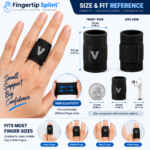
Adjustable Finger Support Sleeve
- Adjustable design for customizable fit
- Flexible sleeve-style construction
- Designed for finger coverage and positioning
- Full product specifications available on the product page
What to Examine on the Product Page
Adjustment
Identify the actual adjustment mechanism. Confirm how the product is adjusted, what changes when it is adjusted, and whether the adjustment remains secure during normal movement.
Fit
Review the sizing information provided. Compare your measured finger circumference against any stated range. Verify that the product’s base size matches your finger before relying on adjustment.
Coverage
Check the covered area. Confirm that the product’s coverage dimensions align with the finger area you need to cover. Adjustment can shift coverage slightly but cannot extend it.
Construction
Review the listed materials, thickness, and inner surface description. Confirm that the construction characteristics match your comfort and activity needs.
Everyday Use
Consider the product’s relevant characteristics against the activity you do most. Confirm that the product is intended for the type of use you have in mind, and review the care instructions.
When an Adjustable Support May Not Be the Right Category
An important part of choosing well is knowing when a product category is not appropriate. An adjustable finger support is a consumer product. It is not designed for every situation, and there are clear circumstances in which it is the wrong choice.
Seek professional assessment rather than choosing a support product on your own if you have: a significant injury, visible deformity, major swelling, significant loss of movement, persistent or worsening pain, numbness or tingling, or other concerning symptoms.
If a healthcare professional has prescribed a particular splint, brace, or immobilization method, follow that guidance. An online buying guide cannot substitute for that recommendation. This is not a limitation of the product — it is a recognition that some finger conditions require specific, prescribed support strategies that a general-purpose consumer product cannot replicate.
None of this is meant to discourage appropriate use of adjustable supports. Many people find them useful for everyday comfort, positioning, and coverage. The point is simply that choosing well includes choosing the right category, and sometimes the right category is not a general consumer support product.
Doctor Advice: What to Ask Before Using a Finger Support
Even when an adjustable support is the right category, there are useful questions to answer before you commit. These are informational prompts, not a substitute for individualized medical advice, but they help clarify your own decision.
Questions About the Area
- What area needs support or coverage?
- Is the area stable day to day or changing?
- Is there a specific finger area that needs more coverage?
Questions About Movement
- Is movement supposed to be restricted or allowed?
- Is flexible support appropriate for this use?
- Does the product match the recommended design?
Questions About Fit
- Is the fit comfortable for extended wear?
- Are there pressure points or edges that need attention?
- Can the fit be adjusted easily as needed?
Questions About Symptoms
- Are there any symptoms that need professional assessment?
- Do symptoms change with or without the support?
- Are there warning signs to monitor while wearing the product?
For reliable general information about hand conditions and finger care, the following resources are useful and authoritative:
- Mayo Clinic for general condition information and patient education.
- WebMD for overviews of common finger and hand concerns.
- Healthline for practical wellness-focused information.
- AAOS OrthoInfo for musculoskeletal guidance from orthopedic specialists.
- NHS guide on hand pain for UK-based clinical guidance.
- MedlinePlus hand injuries and disorders for a broad reference library.
- Cleveland Clinic for clear patient-oriented explanations.
- Johns Hopkins Medicine for clinical and research-based perspectives.
- NIH for research-based health information.
- NINDS for neurological resources where a neurological component is involved.
- FDA for regulatory context on medical devices.
- CDC for public health guidance.
These resources provide general information and are useful for understanding context. They do not replace individualized advice from a qualified healthcare professional.
Quick Buyer Checklist
Before you buy any adjustable finger support, work through this checklist. It compresses the ten-point framework into a practical pre-purchase routine.
Before You Buy
Tap each item as you confirm it for the product you are considering.
Frequently Asked Questions
Look for a product whose purpose, coverage area, sizing, adjustment mechanism, adjustment range, fit characteristics, movement allowance, comfort features, material, and activity match align with your specific needs. Compare product specifications against your requirements rather than relying on marketing language. Prioritize sizing charts and construction details over general claims.
Measure your finger circumference at the target area and compare it against the product’s sizing chart and stated adjustment range. The right size is the one whose base measurement matches your finger, with adjustment providing fine-tuning. If a product requires the extreme end of its adjustment range to fit, you likely need a different size. Where possible, test the fit for thirty minutes during normal activity before deciding.
No. Adjustable products work within a specific range built around a base size. While adjustable designs accommodate small variations in finger size more flexibly than fixed-size products, they still have limits. A finger significantly outside the product’s size and adjustment range will not fit properly, regardless of how the product is adjusted. Sizing still matters even when the product is adjustable.
Enough adjustment to accommodate your finger’s normal variation and to fine-tune comfort — but not so much that the product becomes unstable at the extremes of its range. A moderate adjustment range usually suits buyers whose measurement is close to the product’s base size. A wider range is useful if your finger measurement varies or if you want to reposition the product for different activities. The right amount depends on your needs, not on the maximum available.
No. It should feel snug and secure — not tight. Tightness is not a measure of support. Excessive pressure can cause discomfort, marks on the skin, numbness, or tingling. The appropriate fit is one that stays positioned during movement, feels comfortable, and does not create concentrated pressure points. If you experience concerning symptoms, loosen or remove the product and seek appropriate advice if symptoms persist.
Choose an adjustable support if you want more control over fit, easier repositioning, or the ability to fine-tune comfort. Choose a fixed support if your finger measurement closely matches a standard size and you prefer a simpler design without adjustment features. Both categories have legitimate uses, and neither is universally better. The right choice depends on how much flexibility you need and how much complexity you are willing to manage.
Activity is one important factor, but it is not sufficient on its own. You also need to consider purpose, coverage, sizing, adjustment, fit, movement, comfort, material, and construction. Activity affects which of these matter most — for example, typing prioritizes low profile and movement, while household tasks prioritize secure positioning and coverage. Use activity as context for the full checklist rather than as a substitute for it.
Choose by Fit, Not by Features
The right adjustable finger support is not the one with the most impressive marketing language. It is the one that matches your purpose, coverage, size, adjustment needs, fit expectations, movement requirements, comfort preferences, and activity. Use the checklist. Compare specifications. Choose with confidence.
The Bottom Line on Choosing an Adjustable Finger Support
Choosing well comes down to sequence, not to which product looks most impressive. Start with purpose, then coverage, then size, then adjustment, then fit, then movement, then comfort, then material, then activity, then the quality of the product information. Each step narrows the field, and by the end you have a shortlist of products that genuinely match your requirements.
The most common buying mistake is skipping ahead. Appearance is easy to evaluate, so buyers start there. Marketing language is easy to read, so it influences the decision. Price is easy to compare, so it becomes the deciding factor. All three of these are the wrong place to start. The right place to start is what you need the product to do, and the right way to finish is a product whose specifications match that need.
If you want to continue exploring within this cluster, the reference Why Choose an Adjustable Finger Support Sleeve explains the reasons buyers prefer adjustable designs in practice, and the broader Finger Support Sleeve Buying Guide: Fit, Design, and Comfort covers adjacent buyer concerns. For a wider reference, explore the full FingertipSplint blog library.
This article is for general information only and is not a substitute for professional medical advice. Always consult a qualified healthcare provider for diagnosis and treatment of any medical condition.