
Adjustable Finger Support Sleeve: What Is It and How Does It Work?
Standard sleeves have a fixed fit. Your finger doesn’t. If you’ve ever struggled to find a sleeve that sits correctly, feels comfortable, and stays positioned during daily activities, an adjustable design may be what you’re looking for. This guide explains what makes an adjustable finger support sleeve different, how the adjustment mechanism works, and how that changes fit, positioning, movement, and everyday usability.
What This Guide Covers
- Quick Answer
- What Is an Adjustable Sleeve?
- 3D Exploded View
- How the Adjustment Works
- Adjustment Simulator
- What Makes It Adjustable?
- Fixed vs Adjustable
- How Adjustability Affects Fit
- Adjustability & Movement
- Everyday Activities
- Materials & Construction
- How to Put It On
- Signs of Proper Position
- Common Adjustment Mistakes
- Vs Other Finger Supports
- Who Should Consider It
- Product Spotlight
- Is It Right for You?
- First-Time Use Timeline
- What to Know Before Using
- Quick Tips
- FAQ
Quick Answer: What Is an Adjustable Finger Support Sleeve?
An adjustable finger support sleeve combines a sleeve-style design with an adjustment feature that allows the fit or positioning to be customized. The adjustment mechanism may allow the wearer to modify how tightly the sleeve sits, where it’s positioned, or how much coverage it provides. This can be useful for everyday wear when a fixed fit feels too loose, too tight, or inconsistently positioned.
If you’re new to finger support products entirely, the Finger Sleeves for Finger Support: What Are They and How Do They Work? article covers the fundamentals. This guide focuses specifically on what makes an adjustable design different and how the adjustment mechanism changes the wearing experience.
What Is an Adjustable Finger Support Sleeve?
An adjustable finger support sleeve is essentially a sleeve-style support with a modification mechanism. Instead of relying solely on the material’s stretch and a predetermined size, an adjustable design lets the wearer change how the sleeve fits or sits on the finger.
Standard sleeves work through a combination of material, fit, coverage, and flexibility. Adjustable sleeves add one more element: the ability to modify fit or positioning after the sleeve is on the finger. Depending on the specific product, this might mean adjusting tightness, repositioning coverage, or fine-tuning where the sleeve sits.
Standard Sleeve
- Fixed size based on manufacturer sizing
- Relies on material stretch for fit
- Positioning determined by how it’s applied
- Limited ability to modify fit after application
Adjustable Sleeve
- Adjustment feature modifies fit or positioning
- May allow tighter or looser positioning
- May allow repositioning without removal
- More customizable to individual finger shape
Important distinction: An adjustable design doesn’t automatically mean medical-grade stabilization. Adjustability is a fit and comfort feature — it allows customization, but doesn’t change what category of support the product is. For the broader sleeve concept, see Finger Support Sleeves Explained: Features, Uses and Design.
Interactive 3D: Exploded View of an Adjustable Sleeve
Tap each component to see what it does
👆 Finger
The foundation. Everything else in the sleeve exists to support, cover, or interact with the finger. Finger shape, size, and the specific area needing support determine how the sleeve should be positioned.
Actual construction varies by product. Always check the manufacturer’s specifications for the specific sleeve you’re considering.
How Does an Adjustable Finger Support Sleeve Work?
This is the core of the article. An adjustable sleeve works through a sequence of steps that differ from a standard fixed-size sleeve. Here’s how the mechanism operates:
What makes this different from a fixed sleeve is step 2 — the adjustment. In a fixed sleeve, the fit is determined at purchase by size selection. In an adjustable sleeve, the fit can be modified after the sleeve is on the finger. This matters because:
- Finger shapes vary. A finger that’s wider at the base but narrower at the middle may not fit standard sizing well. Adjustability can accommodate this.
- Activities change. A sleeve that fits well for typing might feel too loose during writing. Adjustability allows modification for the activity.
- Comfort varies. What feels comfortable for five minutes may feel different after an hour. Adjustability allows re-tuning.
Interactive: Adjustment Simulator
Tap each position to see how different adjustment levels affect fit and comfort.
✅ Secure Fit
Stays positioned during normal movement. Feels comfortable — snug but not restrictive. Allows the intended movement for your activity. Doesn’t leave deep marks after removal. This is the target adjustment level — not the tightest possible.
What Makes a Finger Sleeve “Adjustable”?
“Adjustable” can mean different things depending on the specific product. Here are the common adjustment mechanisms you might encounter:
Hook-and-Loop Closure
A fastening system that allows the wearer to modify tightness by repositioning the closure.
Elastic Adjustment
Elastic elements that can be stretched or relaxed to change fit.
Overlapping Material
Layers that slide over each other to modify circumference or coverage.
Adjustable Straps
Straps that can be tightened or loosened to change positioning.
Positioning Tabs
Tabs or pull points that help reposition the sleeve without removal.
Multi-Size Construction
Design that accommodates a range of finger sizes through combined features.
Important: Not every adjustable sleeve uses the same mechanism. Some use closures; others rely on elastic or overlapping construction. Always check the specific product’s design to understand how the adjustment works.
Adjustable vs Fixed Finger Support Sleeves
Here’s a focused comparison. This isn’t a sleeve-vs-splint article — it’s a comparison between two design approaches within the sleeve category.
| Feature | Fixed Sleeve | Adjustable Sleeve |
|---|---|---|
| Fit | Predetermined by size selection | Can be modified after application |
| Positioning | Limited to initial application | More customizable |
| Sizing flexibility | Usually lower | Usually higher |
| Adjustment during use | Limited | Depends on design |
| Complexity | Simple construction | More components |
| Application | Slip-on, stretch-based | Position and secure |
| Bulk | Often lower profile | Adjustment features may add slight bulk |
Fixed Sleeve Design
- Simple slip-on application
- Fewer components
- Often lower profile
- Relies on accurate sizing
- Fit determined at purchase
Adjustable Sleeve Design
- Position, adjust, secure application
- More components for adjustment
- Allows fine-tuning after application
- More forgiving of finger shape variation
- Fit can be modified during wear
If you’re deciding between these two approaches, see Adjustable Finger Brace vs Fixed Support: What’s the Difference? for a deeper comparison. For the broader question of sleeve vs splint design, see Sleeve or Brace: Exploring Different Types of Finger Support.
How Adjustability Affects Fit
Adjustability changes how fit works. Here’s what each adjustment level means in practice:
Too Loose
- Sleeve may move around
- May bunch up during movement
- Coverage may shift
- Requires frequent readjustment
Properly Adjusted
- Sits where intended
- Allows comfortable movement
- Doesn’t create unnecessary pressure
- Maintains consistent coverage
Too Tight
- Can become uncomfortable
- May leave pressure marks
- May cause numbness or tingling
- May cause concerning discoloration
Stop and seek advice: If numbness, tingling, significant discoloration, or persistent discomfort occurs, loosen or remove the sleeve. If symptoms continue after removal, seek appropriate professional advice. The NHS guide on hand pain and MedlinePlus hand injuries and disorders are reliable starting points.
For the full fit framework, see Finger Brace Fit Guide: Understanding Adjustability and Coverage.
Adjustability and Finger Movement
Here’s a key point that many buyers misunderstand: adjustability doesn’t automatically mean greater or lesser movement restriction. The actual effect depends on the product’s construction and how the adjustment interacts with the sleeve’s design.
A sleeve with strong adjustment but flexible construction may preserve significant movement. A sleeve with strong adjustment and more structured components may restrict movement more. The adjustment feature itself doesn’t determine the movement outcome — the whole design does.
For a deeper look at how adjustability and flexible fit connect, see How Adjustable Finger Sleeves Create a More Flexible Fit.
Where Adjustable Finger Sleeves Fit Into Everyday Activities
Adjustability is most useful in activities where fit changes or varies. Here’s how adjustable sleeves interact with different activities:
⌨️ Typing
Frequent finger movement. Adjustability allows tuning fit for keyboard work.
✍️ Writing
Grip and finger movement. Adjustment lets you fine-tune positioning for pen control.
📱 Smartphone
Dexterity and touchscreen use. Adjustable fit preserves fingertip sensitivity.
💼 Office Work
Multiple activities. Adjustment allows re-tuning between tasks.
📚 Studying
Extended wear across activities. Adjustability helps maintain comfort over time.
✈️ Travel
Varied conditions. Adjustable fit accommodates different situations.
For a broader look at how sleeves fit into daily life, see Finger Protector Sleeves for Everyday Activities: What to Know.
Materials and Construction
Material and construction influence how the adjustment mechanism performs. Here’s what affects the experience:
Elastic materials
Fabric construction
Soft inner surfaces
Hook-and-loop components
Seams and edges
Stretch behavior
Thickness
Breathability
Durability
Careful wording: Avoid assuming one material is universally better. The useful material characteristics depend on how the sleeve will be used and how the adjustment mechanism interacts with the material.
How to Put On and Adjust an Adjustable Finger Sleeve
Here’s the practical 7-step sequence for applying an adjustable sleeve correctly:
Signs Your Adjustable Sleeve Is Properly Positioned
Use this checklist to verify that your adjustable sleeve is sitting correctly:
Positioning Checklist
Tap each item to mark it complete.
Good Signs
Recheck the Fit If:
Common Adjustment Mistakes
These seven mistakes are easy to make when using an adjustable sleeve. Avoiding them leads to better fit and comfort:
Adjustable doesn’t mean “should be tightened to the max.” Over-tightening causes discomfort and can restrict circulation.
The sleeve should be positioned correctly before adjusting. Adjusting a poorly positioned sleeve just locks in the wrong fit.
These signals indicate the adjustment needs reconsideration. Don’t push through — address them.
An adjustable sleeve isn’t a rigid splint. Don’t expect it to immobilize or protect like a structured device.
Compression and support are different things. Tighter doesn’t equal better.
Persistent discomfort isn’t “getting used to it.” It signals that the adjustment or fit needs reconsideration.
Follow the specific product’s guidance for sizing, adjustment range, and care. Generic advice doesn’t apply to every product.
Adjustable Sleeve vs Other Finger Supports
Where does an adjustable sleeve fit relative to other support designs? Here’s a conceptual spectrum:
Adjustable Sleeve
Flexible construction with a fit modification feature. Prioritizes customizable everyday support.
Soft Brace
More structure than a sleeve. May provide more consistent positioning without full rigidity.
Rigid / Structured Splint
Designed to stabilize, position, or restrict movement. Used when movement control is the primary requirement.
These categories can overlap, and product terminology varies between manufacturers. The purpose here is simply to help you understand where adjustable sleeves fit in the broader landscape.
Who May Consider an Adjustable Design?
An adjustable design may be relevant for someone who wants:
Customizable Fit
Adjustment allows fine-tuning to individual finger shape.
Flexible Positioning
Ability to reposition coverage as needed.
Accommodation for Different Finger Sizes
More forgiving of finger shape variation than fixed sizing.
Low-Profile Support Option
Flexible design that doesn’t add bulk.
Everyday Usability
Practical support for daily activities.
Adjustable Coverage
Ability to modify how much of the finger is covered.
Important: A flexible adjustable sleeve may not be appropriate as the sole solution when someone has significant injury signs, has been advised to use a specific immobilization device, or needs a specific level of stabilization. Follow professional guidance in those situations.
Product Spotlight: Adjustable Finger Support Sleeve
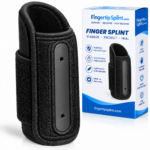
After understanding how adjustable sleeves work, here’s a specific product to examine. The Adjustable Finger Support Sleeve is one option to consider if adjustable fit is one of your priorities.
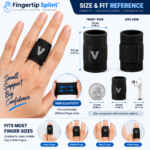
Adjustable Finger Support Sleeve
- Adjustable design for customizable fit
- Flexible sleeve-style construction
- Product specifications available on the product page
- Designed for finger coverage and positioning
- Available to explore with current product details
Check the product page for: adjustment mechanism details, intended coverage, construction, materials, and everyday usability information. For broader buyer guidance, see Choosing an Adjustable Finger Support: What Should You Consider? and Adjustable Finger Support Sleeves: A Complete Guide for Buyers.
Interactive: Is an Adjustable Sleeve Right for Your Needs?
Answer the questions to see whether an adjustable design may be worth comparing. This is educational guidance, not a medical recommendation.
Answer the questions above to see a summary.
First-Time Use Timeline
This isn’t a medical recovery timeline — it’s a practical timeline for getting used to an adjustable sleeve. Here’s what to expect as you learn how the adjustment mechanism behaves:
Check Positioning
Verify the sleeve sits correctly and the initial adjustment feels comfortable.
Learn the Mechanism
Notice how the adjustment behaves during movement. Adjust as needed.
Monitor Fit
Watch for slipping, bunching, or changes in comfort during activity.
Follow Care Instructions
Maintain the sleeve per manufacturer guidance. Replace if condition affects function.
What Should You Know Before Using an Adjustable Finger Support?
Before using any finger support product, keep these important considerations in mind:
A Sleeve Isn’t Automatically a Medical Treatment
A consumer sleeve is a support product, not a treatment for a medical condition. It can provide coverage and light support, but it doesn’t diagnose or treat anything.
Different Problems Need Different Support
A flexible sleeve may not provide the immobilization required for certain injuries. If a specific type of support has been recommended, follow that guidance.
Persistent Symptoms Warrant Assessment
Persistent pain, swelling, numbness, tingling, deformity, major movement loss, or worsening symptoms should be evaluated by a qualified healthcare professional.
Follow Professional Instructions
If the product is being used alongside treatment, follow healthcare provider instructions regarding its use and any limitations.
For trusted guidance, see the AAOS OrthoInfo hand and wrist conditions library, Mayo Clinic, and Cleveland Clinic. For broader perspectives, see Johns Hopkins Medicine and NIH. If a neurological component is involved, NINDS offers specialist resources. For regulatory context on medical devices, the FDA is authoritative, and for general public health information, the CDC is a trusted source. Additional health information resources include Healthline and WebMD.
Quick Tips for Adjustable Sleeve Users
These seven tips make the adjustment experience smoother:
Frequently Asked Questions
An adjustable finger support sleeve is a sleeve-style finger support with a modification feature that allows the wearer to change how the sleeve fits or is positioned. Instead of relying solely on predetermined size and material stretch, an adjustable design allows post-application adjustment of tightness, positioning, or coverage. This can be useful when a fixed fit feels too loose, too tight, or inconsistently positioned during activities.
An adjustable sleeve works through a sequence: the sleeve is positioned on the finger, the adjustment mechanism is secured or modified, the wearer checks fit, movement is assessed, and the fit is rechecked during use if the sleeve shifts. The adjustment mechanism may use hook-and-loop closure, elastic elements, overlapping material, straps, or another design approach depending on the product. The key difference from a fixed sleeve is the ability to modify fit after the sleeve is on the finger.
A fixed sleeve has a predetermined fit based on size selection and material stretch. An adjustable sleeve adds a modification feature that allows fit or positioning to be changed after application. This provides more customization — useful for accommodating individual finger shape variation, adapting to different activities, or fine-tuning comfort during extended wear. However, adjustable sleeves often have more components and may add slight bulk compared to simpler fixed designs.
Yes, many people use adjustable sleeves during everyday activities like typing, writing, smartphone use, office work, studying, and travel. Their flexibility and customizable fit make them practical for daily wear. The adjustment feature is particularly useful when activities vary, since you can re-tune the fit between tasks. However, comfort during rest may differ from comfort during activity, so it’s worth evaluating the sleeve during the specific activities you do most.
It should feel snug — secure enough to stay positioned without slipping or bunching — but not tight. You shouldn’t feel excessive pressure, numbness, tingling, or see deep marks after removal. Tightness doesn’t equal better support. Start with a comfortable adjustment and only modify if the sleeve shifts or doesn’t provide the intended positioning. If the sleeve causes concerning symptoms, remove it and seek appropriate advice if symptoms persist.
No, not generally. An adjustable sleeve and a splint serve different purposes. A sleeve is designed for flexible support, coverage, and comfort with preserved movement. A splint is typically designed to stabilize, position, or restrict movement. If a medical professional has recommended a splint for immobilization, protection, or stabilization, an adjustable sleeve is not a substitute. Always follow professional advice if you have a diagnosed condition or injury.
Consider whether you need customizable fit, flexible positioning, or accommodation for finger shape variation. If your priority is everyday support with preserved movement, an adjustable sleeve may be worth comparing. If you need a highly structured immobilization device or have been advised to use a specific type of support, follow professional guidance. For a deeper buying framework, see the articles linked throughout this guide. If you have persistent symptoms, professional assessment is more important than product selection.
Seek professional advice if you have a significant injury, visible deformity, severe or worsening pain, major swelling, persistent numbness or tingling, substantial loss of movement, or symptoms that aren’t improving. Also seek advice if a specific type of support has been recommended. An adjustable sleeve is a consumer support product — it can’t diagnose or treat a medical condition. Trusted resources include AAOS OrthoInfo, NHS, MedlinePlus, Mayo Clinic, and Cleveland Clinic.
Adjustable Fit. Everyday Usability. Customizable Positioning.
An adjustable finger support sleeve gives you the ability to modify fit and positioning as needed. Explore the FingertipSplint adjustable sleeve and compare it against your own requirements. Position → Adjust → Check → Use → Recheck
The Bottom Line on Adjustable Finger Support Sleeves
An adjustable finger support sleeve combines sleeve-style construction with a fit modification feature. The adjustment mechanism allows you to customize fit, positioning, or coverage after the sleeve is on the finger — providing more flexibility than a fixed-size sleeve. This can be useful for accommodating finger shape variation, adapting to different activities, or fine-tuning comfort during extended wear.
The adjustment feature doesn’t change what category of support the product is. An adjustable sleeve remains a flexible support product, not a rigid splint. Its value comes from customizable everyday usability, not from providing medical-grade stabilization.
For readers ready to explore a specific product, the Adjustable Finger Support Sleeve product page is the natural next step. For deeper buyer guidance, see Adjustable Finger Support Sleeves: A Complete Guide for Buyers and What Makes an Adjustable Finger Protector Useful for Daily Wear? For information on related products, see Finger Protector Brace Explained: Features, Fit and Everyday Uses and Why Choose an Adjustable Finger Support Sleeve? Explore the full FingertipSplint blog library for more guides.
This article is for general information only and is not a substitute for professional medical advice. Always consult a qualified healthcare provider for diagnosis and treatment of any medical condition.